



Hadi the biggest winner, PAS a bundle of contradictions
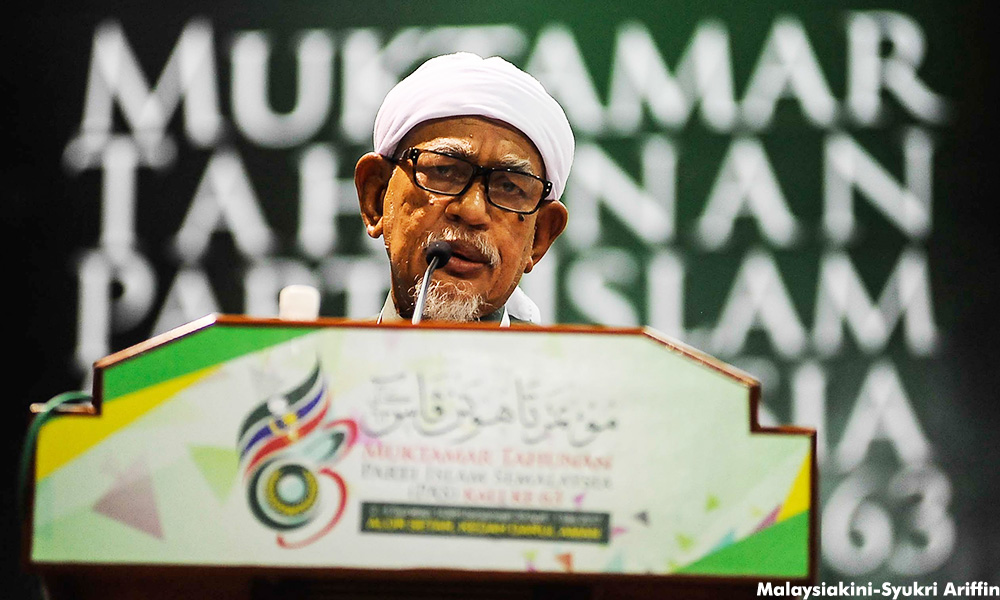
ANALYSIS | The 63rd PAS muktamar in Alor Setar, Kedah, ended yesterday, after five gruelling days of repetitive speeches and mudslinging against the party’s once long-time allies, DAP and PKR.
Faulty air-conditioners, followed by a freak storm that injured several delegates at the muktamar grounds in Kota Sarang Semut, added to the chaotic situation.
The Malaysiakini team shares some observations of the PAS event, which was attended by more than 1,000 delegates from across the country from April 27.
There was no doubt that the PAS leaders and delegates seemed to be on a general election mode. But are they ready to face the GE14 alone?
1. Hadi is the biggest winner
Throughout the entire muktamar, PAS president Abdul Hadi Awang was hailed as the supreme leader, who is second only to the Yang di-Pertuan Agong.
The delegates expressed their support for his policy speech and heaped praises on him as the most suitable ulama to advise the Agong.
Some delegates, including members of the PAS Non-Muslim Supporters Wing, want to see Hadi as the next prime minister.
Hadi, according to them, is morally upright, has great faith in Islam and has traits similar to the Agong.
2. But what about PAS?
Thrice, PAS delegates gave a resounding yes when asked if they agreed to the party cutting ties with PKR.
At first glance, the move may seem advantageous to BN and Umno, especially Prime Minister Najib Adul Razak.
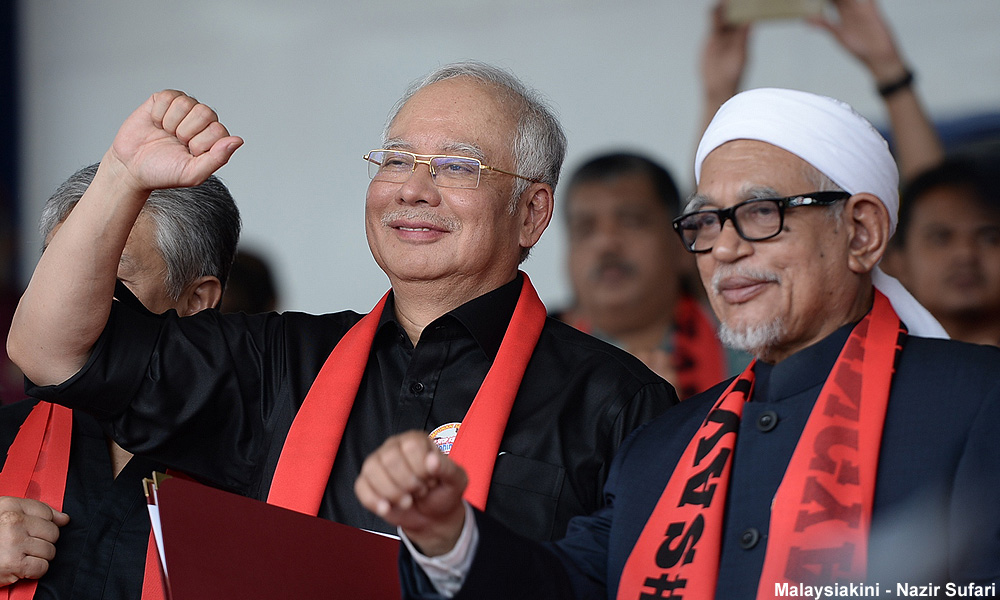 Najib is seen as the architect of the divorce between PAS and its allies, through his support for Hadi's move to table the amendments to the Syariah Courts (Criminal Jurisdiction) Act or Act 355.
Hadi expressed his gratitude to Najib during his closing speech at the muktamar.
However, PAS will now face the coming 14th polls alone.
It is still uncertain if the party's alliance with Ikatan in Gagasan Sejahtera, the so-called third bloc, would help keep the PAS votes.
Can PAS maintain its 14 parliamentary and 78 state seats, while fantasising about capturing five states and 40 parliamentary seats?
PAS appears to be confident, even though it must now face two major competitors - Parti Amanah Negara and Parti Pribumi Bersatu Malaysia - in this coming polls...
ANALYSIS The 63rd PAS muktamar in Alor Setar, Kedah, ended yesterday, after five gruelling days of repetitive speeches and mudslinging against the party’s once long-time allies, DAP and PKR.
Faulty air-conditioners, followed by a freak storm that injured several delegates at the muktamar grounds in Kota Sarang Semut, added to the chaotic situation.
The Malaysiakini team shares some observations of the PAS event, which was attended by more than 1,000 delegates from across the country from April 27.
There was no doubt that the PAS leaders and delegates seemed to be on a general election mode. But are they ready to face the GE14 alone?
1. Hadi is the biggest winner
Throughout the entire muktamar, PAS president Abdul Hadi Awang was hailed as the supreme leader, who is second only to the Yang di-Pertuan Agong.
The delegates expressed their support for his policy speech and heaped praises on him as the most suitable ulama to advise the Agong.
Some delegates, including members of the PAS Non-Muslim Supporters Wing, want to see Hadi as the next prime minister.
Hadi, according to them, is morally upright, has great faith in Islam and has traits similar to the Agong.
2. But what about PAS?
Thrice, PAS delegates gave a resounding yes when asked if they agreed to the party cutting ties with PKR.
At first glance, the move may seem advantageous to BN and Umno, especially Prime Minister Najib Adul Razak.
Najib is seen as the architect of the divorce between PAS and its allies, through his support for Hadi's move to table the amendments to the Syariah Courts (Criminal Jurisdiction) Act or Act 355.
Hadi expressed his gratitude to Najib during his closing speech at the muktamar.
However, PAS will now face the coming 14th polls alone.
It is still uncertain if the party's alliance with Ikatan in Gagasan Sejahtera, the so-called third bloc, would help keep the PAS votes.
Can PAS maintain its 14 parliamentary and 78 state seats, while fantasising about capturing five states and 40 parliamentary seats?
PAS appears to be confident, even though it must now face two major competitors - Parti Amanah Negara and Parti Pribumi Bersatu Malaysia - in this coming polls.
Since Amanah and Bersatu are in seat talks, either one would appear in three-cornered fights with PAS to capture the Malay ground. Who stands to gain from this?
Amanah is poised to split PAS votes, while Bersatu will lure disenchanted Umno supporters. With DAP backing either an Amanah, Bersatu or PKR candidate, where would that leave PAS?
3. Backdoor ties with Umno
Terengganu candidate Kamaruzzaman Abdullah denied there were “backdoor” dealings with Umno, as alleged by PAS’ detractors. However, the muktamar’s focus revealed otherwise.
There were several issues raised by the delegates against the BN government, including complaints about BR1M and GST, which failed to address the people’s economic woes.
PAS Muslimat (women’s) wing came out strongly to condemn Najib for his “false promises”, and his failure to improve the falling ringgit, but these were drowned by the loud noises against PKR, which dominated the five-day meeting.
Less emphasis on attacking BN but more salvos fired at Pakatan Harapan strengthened the perception that PAS has cosy ties with Umno.
4. PAS, the quarrelsome party (parti gaduh)
To some quarters PAS is labelled a “quarrelsome party”, for it has a history of breaking ties with its allies. Trust is an important factor in any relationship, including political cooperation. Can PAS be trusted in the future to ally with and cooperate with any party?
PAS’ divorce history included ending ties with the Alliance government (Umno, MCA and MIC) in 1974; with Berjasa, Parti Imam and Gerakan Bebas Bersatu Kelantan (1978); with Semangat 46 led by Gua Musang MP Tengku Razaleigh Hamzah (1995); with Barisan Alternatif (2004), DAP (2014) and PKR (2017). Who’s next?
To make matters worse, PAS showed its vindictiveness by inviting to the muktamar, PKR’s enemy, former Selangor menteri besar Khalid Ibrahim and DAP’s harshest critic, Parti Cinta Malaysia vice-president Huan Cheng Guan. The adage, “My enemy’s enemy is my friend” rang true here.
5. PAS, a bundle of contradictions
(a) PAS boasts that the party has a combination of professionals and clerics but it is obvious that throughout the five-day meeting, many who took the stage were from the ulama faction. This begs the question: where are the professionals?
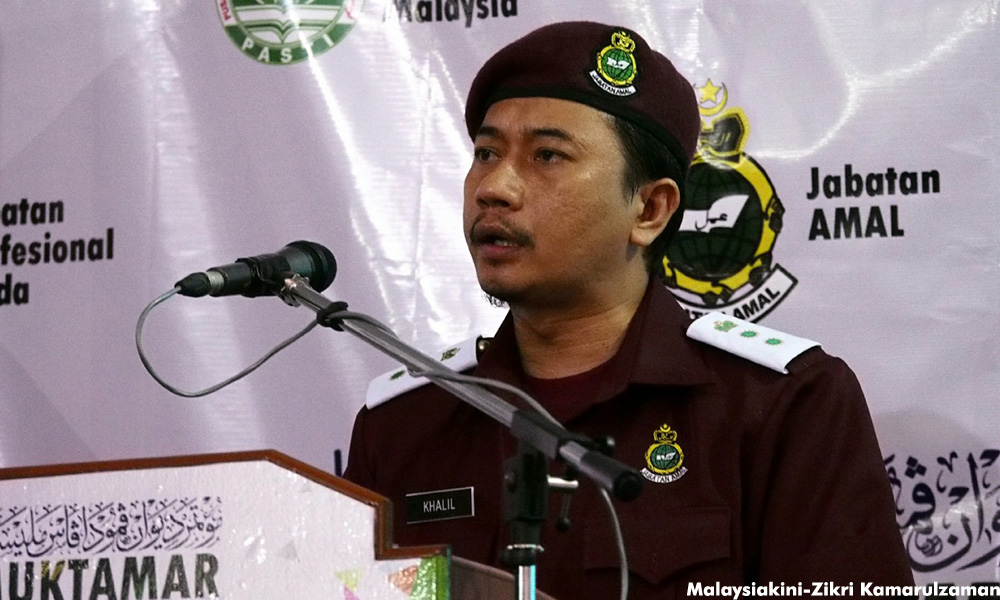 (b) PAS leaders have questioned the ill-effects of cronyism and nepotism in politics and business, but the party’s president and his son, the newly-minted Youth chief Muhammad Khalid Abdul Hadi (photo), lead the two top posts in PAS.
Father and son won the posts uncontested. Hadi insisted that he did not nominate Khalil or influence members to vote for him but perception is everything in politics.
What makes them different now from other so-called political dynasties of Umno (Abdul Razak Hussein-Najib Abdul Razak), DAP (Lim Kit Siang-Lim Guan Eng), PKR (Anwar Ibrahim-Wan Azizah Wan Ismail), Bersatu (Mahathir and Mukhriz Mahathir)?
(c) Throughout the muktamar, PAS leaders told their delegates, the party is ready to govern five states, and their president is ready to be PM, to lead the opposition or government.
But the PAS muktamar was rather disorganised.
From not preparing enough tags for reporters, to failing air-conditioners, poor toilet facilities and blackouts, the muktamar went on in a building that was still under construction.
It is learnt that the building in question has yet to obtain a certificate of fitness. If PAS cannot manage its own affairs, can it govern the country?
6. PAS reaches out to non-Muslims
PAS made an effort to lure non-Muslims into its fold as it tried not to be seen as only a Malay, Islamic party.
The party tried to make itself appealing to non-Muslims by opening the muktamar to the PAS Non-Muslim Supporters Wing (DHPP), which has 20,000 members.
DHPP members were given the opportunity to take the floor and address the delegates, with many cheering the wing’s support for Hadi and his version of Islamic governance.
PAS also tried to reach out further for non-Muslims when its National Unity Commission chief Dr Najihatussalehah Ahmad, asked leaders and members to learn more languages to attract new voters.
These included other efforts to maintain its link with non-Muslims, like organising dialogues with Christian leaders in Penang and Selangor.
It remains to be seen how PAS can overcome the “damage” done to the community’s earlier trust for the party, when Hadi insisted on tabling the amendments to Act 355 in the last Parliament sitting.


Are you sure you want to delete this comment?
This action cannot be undone.