


Constitution experts: Decision on Ting's disqualification is final
DAP's Pujut state assemblyperson Dr Ting Tiong Choon's disqualification for allegedly possessing an Australian citizenship has kicked up much political and legal controversy.
A check by Malaysiakini with the Federal Constitution and the Sarawak state constitution showed that there is a grey area in provisions with regards to dual citizenship.
According to the the Eight schedule of the Federal Constitution, a member of a legislative assembly shall be disqualified should this person have "voluntarily acquired citizenship of, or exercised rights of citizenship in, any country outside the Federation or has made a declaration of allegiance to any country outside the Federation"...
DAP's Pujut state assemblyperson Dr Ting Tiong Choon's disqualification for allegedly possessing an Australian citizenship has kicked up much political and legal controversy.
A check by Malaysiakini with the Federal Constitution and the Sarawak state constitution showed that there is a grey area in provisions with regards to dual citizenship.
According to the the Eight schedule of the Federal Constitution, a member of a legislative assembly shall be disqualified should this person have "voluntarily acquired citizenship of, or exercised rights of citizenship in, any country outside the Federation or has made a declaration of allegiance to any country outside the Federation".
The Sarawak state constitution also has a similar provision under section 17(1) (g), and stated under section (19) that: "If any question arises whether the Speaker or a member of the Dewan Undangan Negeri has ceased to be qualified for the appointment or election as such, the decision of the Dewan shall be taken and shall be final.”
However, the section regarding dual citizenship in both the constitutions seem to be rather vague, especially in the case of Ting, in which he had claimed he had renounced his Australian citizenship in April last year.
The law does not elaborate whether a member of an assembly should be disqualified if the person has renounced the foreign citizenship. Neither does it stipulate whether a person will not be qualified as an elected representative, should he/she had acquired a foreign citizenship.
Nevertheless, constitution experts noted that Ting's disqualification is final.
"Article 19(1) of the Sarawak state constitution states that any question relating to the disqualification is determined by the Dewan itself, and the decision of the Dewan is final.
"Every state constitution has a similar provision on disqualification and it is also contained in the Federal Constitution," lawyer Syahredzan Johan told Malaysiakini.
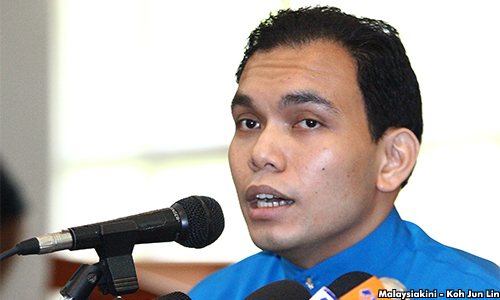 It is believed that the member of the assembly are people who "act in good faith", hence the constitution was set up in such a way that gives much power to the assembly, he added.
"That is why these provisions refer to the 'wisdom' of the members. Members are expected and even demanded to act fairly and not pass judgement without proof," he said.
Another constitution expert, Abdul Aziz Bari, concurred with Syahredzan, pointing out once the assembly has decided on the matter, it has reached a point of no return.
"The decision of the DUN is final and not subject to review in court," he told Malaysiakini.
There are precedences of elected representatives being disqualified after they have been sworn in.
Prior to the 1995 general election, DAP Bukit Bintang candidate Wee Chee Keong was fined RM7,000 in a civil suit for contempt of court, however, his nomination was still accepted by the election officer and he later won the election.
Following this, Lee Chong Meng, the MCA candidate who was defeated by Wee in the election, filed a case in court against Wee's qualification as an MP, citing Wee has been fined RM7,000.
Eventually, Wee was disqualified by the court in a controversial ruling and Lee, who had the second highest votes in the election, automatically became Bukit Bintang MP.
However, it is noteworthy that Wee's election was nullified by court whereas Ting was disqualified by the assembly, the first such case in history.
It is still not known whether Pujut will see a by-election coming, or only candidates who contested the seat in the last state election will be eligible to contest in a re-election.
During the Sarawak state election last year, Ting won the Pujut seat in a four-cornered fight, with a majority of 1,759 votes against BN’s Hii King Chiong and independent candidates Jofri Jaraiee and Fong Pau Teck.
Hii then filed an election petition against Ting's victory, but the Election Court dismissed it on technical grounds.
Yesterday, Sarawak International Trade and e-Commerce Minister Wong Soon Koh (BN-Bawang Assan) moved a motion against Ting for allegedly holding an Australian citizenship.
The state assembly voted 70-10 in favour of Ting's removal.
At a press conference after the decision, Ting said he had renounced his Australian citizenship after he was recruited by Talent Corporation Malaysia (TalentCorp) to return to Malaysia.


Report this comment
Are you sure you want to delete this comment?
This action cannot be undone.