



Harapan: Najib's Indian blueprint a damning BN report card
The Malaysian Indian Blueprint is a damning report of Indian marginalisation and an indictment of the failure of BN and MIC to address the structural problems faced by the community in more than 60 years.
This is according to Pakatan Harapan leaders who studied the 168-page blueprint that was launched by Prime Minister Najib Abdul Razak on April 24.
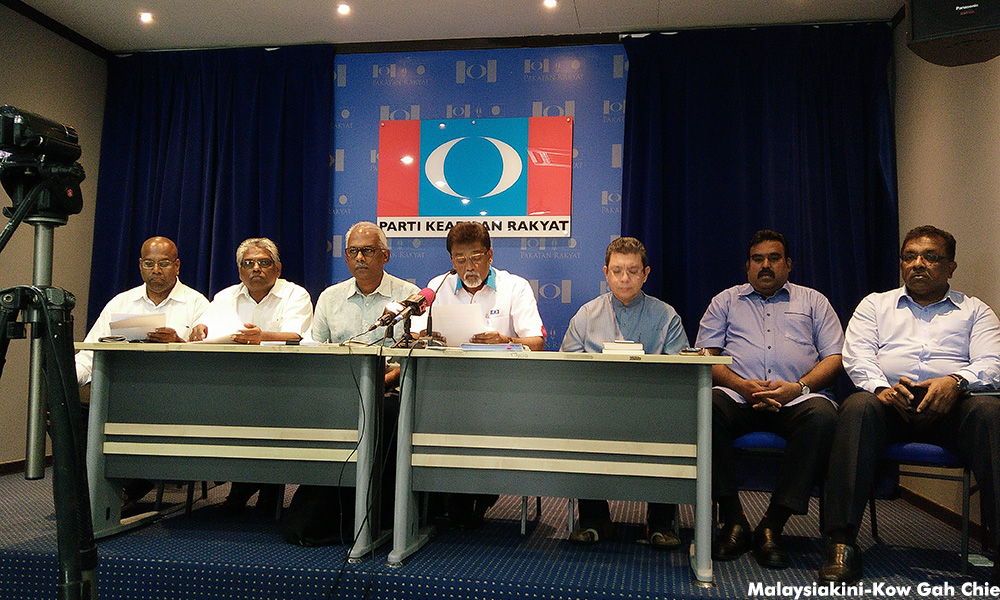
In a joint press conference today, PKR vice-president Dr Xavier Jayakumar explained the numerous handicaps faced by the bottom 40 percent of Indians (IB40), which included...
The Malaysian Indian Blueprint is a damning report of Indian marginalisation and an indictment of the failure of BN and MIC to address the structural problems faced by the community in more than 60 years.
This is according to Pakatan Harapan leaders who studied the 168-page blueprint that was launched by Prime Minister Najib Abdul Razak on April 24.
In a joint press conference today, PKR vice-president Dr Xavier Jayakumar explained the numerous handicaps faced by the bottom 40 percent of Indians (IB40), which included:
- IB40 receives a meagre 17 percent of the total income;
- Only three percent of IB40 own houses;
- 83 percent of Indian households have only three months of savings;
- 40 percent of Indian youths were unemployed in 2015;
- 46 percent of Indian students failed in the UPSR examination in 2015;
- Only four percent of of Indian students were accepted into public universities in 2014/2015; and
- 25,000 stateless Indians are excluded from education, housing and social welfare programmes.
"The blueprint did not address the core problems that had marginalised, and continue to marginalise the poor," Xavier said.
"The blueprint fails to address the root cause of income inequality, which is an economic growth model fuelled by cheap, docile labour. Poverty will not be eradicated if there is no political will to address income disparity.
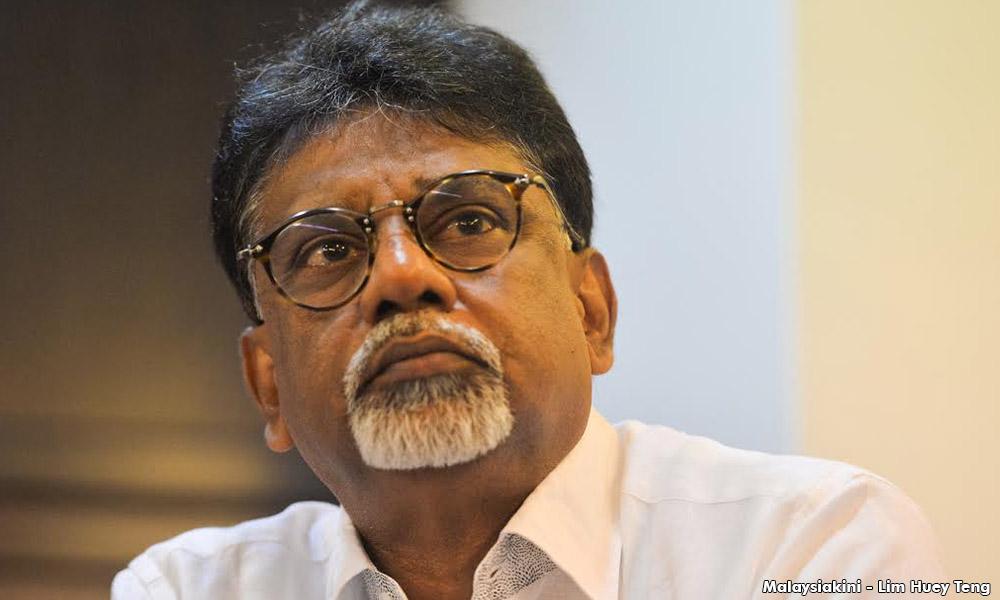 "To overcome the income equality, Harapan calls for an increase in real wages for the B40 (bottom 40 percent income group) across all races," Xavier (photo) said in reading out the joint statement that was also endorsed by DAP's Klang MP Charles Santiago and Amanah secretary-general Mohd Anwar Tahir.
Parti Pribumi Bersatu Malaysia (Bersatu), which officially joined Harapan recently was not present at the press conference.
Asked about this, Xavier simply requested the media to direct the question to Bersatu.
Charles noted that similar inequality of income also affected the B40 in the Malay and Chinese communities.
"The solution is to increase their wages across the board but the blueprint did not factor the most critical point.
"The blueprint cannot solve the Indian problems. It has to make sure the government is committed to high-wage and high-skill policies. The chances of B40 to move up to middle class or top 20 are very, very low," Charles added.
Why can't it be implemented now?
Elaborating further, Xavier said the government took two years to prepare the blueprint, from 2015, and will take another two years from 2017 to roll out the 10-year plan, and to implement it only from 2019.
"They have to find 58 people to form a working committee, which they have not done yet. Only in 2019, will they start the programme. The question is, why can't it be implemented immediately?" he asked.
Xavier also pointed out that SEED, a flagship project under the blueprint, would not be able to help the IB40 as the group would not have access to secure the loan.
"The blueprint claims to have assisted 29,115 entrepreneurs in securing loans of RM1.2 billion, largely from commercial banks, but directed toward the top 20 and middle 40," he said.
"Many Indian entrepreneurs in the M40 and B40 do not have access to funds as they do not qualify for loans from these banks. As a result, they are unable to compete in the marketplace and are forced to turn to moneylenders or Ah Long," he said.
Xavier noted that the government needed to iron out the target timeline under the blueprint, just like the education blueprint.
He said Harapan, if it comes to power in the next general election, will resolve the issue of 25,000 stateless Indians within six months, instead of 10 years as pledged by Najib.
"Harapan's manifesto will accommodate our plans for the Indian community," Xavier added.
Najib pledged hundred of millions of ringgit for the Indian community, including the RM40 million for higher education assistance, RM500 million to set up a revolving fund to provide loans to ethnic Indian entrepreneurs and RM500 million under Permodalan Nasional Bhd targeting the B40 in the Indian community.
The other measures in the 10-year blueprint include:
- Increasing Indian student enrolment in public higher learning institutions by at least seven percent;
- Targeting seven percent Indian participation in the civil service by 2026; and
- A special clearance system to grant citizenship to Indians who were born in Malaysia before independence.


Are you sure you want to delete this comment?
This action cannot be undone.