


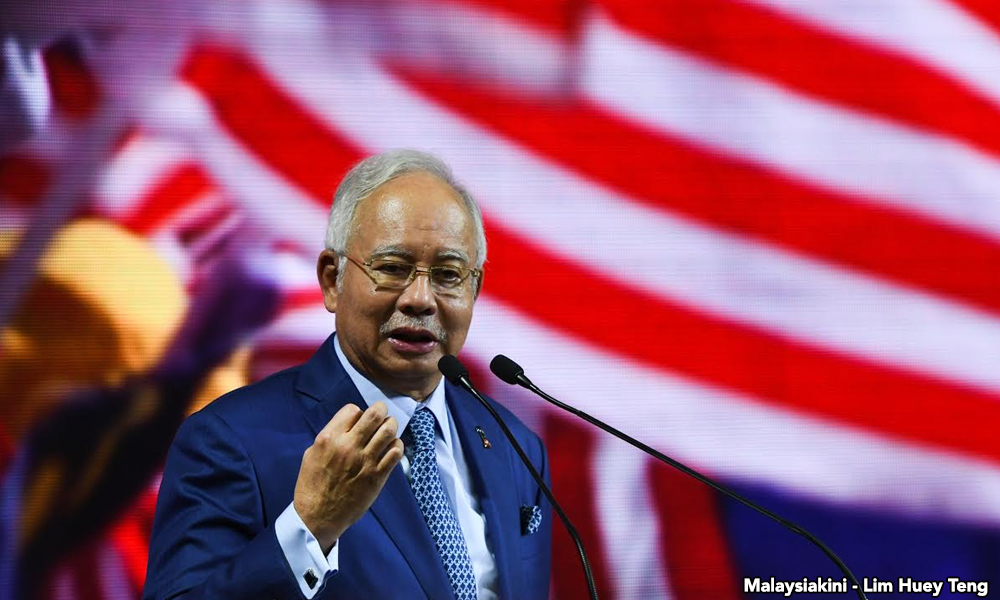

Your enemy is our enemy too, Najib tells Trump
Prime Minister Najib Abdul Razak has reaffirmed that Malaysia and the United States share a common battle against religious extremists linked to terror attacks launched in the name of Islam.
In an opinion piece published by The Hill, a US-daily newspaper covering its Congress and local politics, Najib said shared efforts between Malaysia and US against violent extremism is the best example of its long-standing relationship.
"There has, so far, been only one successful Daesh-linked attack in Malaysia (and, thankfully, no fatalities), but that has not been for want of trying.
"Your enemy - those who blaspheme against the religion of a majority of Malaysians by claiming their terrorism is Islamic - is our enemy, too," said Najib, who is slated to meet with President Donald Trump at the White House in Washington later today...
Prime Minister Najib Abdul Razak has reaffirmed that Malaysia and the United States share a common battle against religious extremists linked to terror attacks launched in the name of Islam.
In an opinion piece published by The Hill, a US-daily newspaper covering its Congress and local politics, Najib said shared efforts between Malaysia and US against violent extremism is the best example of its long-standing relationship.
"There has, so far, been only one successful Daesh-linked attack in Malaysia (and, thankfully, no fatalities), but that has not been for want of trying.
"Your enemy - those who blaspheme against the religion of a majority of Malaysians by claiming their terrorism is Islamic - is our enemy, too," said Najib, who is slated to meet with President Donald Trump at the White House in Washington later today.
Najib, who noted how the Sept 11 attacks had changed the world's perception on terrorism, said America has since suffered further attacks on its soil that were inspired by the same false and poisonous ideology.
At the same time, he also recounted Malaysia's efforts to address the threat of Islamic State in Iraq and Syria (ISIS) or also known as Daesh - through the promotion of moderation, and through a deradicalisation programme that recorded a 90 percent success rate.
"I am proud to say that the Royal Malaysian Police has thwarted at least 14 major terrorist attacks since 2012.
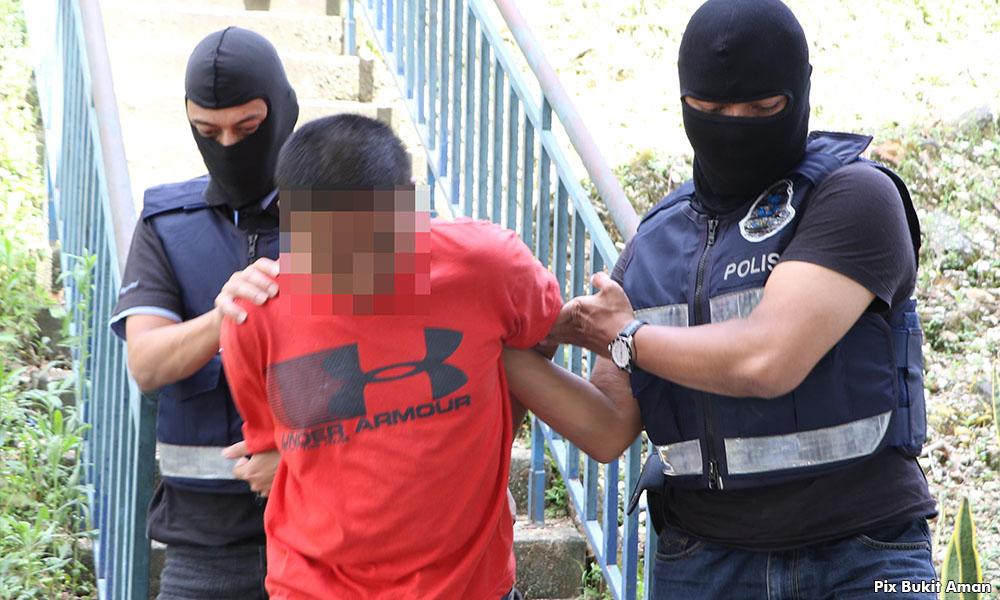
"And we have fought this through being a partner in the US-led global coalition to defeat Daesh, and through the strategic dialogue between our Ministry of Defence and the Pentagon," Najib wrote.
"Rest assured, Malaysia will always stand shoulder-to-shoulder with America on this vital mission to eliminate a terror group whose acts sicken all of civilised humanity."
Aside from the war against terror, Najib also reiterated Malaysia's commitment to strengthen its 60 years of bilateral ties with the US in areas of trade, investments, and security.
"If America wishes to find a partner for peace, for prosperity and for security in the coming decades of the 21st century, it will find a staunch and steadfast friend in Malaysia.
"Here’s to the next 60 years," he said.
In the days leading up to Najib's arrival, several US dailies, including The Wall Street Journal (WSJ), have published articles critical of both Najib's and Trump's administrations.
 In an opinion piece in The Washington Post, PKR vice-president Nurul Izzah Anwar (photo) said the main agenda for discussion should be on Umno's alleged support of extremist groups in Malaysia that has contributed to mounting racial-religious tension.
"Any conversation with a purported partner against extremist violence who fails to address these concerns at home is pointless," said Nurul Izzah who also highlighted various alleged abuses of anti-terror laws to stifle the government's critics.
As such, she urged Trump to use his existing rapport as Najib's former golfing buddy to deliver a message that Malaysia must first address its own domestic issues before seeking to strengthen its foreign commitments against extremism.
"To start, Najib should immediately cease persecution of journalists and opposition leaders, and release all political prisoners, including my father," she said in reference to jailed PKR de facto leader Anwar Ibrahim.
"Trump must also make clear that the United States does not tolerate partners who harbour and protect terrorists, much less partners who actively encourage such behaviours.
"Without reforms, the Malaysian government is not a reliable partner on counterterrorism, international security or economic development," Nurul Izzah said in her piece, adding that only a clear message followed by a strong action would transform Malaysia from a liability to a credible ally.
'Trump welcomes abusive leaders'
Global watchdog Human Rights Watch, meanwhile, pointed out that Najib will be joining Trump's long list of "abusive leaders" whom he had welcomed since taking office in January.
"Members of Congress, who will also be meeting Najib, should communicate clearly to Najib that Trump’s embrace does not signal general US disregard of the human rights violations he’s committed to saving his own skin and political career," said HRW Asia advocacy director John Sifton.
Contrary to Najib's declaration that free speech is thriving in Malaysia, Sifton highlighted the government's crackdown on dozens of opposition politicians and activists who were charged with sedition or other criminal offences.
"The kind of Southeast Asian partner that the United States needs to help counter terrorism and sectarian violence in the region is not one that jails its critics and promotes religious intolerance.
"Congress should be telling the Trump administration that Malaysia is only valuable as a US partner if it respects the rights of its own citizens, embraces both political discourse and dissent and protects religious diversity," Sifton said.
He also echoed concerns over Najib's alleged use of religion for political purposes, which encouraged the rise of religious intolerance in Malaysia by promoting a "pro-Islamic" agenda that appealed to conservative Malay Muslim voters.
Other members of the Malaysian delegation in the US include Foreign Minister Anifah Aman, International Trade and Industry Minister Mustapa Mohamed, Women, Family and Community Development Minister Rohani Abdul Karim, Malaysian Ambassador to the United States Zulhasnan Rafique and Chief Secretary to the Government Ali Hamsa.


Are you sure you want to delete this comment?
This action cannot be undone.