


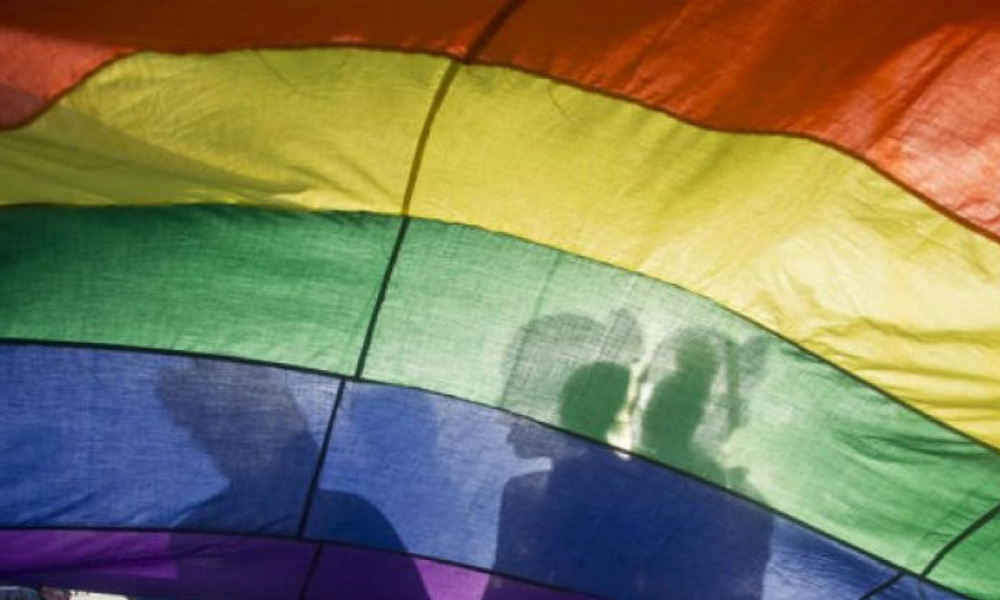

After 'gay party' furore, LGBT community prefers to lie low
FEATURE | Two weeks ago, the authorities reaffirmed that the Lesbian, Gay, Bisexual and Transgender (LGBT) community is not allowed to organise a party - at least not publicly - by promising to clamp down on a so-called "gay-friendly" event in Kuala Lumpur.
News of the purported event first made rounds on social media when Ikatan Muslimin Malaysia (Isma) published an article on its website claiming that a "White Party BKK Warm Up" would be held in Kuala Lumpur on Sept 30.
The event was supposed to be a prelude to "White Party Bangkok" - a four-day end-of-year event in the Thai capital, which is reportedly the biggest annual gay music festival in Asia.
According to the official website for the event, a total of five parties have been scheduled for the New Year's Eve weekend later this year.
The Kuala Lumpur-leg was advertised through social media and was said to be organised by a local events promoter. However, when contacted previously, the firm told Malaysiakini it had nothing to do with the event.
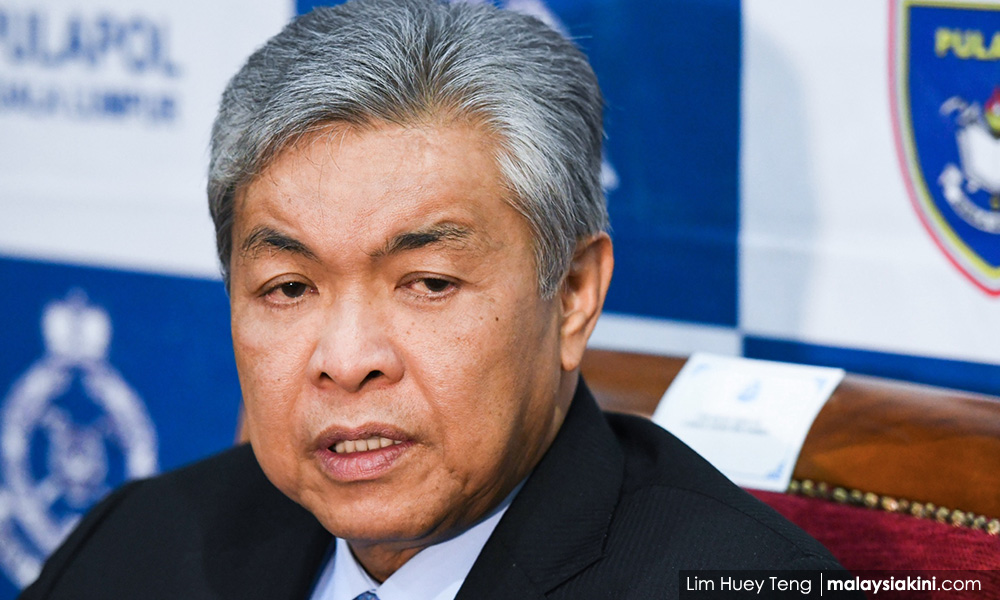
Nevertheless, the government responded by saying any gay party would not take place in Malaysia. Deputy Prime Minister Ahmad Zahid Hamidi (photo) also branded the event as an "illegal gathering".
The Immigration Department, on the other hand, vowed to deny entry to participants and organisers flying in for the event by issuing a 'Not to Land' (NTL) notice under Section 8 of the Immigration Act 1959.
The authorities' hostile attitude towards the LGBT community appears to reflect a Pew Research Center survey done in 2013, which showed that 86 percent of Malaysians believe homosexuality should not be accepted by society.
How would or should the local LGBT community react to such hostility? To find out, Malaysiakini spoke to patrons at the venue of the purported event and other "gay-friendly" nightspots over the weekend...
FEATURE | Two weeks ago, the authorities reaffirmed that the Lesbian, Gay, Bisexual and Transgender (LGBT) community is not allowed to organise a party - at least not publicly - by promising to clamp down on a so-called "gay-friendly" event in Kuala Lumpur.
News of the purported event first made rounds on social media when Ikatan Muslimin Malaysia (Isma) published an article on its website claiming that a "White Party BKK Warm Up" would be held in Kuala Lumpur on Sept 30.
The event was supposed to be a prelude to "White Party Bangkok" - a four-day end-of-year event in the Thai capital, which is reportedly the biggest annual gay music festival in Asia.
According to the official website for the event, a total of five parties have been scheduled for the New Year's Eve weekend later this year.
The Kuala Lumpur-leg was advertised through social media and was said to be organised by a local events promoter. However, when contacted previously, the firm told Malaysiakini it had nothing to do with the event.
Nevertheless, the government responded by saying any gay party would not take place in Malaysia. Deputy Prime Minister Ahmad Zahid Hamidi (photo) also branded the event as an "illegal gathering".
The Immigration Department, on the other hand, vowed to deny entry to participants and organisers flying in for the event by issuing a 'Not to Land' (NTL) notice under Section 8 of the Immigration Act 1959.
The authorities' hostile attitude towards the LGBT community appears to reflect a Pew Research Center survey done in 2013, which showed that 86 percent of Malaysians believe homosexuality should not be accepted by society.
How would or should the local LGBT community react to such hostility? To find out, Malaysiakini spoke to patrons at the venue of the purported event and other "gay-friendly" nightspots over the weekend.
'Gay party' expected to carry on
When Malaysiakini visited the purported party venue last Saturday night, it appeared to be business as usual for a normal cocktail bar.
While several police personnel and a patrol car were seen in the vicinity, the night moved on peacefully, with no interruptions.
Most local patrons at the venue that Malaysiakini spoke to identified themselves as gay or sympathetic to the LGBT community and expressed disappointment that the advertised "gay party" was not taking place.
Many of them were aware of the ban but still showed up, hoping that the event would proceed.
"I didn't expect for the party to actually be banned, but I did think it would still carry on. That's why I came tonight," said one regular patron, Lee, 25, who did not wish to have his full name published.
A number of other patrons assumed that the party would continue in the shadows, and found the ban to be "ridiculous".
"It's not like we've never had gatherings and parties for our community in the past, you know.
"And I'm sure the government is aware of gay-friendly establishments that host functions like a 'gay party', but they just prefer to slide it under the carpet and let us do our own thing, in hiding," Lee explained.
Meanwhile, Adam, 32, another regular who described himself as a bisexual, believed that it was very unlikely for the police to raid the venue, even if the event proceeded as planned.
"This is quite a classy place, and I don't think the police would storm this place if the 'gay party' was actually on.
"The government may not accept us, but they sure don't translate that (into action) here. I think you could call it a love-hate relationship we have; we are here, they are up there, but we get along quite fine," explained Adam.
Visitors: KL is 'pretty gay'
On the other hand, first-timers and foreign patrons at the club were shocked to hear about the ban.
"I've never heard of this programme, or even the 'famous' Bangkok one, but, goodness, isn't Kuala Lumpur pretty gay anyway?
"I mean, we are sitting in a gay-friendly bar, aren't we? Not something you expect to see in a so-called 'anti-gay country'.
"I also visited... (this place) the other day, and I am quite sure I saw transgender people manning the shop lots," explained Sheila, a 52-year old Maldivian businesswoman on holiday in Malaysia.
While Sheila seemed to describe mak nyah, the Malay term for male-to-female transgenders, she insisted the people she saw were from Thailand or the Philippines.
"Of course, I haven't really been in Malaysia for quite some time yet, so they may have been local. They looked quite content with their lives though," she explained.
Despite their shock, other nightspot regulars claimed that there were many LGBT-friendly establishments in the country, which made finding a hotel or bar that catered to just gay men or lesbian women relatively easy.
"Don't take my word for it, but finding 'massage parlours' for men like me... is a piece of cake.
"If you've seen the things that I've seen in this country, you'll understand why I keep coming back", said another patron, Mark, 40, a US citizen who said he is a homosexual.
Another foreigner, who had recently visited the northern part of Peninsular Malaysia, concurred that the country was in some ways accommodating to homosexuals.
"The food (up north) was great, and greater still were the Asian men," he said.
The cost of living under the radar
While foreigners may have a decent impression of Malaysia, locals at another "gay-friendly" establishment in Bangsar complained about having to live life in the shadows.
Suji, 24, a bisexual law student, said the authorities have bigger problems to worry about than gay parties and should let the people be.
"No one invited you (initiators and supporters of the ban) to the party anyway, so why are you making such a fuss about it? Let the gays have their party, and you lot... worry about the actual problems we face in Malaysia," said Suji.
Ng, 26, who identified herself as a lesbian, said even if society and the authorities were to oppress the LGBT community, they would persevere.
"Even if we don't have the support of the government, we will still carry on and progress, in our own little ways. So I don't really care for the ban... clearly, they haven't heard of our "gayer" events," she said.
While Suji and Ng were proud to give their views on the matter, others shied away and refused to provide their names. Many looked terrified at the thought of their sexual identification being listed, even if they were openly gay to their friends.
"I don't think I'll ever come out publicly on this issue. Not in this country, that's for sure," said Ng.
Although there are those who are unhappy with the lack of acceptance, some interviewees were unfazed by the way things were going in the country.
"If the government banned Despacito for being sexually suggestive, instead of hundreds of other similar songs, perhaps we could benefit from a somewhat 'slow' group of authorities.
"I mean, they only found out about this 'gay party' when it was publicised, right? So if we keep things quiet and under the radar, maybe that could be the way to go," said Ng, with a shrug.
Earlier this year, Malaysia's stand on LGBT issues made international headlines when the local release of Disney's live-action remake of "Beauty and the Beast" was postponed, and later banned from being screened, if a request for a minor cut involving a 'gay' scene would not be removed.
The four-minute-38-second long scene in question featured a song that contained three seconds of purported sexually suggestive lyrics performed by Le Fou, who mentioned he had received "hickeys" from a male. The movie was eventually screened in local theatres, without cuts.
VINODH PILLAI is a communications major and a former Malaysiakini intern.


Are you sure you want to delete this comment?
This action cannot be undone.