



The ‘froth’ over beer festivals
KINIGUIDE | Celebrations involving alcohol have taken centre stage in public discussions after the unprecedented cancellation of a beer festival and subsequent issues with other similar events this month.
A public outcry over the “Better Beer Festival 2017” in September, which was supposed to be held in Kuala Lumpur this month, eventually led to the Kuala Lumpur City Hall (DBKL) refusing to greenlight the event, citing political sensitivities.
Inspector-general of police (IGP) Mohamad Fuzi Harun later revealed that the police objected to the festival because they received information that militants were planning to sabotage the event.
That was not to be the end of the debate over the matter as this month heralded the arrival of Oktoberfest celebrations.
Though these celebrations were not marketed explicitly as Oktoberfest, the whiff of alcohol being served at these events resulted in the authorities delaying their approval and even refusal by the local councils.
Malaysiakini takes a gulp of the controversy and the uproar it has caused.
What is ‘Better Beer Festival’ and ‘Oktoberfest’?
According to its website, the Better Beer Festival, which would have been held for the sixth time this year, is the “biggest celebration of the craft beer revolution in Malaysia”, aimed at promoting smaller breweries.
It had promised to showcase over 250 different craft beers by 43 independent breweries across 12 countries.
Craft beer, as defined by the Brewer’s Association in Colorado, US, is beer made by small, independent and traditional brewers.
The Oktoberfest is a beer festival and funfair which began in Munich, Germany in 1810, where it is now considered an important part of Bavarian culture.
Since then, it has inspired similar events around the world, including the US, Canada and China.
In Malaysia, Oktoberfest events have been held throughout the country for years, with the Malaysian-German Society (MGS) claiming that it has been their tradition to hold the festival since 1973.
Notably, these events involving alcohol usually state in their promotional material that the events were strictly for non-Muslims and those over 21 years old only.
So, other than the ‘Better Beer Festival’, what other events involving alcohol have landed in hot water this year...
KINIGUIDE | Celebrations involving alcohol have taken centre stage in public discussions after the unprecedented cancellation of a beer festival and subsequent issues with other similar events this month.
A public outcry over the “Better Beer Festival 2017” in September, which was supposed to be held in Kuala Lumpur this month, eventually led to the Kuala Lumpur City Hall (DBKL) refusing to greenlight the event, citing political sensitivities.
Inspector-general of police (IGP) Mohamad Fuzi Harun later revealed that the police objected to the festival because they received information that militants were planning to sabotage the event.
That was not to be the end of the debate over the matter as this month heralded the arrival of Oktoberfest celebrations.
Though these celebrations were not marketed explicitly as Oktoberfest, the whiff of alcohol being served at these events resulted in the authorities delaying their approval and even refusal by the local councils.
Malaysiakini takes a gulp of the controversy and the uproar it has caused.
What is ‘Better Beer Festival’ and ‘Oktoberfest’?
According to its website, the Better Beer Festival, which would have been held for the sixth time this year, is the “biggest celebration of the craft beer revolution in Malaysia”, aimed at promoting smaller breweries.
It had promised to showcase over 250 different craft beers by 43 independent breweries across 12 countries.
Craft beer, as defined by the Brewer’s Association in Colorado, US, is beer made by small, independent and traditional brewers.
The Oktoberfest is a beer festival and funfair which began in Munich, Germany in 1810, where it is now considered an important part of Bavarian culture.
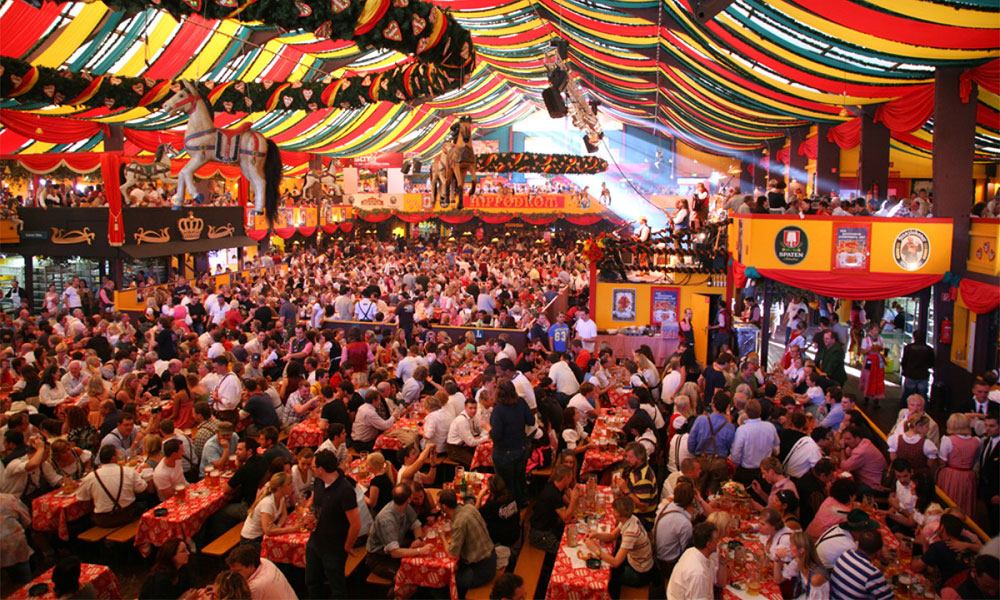
Since then, it has inspired similar events around the world, including the US, Canada and China.
In Malaysia, Oktoberfest events have been held throughout the country for years, with the Malaysian-German Society (MGS) claiming that it has been their tradition to hold the festival since 1973.
Notably, these events involving alcohol usually state in their promotional material that the events were strictly for non-Muslims and those over 21 years old only.
So, other than the ‘Better Beer Festival’, what other events involving alcohol have landed in hot water this year?
A “Bavarian Festival”, slated to be held at 1 Utama Shopping Centre early this month, appears to have had its permit application rejected by the Petaling Jaya mayor, after district police indicated the event would be a target for militants.
While it is not specified that the Bavarian Festival is an Oktoberfest celebration, 1 Utama has held Oktoberfest events every year over the past 12 years.
According to the Facebook event page for 1 Utama’s Oktoberfest 2016, its celebrations last year included German cuisine and beverages, live shows from German entertainers, games, activities and Oktoberfest merchandise.
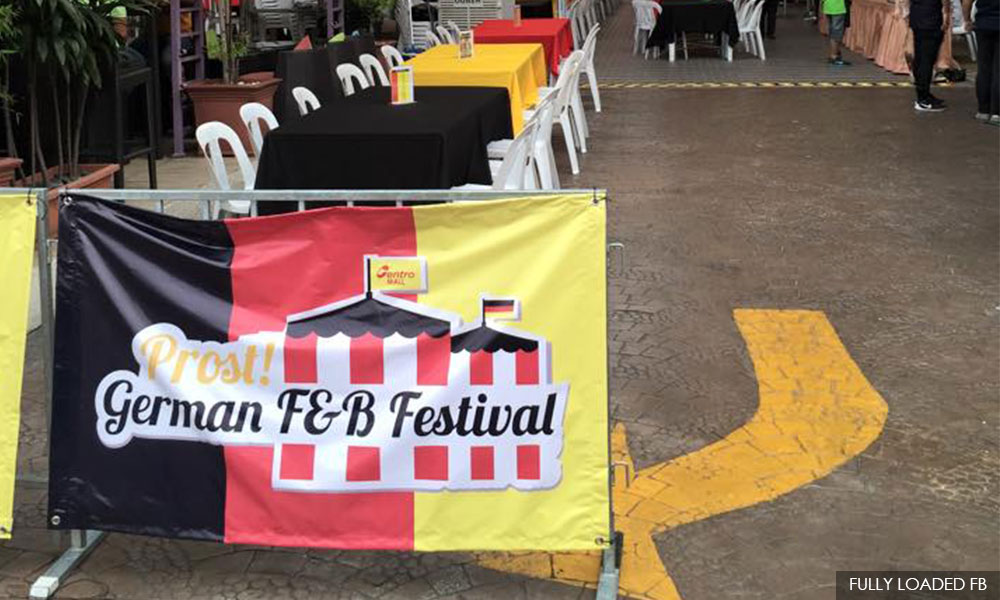
Meanwhile, the fate of the “German F&B Festival” in a mall in Klang hangs in the balance as they await advice from the authorities on how to proceed.
On the other hand, it was reported that the Oktoberfest celebration in Penang, which is organised by MGS, will proceed as planned.
It will serve non-alcoholic beverages alongside their alcoholic counterpart, to address drink driving concerns and to keep up with the current trend in Germany, said MGS Oktoberfest chairperson Dr Wolfgang Mark.
Oktoberfest celebrations will also be held in Johor, where the state’s Menteri Besar Mohamed Khaled Nordin had called for the issue not to be played up.
It has also been reported that Sarawak and Malacca will allow Oktoberfest celebrations to be held, which has been the case previously.
How did this furore over beer start?
On Sept 11 this year, PAS central committee member Riduan Mohd Nor highlighted the “Better Beer Festival 2017”, saying that the event involved “vice activities” and would lead to hatred from the society and reprisals from extremists.
He had warned that if this event was a success, it might lead to even bigger events in the future, adding that he was “unwilling to allow Kuala Lumpur to be known to the world as Asia’s biggest vice centre.”
Also, although the event is geared towards non-Muslims, he said there was no guarantee that Muslims would not participate in it.
There was also no guarantee that the event would not lead to crime, free sex, rape and other vices, he warned.
This led to an uproar against the beer festival, with many Muslims saying that holding a public celebration of alcohol offends their religious sensibilities.
The DBKL subsequently refused to grant approval for the event, causing the event to be cancelled and in turn, leading to outrage from another group who said the cancellation was a form of infringement of minority rights.
The debate over this issue rages on as Oktoberfest arrives in Malaysia.
Was there any public outcry over previous celebrations?
As mentioned earlier, Oktoberfest events and festivals involving alcohol have been held in Malaysia for years.
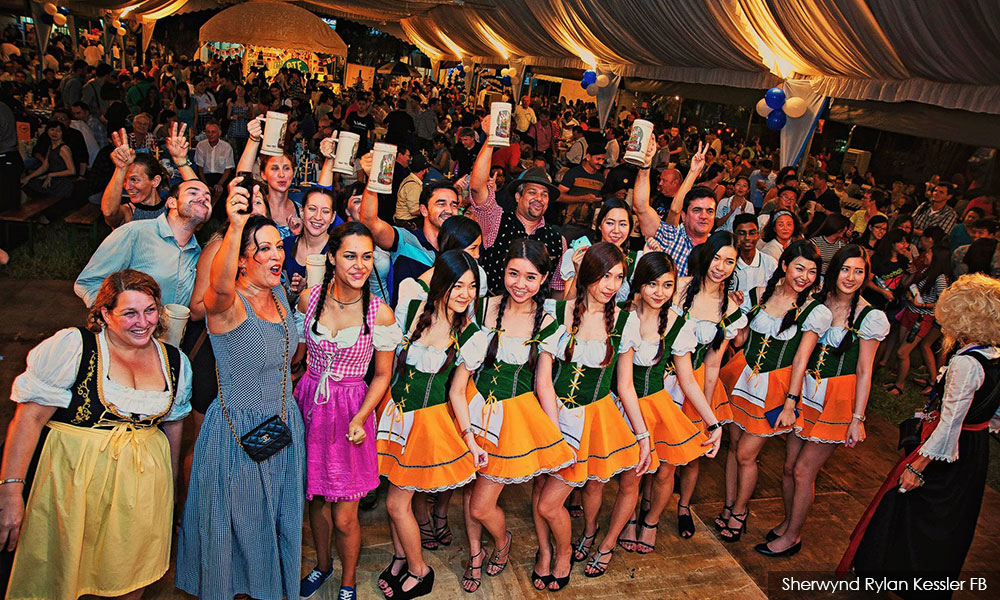
These previous events were not, however, free of controversy either.
In 2014, the Oktoberfest event by Carlsberg was originally meant to be held outside of 1 Utama.
After protests and objections from PAS, the event was moved to an indoor car park, purportedly to comply with regulations.
At the time, PAS had said that the event “challenges the sensitivities of Muslims.”
The Islamic party also rained criticism on another Oktoberfest event in Malacca in that same year.
However, PAS president Abdul Hadi Awang was reported at that time as saying that discomfort over some non-Muslim practices does not allow Muslims to bar others from practising their culture.
In response to a question on Oktoberfest, he said that while alcohol consumption is forbidden for Muslims, non-Muslims should not be restricted from doing so.
This instalment of KiniGuide was prepared by Geraldine Tong.


Report this comment
Are you sure you want to delete this comment?
This action cannot be undone.