



Harapan could help reset terms of tax debate
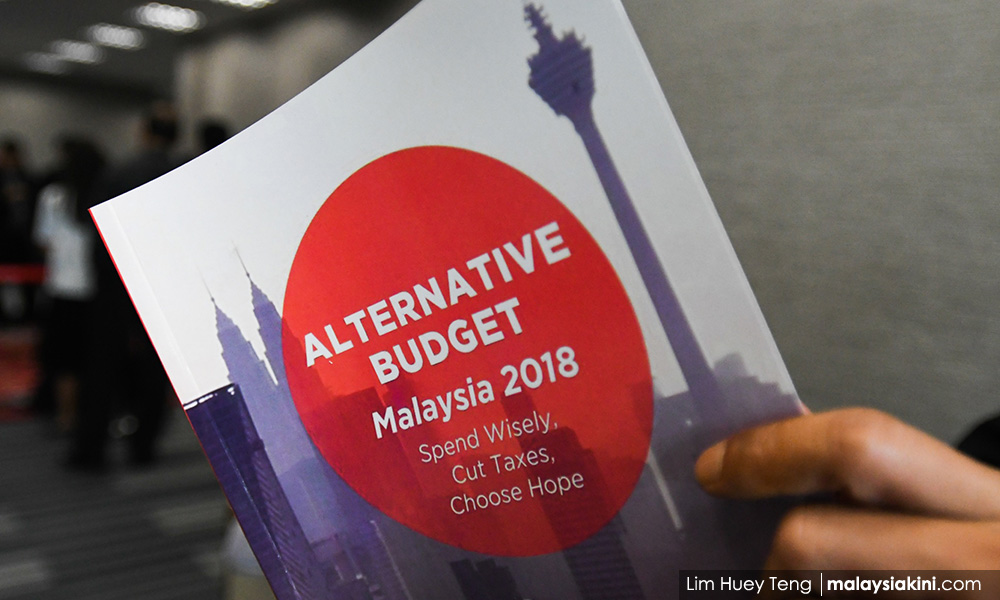
COMMENT | Pakatan Harapan’s newly-released alternative budget doubles down on abolishing the goods and services tax (GST). The usual arguments about economic boosts versus budget shortfalls followed. But the GST debate hides one truth: the tax debate is stalling in Malaysia.
Tax cuts are usually an easy (some say populist) sell to voters. Who doesn’t want to keep a bigger slice of their paycheque pie? However, they inevitably trigger responses about making up lost revenue, or cutting government expenditure to match.
The critics have a point. While the alternative budget doesn’t make the old (and false) argument that tax cuts pay for themselves, it suggests that leaving RM25.5 billion with consumers will net RM7.7 billion in extra revenue from consumers spending that extra money. (The rest of the shortfall, Harapan says, will be covered by cuts to the PM’s Department budget and savings from wastage and graft elimination).
In other words, they say the GST cut will pay for about 30% of itself. Whether this is a reasonable estimate depends on an understanding of how the many moving parts of the economy will interact with a tax cut - something that even economists cannot agree on.
What about raising taxes (on the rich)? A progressive taxation system that takes more from Malaysians who can afford it to help the neediest in the country, could be a strong equalising force for those stuck in poverty traps, disadvantaged by socioeconomic circumstances and held back by discrimination. Malaysia already has higher taxes for higher earners - but can our wealthiest offer more?
The Harapan budget is disappointingly non-committal here. The coalition promises to ‘look into’ other progressive taxation policies like a higher tax rate on the richest 10 percent, a 10 percent capital gains tax and a 10 percent inheritance tax on assets worth over RM10 million. The rich shouldn’t sweat over this 10-10-10 idea, though - these will only be a "last resort."
Obviously, higher taxes are a tough sell anywhere. BN crony capitalists like their "hard-earned" income, thank you very much. Neither would wealthy Harapan supporters be keen to donate to a coalition that wants to tax them more...
COMMENT | Pakatan Harapan’s newly-released alternative budget doubles down on abolishing the goods and services tax (GST). The usual arguments about economic boosts versus budget shortfalls followed. But the GST debate hides one truth: the tax debate is stalling in Malaysia.
Tax cuts are usually an easy (some say populist) sell to voters. Who doesn’t want to keep a bigger slice of their paycheque pie? However, they inevitably trigger responses about making up lost revenue, or cutting government expenditure to match.
The critics have a point. While the alternative budget doesn’t make the old (and false) argument that tax cuts pay for themselves, it suggests that leaving RM25.5 billion with consumers will net RM7.7 billion in extra revenue from consumers spending that extra money. (The rest of the shortfall, Harapan says, will be covered by cuts to the PM’s Department budget and savings from wastage and graft elimination).
In other words, they say the GST cut will pay for about 30% of itself. Whether this is a reasonable estimate depends on an understanding of how the many moving parts of the economy will interact with a tax cut - something that even economists cannot agree on.
What about raising taxes (on the rich)? A progressive taxation system that takes more from Malaysians who can afford it to help the neediest in the country, could be a strong equalising force for those stuck in poverty traps, disadvantaged by socioeconomic circumstances and held back by discrimination. Malaysia already has higher taxes for higher earners - but can our wealthiest offer more?
The Harapan budget is disappointingly non-committal here. The coalition promises to ‘look into’ other progressive taxation policies like a higher tax rate on the richest 10 percent, a 10 percent capital gains tax and a 10 percent inheritance tax on assets worth over RM10 million. The rich shouldn’t sweat over this 10-10-10 idea, though - these will only be a "last resort."
Obviously, higher taxes are a tough sell anywhere. BN crony capitalists like their "hard-earned" income, thank you very much. Neither would wealthy Harapan supporters be keen to donate to a coalition that wants to tax them more.
Toxic pitch
What really makes the pitch toxic in Malaysia, however, is government corruption. Even voters sympathetic to higher taxes must be wary of forking out more, in case it might go to another 1MDB or PKFZ. By carelessly, wastefully and fraudulently spending taxpayer money, BN poisoned the well of government trust. That won't change overnight, even with a new government.
The result? We are caught between popular tax-less policies that may or may not boost economic growth, on the one hand, and potentially helpful but unpopular progressive taxation ideas, on the other.
Yes, the alternative budget touches on BR1M payments, the minimum wage, free education and cost of living. But these only highlight that Malaysian voters may have a bigger appetite for debating redistribution and progressive taxation. It’s time that BN and Pakatan Harapan give them that debate.
Sooner or later, these questions - “How do we pay for free education and higher minimum wages? How much will it grow the economy? How much will you really save from tackling corruption?” - will steer voters towards the question of whether some taxpayers should pay more tax.
Pakatan Harapan can try to set the terms of that debate. They could argue that the luckiest Malaysians have a moral duty to help the unluckiest. They could point to the win-win benefits of lifting people out of poverty and into fairly-paid, productive employment.
Or they could have the terms of the debate set for them - by critics who see only half a plan in their anti-GST policy, and by voters who see only half a reason to vote for them.
NICHOLAS WONG is a former intern with Malaysiakini’s news desk. He is a law graduate and is currently pursuing a Master’s in International Public Policy in the UK.
The views expressed here are those of the author/contributor and do not necessarily represent the views of Malaysiakini.


Are you sure you want to delete this comment?
This action cannot be undone.