


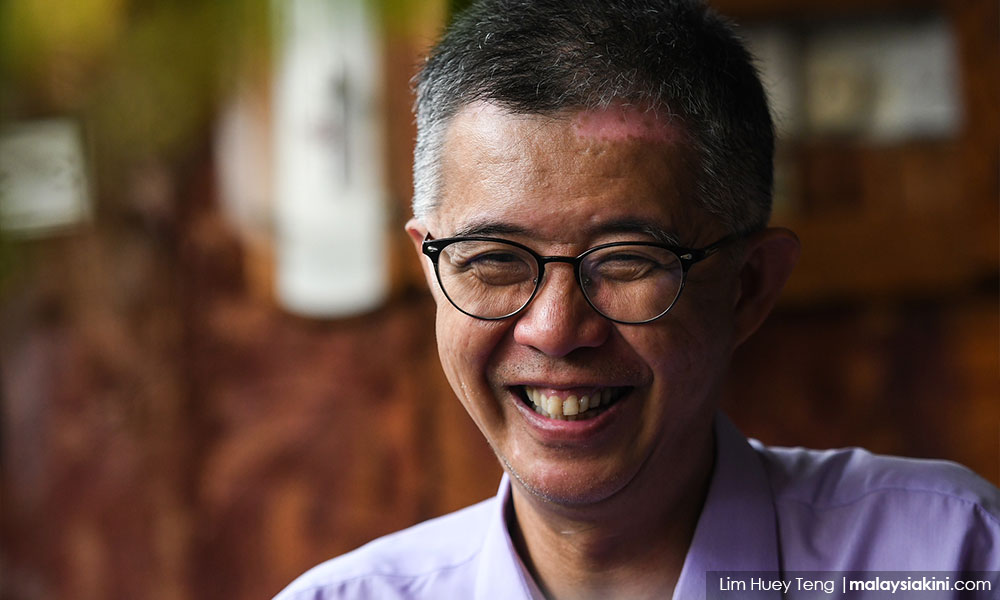

Tian Chua and the holy books
INTERVIEW | When Batu MP Tian Chua went to jail to serve a month-long sentence from Sept 29, the PKR vice-president brought with him four books, three of which were religious texts - the Bible, the Quran, and the Bhagavad Gita.
As a man of science, who described himself as secular and agnostic, Chua's choice of these reading materials may seem odd to others.
But for the 54-year-old, these books are not just about religion.
Speaking to Malaysiakini at his terrace house in Bandar Utama, Chua described the books as philosophical guides on how humans confront difficulties in life and overcome them.
Of particular interest to him is the Gita, the Sanskrit script and teachings of which enamoured him...
INTERVIEW | When Batu MP Tian Chua went to jail to serve a month-long sentence from Sept 29, the PKR vice-president brought with him four books, three of which were religious texts - the Bible, the Quran, and the Bhagavad Gita.
As a man of science, who described himself as secular and agnostic, Chua's choice of these reading materials may seem odd to others.
But for the 54-year-old, these books are not just about religion.
Speaking to Malaysiakini at his terrace house in Bandar Utama, Chua described the books as philosophical guides on how humans confront difficulties in life and overcome them.
Of particular interest to him is the Gita, the Sanskrit script and teachings of which enamoured him.
"The Gita is quite profound, even in its starting chapter," Chua said.
The Gita tells the story of Hindu mythic hero Arjuna's struggle in fulfilling his dharma (right way of living) as a prince and a warrior, and his hesitation to fight a war against his own kin and friends.
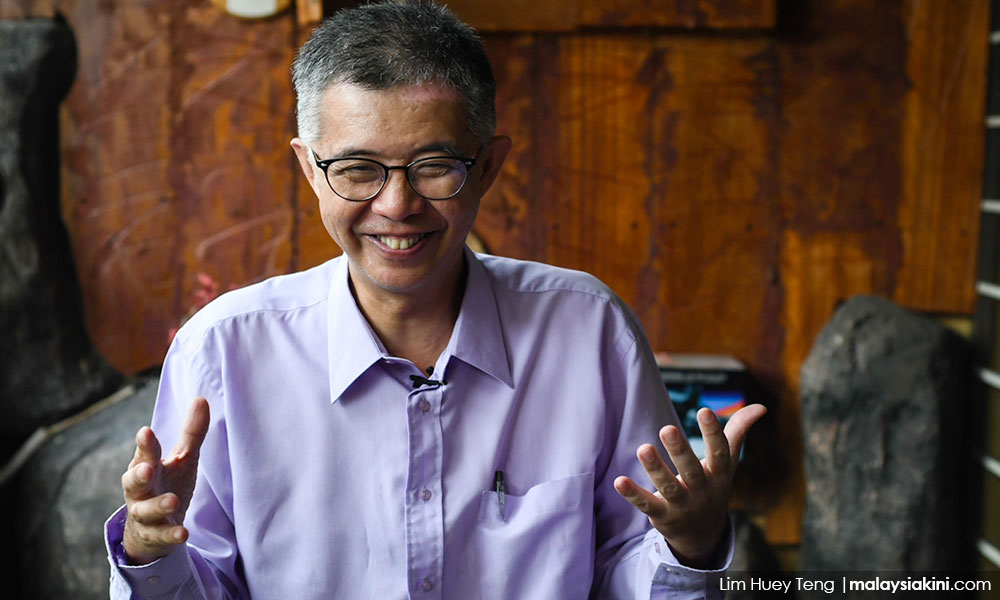
"The central message is that you perform your duty, and not question your rewards.
"To accept whatever results that come out, doing it not for your self-interest or purpose but to fulfil your duty.
"That is what justice is about," he added.
It was a message which Chua echoed on Sept 29, when he withdrew his appeal on a charge for refusing to leave the restricted Police Training Centre (Pulapol) during the Bersih 3 rally in 2012.
“My Lords, in my opinion, it is an absurdity to penalise me for my being in the compound of Pulapol, in a situation which I was brought in by force and against my will.
"My participation in Bersih had been part of a very long journey of the struggle for a fairer and better Malaysia.
"If the price for changing this repressive and corrupt system is to go to prison, I shall say I am more than ready to accept," he had said.
Like the Gita, Chua's interest in the Quran was both philosophical and linguistic.
It had given the PKR leader insight on the religious beliefs of Muslims.
Message of compassion in Quran
But his main takeaway from the Muslim holy book, was its message of compassion.
"The Quranic verses continuously remind followers to be reciprocal, to show kindness, to do welfare as a means of survival.
"That contrasts with a lot of people who try to interpret Islam as a militant religion that always tries to pick fights with others," he said, adding that the Quran often reinforces moral messages found in the Bible.
His interest in theology was just one of many fields of knowledge which Chua seeks to enrich his life with.
"I personally also take very much more reference in nature," he said.
This affinity for nature was evident at his home.
The front porch where he sat for the interview was beside a koi pond lined with tall plants, that served both as aesthetics as well as a natural filtration system.
The quacking of his two pet ducks added to the atmosphere, where one could forget that the house was located in the urban sprawl of Damansara.
The interest in nature also had a visible influence in his time behind bars, sculpting figurines from leftover bread.
Chua made over a dozen bread sculptures during his time in Kajang prison, most of which were of animals, including a kangaroo, an elephant, a buffalo and even a dinosaur.
He dismissed the artworks as what a child would make, but divulged that he first started making bread sculptures as a way to keep mentally engaged while being held under the Internal Security Act (ISA).
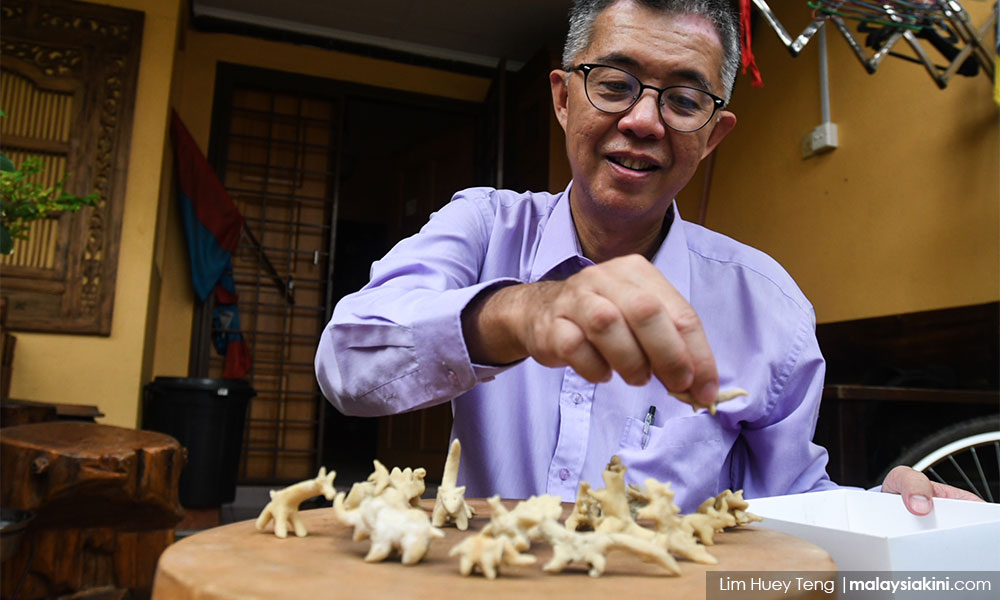
"Making sculptures with bread is quite primitive. When we are in isolation, in detention, we go back to our most primordial state.
"We can almost imagine ourselves when the first homo sapiens were trying to live," he added.
Chua had also spent time sketching his experiences of life behind bars, making detailed drawings of his cell, the meals he was given, and the resident prison cat among others.
Overall, the lawmaker appeared to have a positive perspective of his time in prison, especially the time he had with his books.
But despite this and his readiness to be imprisoned again for the sake of his struggles, Chua said this is not the way things should be in Malaysia.
"It is wrong that we have to go to prison for fighting for what we believe in, for our political activities or for speaking out against the authorities.
"But if we want to be activists, that would be our occupational hazard.
"This is something we have to face calmly. We don't need to glorify it or make it something heroic," he said.


Are you sure you want to delete this comment?
This action cannot be undone.