



Sheriff: Hudud may face constitutional challenge if implemented
The proposed amendments to the Syariah Courts (Criminal Jurisdiction) Act 1965 may still face hurdles even if passed by Parliament, according to former Treasury secretary-general Mohd Sheriff Mohd Kassim.
Mohd Sheriff said if the proposed amendment is implemented, it could run afoul of Article 8 of the Federal Constitution, which guarantees equality before the law.
“If there is hudud, it would be implemented at the state level, because the administration (of religious matters) is under state jurisdiction.
“When each state metes out different punishments, the people will be exposed to different forms of justice.
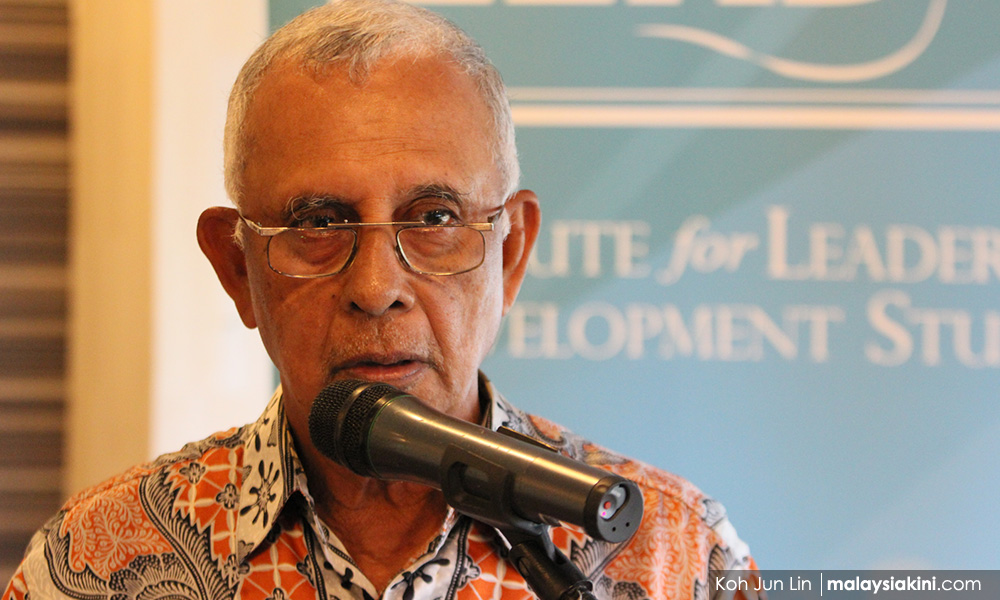
“This is against Article 8,” he said at a speech at the annual Malaysia Freedom Summit organised by the Institute for Leadership and Development Studies in Petaling Jaya today...
The proposed amendments to the Syariah Courts (Criminal Jurisdiction) Act 1965 may still face hurdles even if passed by Parliament, according to former Treasury secretary-general Mohd Sheriff Mohd Kassim.
Mohd Sheriff said if the proposed amendment is implemented, it could run afoul of Article 8 of the Federal Constitution, which guarantees equality before the law.
“If there is hudud, it would be implemented at the state level, because the administration (of religious matters) is under state jurisdiction.
“When each state metes out different punishments, the people will be exposed to different forms of justice.
“This is against Article 8,” he said at a speech at the annual Malaysia Freedom Summit organised by the Institute for Leadership and Development Studies in Petaling Jaya today.
He was speaking as a founding member of the G25, which is a group of prominent former civil servants.
PAS president Abdul Hadi Awang had been pushing a private members’ bill to enhance the punishments that can be meted out by the Syariah Court.
This would increase the limits for syariah offences to 10 years’ imprisonment, RM100,000 fine and 100 strokes of the rotan, from three years’ imprisonment, RM5,000 fine and six strokes of the rotan, to 10 years’ imprisonment, RM100,000 fine and 100 strokes of the rotan.
Critics, however, claim the proposed amendment is meant to enable the implementation of hudud law.
Hudud is already a part of syariah criminal law books of several states, including the PAS-ruled Kelantan, but cannot be implemented because of current limits under Act 355.
Increasing those limits would allow some of these laws to be implemented. Examples include 80 lashes of whipping for qazaf (accusation of adultery or sodomy without at least four credible witnesses) and between 40 to 100 lashes for syrub (alcohol consumption).
More severe punishments such as capital punishment and amputation would remain off limits.
Meanwhile, Sheriff said it was unfortunate that the courts did not always intervene in syariah matters on the grounds that it was beyond their jurisdiction.
“If there are syariah laws that are passed at the state level that goes against the Constitution’s principles of freedom, our victory at the Federal Court will not be certain,” he said.
On a related matter, Sheriff reiterated G25’s statement that the states should not criminalise personal sins, and that doing so would be unconstitutional.
Instead, more focus should be given to other problems faced by Muslims such as drug addiction, HIV infection, child abandonment by unwed mothers, injustice to women, poverty, and corruption in the civil service and politics.
“The personal sins of Muslims do not cause harm or pose a danger to the public or national security, and therefore should not be criminalised.
“Whoever commits sins against Allah will answer for his vices in the afterlife,” he said.


Are you sure you want to delete this comment?
This action cannot be undone.