




MP: Cabinet's real estate ruling a knee-jerk reaction
The cabinet decision to ban new high-end property development in Kuala Lumpur has been described by Petaling Jaya Utara MP Tony Pua as a knee-jerk reaction that does not address the main cause of the property glut.
According to Pua, Bank Negara had used a RM250,000 threshold when categorising unsold properties that are unaffordable to most Malaysians.
However, the cabinet's moratorium only covers high-rise condominiums priced above RM1 million, shopping malls and offices.
Pua also noted that Bank Negara had clearly stated that Johor was poised to have the largest number of unsold residential properties and vacant commercial space, but the cabinet directive only affected Kuala Lumpur...
The cabinet decision to ban new high-end property development in Kuala Lumpur has been described by Petaling Jaya Utara MP Tony Pua as a knee-jerk reaction that does not address the main cause of the property glut.
According to Pua, Bank Negara had used a RM250,000 threshold when categorising unsold properties that are unaffordable to most Malaysians.
However, the cabinet's moratorium only covers high-rise condominiums priced above RM1 million, shopping malls and offices.
Pua also noted that Bank Negara had clearly stated that Johor was poised to have the largest number of unsold residential properties and vacant commercial space, but the cabinet directive only affected Kuala Lumpur.
Moreover, Putrajaya's PR1MA housing scheme mostly involved properties priced at around RM400,000, which would be unaffordable to most people, based on Bank Negara's findings, Pua said.

In view of this, he suggested that the cabinet appears to be failing to act on the central bank's diagnosis with precision.
"We call upon the finance minister to provide not only clarity to the hare-brained 'temporary ban' decision, but also to justify how such a ban will actually solve the 'supply-demand imbalances' in our property sector.
"He should also take cognisance of the fact that Bank Negara's six-policy prescription for resolving the problem did not involve an outright ban on types of development.
"Otherwise, the unintended consequences of such a crude policy prescription would worsen the effects on our already fragile economy," Pua said in a statement today.
He added that the cabinet appears to have made the decision in haste, despite having been warned by Bank Negara on the issue as far back as 2015.
Furthermore, the cabinet should have been aware of the situation because the National Property Information Centre (Napic), from whom the central bank obtained its data, is part of the Finance Ministry.
'Study why developers keep building luxury condos'
He said Putrajaya's latest policy decision also begs the question of whether proper research had been done on why developers continued to build "luxury" condominiums, despite the glut.
"Are Malaysian developers really that stupid to invest in projects that cannot sell?
"Has the Finance Ministry conducted a study to determine if a ban on the 'luxury' sector will reallocate investments into the 'affordable' property sector?
"If it doesn't, will the ban merely stop property and construction activities and consequently trigger an economic slowdown and lower employment opportunities?" Pua asked.
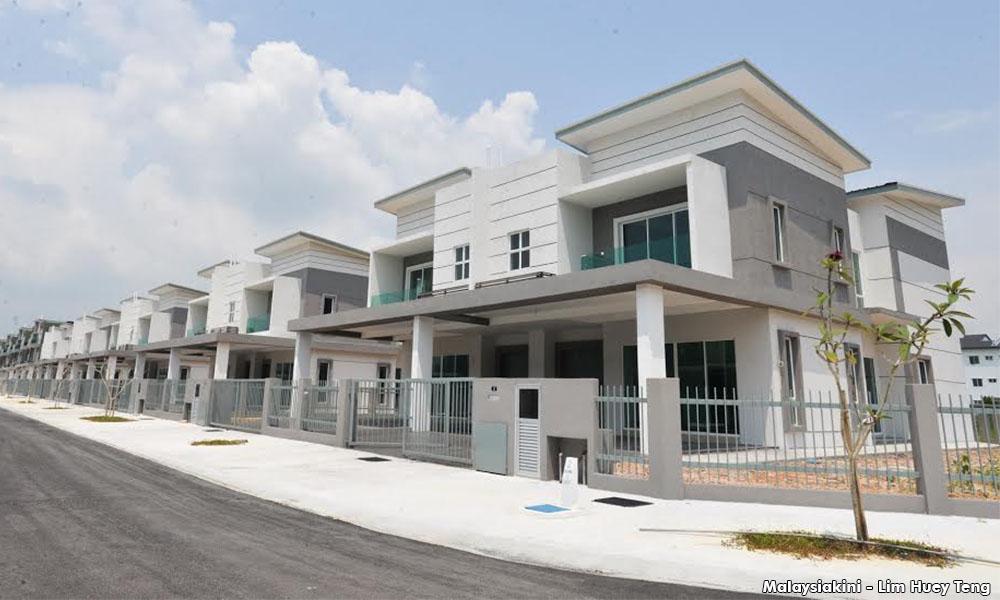
Bank Negara's latest quarterly bulletin warned that Malaysia – especially Johor, Klang Valley and Penang – was experiencing a high-end property glut with a large amount of unsold residential properties or vacant commercial space.
The central bank predicted that one in three offices in the Klang Valley would be vacant by 2021.
Following this, the cabinet instructed Kuala Lumpur City Hall to stop approving high-end development projects.
There are, however, conflicting accounts from ministers on whether the directive constitutes a blanket ban.
For instance, the ban will not cover Bandar Malaysia, the planned massive development project in the heart of Kuala Lumpur which has yet to receive a master developer.


