




No HRDF levy for SMEs in Penang, Kedah and Perlis for six months
The Human Resources Ministry has waived the Human Resources Development Fund (HRDF) levy for SMEs for up to six months in Penang, Kedah and Perlis following the recent floods which affected these states.
Human Resources Minister Richard Riot Jaem said the waiver will commence from Jan 1 to June 30 next year.
"The move is to assist the SMEs in these states to ease the financial burden and regain traction for the progress of their business.
"To further assist the flood situation, the CSR team from HRDF went on the ground to help some 50 homes affected," he told the media at the opening ceremony of the HRDF Conference and Exhibition 2017 this morning....
The Human Resources Ministry has waived the Human Resources Development Fund (HRDF) levy for SMEs for up to six months in Penang, Kedah and Perlis following the recent floods which affected these states.
Human Resources Minister Richard Riot Jaem said the waiver will commence from Jan 1 to June 30 next year.
"The move is to assist the SMEs in these states to ease the financial burden and regain traction for the progress of their business.
"To further assist the flood situation, the CSR team from HRDF went on the ground to help some 50 homes affected," he told the media at the opening ceremony of the HRDF Conference and Exhibition 2017 this morning.
In view of the uncertainties and fourth industrial revolution or better known as Industry 4.0, he said that it was important to up-skill and re-skill the employees in SMEs.
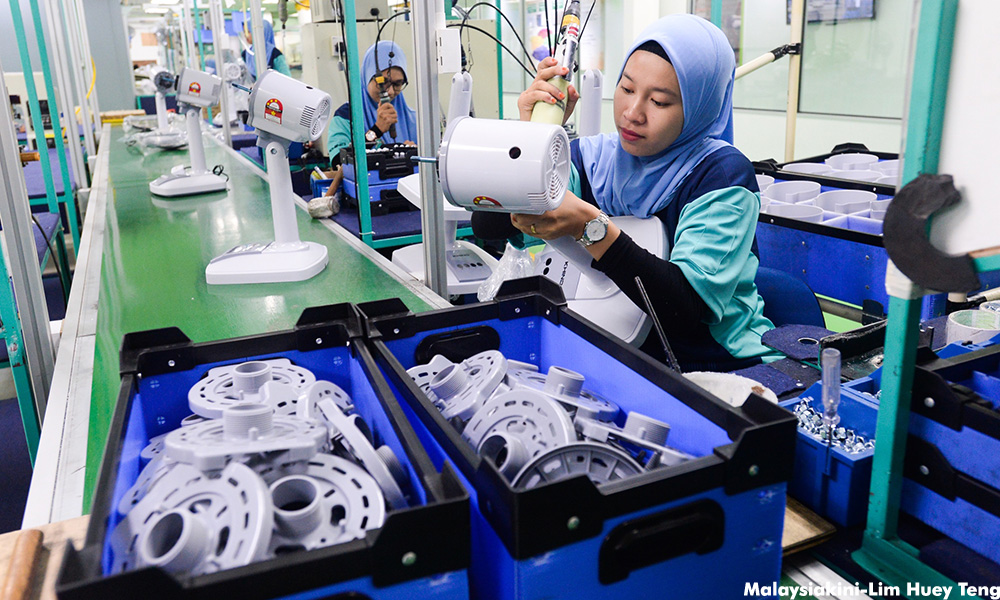
He explained that Malaysian employers, employees, businesses and the government must respond to Industry 4.0 in a holistic manner.
"It’s a matter of either sink or swim — and sinking is not an option! Therefore, the time has come to embrace these new challenges and prepare our talent across industries.
"By preparing for change, we look to ensure a seamless transition, reduce our unemployment rate and also achieve high-income nation status with a 35 percent skilled workforce.
"We must bear in mind that our end result remains the same – to promote the economic well being and quality of life for our rakyat."
Riot also stressed Putrajaya's commitment to realising the importance of Technical and Vocational Education and Training (TVET) transformation as the game changer to face these new challenges.
The government will be allocating RM50 million to develop a comprehensive TVET plan that aims to propel the Malaysian labour force to be globally competitive in this new era.
"I would like to point out that many TVET graduates will be working in small-and-medium enterprises (SMEs), which make up 98 percent of businesses in the country and account for 65 percent of the nation’s employment. Therefore, we must ensure that skills taught to them meet the technological demands of Industry 4.0.
"Preparation is crucial, if we are to realise the goals outlined in the SME Masterplan (2012-2020) and the Eleventh Malaysia Plan (2016-2020)," added the minister.

While the government lays the framework for Malaysia to move towards Industry 4.0, he said the private sector must also pull its weight to prepare the local workforce for the digital economy.
"We need to work together in a holistic manner, starting with re-skilling and multi-skilling our Malaysian workforce.
"With the recent expansion of the PSMB Act 2001, more training opportunities have been extended to employers. The Act has streamlined the eligibility criteria for Malaysian employers across the manufacturing, service, and mining and quarrying sectors that have a minimum of 10 employees."
An example of some of the trainings offered is the Industrial Based Certification Programme (Inbase). Under this initiative, there are programmes for the development of digital talent as well as programmes to prepare Malaysia organisations and workforce for Industry 4.0.
Some of the programmes include data science & data professional training; empowering women leadership through ICT & data science; MDEC development programme on critical ICT.
The HRDF Conference and Exhibition is aimed at sharing best practices in reducing skill gaps, managing talent mobility and promoting collaboration and job creation.


Are you sure you want to delete this comment?
This action cannot be undone.