


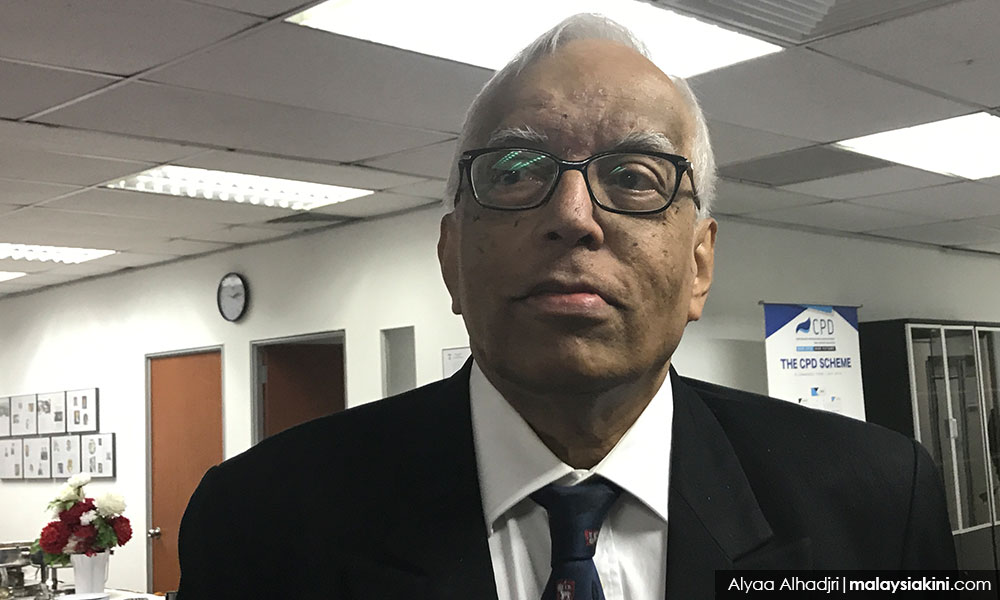

Judge: Constitutional safeguards key to judicial independence
A senior judge said today that an independent judiciary could derive its strength from provisions within a nation’s constitution.
Fiji High Court judge David Alfred said sections related to how the judiciary could independently exercise its powers are "embedded" in constitutions of countries like the United States, Australia and Fiji.
"The underpinning of the independence of the judiciary of a nation is its constitution," said Alfred in his speech at a Bar Council symposium themed "Constitutional Law: Rule of Law in Jeopardy?"...
A senior judge said today that an independent judiciary could derive its strength from provisions within a nation’s constitution.
Fiji High Court judge David Alfred said sections related to how the judiciary could independently exercise its powers are "embedded" in constitutions of countries like the United States, Australia and Fiji.
"The underpinning of the independence of the judiciary of a nation is its constitution," said Alfred in his speech at a Bar Council symposium themed "Constitutional Law: Rule of Law in Jeopardy?"
Speaking at a panel session on the role and responsibility of an independent judiciary in a democracy, Alfred said Section 97 of the Fijian Constitution provides that the courts and all judicial officers are independent of the legislative and executive branches of government.
"...(they) are (also) subject only to this constitution and the law, which they must apply without fear, favour or prejudice.
"This (independence) is the lodestar for any serving judge," said the 72-year-old Malaysian, who has served in Fiji for three years.
Alfred questioned whether each serving judge could claim to be truly independent in carrying out their duties, even with these constitutional safeguards in place.
"The acid test for determining this is not the external garb of independence from interaction with other branches (of government), but whether the independence is in the heart and the mind of the (individual) judge.
"If this is indeed the case, then that judge will be motivated and empowered to decide without fear, favour, or prejudice, because no personal or spiritual feelings have entered the picture," he said.
Alfred also reminded that each serving judge could not escape the fact that they have to protect their independence from "adverse interactions" between the three separate arms of government.
He further explained that he had earlier chosen the term "embedded" to describe constitutional safeguards for judicial independence on the belief that it forms an integral part of the basic structure of a constitution.
"This independence is (also) a legacy and not potential. It has been handed down by the founding fathers, the framers or the draftsmen of the constitution, whichever term may be employed."
When met later, Alfred said he started practicing as a lawyer in Malaysia in 1971, and only moved to accept an offer to serve as the Fiji High Court judge in 2015.
"I could still write a judgment in Malay," he quipped, adding that the two countries could trace its ties from days of the emergency between 1952 and 1956, when the Fijian army was deployed in then-Malaya to assist in the fight against communist insurgents.
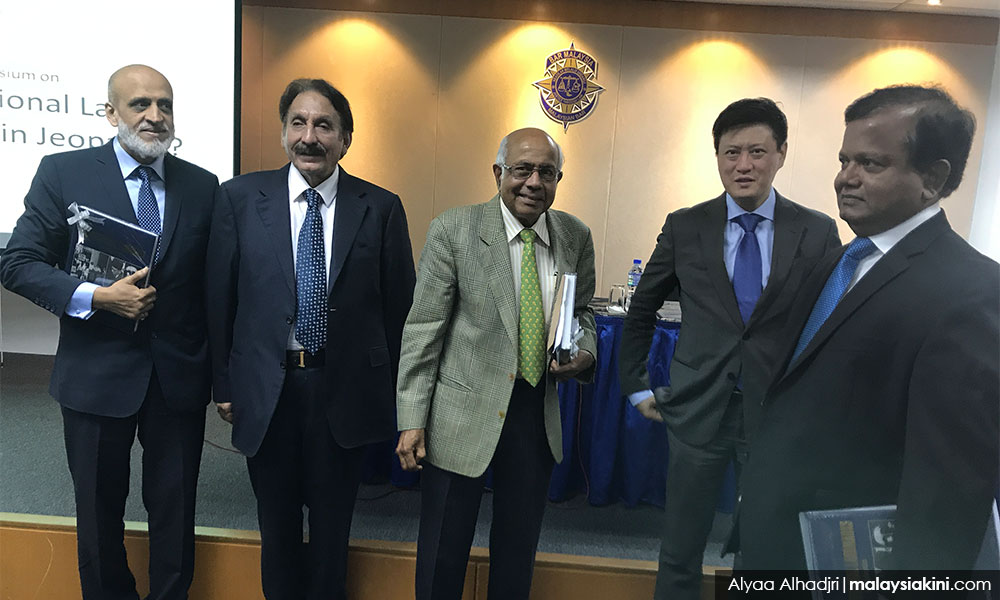
Also on the panel moderated by former Malaysian Bar president Param Cumaraswamy were former chief justice of Pakistan's Supreme Court Iftikhar Mohammad Chaudhry, Sri Lanka Bar Association former past president Upul Jayasuriya, Singapore Law Society's immediate past president Thio Shen Yi, and Hong Kong Law Society vice-president Amirali Nasir.


Are you sure you want to delete this comment?
This action cannot be undone.