



Censoring the dog: An affront to multiculturalism
COMMENT | As Chinese in Malaysia feast during the Chinese New Year celebrations, the ‘happy’ in "Happy Chinese New Year" greetings certainly does not apply to the state of intolerance towards (fictitious) animals deemed anathema to the majority Muslim community in Malaysia.
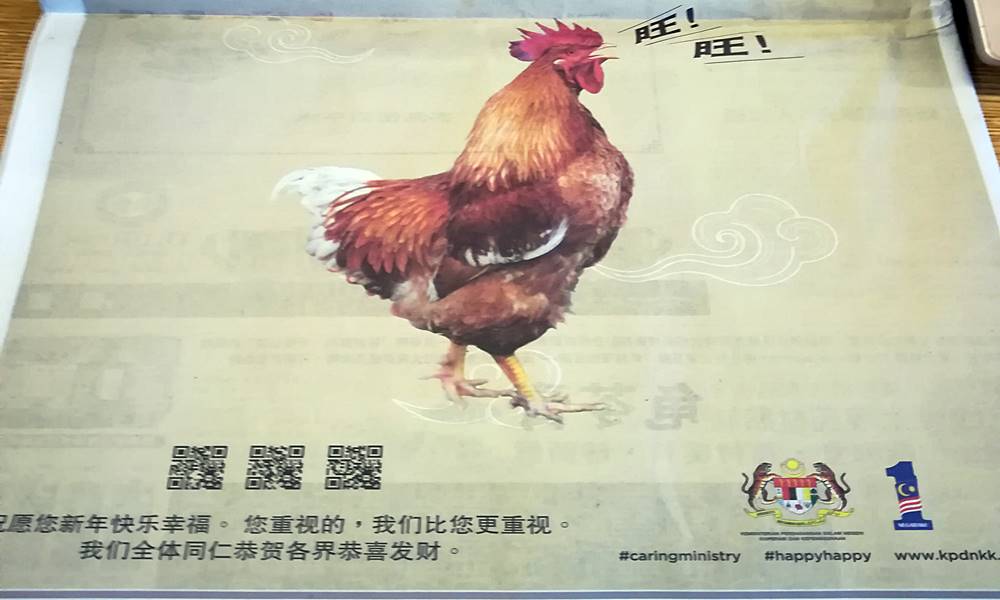
It was only two weeks ago that the director-general of the Malaysian Islamic Development Department (Jakim) Othman Mustapha, urged Malaysians to embrace and embody the spirit of co-existence amidst the lunar holiday. However, this spirit has not been present thus far, evidenced by incidents such as a government ad showing a barking rooster instead of a dog and shopping malls pulling back from canine decorations so as to not offend Muslims.
The controversy surrounding the omission of dogs in public decorations is in itself not surprising, it is merely symptomatic of the lack of a multicultural spirit and a poignant vantage point for what needs to be done to foster such a spirit.
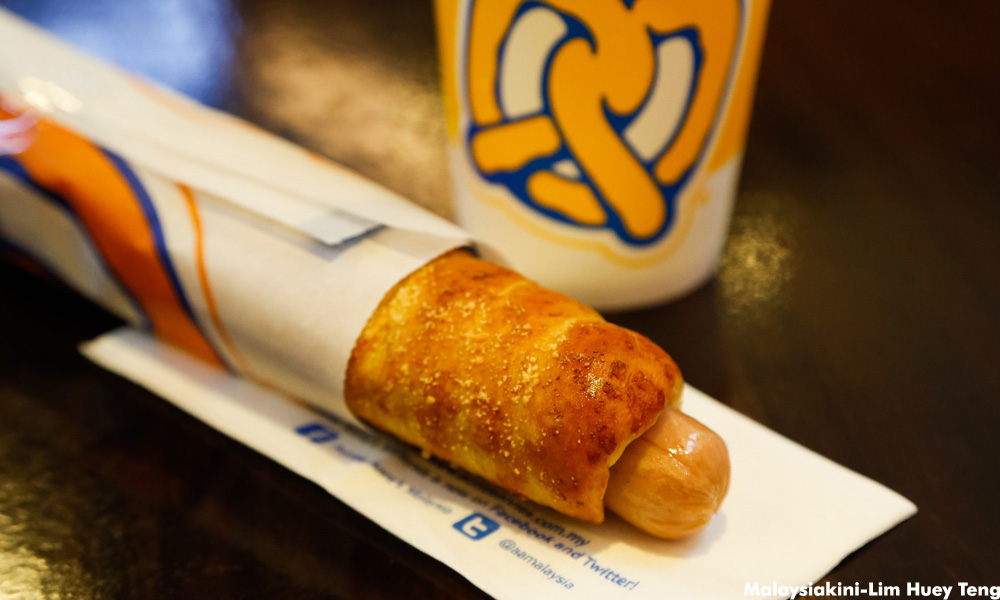
The poor dog has been implicated before. In 2016, Jakim recommended that pretzel store franchise Auntie Anne's change the name of its "Pretzel Dog" to "Pretzel Sausage" in order to receive a halal certification. The franchise did change the name, avoiding ‘confusion’ among Muslims...
COMMENT | As Chinese in Malaysia feast during the Chinese New Year celebrations, the ‘happy’ in "Happy Chinese New Year" greetings certainly does not apply to the state of intolerance towards (fictitious) animals deemed anathema to the majority Muslim community in Malaysia.
It was only two weeks ago that the director-general of the Malaysian Islamic Development Department (Jakim) Othman Mustapha, urged Malaysians to embrace and embody the spirit of co-existence amidst the lunar holiday. However, this spirit has not been present thus far, evidenced by incidents such as a government ad showing a barking rooster instead of a dog and shopping malls pulling back from canine decorations so as to not offend Muslims.
The controversy surrounding the omission of dogs in public decorations is in itself not surprising, it is merely symptomatic of the lack of a multicultural spirit and a poignant vantage point for what needs to be done to foster such a spirit.
The poor dog has been implicated before. In 2016, Jakim recommended that pretzel store franchise Auntie Anne's change the name of its "Pretzel Dog" to "Pretzel Sausage" in order to receive a halal certification. The franchise did change the name, avoiding ‘confusion’ among Muslims.
In 2014, pharmacist Syed Azmi was villified (and praised) for organising a “I Want To Touch a Dog” event. All it took was a four-legged animal to force him to seek police protection from angry Muslims.
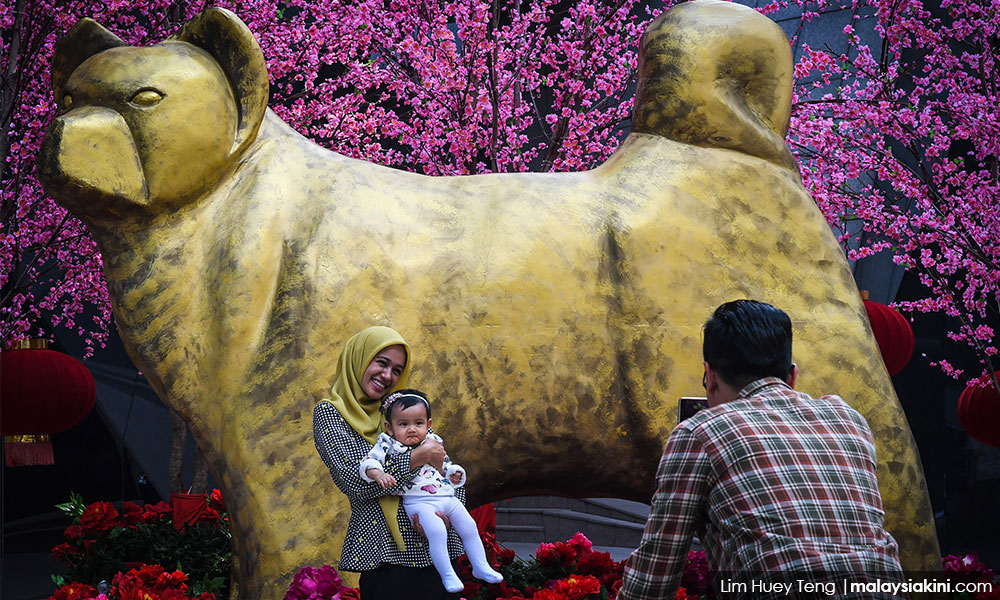
Sunway Pyramid, a bustling shopping mall just outside Kuala Lumpur, decided not to depict images of dogs during the lunar holiday since they were deemed unclean by many Muslims. From the mall’s point of view, they were doing a favour to the Muslims by not upsetting them with depictions of an animal considered taboo in Islam.
In other words, it was of paramount importance to not offend the Muslim majority during a Chinese festivity. From the onset, this self-censorship is understandbly offensive to the Chinese because it basically means their festival is less important than not upsetting Muslims.
However, citing a fear of not upsetting Muslims as a reason for not publicly displaying images of dogs is both an offence to Muslims and to multiculturalism itself. It is an offence to Muslims because they are seen as people who are not emotionally equipped to deal with an innocent depiction of a dog.
They are not able to distinguish between evangelism and an innocent celebration of a festival that means so much to the substantial Chinese minority of Malaysia. This is a reality that may seem laughable but it not.
The cited fear is thus also an offence to multiculturalism as it reflects cultural gaps in how different races understand one another. In understanding multiculturalism, one needs to go back to basics. How does one react to the festivity of another race? Is it one of curiousity, or one of fear and contempt?
The phenomenon of Muslims who do persecute dogs, or images of dogs during Chinese New year, reflects a failure in our education system right at the elementary level. Token lessons on the different ethnicities in Malaysia, if they even exist, are not enough.
Of course, an in-depth lesson on Chinese astrology would not be necessary either. Rather, the ministry of education would do well to formalise courses in schools on the existence of the different ethnicities in Malaysia in terms of their festivities.
Taking Chinese New Year as an example, the dog symbolises traits such as loyalty and honesty. In theory, this sounds idealistic, bearing in mind that the influence of Saudi Arabia on the pernicious manifestations of Islam in Malaysia does not look to be waning any time soon.
With Saudi Arabia funding numerous Malaysians to study in the country, it should not be a surprise that ideas of intolerance anchored in manifestations of Islam such as Wahhabism, borderless as they are, find a safe haven back in Malaysia. Hence, we have a ‘David versus Goliath’ paradigm of efforts in combating religious and racial intolerance: domestic efforts in education versus the transnational nature of the spread of religious extremism. How this battle pans out remain to be seen.
For now, if you think a dog can spark controversy and discussion, wait till the next Chinese New Year festival where malls might refrain from displaying images of the pig. Maybe a government ad will show a rooster oinking. A comical tourism logo may make us look bad on the international scene but I think what is more worrying is Malaysia being criticised for the way it treats a racial minority.
SYED IMAD ALATAS is a member of the publications team at the National University of Singapore's Middle East Institute. He enjoys doing social commentary on topics such as religion and gender.
The views expressed here are those of the author/contributor and do not necessarily represent the views of Malaysiakini.


Report this comment
Are you sure you want to delete this comment?
This action cannot be undone.