


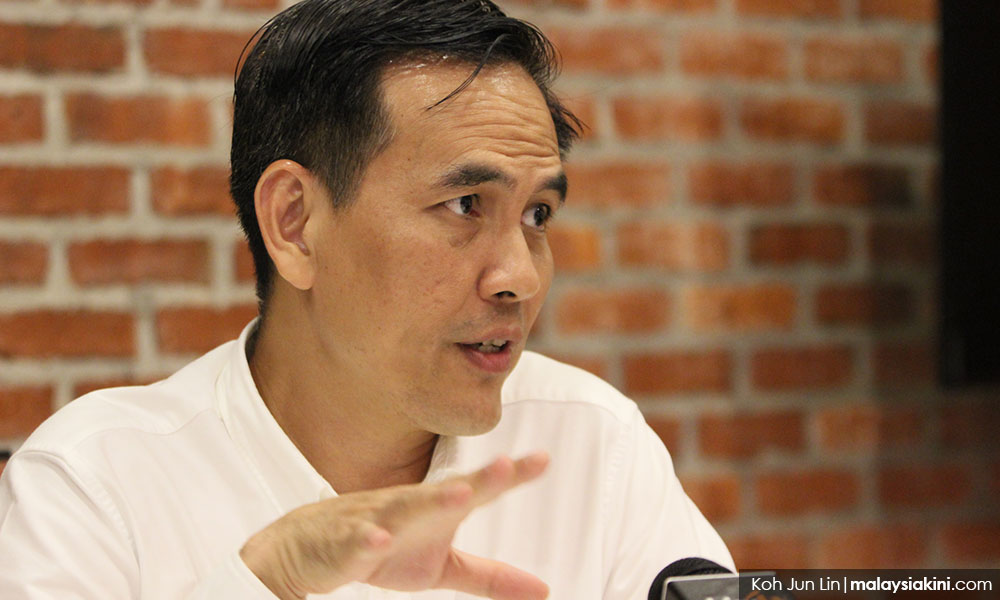

DAP’s newbie Chew wants to bring Johoreans home
CALONKINI | DAP’s latest recruit Johnson Chew Chong Sin envisions a future where Johoreans will no longer need to leave their families behind and trek across the Causeway just to earn a living.
Should he win a state seat in the 14th general election, the entrepreneur wants to work with the government on generating better economic opportunities in the southern state.
“This is so that many more families will be able to reunite with one another. The government is responsible for providing these opportunities for the people.
“The majority of them work in Singapore for the sake of the next generation. They travel every day, leaving their children and elderly parents behind.
“They just want to have a good future, they just want a good life,” he tells Malaysiakini in an interview, overcome by equal parts of emotion and conviction.
Yesterday, Chew’s entry into the Pakatan Harapan component party was marked with much fanfare, with introductions by party heavyweights, Lim Guan Eng and Liew Chin Tong.
He is speculated to be fielded in a state seat in Kluang, where he hails from.
Chew reminisces how, as a child, he would help out at his parents’ hawker shop selling fruits and snacks before returning to their wooden squatter house in the Chinese-majority town.
His sister and he would go on to be the only two among his neighbours to receive a tertiary education...
CALONKINI | DAP’s latest recruit Johnson Chew Chong Sin envisions a future where Johoreans will no longer need to leave their families behind and trek across the Causeway just to earn a living.
Should he win a state seat in the 14th general election, the entrepreneur wants to work with the government on generating better economic opportunities in the southern state.
“This is so that many more families will be able to reunite with one another. The government is responsible for providing these opportunities for the people.
“The majority of them work in Singapore for the sake of the next generation. They travel every day, leaving their children and elderly parents behind.
“They just want to have a good future, they just want a good life,” he tells Malaysiakini in an interview, overcome by equal parts of emotion and conviction.
Yesterday, Chew’s entry into the Pakatan Harapan component party was marked with much fanfare, with introductions by party heavyweights, Lim Guan Eng and Liew Chin Tong.
He is speculated to be fielded in a state seat in Kluang, where he hails from.
Chew reminisces how, as a child, he would help out at his parents’ hawker shop selling fruits and snacks before returning to their wooden squatter house in the Chinese-majority town.
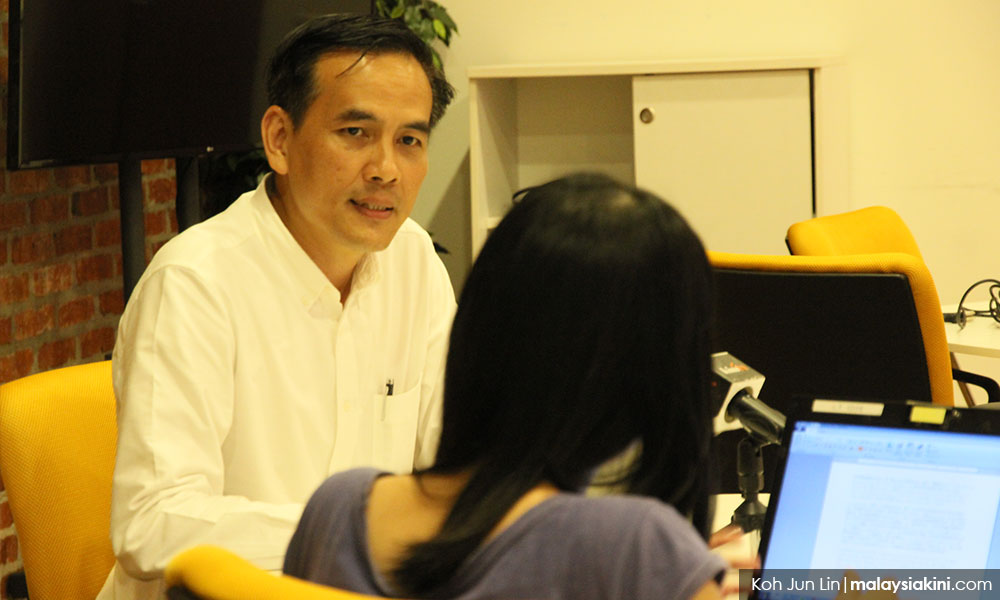
His sister and he would go on to be the only two among his neighbours to receive a tertiary education.
After graduating from UKM with a degree in finance in 1997, Chew committed himself to civil society work joining the reformasi street rallies and the civil rights committee of the KL and Selangor Chinese Assembly Hall.
In the 1999 general election, an alliance of Chinese civil society groups, dubbed 'Suqiu' drew up a list of appeals for BN's consideration.
The KL and Selangor Chinese Assembly Hall was one of the members of this Malaysian Chinese Organisations Election Appeals Committee (Suqiu).
However, Mahathir labelled Suqiu as “communist” and Chew then took part in the meeting of Suqiu with Umno Youth.
Mahathir had supported the Suqiu movement, which listed 17 demands for reforms, in the run-up to the heated 1999 general election but made an about-turn soon after.
“If I had the chance to talk to Mahathir personally, I would ask him why, at the time, he suddenly changed his stance and called Suqiu ‘communist’.
“However, I think Suqiu is not a critical issue in GE14, it is history,” Chew said.
Later, when he uprooted to Shanghai for a decade for work, he set up the city’s first ever Bersih chapter.
In his jump from civil society to partisan politics, he joins the ranks of former Bersih chairperson Maria Chin Abdullah, along with academics Wan Saiful Wan Jan and Maszlee Malik.
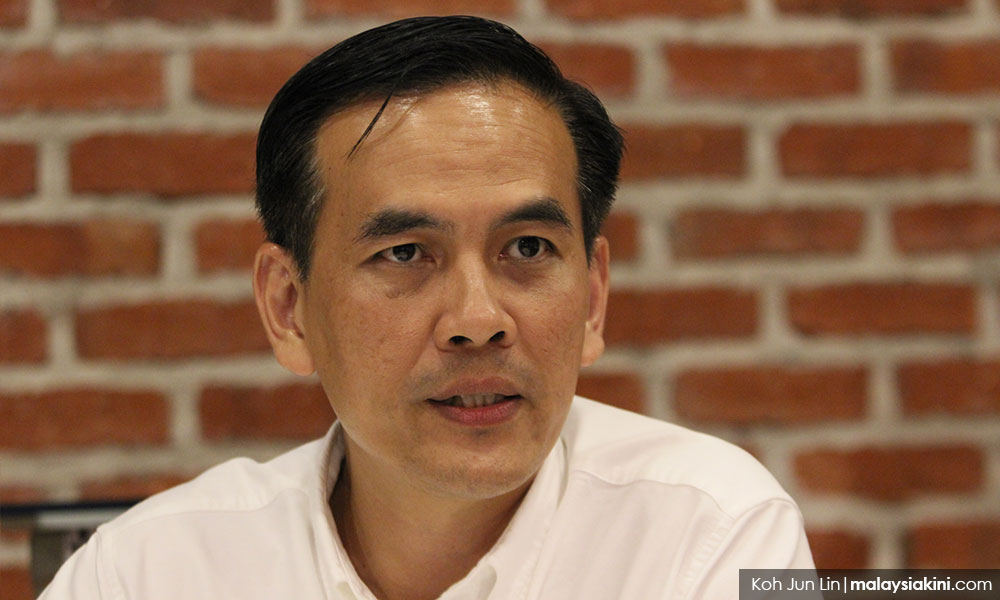
In his own words, Chew articulates why he made that leap.
THE MAIN REASON IS TO CHANGE THE GOVERNMENT. Civil society has been fighting for institutional reform for so long, now we are at the stage where we need some breakthrough.
I believe politics is the only solution.
Maria is strong as an independent, but for me IT WOULD BE MORE EFFECTIVE TO JOIN A POLITICAL PARTY.
Maria and I share a common objective, which is seeking reform. It’s just that we are using different approaches to achieve it. For me, I think joining a party is better because you have a strong team of talent and you can fight together.
DAP HAS CONSISTENTLY STOOD FOR THE GOALS CIVIL SOCIETY SHARE - institutional reform, transparency, accountability, democracy.
I am convinced they have a consistent track record. I also have a lot of friends in DAP.
I THINK MAHATHIR IS GENUINELY SEEKING TO REFORM and save the country. I believe it is not for any personal agenda, and I do not think Harapan is using him nor vice versa.
If we put aside his past and hear what he is saying now, you can see that he is coming out with a lot of ideas for reforms - like a two-term limit and having a panel to appoint key posts for the country.
In Shanghai, I saw a lot of good things and reflected WHY MALAYSIA HAD NOT REACHED ITS FULL POTENTIAL.
Malaysia has so much resources and if Shanghai could implement so much reforms, why can’t we?
Malaysia used to be more advanced than Singapore in the 1960s but we have not been able to make a breakthrough ever since. We have so much to reform and change.
I ALWAYS COMPARE SHANGHAI WITH JOHOR, and ask why as a large state with so much agriculture, we still experience negative growth.
Today, we see about 500,000 Johoreans now working in Singapore. We are losing talent and this is why our industries can’t be upgraded.
I want to improve economic opportunities in the state so that Johoreans can come home.
CALONKINI introduces new faces from all sides of the political divide who are potential candidates for the 14th General Election.
The interviews are not an endorsement by Malaysiakini.


Are you sure you want to delete this comment?
This action cannot be undone.