



Anti-fake news law does not offer any safeguards for media
COMMENT | Malaysia yesterday became the first country to formally table an Anti-Fake News Bill in Parliament in an attempt to curb the “fake news” phenomenon, which has threatened the credibility of the media not just here but all over the globe.
In the weeks leading to the bill being tabled, the government had a series of engagement sessions and discussions with stakeholders regarding the drafting of this bill, while excluding one of the most important stakeholders - the media industry.
Any legislation on fake news would inevitably affect the media industry, and it is our firm belief that we should be seen as the most important stakeholders, as opposed to social media platforms and companies that the government had engaged with.
The bill reflects this lack of engagement with media, as it overlooks the impact it could have on the media and does not provide any safeguard for the industry in Malaysia.
Provisions in this bill allow the government to apply to have an article removed via the courts, following which the affected party would not be able to set aside the order if national security is cited in removing the article.
This provision is too broad and could be used to remove articles...
COMMENT | Malaysia yesterday became the first country to formally table an Anti-Fake News Bill in Parliament in an attempt to curb the “fake news” phenomenon, which has threatened the credibility of the media not just here but all over the globe.
In the weeks leading to the bill being tabled, the government had a series of engagement sessions and discussions with stakeholders regarding the drafting of this bill, while excluding one of the most important stakeholders - the media industry.
Any legislation on fake news would inevitably affect the media industry, and it is our firm belief that we should be seen as the most important stakeholders, as opposed to social media platforms and companies that the government had engaged with.
The bill reflects this lack of engagement with media, as it overlooks the impact it could have on the media and does not provide any safeguard for the industry in Malaysia.
Provisions in this bill allow the government to apply to have an article removed via the courts, following which the affected party would not be able to set aside the order if national security is cited in removing the article.
Applications for article removals are ex-parte
This provision is too broad and could be used to remove articles that the government disagrees with. While there exists a process involving the courts in determining the need to remove any article, the bill or provision does not put any substantial burden on the part of the government to establish the veracity of an article before it is brought before the courts.
Applications for article removals are also ex-parte, which means articles published in any media websites can be removed due to protests and complaints by unsatisfied parties.
We are also concerned with the consequences should an article quoting a confidential source is published by the media and subsequently contested as “fake news”. Will this compel organisations to compromise their sources, which goes against the grain of investigative journalism?
The bill also goes after funders of publications that allegedly spread fake news, and raises eyebrows about potential action against media investors and even paying subscribers should a media organisation face any action under this proposed legislation.
Any such action will leave a long-lasting damage on the business viability of media organisations.
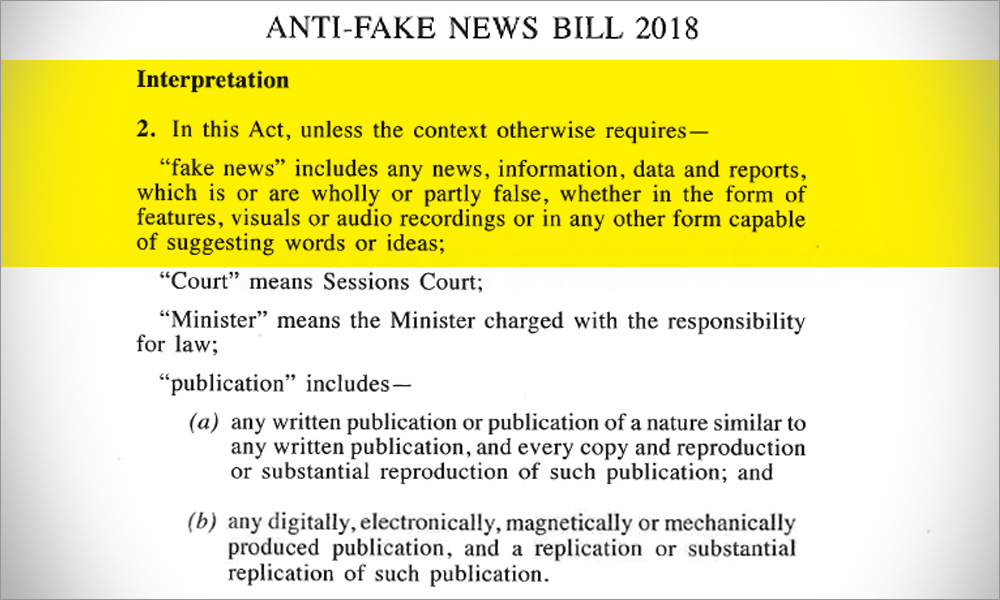
Any disagreement with media outlets regarding any publication should not involve the use of criminal law, but unfortunately the Anti-Fake News Bill serves as an addition to the Printing Presses and Publications Act (PPPA), Communications and Multimedia Act (CMA), and also the Sedition Act in restricting the space for media freedom in Malaysia.
As seen in the past with the PPPA and the CMA, the government has not hesitated in using criminal law provisions against established media organisations in the country- including The Malaysian Insider, where actions taken under the CMA contributed to the website’s shutdown.
Apart from restricting media freedom, these actions under the criminal law against media organisations and their staff risk affecting the livelihood of journalists in the country during what is already a tumultuous period for the media and news industry worldwide.
The press has long been lauded as the fourth estate in a democracy, and the efforts should instead be re-focused on helping the media industry flourish and also improve Malaysia’s standing in the World Press Freedom Index.
This proposed law also provides for an imprisonment for up to 10 years for those found guilty of an offence, and this is a far heavier punishment scope compared to even the colonial-era Sedition Act, which only provides for a maximum of three years in prison.
While the dissemination of fake news is a matter of concern for everyone, it is our belief that provisions in both the CMA and the Sedition Act already allow the government to deal with the perpetrators of fake news.
The Anti-Fake News Bill will only serve as another addition to criminal law which could affect journalists in the future.
We urge the authorities and the government to withdraw the bill or, at the very least, re-draft the bill, and this time include engagements with all stakeholders in the media industry so that the freedom of the press in Malaysia can continue to be preserved.
This statement is released by WAN-IFRA Media Freedom Committee Malaysia (MFC Malaysia) and Institute of Journalists Malaysia (IOJM).
The views expressed here are those of the author/contributor and do not necessarily represent the views of Malaysiakini.


Are you sure you want to delete this comment?
This action cannot be undone.