


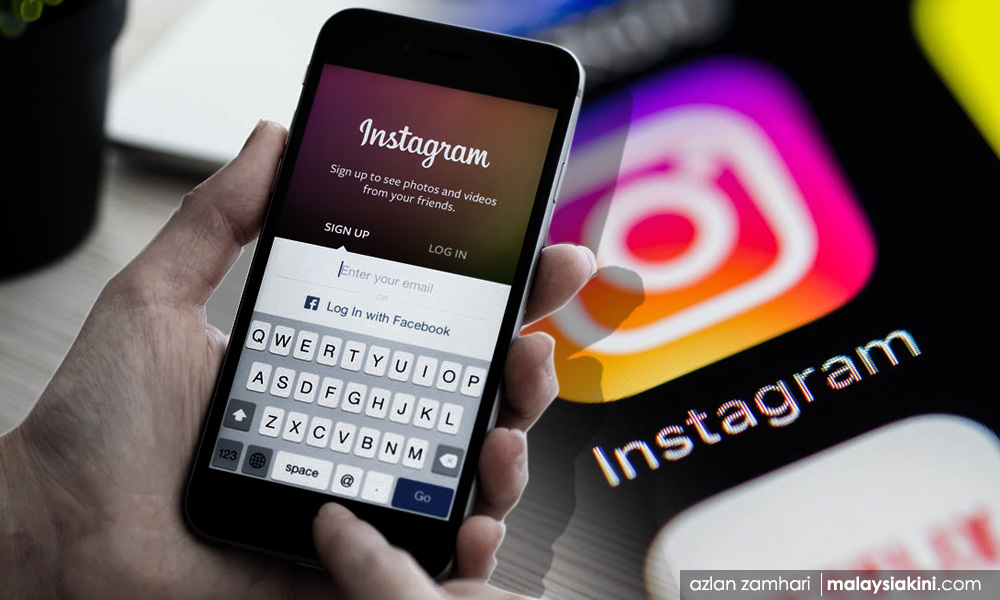

Talking politics to the touchscreen generation
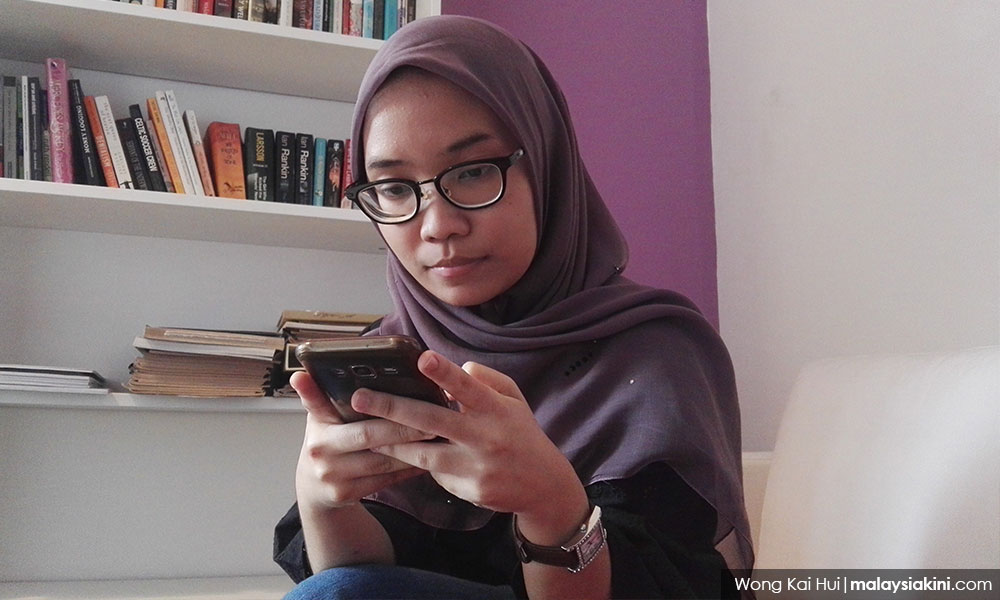
SPECIAL REPORT | Lying in her bed just before turning in for the night, Hannatul Alia Ahmad slides her finger up and down her phone screen to check out posts by some of the 239 people she follows on Instagram.
“Before sleeping every night, I like to see some beautiful stuff and also to see how other people live their lives.”
For her, Facebook has taken a back seat to Instagram. “I only open it once a week,” she said.
Twenty-two-year-old Hannatul (below) began using Facebook when she was in Form One. She then thought it was a "very cool” platform to connect with her school friends.
However, she began to move away from Facebook when she noticed she was increasingly being bombarded by advertisements.
When the 12th general election was held in 2008, Hannatul was just a Standard One student. After school, she used to sit in front of her computer surfing the blogs of friends and celebrities. At the time, smartphones were not very popular and SMSes were still the order of the day.
But since then, there has been a tremendous transformation in digital technology. Mobile data plans became more common and just about everyone is signed up to Facebook.
By the 13th general election, as winds of change blew through the whole country, political messages, too, were quickly transmitted through these new technologies.
Some political speeches even went viral on Facebook and YouTube. The borderless world had arrived.
Instagram a new trend
It is now known that by collecting and analysing their users’ data, Facebook can figure out their preferences and send targeted advertisements to them.
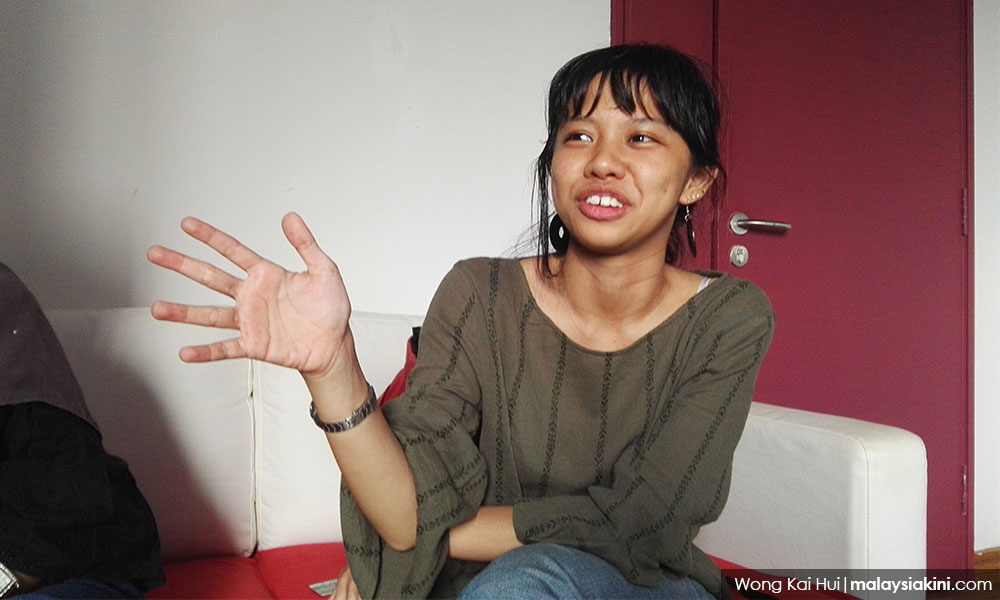
Like Hannatul, Puteri Nurdiyana Khir Anuar (photo), 22, also became annoyed with these messages and she too began to abandon Facebook.
“Facebook kept showing the video of Ustaz Azhar Idrus. My father loved watching those speeches and was deeply affected (by them). But I hate those things, which is why I hate Facebook!” said Puteri rolling her eyes.
Puteri is a student of Visual Arts at UiTM. Instead of Facebook, she is now addicted to Instagram by her own admission. She spends a lot of time sharing her artworks and following the accounts of some artists.
“I don’t know how many times I open my Instagram in a day. I lost count! I open it when I'm in class and also when I'm eating [...] so maybe more than 20 times in a day...
SPECIAL REPORT | Lying in her bed just before turning in for the night, Hannatul Alia Ahmad slides her finger up and down her phone screen to check out posts by some of the 239 people she follows on Instagram.
“Before sleeping every night, I like to see some beautiful stuff and also to see how other people live their lives.”
For her, Facebook has taken a back seat to Instagram. “I only open it once a week,” she said.
Twenty-two-year-old Hannatul (below) began using Facebook when she was in Form One. She then thought it was a "very cool” platform to connect with her school friends.
However, she began to move away from Facebook when she noticed she was increasingly being bombarded by advertisements.
When the 12th general election was held in 2008, Hannatul was just a Standard One student. After school, she used to sit in front of her computer surfing the blogs of friends and celebrities. At the time, smartphones were not very popular and SMSes were still the order of the day.
But since then, there has been a tremendous transformation in digital technology. Mobile data plans became more common and just about everyone is signed up to Facebook.
By the 13th general election, as winds of change blew through the whole country, political messages, too, were quickly transmitted through these new technologies.
Some political speeches even went viral on Facebook and YouTube. The borderless world had arrived.
Instagram a new trend
It is now known that by collecting and analysing their users’ data, Facebook can figure out their preferences and send targeted advertisements to them.
Like Hannatul, Puteri Nurdiyana Khir Anuar (photo), 22, also became annoyed with these messages and she too began to abandon Facebook.
“Facebook kept showing the video of Ustaz Azhar Idrus. My father loved watching those speeches and was deeply affected (by them). But I hate those things, which is why I hate Facebook!” said Puteri rolling her eyes.
Puteri is a student of Visual Arts at UiTM. Instead of Facebook, she is now addicted to Instagram by her own admission. She spends a lot of time sharing her artworks and following the accounts of some artists.
“I don’t know how many times I open my Instagram in a day. I lost count! I open it when I'm in class and also when I'm eating... so maybe more than 20 times in a day.”
Although we can’t tell the exact number of youths who have shifted from Facebook to Instagram, the Internet Users Survey 2017 Report by the Communications and Multimedia Commission (MCMC) echoes this phenomenon.
The report shows that more than half of Internet users in Malaysia are young people aged between 20 and 35.
Compared to the previous year, Facebook and Twitter users grew by 0.8 percent and 0.1 percent respectively, while Instagram was a staggering new trend with a sharp hike of 9.4 percent.
Syed Saddiq, Nurul at the fore
Most political leaders have already set up their Facebook and Twitter accounts and regularly update them with posts of their political activity. However, some politicians are not quite aware of the quiet rise of Instagram.
Some younger politicians, however – for example, Syed Saddiq Abdul Rahman, Nurul Izzah Anwar and Khairy Jamaluddin – started up their Instagram accounts four to six years ago and have drawn more than 100,000 followers to date.
On the other hand, veteran political leaders such as DAP secretary-general Lim Guan Eng and Gerakan president Mah Siew Keong only joined Instagram at the end of last year, and have to date about 2,000 and 700 followers respectively.
For MCA president Liow Tiong Lai and Bersatu president Muhyiddin Yassin, although they have registered their Instagram accounts, they do not seem to be quite adept at it.
Liow’s last update was more than two years ago while Muhyiddin posted a photo of a press conference in 2013 after which his Instagram account went dormant.
Meanwhile, some politicians, for example, PAS president Abdul Hadi Awang and DAP national organising secretary Anthony Loke, do not even have an Instagram account.
Malaysians also prefer WhatsApp
According to the 2017 report by MCMC, the four most popular social media platforms in Malaysia are Facebook, Instagram, YouTube, and WeChat with account ownership among Internet users at 97.3 percent, 56.1 percent, 45.7 percent, and 43.7 percent respectively.
Twitter was ranked at sixth with only 26.6 percent in usage.
During the survey period, instant messaging app WhatsApp had yet to develop its “status” feature so it was not defined as “social media” and therefore was not included in MCMC's report.
WeChat, however, was categorised as social media as it had its “WeChat Moments” function.
Despite that, the report showed that while Instagram users grew by 9.4 percent, the number WeChat users has dropped by 16.5 percent since 2015.
But as the MCMC survey only adopted a simple random sample (SRS) selection, this figure may be not that accurate.
In general, Malaysians use WhatsApp more frequently and more for its messaging feature rather than the “Status” feature which was launched in February 2017.
According to the Digital News Report 2017 by the Reuters Institute, 77 percent of Malaysians use WhatsApp to communicate, but the interesting discovery is that 51 percent of Malaysians share and discuss the news via WhatsApp – the highest percentage in the world.
This may be because compared to social media, communicating through the messaging software such as WhatsApp is more private. Also, WhatsApp uses end-to-end encryption to prevent monitoring by third party.
WeChat, kingmaker for Chinese
WhatsApp introduced its voice messaging feature in August 2013. But WeChat introduced this earlier, and it has since widely used by local Chinese senior citizens who have difficulty typing on tiny mobile phone keypads.
WeChat was developed by China-based Tencent and is wildly popular in China. Some Chinese youth in Malaysia also prefer WeChat instead of WhatsApp due to influence from China’s entertainment shows.
WeChat played an important role at the 2016 Sarawak state election campaign in Sibu, which has a high population of Chinese. The Sarawak United People's Party (SUPP) did a successful “reverse-propaganda” campaign against DAP by riding on the WeChat platform.
Johor DAP's publicity secretary Wong Shu Qi, who was on the Sarawak campaign team, witnessed the huge effect this communication platform had on the electorate.
She recalled that they discovered there were many private WeChat groups advocating “Don’t vote for the Rocket” long before the DAP campaign team from the peninsula set foot in Sarawak.
“The messages spread really fast. Our young party workers said that even their fathers received such messages. Obviously, someone was operating these campaigns from behind the scenes.
“Instead of attacking other parties, it only attacked DAP. The messages didn't say anything about whether BN was better but sometimes the cat was let out of the bag.”
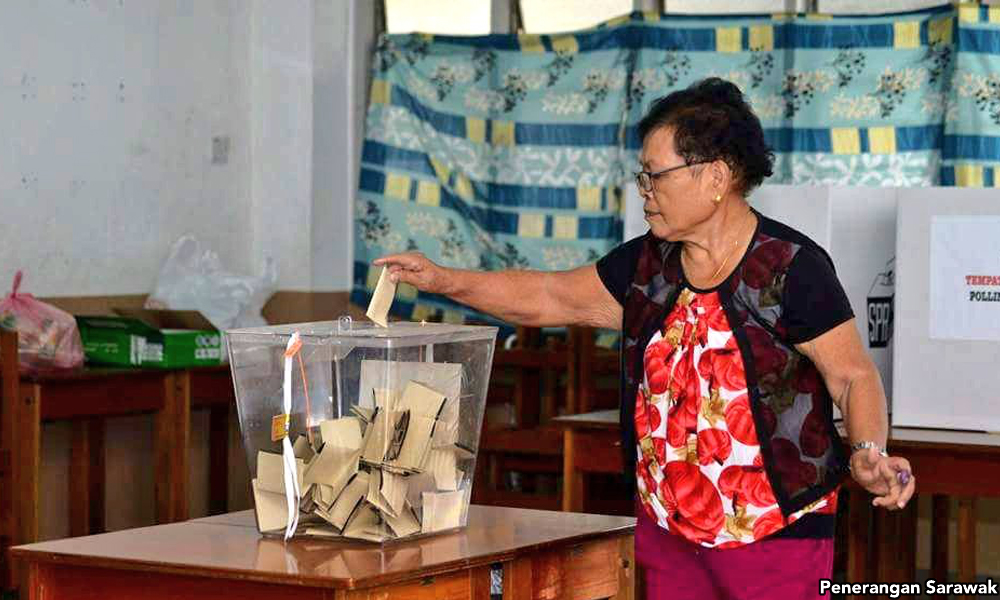
Sibu and Kuching used to be the strongholds of DAP. In the 2016 state elections, the party lost Batu Kawah, Repok, Meradong and Dudong.
SUPP president Sim Kui Hian beat Chiew Wang See of DAP by a majority of 2,085 for Batu Kawah while BN direct candidate Tiong Thai King won Dudong by a majority of 2,146. SUPP also snatched back Repok and Meradong from DAP by a majority of 943 and 1,516 respectively.
While DAP is known to be good in the fight for urban areas using traditional campaigning methods – hanging banners and flags, holding political speeches, visiting voters and even publishing on Facebook, they overlooked the power of WeChat.
When the election results were out, DAP leaders were shocked. Wong said WeChat had created a significant impact among the voters and it was too late when DAP found out about it.
“You have to manage social media for a long time to accumulate the attention you want. It is not that you can get everyone's attention within a short time.”
New media powers changes
With the advent of smartphones, social media has helped fuel social movements around the globe.
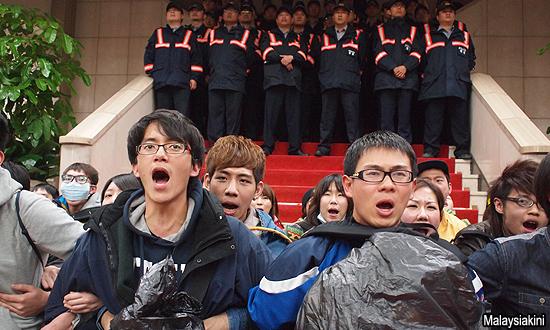
Facebook and Twitter were catalysts for the “Arab Spring” revolution, while FireChat played a significant role in the Sunflower Student Movement in Taiwan and Hong Kong's Umbrella Revolution.
This is also true for elections. We have the example in Donald Trump's victory at 2016 US presidential election and nearer home, we can take the case of SUPP outlined above.
The "digital natives" born in the 90s will vote for the first time in the coming 14th general election.
Does either the government or the opposition know how to reach out from their phone screens to touch their hearts and minds?
NEXT
Why politicians from Najib to Dr M share their lives on Instagram


Report this comment
Are you sure you want to delete this comment?
This action cannot be undone.