



Malaysia has changed! Will Singaporeans have courage to do as well?
COMMENT | “Finally I feel like a Malaysian,” my uncle, born 55 years ago in Malaysia, tells me over the phone on Friday as he speeds back to his home in Petaling Jaya, just outside Kuala Lumpur. There is a calm, unhurried pride in his voice, of a victory realised, a victory assured, of a sentence and sentiment imagined countless times before, and now, at long last, finding expression.
In tow is a karaoke machine, over which other uncles and aunties and cousins and friends will fight, as they jump from English songs by the artist formerly known as Prince to the Malay ‘Andainya Aku Pergi Dulu’ and the Tagalog ‘Anak’, as they pick at dry meat curries and toast their new old prime minister whom they once cursed, as they pile up empty bottles of scotch and crushed packets of cigarettes, offerings to this technological marvel that spits out multilingual songs for the Malaysia-Truly-Asia multicultural society whose contours they can now, finally, envision.
Wasn’t the big party on Wednesday? No, Wednesday was for voting and waiting. Thursday was for recuperating and pinching oneself and hopscotching between WhatsApp groups and watching in amazement as a 92-year-old man exudes stamina and wit you forgot he had. Friday is when you realise that the sun has still risen and that you’ve taken back your country.
Taken back from whom?
In 2009, a year after that seminal election when Malaysia’s ruling coalition lost its two-thirds majority, I met an astute Indian Malaysian banker from Maybank. His worry was that some Umno politicians and Malay nationalists might interpret the shifting sands not as an opportunity to reform, but to ‘pukul habis’, literally beat till it’s gone, drain the Malaysian coffers of all they can. Their last chance in the sun.
Well, since then Najib Razak and his wife, Rosmah Mansor, have tried to steal the sun as well. ‘Pukul habis mati’, one might say. Though Malaysians have long tolerated corrupt, crony capitalists, there was something different about the magnitude, the brazenness, the sheer ‘f’-you-all attitude of Najib’s graft.
Previous Umno leaders, even if they were wilfully ignorant of corruption in their stables, and even if they padded the pockets of a million Umno delegates, keeping patronage politics going, they all had two attributes: they never appeared to be enriching themselves personally in a decadent way; and they always seemed to have the country’s best interests at heart, no matter how sloppy - or sleepy - they were.
Najib’s 1MDB transgressions, beamed across the world from London and New York to Singapore, embarrassed Malaysians. They were made to look like the foolish, meek flock of an untouchable shepherd. New stories of Najib flirting with Saudis and his stepson flirting in Hollywood simply piled on to the old stories of submarines and a Mongolian lover blown to bits with C4 explosives.

Najib was losing his capacity to shock; we were all in danger of becoming desensitised to a devil.
Meanwhile, if even half the stories about her are true, Rosmah makes Imelda Marcos look like a sadhu; and Winnie Mandela look like a spineless pooch.
Given to whom?
You’ve taken back your country. Now what? Nobody seems quite sure...
COMMENT | “Finally I feel like a Malaysian,” my uncle, born 55 years ago in Malaysia, tells me over the phone on Friday as he speeds back to his home in Petaling Jaya, just outside Kuala Lumpur. There is a calm, unhurried pride in his voice, of a victory realised, a victory assured, of a sentence and sentiment imagined countless times before, and now, at long last, finding expression.
In tow is a karaoke machine, over which other uncles and aunties and cousins and friends will fight, as they jump from English songs by the artist formerly known as Prince to the Malay ‘Andainya Aku Pergi Dulu’ and the Tagalog ‘Anak’, as they pick at dry meat curries and toast their new old prime minister whom they once cursed, as they pile up empty bottles of scotch and crushed packets of cigarettes, offerings to this technological marvel that spits out multilingual songs for the Malaysia-Truly-Asia multicultural society whose contours they can now, finally, envision.
Wasn’t the big party on Wednesday? No, Wednesday was for voting and waiting. Thursday was for recuperating and pinching oneself and hopscotching between WhatsApp groups and watching in amazement as a 92-year-old man exudes stamina and wit you forgot he had. Friday is when you realise that the sun has still risen and that you’ve taken back your country.
Taken back from whom?
In 2009, a year after that seminal election when Malaysia’s ruling coalition lost its two-thirds majority, I met an astute Indian Malaysian banker from Maybank. His worry was that some Umno politicians and Malay nationalists might interpret the shifting sands not as an opportunity to reform, but to ‘pukul habis’, literally beat till it’s gone, drain the Malaysian coffers of all they can. Their last chance in the sun.
Well, since then Najib Razak and his wife, Rosmah Mansor, have tried to steal the sun as well. ‘Pukul habis mati’, one might say. Though Malaysians have long tolerated corrupt, crony capitalists, there was something different about the magnitude, the brazenness, the sheer ‘f’-you-all attitude of Najib’s graft.
Previous Umno leaders, even if they were wilfully ignorant of corruption in their stables, and even if they padded the pockets of a million Umno delegates, keeping patronage politics going, they all had two attributes: they never appeared to be enriching themselves personally in a decadent way; and they always seemed to have the country’s best interests at heart, no matter how sloppy - or sleepy - they were.
Najib’s 1MDB transgressions, beamed across the world from London and New York to Singapore, embarrassed Malaysians. They were made to look like the foolish, meek flock of an untouchable shepherd. New stories of Najib flirting with Saudis and his stepson flirting in Hollywood simply piled on to the old stories of submarines and a Mongolian lover blown to bits with C4 explosives.
Najib was losing his capacity to shock; we were all in danger of becoming desensitised to a devil.
Meanwhile, if even half the stories about her are true, Rosmah makes Imelda Marcos look like a sadhu; and Winnie Mandela look like a spineless pooch.
Given to whom?
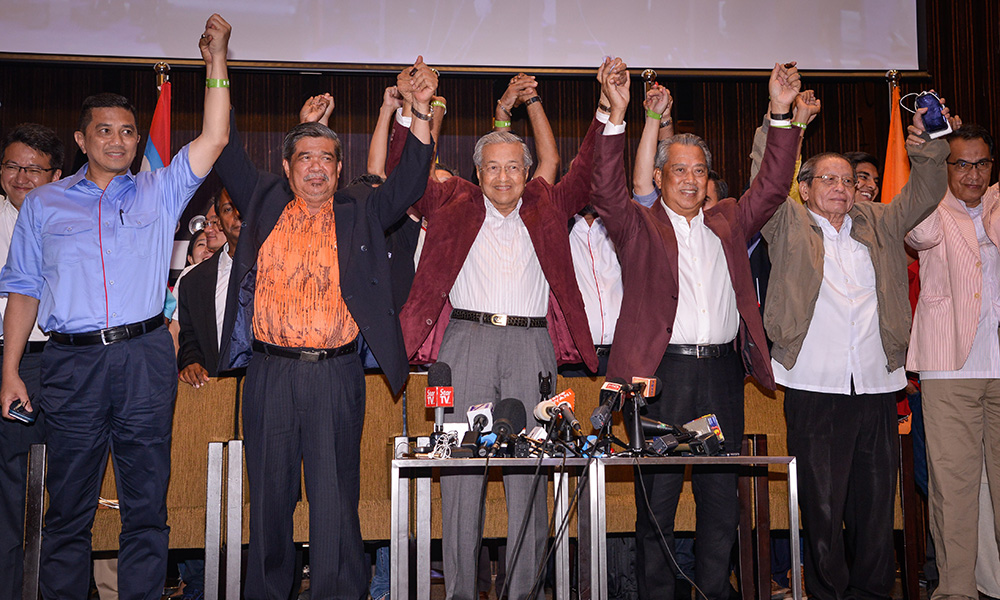
You’ve taken back your country. Now what? Nobody seems quite sure. Malaysians have been repeating mantras like “We’re going to hold them to the 100-day promises!” and “They’ve done well in Penang and Selangor so I’m sure they can do a good job for the country.” (Referencing the constituent parties in the new ruling coalition have held the two states for 10 years now.)
Yet everybody knows this is unchartered territory. For while it is difficult to overstate what a milestone this is for Malaysians, it is also difficult to overstate how ideologically diverse this ragtag winning coalition is.
The affection Malaysian liberals have today for Mahathir reminds me of the affection some Americans display towards George Bush. Now that there is a scarier dinosaur in the room, life under you seems quaint. Oh, you cuddly grandfather.
Imagine if George Bush, John McCain and Mitch McConnell became Democrats just so they could team up with Bernie Sanders and Hillary Clinton to oust Donald Trump. That doesn’t even begin to capture the scale of bed-hopping Malaysia has witnessed in the last decade.
In Dr Mahathir Mohamad’s winning team are a number of people, including Anwar Ibrahim, whom he has in the past abused, arrested and/or jailed. One wonders where forgiveness ends and opportunism begins.
Which Mahathir is going to show up? The rabid anti-colonialist, the auteur of ‘The Malay Dilemma’, the person who ingrained in Malaysians the zero-sum-game idea that in order for the Malays to rise, the Chinese and Indians must necessarily be held back? The Mahathir who destroyed the judiciary’s independence in the 1980s?
Or the Mahathir who stitched together Peninsula Malaysia with highways and cars, enhancing labour mobility and offering Malaysia’s diverse peoples a chance to more easily visit one another? Or the Mahathir who thumbed his nose at neo-liberals in the wake of the Asian Financial Crisis, implementing much maligned currency controls that (some believe) helped stabilise the currency and economy?
Like his old nemesis Lee Kuan Yew, Mahathir is many things to many people all at the same time. “India has Gandhi, South Africa has Mandela, Malaysia has Mahathir,” his fans say.
The optimistic scenario
And so, in the spirit of this moment and that statement, it is worth contemplating the optimistic scenario for the new Malaysia. Mahathir, job mostly done, is going to fade from the limelight, spending more time in Langkawi, the island in which he won his parliamentary seat. He was merely a figurehead for the movement, the “final ingredient to bake the cake”, as my uncle put it.
He has already appointed a cabinet and a special council of advisers that have Malaysians cooing. Soon he will be replaced as prime minister by Anwar and this new progressive team will transform Malaysia into a more meritocratic, culturally diverse yet integrated society.
Mahathir will help to deflect criticism from the Malay right as Malaysia starts to unwind most of the privileges afforded to bumiputeras, targeting aid and assistance not by ethnicity but by income and wealth. Opportunities for corruption will be curtailed.
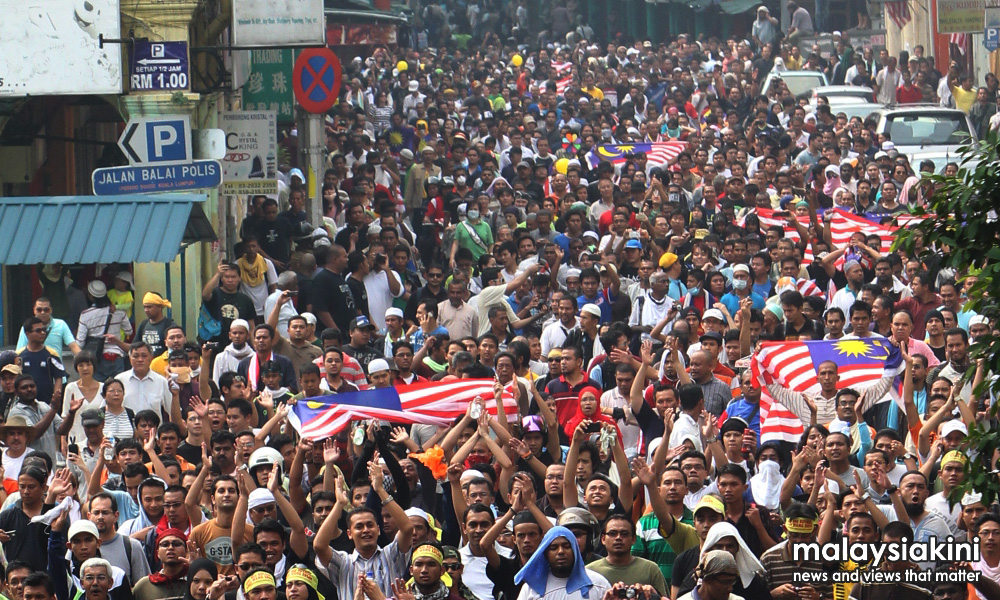
Mahathir, in this telling, is the caring, ideologically agile father: having propped up Malays so they can win back their pride, he now cuts support because the crutch mentality is undermining them (and the favouritism annoying their Chinese/Indian siblings).
There are many assumptions to all this, most notably that this is actually an agenda that individual Pakatan Harapan politicians are able and willing to push.
On a related note, it is not completely clear that a majority of Malaysians are ready to move past communalism and identity politics. “Stop calling us Malay, Chinese, Indian and Lain2 (lain-lain, others), call us Malaysians” is the progressive chatter making its rounds.
Yet, how many Malaysians were actually voting for this new vision and how many were only voting to kick out Najib or revoke GST?
(Pakatan Harapan’s messaging combined highfalutin ideals with bald-faced populism. Malaysia will revert to a previous lower, sales tax regime. It remains to be seen if and how it will supplement the budgetary loss.)
Given the current nativist backlash around the world, Malaysians will be aware of the risks of forcing any particular multicultural model. There are thorny questions to be answered, such as on the role of vernacular schools and the Malay language as Malaysians of all stations become better at English, one of many prerequisites if the country is ever going to escape the middle-income trap.
Nevertheless, if Mahathir does help realise this vision - one that embraces the PAS-voting northeast as well - then comparisons to Mandela will no longer seem so misplaced. Mahathir’s harsher critics, meanwhile, will simply contend that he is fixing what he broke. He deserves not a star, but a pardon.
Implications for Singapore
If Malaysia really can evolve into a race-blind meritocracy - a big if - it will put even more pressure on Singapore to ditch its pro-Chinese bias. To be clear, Singapore’s system is far more meritocratic and has never been plagued by the institutionalised discrimination of Malaysia.
But its pro-Chinese bias is plainly evident, for example, the preference given to ethnic Chinese migrants in order to ensure that this “global” city always maintains its Chinese supermajority; as well as the sidelining of Tharman Shanmugaratnam, the most talented, obvious, popular choice for the next prime minister, in favour of four Chinese male candidates. So much for merit.
It would indeed be a remarkable turnaround if, in 10 years’ time, Malaysia is the multicultural, tolerant society of the region, while Singapore is still wedded to this archaic pro-Chinese bias.
Over the past week some Singaporeans have been looking enviously over the border, jealous, I think, of the courage that Malaysians have found, the courage to break from the past, a courage sorely lacking in Singapore. So, now again, there is this suggestion - one that first surfaced after the 2008 Malaysian elections - that some pro-opposition fervour might diffuse down the Malacca Straits, inspiring Singaporeans to vote out the PAP at the next election.

This is overdone. Whatever quibbles Singaporeans might have about being led by a cosy cabal of elites and military men, there is no suggestion that any of them is outright corrupt. Most Singaporeans have a unique fondness for authoritarian rule, partly because we have never experienced its worst excesses. Nonetheless, having observed the peaceful transition of power up north, we now realise that such a thing is possible - democracy can work (duh).
Importantly, we have had the privilege of seeing the decades-long struggle, of understanding the characters involved, the plucky resistance of Malaysiakini’s Steven Gan, the unbridled defiance of Bersih’s Ambiga Sreenevasan, the evolution of Nurul Izzah Anwar from demure daughter to an independently-secure, articulate — and fiery, when she wants to be - orator, the immense personal sacrifices of Rafizi Ramli, Liew Chin Tong and many more. All these give us granularity and an appreciation for what’s involved - if we ever need to kick out our own tyrant.
For the PAP, the more worrying threat, perhaps, is the economic and strategic one. Singapore has always sold itself on being an oasis of stability and efficiency in a rocky region. Not only did this win us foreign investment, but the social-fairness arbitrage with Malaysia led to a brain drain of the country’s top talent, people who today occupy lofty positions across Singaporean society.
Mahathir no longer needs to threaten to “turn off the tap” - neither the literal water one nor the metaphorical human capital one - for it appears like Malaysians of all stripes, of all persuasions, of all passports, are getting ready to roll up their sleeves and rebuild their country.
Compared to us pampered Singaporeans, Malaysia’s top people have always had a reputation for being more creative, resourceful, and able to more easily transplant themselves, whether to Riyadh or Shenzhen. No surprise that some of the region’s top start-ups, including Air Asia, Grab and iFlix, are Malaysia-borne.
If Malaysia gets its act together, there is a real possibility that the region’s most vibrant knowledge economies are going to be in places like Kuala Lumpur and Penang - with the likes of Kuching and Sandakan perhaps becoming leaders in sustainable development - rather than in Singapore.
Of course, many of us look forward to a thriving, integrated region, where everybody can prosper. But in order to fully unleash the creativity and entrepreneurship of Singaporeans, the PAP will have to embark on numerous reforms that it has hitherto been unwilling to do.
The PAP also appears afraid of permitting honest public dialogues - on race relations, for instance, or Singapore’s pre-independence politics and history - that, though potentially discomfiting, would go a long way towards infusing in Singaporeans a greater sense of belonging to the country; a sensation Malaysians now seem to be drowning in.
Reset to 1957
It is telling that many Malaysians believe they have enacted a reset to 1957. The (presumed) release from Najib and the attendant race-based political system is seen as the equivalent of independence from the British.
One early superstition was that the names of Malaysia’s leaders would all align with the acronym RAHMAN, the name of its first prime minister.
With Najib’s exit bringing an end to an era, it has proved eerily prescient:
Rahman (Tunku Abdul Rahman)
Abdul Razak Hussein (Najib’s father)
Hussein Onn
Mahathir Mohamad
Abdullah Badawi
Najib Razak
The talk now is that a new formulation for a new era is emerging with the name MAHATHIR. But after Mahathir and Anwar, who’s next?
Well, for this new multicultural Malaysia, it may not be too much of a stretch to consider a Chinese Christian female prime minister. So, Hannah Yeoh, and all the Chinese, Indians and Malays you’ve converted over the years - to the Harapan cause, lah, not Christianity - your real audition may be starting soon.
Then again, maybe we’re getting ahead of ourselves. In 1957 there was, I am told, much hope too.
SUDHIR THOMAS VADAKETH is the author of ‘Floating on a Malayan Breeze: Travels in Malaysia and Singapore’. He is currently working on a book about China and India. He blogs at sudhirtv.com.
The views expressed here are those of the author/contributor and do not necessarily represent the views of Malaysiakini.


Report this comment
Are you sure you want to delete this comment?
This action cannot be undone.