


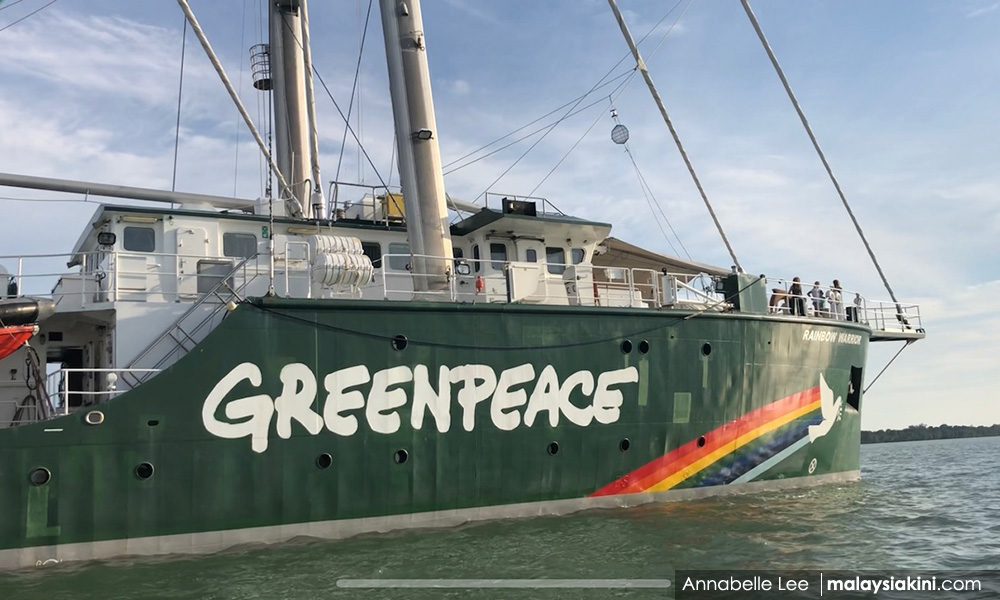

Greenpeace M’sia to target single-use plastics, deforestation
The Malaysian chapter of international environmental NGO Greenpeace has made the widespread use of plastic and deforestation its two key targets.
In particular, it aims to reduce public consumption of single-use plastics as they are a key pollutant, said Southeast Asia deputy fundraising director Jacqueline Yew, who helps run the Malaysia office...
The Malaysian chapter of international environmental NGO Greenpeace has made the widespread use of plastic and deforestation its two key targets.
In particular, it aims to reduce public consumption of single-use plastics as they are a key pollutant, said Southeast Asia deputy fundraising director Jacqueline Yew, who helps run the Malaysia office.
“Global statistics show that more than 90 percent of plastic waste is not recyclable… and Malaysia is one of the worst plastic waste producers in the region.
“Especially single-use plastics, like straws and plastic bags.
“Deforestation is (also) one of the issues we would like to look into,” she said when met on board Greenpeace’s ship, Rainbow Warrior, in Port Klang yesterday.
Citing The Wall Street Journal, Greenpeace said Malaysia as the world’s eighth-highest contributor to plastic pollution in oceans.
Yew was thus supportive of a recent statement from Housing and Local Government Minister Zuraida Kamaruddin calling for a nationwide ban on plastic bags.
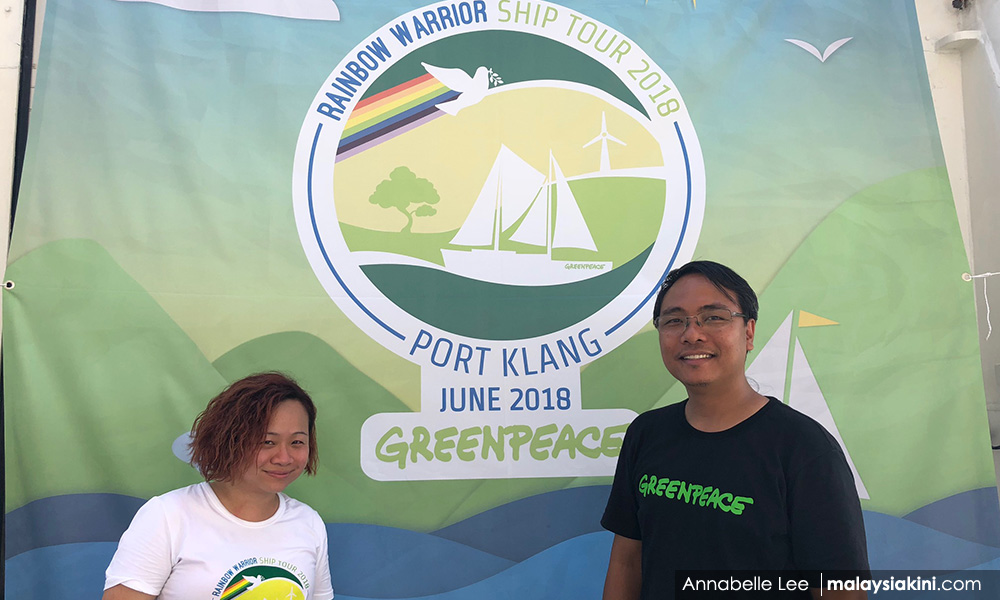
“It was totally like a song to our ears, we are very interested to see how we can collaborate (with the initiative),” Yew (left in photo) told Malaysiakini.
Peaceful direct action
Formed in 1971 in Canada, Greenpeace is well-known for its unorthodox methods of protesting environment destruction.
Registered as a company in Malaysia, it opened its local office last year and intends to apply with the Registrar of Societies next.
With its entry into the country, Yew said that a more “balanced” approach to activism will be used here.
“Greenpeace is known as an unorthodox and assertive activist organisation internationally, but that does not mean we can’t balance it out, especially in this region.
“Of course we (will be) very encouraged to be able to work with the government on policy and advocacy issues.
“We don’t believe everything can be solved using unorthodox methods,” she said when asked.
The NGO’s Southeast Asia executive director Naderev Sano added that they were looking forward to working with the newly installed Pakatan Harapan government.
“We want to confront all these problems... working with a wide range of people from government, to business, to individuals.
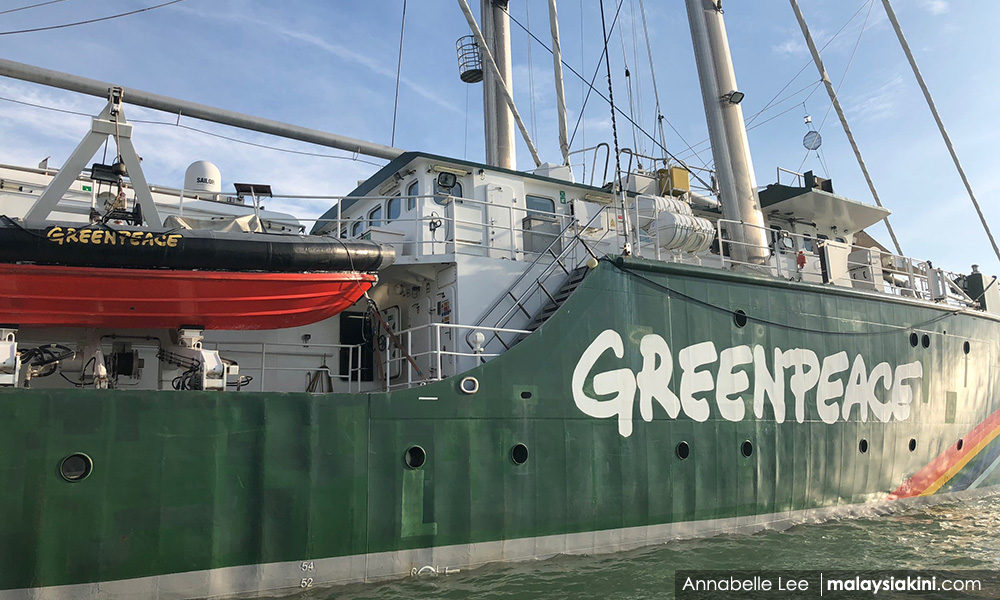
“We think that the arrival of the Rainbow Warrior (in Malaysia) is very opportune and timely with the changes in the Malaysian government.
“We do think there is hope for Malaysia to be very instrumental in confronting these big environmental problems,” Sano said.
Among those who welcomed the Rainbow Warrior when it arrived in Port Klang were Petaling Jaya MP Maria Chin Abdullah and PKR vice president Tian Chua.
Public ship tours available
The Rainbow Warrior is currently open to the public until Tuesday, June 5.
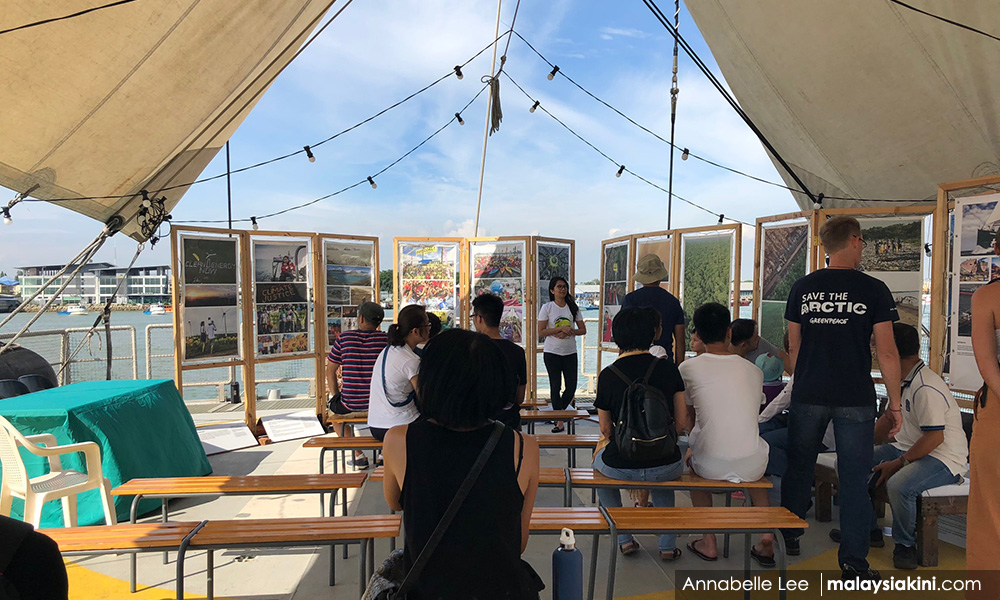
Those interested in joining one of its free guided tours need to first register with the NGO.
The ship, custom-built for Greenpeace in 2011, arrived in Malaysia as part of its Southeast Asian promotional tour.
It is the third of Greenpeace’s nautical vessels of the same name – after the original Rainbow Warrior was bombed in 1985, and the second was retired in 2011.
“The name Rainbow Warrior comes from a tradition of the indigenous people in Canada who are also called warriors of the rainbow.
“We think people who care about this planet and its future are rainbow warriors,” Sano explained.
Rainbow Warrior is docked at Kompleks Dato Shaari Jihin in Port Klang from now until June 5.


