


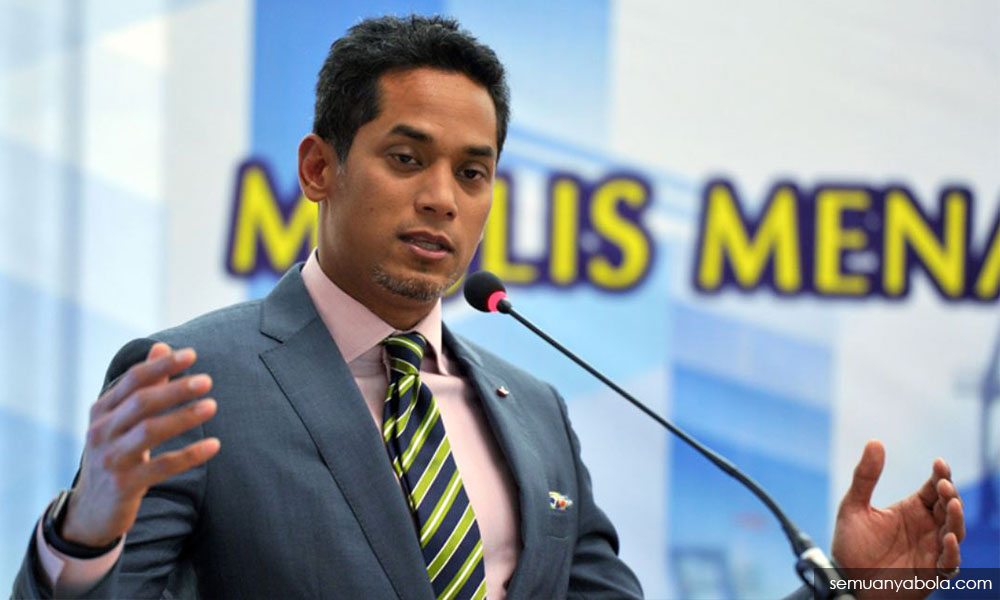

KJ runs over Dr M's Proton 2.0 idea, MCA lectures on wasting billions
Prime Minister Dr Mahathir Mohamad's aspiration for a new national car has not gone down well with his former BN colleagues, who had been comrades-in-arms in the former ruling party's Proton venture.
Umno Youth chief Khairy Jamaluddin said the plan was “regressive”, particularly in view of the scrapped Kuala Lumpur MRT3 line...
Prime Minister Dr Mahathir Mohamad's aspiration for a new national car has not gone down well with his former BN colleagues, who had been comrades-in-arms in the former ruling party's Proton venture.
Umno Youth chief Khairy Jamaluddin said the plan was “regressive”, particularly in view of the scrapped Kuala Lumpur MRT3 line.
“Where a public transport project such as the MRT3 is cancelled, the announcement of a new national car is a move that is regressive and backward.
“Not only is the project not in line with environmental concerns such as the release of carbon dioxide, but can potentially swallow up a huge part of the government budget that should rightfully be channelled towards public transport projects,” Khairy said on his Facebook today.
He was responding to Mahathir's comment on his visit to Japan that following the sale of a majority stake in Proton, his pet project as the long-serving former BN prime minister, to a China firm, he was looking at starting up a replacement.
Khairy added having another national car would add to the cost of living of Malaysians through an excise duty that exceeds 105 percent.
“Unless the project results in a fully electric car, I don't see any benefit to the people, the economy and the environment,” said the Rembau MP.
MCA: Don't burn billions
MCA publicity spokesperson Ti Lian Ker echoed Khairy, saying the project was a “return of Mahathirism”.
“Was this plan even raised and decided in cabinet, or are we seeing a return of Mahathirism - a unilateral decision-making dictatorship,” Ti said in a statement.
“While it is wishful thinking to venture into another national car project, the country’s finances should be healthy and our public transport fully developed and seamless, as intended by the former BN government,” he said.
Pointing out Proton had not performed as successful as intended “owing to preferred pricing stemming from high tariffs to make comparable imports more expensive”, Ti said the government shouldn't waste money on projects that are not viable.
“Are we going to burn billions again for yet another economically unviable project? Or should we be forsaking the hunger for the convenience of public transport? All of these solely to feed a man’s pride?”
No room for third car
MCA deputy president Wee Ka Siong meanwhile warned the market was not big enough for another car company, noting we already have Proton and Perodua.
“Starting a third national car company and to ensure its success can only mean reverting back to higher protectionism which will result in higher car prices across the board,” he argued.
He blamed the success of Proton in the past to Mahathir’s “heavy protectionism” that jacked up the price of other non-national cars and higher prices for local Protons.
“There were also many accusations that certain Proton suppliers were cronies who had benefited greatly by supplying low-quality parts at inflated prices.
“EON was made the sole distributor of Proton. Due to the protectionism for Proton, in just a few years’ time, EON became the most successful car distributor in the world as it went from nothing to becoming a company worth tens of billions and even owning a bank,” said Wee in a separate statement.
“Due to this protectionism, it had been estimated by various analysts and journalists that Proton ended up costing ordinary Malaysians up to RM300 billion over the past decades from much higher car prices for all cars and the correspondingly higher financing costs,” he claimed.
Wee also defended Prime Minister Najib Razak’s administration as having allegedly tried to “correct a legacy issue” that purportedly resulted in lower car prices.
“Due to a combination of tariff reductions and incentives, car prices in Malaysia were gradually reduced over the years resulting in Malaysians having more choices to buy higher quality and safer cars that they can now afford.
“Many car brands are now selling at a lower price compared to 20 years ago. This has significantly reduced the ownership cost and debt burden of Malaysians,” claimed Wee.
Contrary to Wee’s claim of lower car prices, a prominent automotive website Paultan.org in February disputed an exclusive report in Berita Harian that had claimed car models were significantly cheaper since the 2013 general election.


Report this comment
Are you sure you want to delete this comment?
This action cannot be undone.