


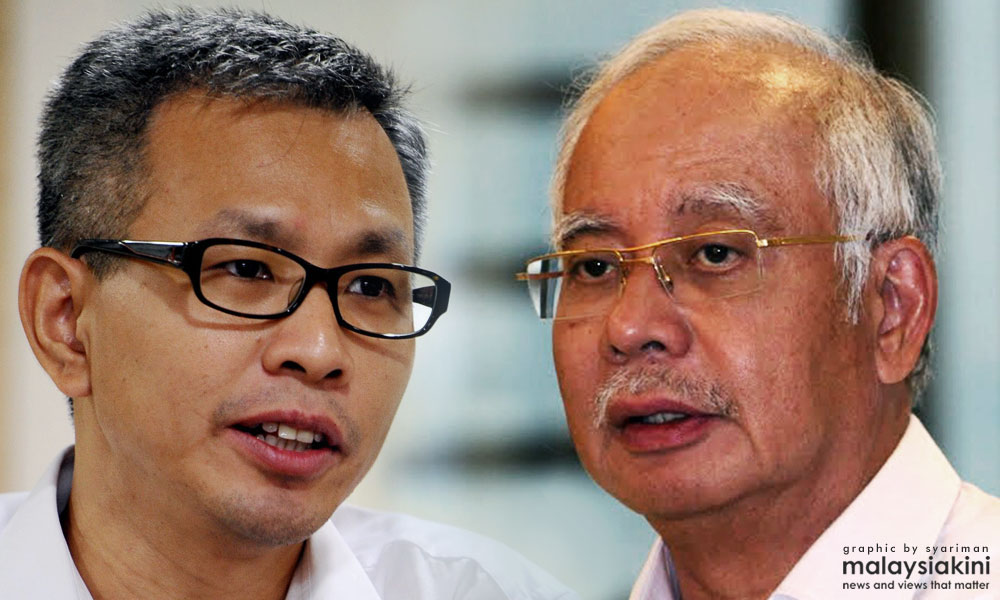

1MDB - Pua given leave to challenge Najib's gag order on him
The Federal Court has granted leave for Damansara MP Tony Pua to challenge an interim injunction barring him from making allegedly slanderous remarks about former prime minister Najib Abdul Razak with regards to the 1MDB scandal.
The Federal Court has granted leave for Damansara MP Tony Pua to challenge an interim injunction barring him from making allegedly slanderous remarks about former prime minister Najib Abdul Razak with regards to the 1MDB scandal.
Chief Judge of the High Court of Malaya Ahmad Maarop, who led a three-member panel, said the case posed important questions that warranted further argument at the apex court.
The court unanimously allowed four legal questions to be argued, namely:
1. Whether a 1987 precedent set in the defamation case between New Straits Times Press and AirAsia Bhd is good law in view of the constitutional guarantees for freedom of expression.
2. Whether an application for an interim injunction ought to be dismissed in cases where the defendant had pleaded the defences of justification and fair comment in his defence, and/or stated under oath affirming that his belief that this statement was true.
3. Whether the exercise of the speaker of the Dewan Rakyat’s powers precludes a plaintiff’s right to establish that the exercise of the power was not bona fide in a civil suit.
4. Whether the court can treat the fact that the attorney-general had decided not to prosecute a case and his explanation for not doing so as being tantamount to an exoneration.
Other members of the panel were Federal Court Judges Balia Yusof Wahi and David Wong.
Najib had sued Pua on April 6 last year, his second defamation suit against him. On Aug 4 the same year, Najib also obtained an interim injunction to gag Pua pending disposal of the case.
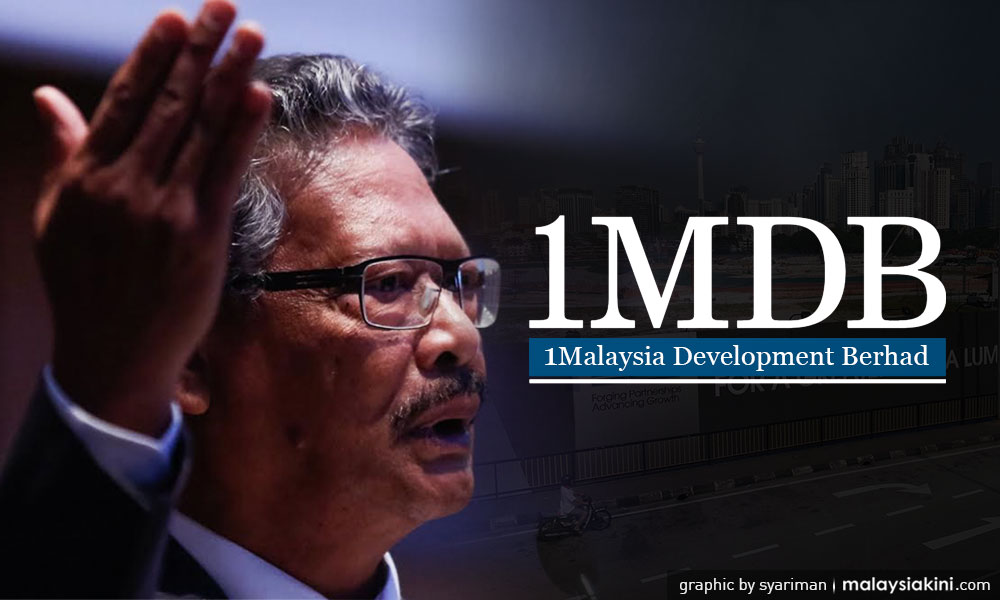
Pua had unsuccessfully challenged the injunction at the Court of Appeal, where the court controversially took judicial notice of then attorney-general Mohd Apandi Ali’s statement saying Najib had been cleared of wrongdoing in the 1MDB scandal.
The judicial notice meant that the court accepts as common knowledge that Najib was supposedly innocent in the scandal which could have implications if the present administration decided to press charges against him.
'Warrants intervention'
During that hearing, Pua’s counsel Malik Imtiaz Sarwar argued that this cannot be the case as Apandi (above) had merely exercised his discretion as attorney-general not to prosecute Najib.
He said the power to determine whether Najib was innocent or guilty rested with the courts, not the attorney-general.
“The breadth and scope of this decision and its impact warrants intervention by this court,” he said.
Meanwhile, in arguing against leave being granted to Pua to challenge the injunction, Najib’s counsel Mohd Hafarizam Harun said maintaining the injunction until the disposal of the full trial would not harm Pua’s rights.
This is because Pua would still have the opportunity to argue against it when the matter goes to trial, he said, adding that leave ought not to be granted for appeals against interlocutory injunctions.


Are you sure you want to delete this comment?
This action cannot be undone.