



Proposed Racial and Religious Hatred Bill ill-conceived
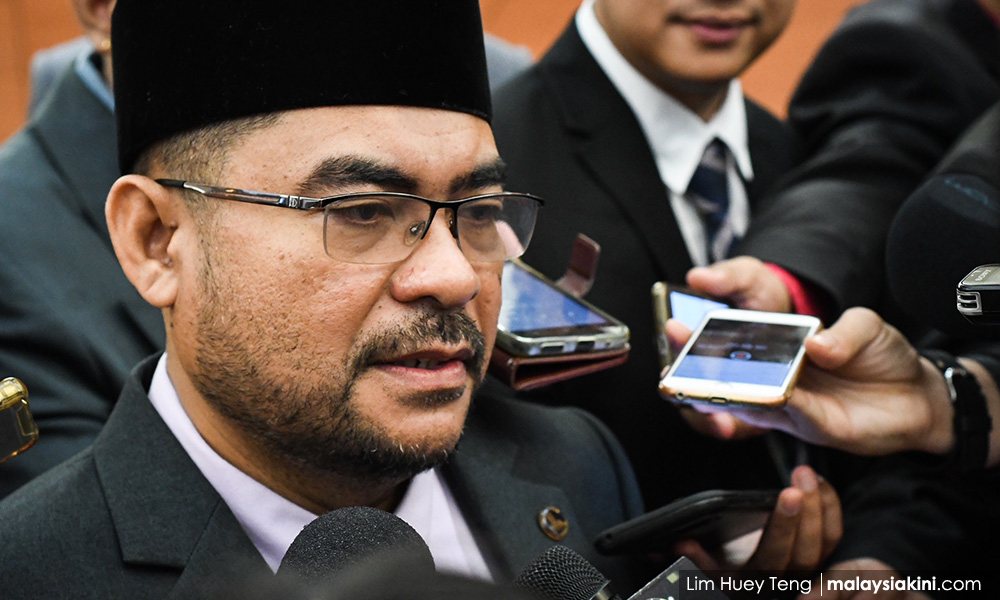
COMMENT | Minister in the Prime Minister's Department (Religion) Mujahid Yusof Rawa has told Parliament that a Religious and Racial Hatred Bill would be tabled soon “...not just to deal with incidents when Islam is insulted but also when non-Muslim faiths are insulted... This is to ensure that our multi-religious and multiracial society is protected from being insulted and belittled."
There are three reasons why such a law is ill-conceived:
(i) It is framed as a “problem” rather than a solution;
(ii) It is another “fluffy” law that can be used against dissidents; and
(iii) It is not “rights” based.
Let's move from the “problem” frame to a “solution” frame. Milton Erickson, the acclaimed practitioner of medical hypnosis, taught us the power of “embedded commands” and how words shape our external experience. Thus, if we want a new society that is equal, just and tolerant, we should avoid naming a law as “Religious and Racial Hatred Act”...
COMMENT | Minister in the Prime Minister's Department (Religion) Mujahid Yusof Rawa has told Parliament that a Religious and Racial Hatred Bill would be tabled soon “...not just to deal with incidents when Islam is insulted but also when non-Muslim faiths are insulted... This is to ensure that our multi-religious and multiracial society is protected from being insulted and belittled."
There are three reasons why such a law is ill-conceived:
(i) It is framed as a “problem” rather than a solution;
(ii) It is another “fluffy” law that can be used against dissidents; and
(iii) It is not “rights” based.
Let's move from the “problem” frame to a “solution” frame. Milton Erickson, the acclaimed practitioner of medical hypnosis, taught us the power of “embedded commands” and how words shape our external experience. Thus, if we want a new society that is equal, just and tolerant, we should avoid naming a law as “Religious and Racial Hatred Act”.
Why focus on “hatred”? Words sculpt our inner world which then shapes the outer world. Thus, shout at a child “Don’t run …you’ll fall!” - and the chances are the child is going to fall. As they say in communication studies, the meaning of your communication is in the effect that it evokes. So let us focus on what it is we want to take place.
Fluffily worded laws
The old regime’s National Unity Consultative Council (NUCC) had drafted the National Harmony Bill, National Unity Bill and the National Unity & Integration Commission Bill. Like these fluffily-worded bills, the originators of these bills, including the present law under discussion, are avoiding the “problem” we are trying to solve.
Sure, “national harmony” and “national security” are preferable to the embedded commands in “religious and racial hatred” and “sedition”, but we know from our harrowing experience with the Internal Security Act and the Sedition Act that these nice fluffy concepts cut both ways.
Nice folks like us human rights defenders get taken in under the same fluffily worded laws as well! Thus, I was arrested and detained in 1987 for threatening “national harmony” because I had spoken at a forum on human rights to mother tongue education.
From the bills, it is very clear that they are aimed at combatting a problem widely recognised by the world community at least since the Second World War; namely, racism, racial discrimination, related prejudice and intolerance.
The new foreign minister should take note of this since he has committed to the ratification of the international covenants, including the International Convention on the Eradication of Racial Discrimination.
Thus the UK has the Equality Act 2010, the purpose of which is to align the Race Relations Act with European Human Rights legislation and to extend protection to other groups not previously covered, namely, to cover age, disability, gender, religion, belief and sexual orientation.
It is not surprising that in the old and new Malaysia, legislators cannot seem to be able to frame laws in terms of “equality” because “incitement to racial and religious hatred” would be considered a criminal offence within the scope of such an Equality Act.
Protection from hate speech
Under the UK Equality Act, actions are also considered to be direct discrimination when “someone is treated less favourably than another person because of a protected characteristic”. The British Criminal Justice & Public Order Act 1994 made publication of materials that incited racial hatred an arrestable offence. These include:
• Deliberately provoking hatred against a racial group;
• Distributing racist material to the public;
• Making inflammatory public speeches;
• Creating racist websites on the internet; and
• Inciting inflammatory rumours about an individual or ethnic group in order to spread racial discontent.
“Hate crimes” are criminal acts committed as intimidation, threats, property damage, assault, murder or such other criminal offence. They are a type of crime in which the perpetrator is sending a message to the victim about their right to belong to that society.
Hate crimes violate the principle of equality between people and deny their right to achieve full human dignity and to realise their full potential.
Hate speech is defined as an expression of hatred towards another person or group of people using various means such as writing, speech or any other form of communication. In the UK, there are a number of laws set out to provide protection to citizens from hate speech.
In 2006, the Public Order Act was amended to include religious hatred and in 2008, the Public Order Act was amended to forbid the incitement of hatred on the grounds of sexual orientation. Anyone who uses threatening or abusive behaviour in this way can face up to seven years in prison, which is the maximum sentence. Fines can also be added to prison sentences or applied solely.
Equality and Human Rights Commission
In the UK, they also have an Equality and Human Rights Commission. For a population of more than 56 million, this commission has just 10 commissioners. Now, in Malaysia, we already have a National Human Rights Commission (Suhakam). Our Suhakam should, therefore, extend its jurisdiction to incorporate an Equality Commission for, after all, equality is an intrinsic part of our human rights.
Its work would be to encourage greater integration and better ethnic relations and to use legal powers to help eradicate racial discrimination and harassment. Thus, its ambit would cover racist stereotyping in textbooks and the press; racial discrimination in the public sphere, employment, education, social services and advertisements.
Such an independent commission should be empowered to issue codes of practice and be invested with powers to conduct formal investigations and to serve notices to furnish information or documents in order to enforce the law.
Clearly, far right racial supremacists and religious exclusivists who rail about the dominance of their “race” or religion should be reined in by an Equality and Human Rights Commission and dealt with under an Equality Act and/or Public Order Act.
To take Malaysia out of the Dark Ages and into 21st Century developed status, the new regime needs to address the main issues of racism, racial discrimination and related intolerance in our society and to propose appropriate bills and institutions to resolve these problems.
As we have seen, failure to do so results in fluffily clad bills which merely serve to glamourise an insincere regime.
KUA KIA SOONG is adviser to Suaram, a human rights advocacy NGO.
The views expressed here are those of the author/contributor and do not necessarily represent the views of Malaysiakini.


Report this comment
Are you sure you want to delete this comment?
This action cannot be undone.