


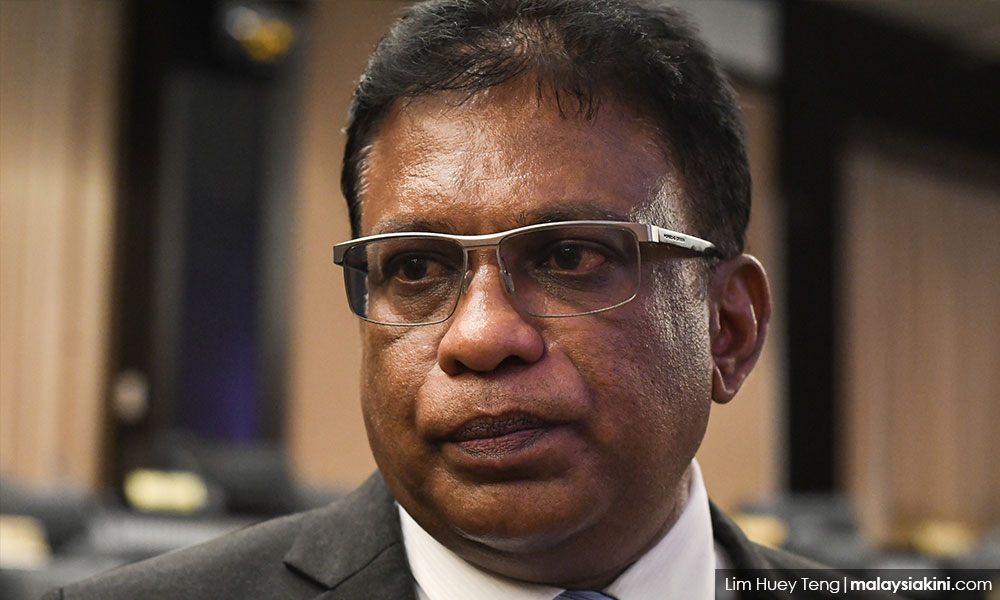

Bar disappointed in apex court decision on top judges
Malaysian Bar president George Varughese expressed his disappointment over the apex court's failure to rule over the controversial appointments of former chief justice Md Raus Sharif and former Court of Appeal president Zulkefli Ahmad Makinudin, and deeming its four questions of law "academic".
Varughese said the decision (not to rule) invariably would lead to uncertainty as to the current position of the law in the matter regarding the controversial appointments...
Malaysian Bar president George Varughese expressed his disappointment over the Federal Court's failure to rule over the controversial appointments of former chief justice Md Raus Sharif and former Court of Appeal president Zulkefli Ahmad Makinudin, deeming its four questions of law "academic."
Varughese said the decision not to rule would invariably lead to uncertainty as to where the law stands on the controversial appointments.
"The roles of the chief justice and Court of Appeal president under the Federal Constitution could have been clarified by the Federal Court.
"There is now the risk that there could be more controversial appointments of this nature in the future, which we maintain is unconstitutional. We are disappointed the judges did not seize the opportunity to determine issues which are of considerable constitutional and public importance," he said.
Read more: Apex court declines to rule on Raus, Zulkefli appointments
Varughese said the vital issues are whether the outgoing chief justice (at the time, Arifin Zakaria) is permitted by law to advise the Yang di-Pertuan Agong on the appointment of additional judges to take effect after he steps down from the post.
What is also significant, he added, is the justiciability of the appointment of judges by the Agong under Articles 122 (1A) and Article 122B (1) of the Federal Constitution.
"These are not matters which have been rendered academic to the passage of time or change of circumstances, but constitute clear, present and substantive issues which have attracted nationwide interest.
"Public interest requires that the questions before the court be answered. The interpretation of the provisions in the Federal Constitution can never be academic," he said.
The Bar was represented by Ambiga Sreenevasan and Farez Jinnah, while senior federal counsel Amarjeet Singh, Alice Loke and Suzana Atan appeared for the Attorney-General’s Chambers.
Lawyer Mohd Haniff Khatri Abdulla was also present in court, as he was holding a watching brief for his client Prime Minister Dr Mahathir Mohamad.
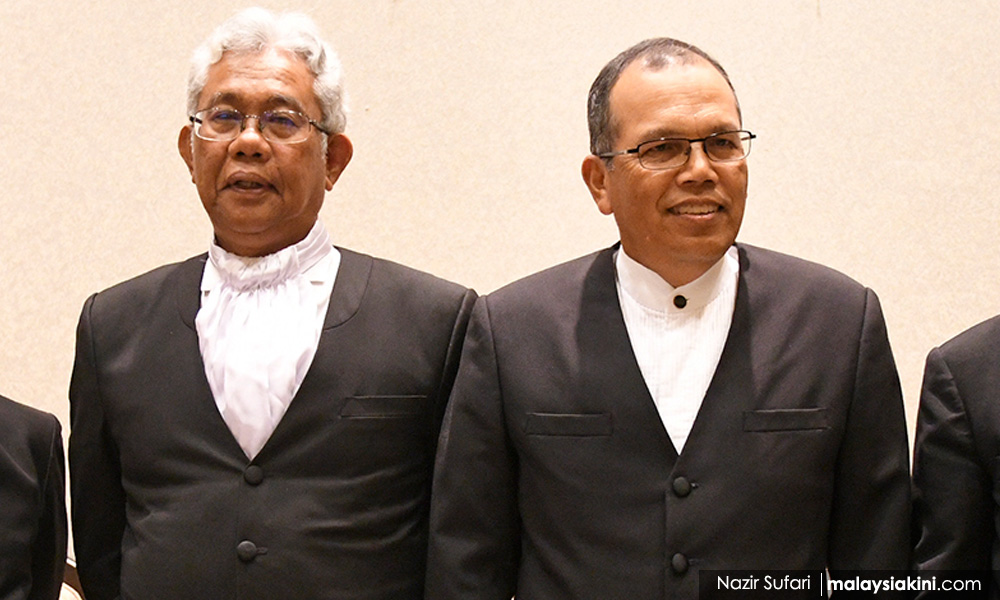
Mahathir had filed a similar challenge against the appointments of Raus and Zulkefli, which was later thrown out. According to Haniff, Mahathir's appeal is pending at the Court of Appeal next month.
He said he will seek further instruction on whether to proceed, as the apex court has ruled that the matter is academic. However, if Mahathir does decide to mount the challenge, there will be only five Federal Court judges who may sit at the hearing.
Haniff also agreed with Varughese that the apex court should have made a decision after hearing the case in March.
"It is their (bench) delay in delivering the decision that has rendered the matter academic, where else it should have not been like that. We had almost four months when the two (Sharif and Zulkefli) were in power," he said.
Haniff said it was necessary to make the position clear or to extend the retirement age of judges before the constitutional amendment is made.
Senior lawyer Muhammad Shafee Abdullah, appeared for the Muslim Lawyers Association, said the non-decision reflects that there are no questions to the appointment.


Are you sure you want to delete this comment?
This action cannot be undone.