




CJ tells judges to be brave as dissent sometimes becomes law
Chief Justice Richard Malanjum advised judges and law students who aspire to be judges to be brave in writing dissenting judgments as the dissent judgment sometimes may become law.
Chief Justice Richard Malanjum advised judges and law students who aspire to be judges to be brave in writing dissenting judgments as the dissent judgment sometimes may become law.
Speaking at the Professor Emeritus Ahmad Ibrahim 17th memorial lecture recently at the International Islamic University (IIU), Justice Malanjum tells judges to be brave and just do the right thing.
"When you make a decision, consider it as if (it were being) made on the last day of your working life as a judge," he said.
Citing Lord Denning from his book The Road to Justice, Justice Malanjum said: "once a man becomes a judge, he has nothing to gain from further promotion and does not seek it … The reason is that we think that the decisions of a judge should not be influenced by the hope of promotion.
Justice Malanjum further quoted Perak ruler Sultan Nazrin Shah who last year had said some judges may hold strong legal and moral convictions, yet fail to articulate their concerns in their judgments.
"They may remain silent out of deference to the judgments of others, out of concern that their comments may be dismissed, or out of the misplaced belief that what they might have to say is not that important.
"Sometimes the brave dissenting voice is transformed into law," the chief justice said, in quoting the sultan (photo, below).

The country’s top judge said dissenting judgments also provide the alternative view if not for the present, then the future of what would possibly be the law when more judges are convinced of the rationale of the dissenting judgment.
"In my view, dissenting judgments do play a huge and integral role in any judicial system.
"They promote judicial independence; they may spark changes in the law, be it legislative or judicial precedent; and they generally provide a diverse view on what the law should be," he said.
However, he noted the main downside of a dissenting judgment may be the uncertainty of the law it can create.
"We all know that it is vital for the law to be certain otherwise the administration of the law would be a difficult task. Lawyers would find it difficult to advise their clients. However, in my opinion, the positive side of allowing a dissenting judgment outweighs the negative aspect of it," he said.

The top judge cited the landmark Semenyih Jaya and the M Indira Gandhi (photo) cases delivered earlier this year, which recognises that judicial independence forms part of the basic feature of our Federal Constitution, and hence, such dissenting views in appellate courts should be recognised.
"For that reason, we have appellate judges, particularly at the apex court, in the past and in our midst today who would not hesitate to dissent when he or she thinks that the majority has erred in the interpretation or application of the law.
"This principle must be defended and allowed to continue. Of course, it is not a license for any judge to dissent, just for the sake of dissenting," he said.
In the past, Justice Malanjum had written some well-known dissent judgments especially in the Lina Joy case, the Catholic Herald case and also the R Subashini case when he was a Court of Appeal judge.
Justice Malanjum, in his speech, further cited some famous judgments which were considered in dissent at that time but had since transformed into law.
He pointed out the case of the Adorna Properties, whereby the Court of Appeal dissenting judgment was then adopted as the right judgment in the Tan Ying Hong case over nine years later. This ruling then departed from the decision in the Adorna Properties case at the Federal Court.
Justice Malanjum also mentioned then High Court judge Mohd Hishamudin Mohd Yunus (who retired at the Court of Appeal, photo below) in the habeas corpus Abdul Ghani Haroon case in 2001, concerning detention under the Internal Security Act.
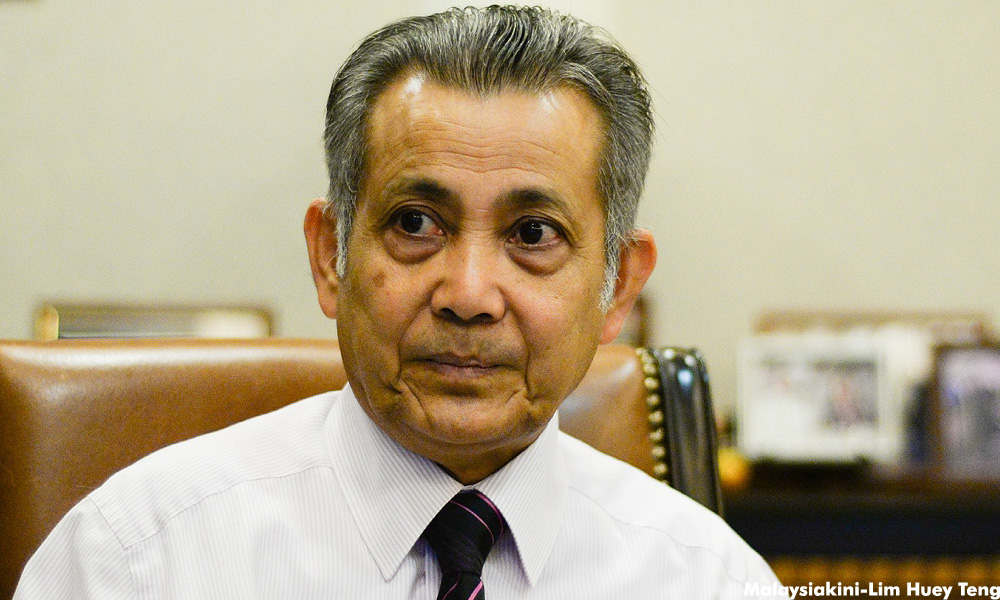
"While his Lordship (Hishamudin) allowed the application but in the process of doing so, he went a step further to call upon Parliament to review the usefulness of the ISA.
"It turns out his comment was not in vain because the ISA was eventually repealed," he said.
The top judge also pointed to the dissenting judgment of former Court of Appeal judge KC Vohrah in the Yong Teck Lee vs Harris Mohd Salleh, where the question was whether the decision of the High Court in respect of election matters could be appealed.
Justice Malanjum said Vohrah dissented as he preferred a more liberal view and held that the construction of the law suggested Parliament intended said decisions to be appealable.
"Not long after the decision, Parliament amended the law and allowed a right of appeal to the Federal Court. Vohrah was therefore correct. This would never have been known but for his dissent," he said.
Justice Malanjum said the diversity of views, especially from the judiciary is a nikmat, a blessing.
"So for judges and would-be judges, as I have said earlier, be brave and do not hesitate to state your views. There is little use in being a ‘yes man’. It is high time that we scrap the ‘herd mentality’ at all levels of our society.
"Dissent encourages independence of thought and paves the way for the healthy development of the law in future. We would not be where we are today but for the healthy and vigorous contestation of ideas," he said.


Report this comment
Are you sure you want to delete this comment?
This action cannot be undone.