



Soi Lek: Opponents’ attempt to bury me made me work harder
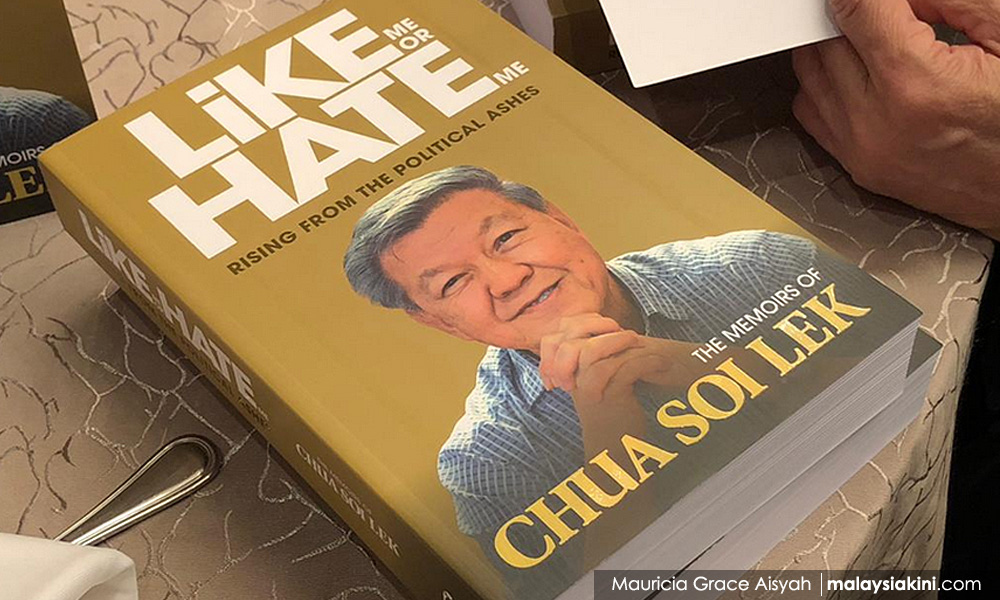
Editor’s note: This is the fourth part of a series of excerpts from former health minister and MCA president Chua Soi Lek’s book, ‘Like Me or Hate Me: Rising from the Political Ashes’.
BOOK EXCERPT | When the 2008 election campaign began, I returned to Batu Pahat to campaign for Datuk Koh Chee Chai in the Bandar Penggaram state seat, another constituency I used to represent. But I also campaigned for my son and Labis parliamentary seat candidate, Chua Tee Yong. So I was busy travelling between Batu Pahat and Labis every day.
As this was Tee Yong’s first election campaign, he had to learn the ropes and the skills needed when giving speeches to Malay, Indian and Chinese crowds.
The gist of such a speech, I told him, was a very brief introduction of himself, his past experience as a chartered accountant and his final job as chief financial officer in a subsidiary of a government-linked company. This should be followed by what he would do if he won the seat. There were to be no announcements of government grants, no personal attacks against political opponents, and no controversial references to race or religion.
I also did my best to help Labis MCA divisional chairman Tan Kok Hong. He was defending his Bekok state seat for the third term. Bekok was another state seat within the parliamentary seat of Labis. Tan Kok Hong was an ex-Special Branch inspector. Fortunately, he got along well with Tee Yong.
During the campaign period, the MCA members in Labis were cooperative and gave their full support to both Tee Yong and Kok Hong. There was no factional politics. The MCA general election machinery also functioned smoothly and effectively. I played the role of adviser in the election operation room.
Tee Yong had no difficulties in delivering his speech in Bahasa Malaysia, but he struggled when delivering Mandarin speeches. I impressed upon him that he needed to improve his Mandarin. It was advice he quickly took to heart. Six years later, his Mandarin is much better than mine when I was serving my second term as a state assemblyman.
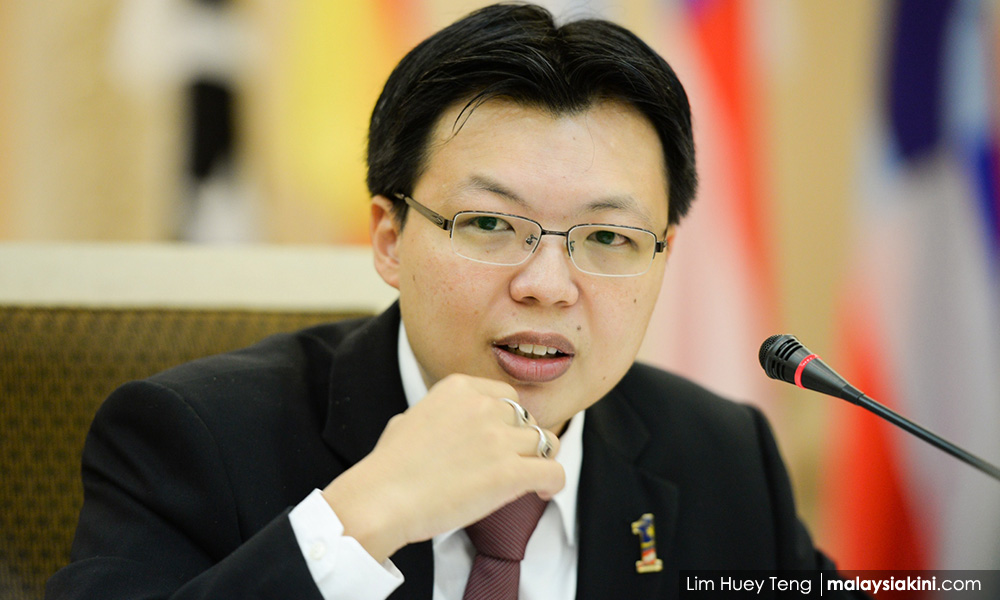
During the campaign period, my speeches were short. I told voters in Labis that with Tee Yong (photo) as an MP, there would be two people serving the constituency. Since I was an ordinary member with more time on my hands, the voters in Labis could feel free to contact me if they needed advice or help. I have honoured that pledge to this day and still visit the Labis constituency when the need arises.
It was obvious, from the time I resigned from all posts until the general election, that there had been a concerted effort to ensure my supporters and friends understood that I was no longer welcome in the party. In short, the expectation was that I should withdraw from politics completely and be consigned to the political dustbin, never to be heard or seen again.
Meanwhile, the Ministry of Health was not spared from political interference. When I resigned, Ka Ting took over as the acting minister of health. And after the election, he appointed Liow Tiong Lai as minister of health.
A MoH official told me an instruction was also given that MoH officials should not help me in any way if I made any enquiry or sought help from ministry officials about projects that I started when I was the minister. The argument given was that this was necessary to ensure I did not receive any financial support from concessionaires and contractors who were involved in ministry projects.
It appeared that his real calculation was that if I was deprived of financial resources, it would be difficult for me to make a political comeback. Since then, I have avoided contacting the MoH to underline the point that I did not approve and award projects for personal monetary gain.
Writing on the wall
In retrospect, I should thank my political opponents. Their concerted attempts to bury me politically angered my friends and supporters. Their efforts also provided me with a stimulus, encouraging me to work harder and not to give up.
I wanted to prove that the majority of my comrades and friends, as well as the public in general, did not subscribe to the moral policing propagated by President Ong and his supporters.
Unfortunately for him, Ong Tee Keat (photo, left) attempted to use the same moral high ground to undermine me at the later stage of my political career. This attempt to take on the role of moral guardian was to become a fatal self-inflicted political blow that caused him to lose the presidency to me in 2010.

Four days after nomination day, I received a call from the office of the Johor menteri besar, Abdul Ghani Othman, asking me to campaign with him in several hotly contested seats in the state. It was then that I learnt that a general instruction had been given to MCA leaders in Johor not to get me involved in the campaign. The logic was that my presence would drive away voters.
However, because of the menteri besar’s request I did campaign in Bakri and Gelang Patah, two Chinese-majority constituencies hotly contested by the DAP. I made two appearances in each constituency with the menteri besar. While campaigning in these areas, it soon became obvious to me that the ground was shifting against the BN, especially among the Chinese voters...
Editor’s note: This is the fourth part of a series of excerpts from former health minister and MCA president Chua Soi Lek’s book, ‘Like Me or Hate Me: Rising from the Political Ashes’.
BOOK EXCERPT | When the 2008 election campaign began, I returned to Batu Pahat to campaign for Datuk Koh Chee Chai in the Bandar Penggaram state seat, another constituency I used to represent. But I also campaigned for my son and Labis parliamentary seat candidate, Chua Tee Yong. So I was busy travelling between Batu Pahat and Labis every day.
As this was Tee Yong’s first election campaign, he had to learn the ropes and the skills needed when giving speeches to Malay, Indian and Chinese crowds.
The gist of such a speech, I told him, was a very brief introduction of himself, his past experience as a chartered accountant and his final job as chief financial officer in a subsidiary of a government-linked company. This should be followed by what he would do if he won the seat. There were to be no announcements of government grants, no personal attacks against political opponents, and no controversial references to race or religion.
I also did my best to help Labis MCA divisional chairman Tan Kok Hong. He was defending his Bekok state seat for the third term. Bekok was another state seat within the parliamentary seat of Labis. Tan Kok Hong was an ex-Special Branch inspector. Fortunately, he got along well with Tee Yong.
During the campaign period, the MCA members in Labis were cooperative and gave their full support to both Tee Yong and Kok Hong. There was no factional politics. The MCA general election machinery also functioned smoothly and effectively. I played the role of adviser in the election operation room.
Tee Yong had no difficulties in delivering his speech in Bahasa Malaysia, but he struggled when delivering Mandarin speeches. I impressed upon him that he needed to improve his Mandarin. It was advice he quickly took to heart. Six years later, his Mandarin is much better than mine when I was serving my second term as a state assemblyman.
During the campaign period, my speeches were short. I told voters in Labis that with Tee Yong (photo) as an MP, there would be two people serving the constituency. Since I was an ordinary member with more time on my hands, the voters in Labis could feel free to contact me if they needed advice or help. I have honoured that pledge to this day and still visit the Labis constituency when the need arises.
It was obvious, from the time I resigned from all posts until the general election, that there had been a concerted effort to ensure my supporters and friends understood that I was no longer welcome in the party. In short, the expectation was that I should withdraw from politics completely and be consigned to the political dustbin, never to be heard or seen again.
Meanwhile, the Ministry of Health was not spared from political interference. When I resigned, Ka Ting took over as the acting minister of health. And after the election, he appointed Liow Tiong Lai as minister of health.
A MoH official told me an instruction was also given that MoH officials should not help me in any way if I made any enquiry or sought help from ministry officials about projects that I started when I was the minister. The argument given was that this was necessary to ensure I did not receive any financial support from concessionaires and contractors who were involved in ministry projects.
It appeared that his real calculation was that if I was deprived of financial resources, it would be difficult for me to make a political comeback. Since then, I have avoided contacting the MoH to underline the point that I did not approve and award projects for personal monetary gain.
Writing on the wall
In retrospect, I should thank my political opponents. Their concerted attempts to bury me politically angered my friends and supporters. Their efforts also provided me with a stimulus, encouraging me to work harder and not to give up.
I wanted to prove that the majority of my comrades and friends, as well as the public in general, did not subscribe to the moral policing propagated by President Ong and his supporters.
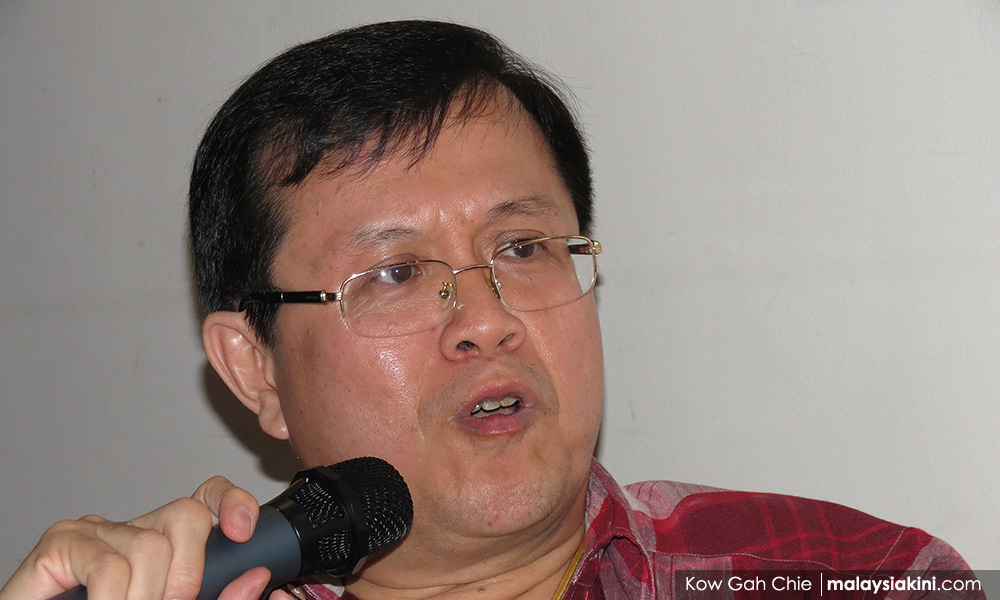
Unfortunately for him, Ong Tee Keat (photo) attempted to use the same moral high ground to undermine me at the later stage of my political career. This attempt to take on the role of moral guardian was to become a fatal self-inflicted political blow that caused him to lose the presidency to me in 2010.
Four days after nomination day, I received a call from the office of the Johor menteri besar, Abdul Ghani Othman, asking me to campaign with him in several hotly contested seats in the state. It was then that I learnt that a general instruction had been given to MCA leaders in Johor not to get me involved in the campaign. The logic was that my presence would drive away voters.
However, because of the menteri besar’s request I did campaign in Bakri and Gelang Patah, two Chinese-majority constituencies hotly contested by the DAP. I made two appearances in each constituency with the menteri besar. While campaigning in these areas, it soon became obvious to me that the ground was shifting against the BN, especially among the Chinese voters.
There were many reasons for this. One of them involved the then-Umno Youth chief Hishammuddin Hussein. On 20 July, 2005, he had given his infamous keris-wielding speech during the Umno Youth Assembly, making several remarks that alienated the Chinese.
Since the MCA in general, and President Ong in particular, had left the remarks unchallenged, many Chinese concluded that the party could no longer effectively represent their interests. This only served to reinforce the idea that the MCA under Ka Ting was only playing second fiddle to Umno.
In Labis, it was obvious that on the ground, anti-establishment feeling among Chinese and Indian voters was very strong. The Hindu Rights Action Force (Hindraf) movement had also produced a shift in support among Indians.
There were also other issues working against the government. These included oil price rises, inflation and corruption allegations.
During the campaign, I also discovered that the DAP and their supporters were better organised, more committed, and hungry for victory than MCA workers.
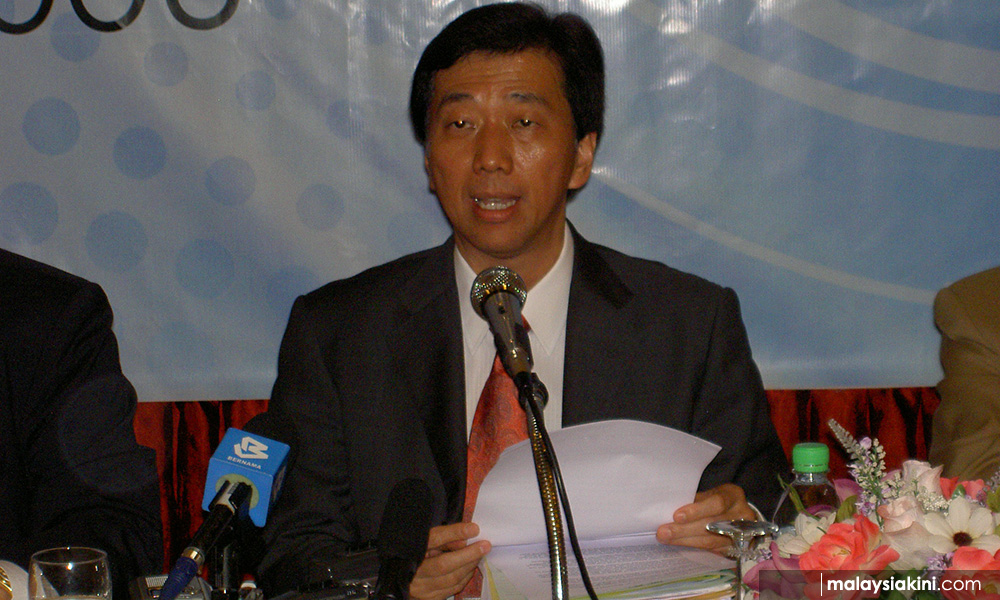
From the time Ong Ka Ting (photo) became the president in 2003 to the 2008 general election, I cannot recall any in-depth discussions about the need for the party to be engaged on social media. Instead, the view was often expressed that there was a lot of misinformation and half-truths on the Internet, and that the rakyat would not be swayed by what was being said by the opposition.
The idea that the party should reach out to voters through the social media platforms was therefore alien to most MCA leaders. As a result, the DAP was way ahead of us, having trained a core group of dedicated and committed young cybertroopers.
On polling day (8 March, 2008), Koh Chee Chai successfully defended the Bandar Penggaram state seat, but his majority was razor-thin. In my last state election in 1999, I had won the seat with majority of more than 14,000 votes.
Standing in my former parliamentary seat of Labis, Tee Yong also won. But his majority of 4,000 was also significantly lower than the 10,000 majority I obtained in 2004.
Tan Kok Hong, who was seeking re-election in the Bekok state seat, also survived the political tsunami with a reduced majority. Overall, however, the MCA performed badly, as did the ruling coalition in general.
The 2008 political tsunami
The 2008 political tsunami came as a great shock to the BN and its component parties. After the creditable showing in 2004 election, government leaders, including those in the MCA, were confident that there would be no serious challenge to the ruling coalition’s political dominance.
There was general consensus among BN leaders that we might not do as well as in the 2004 election. But there was no expectation that any state government would fall into opposition hands.
Between 2004 and the end of 2007, I cannot recall any discussion in the cabinet that the BN might face defeat in any state. The only exception was Kelantan, where PAS had been running the state government for some time.
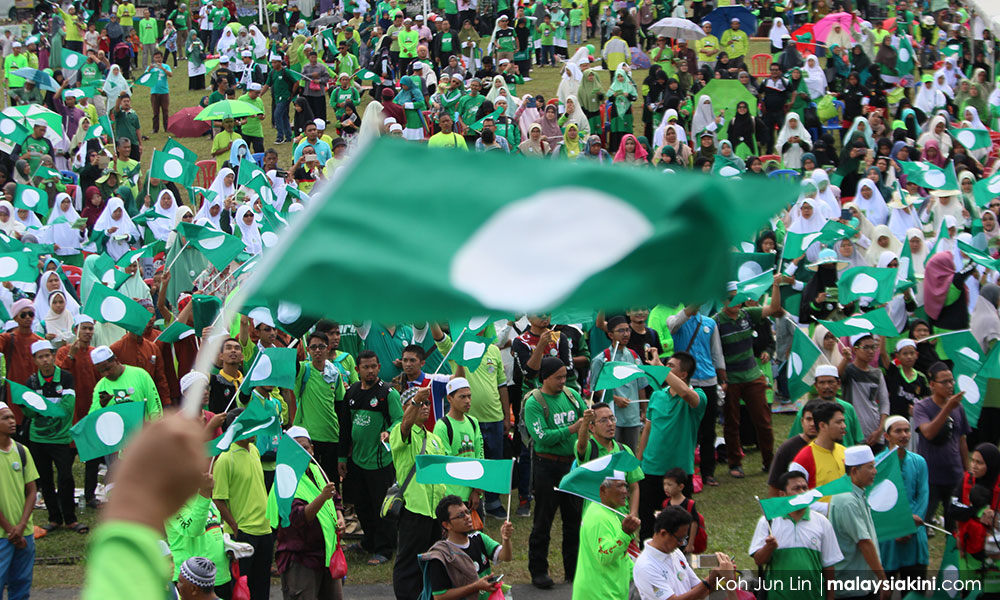
I do not know what reports the Special Branch was giving the prime minister, but my feeling was that the Special Branch did not have accurate information about the true extent of dissatisfaction and disillusionment among the voters.
Before the general elections, there was a lot of complacency among many MCA leaders, especially at the divisional level. The thinking then was that, at worst, we would lose a few parliamentary and state seats.
This mindset was also dominant in the other component parties in the ruling coalition. Towards the end of 2007, a senior Gerakan leader told me he believed his party would continue to control the state government. At worst, he believed that the BN would be able to win 25 out of the 40 state seats.
He admitted that the DAP in Penang was very active and better organised. But it clearly never crossed his mind that, come the 2008 general election, Penang would be one of several states to fall to the opposition.
Many voters clearly believed the government under Pak Lah (Abdullah Ahmad Badawi) had failed to deliver on a lot of issues. The prime minister had not been doing what he promised, particularly when it came to fighting corruption and implementing more moderate and tolerant Islamic policies.
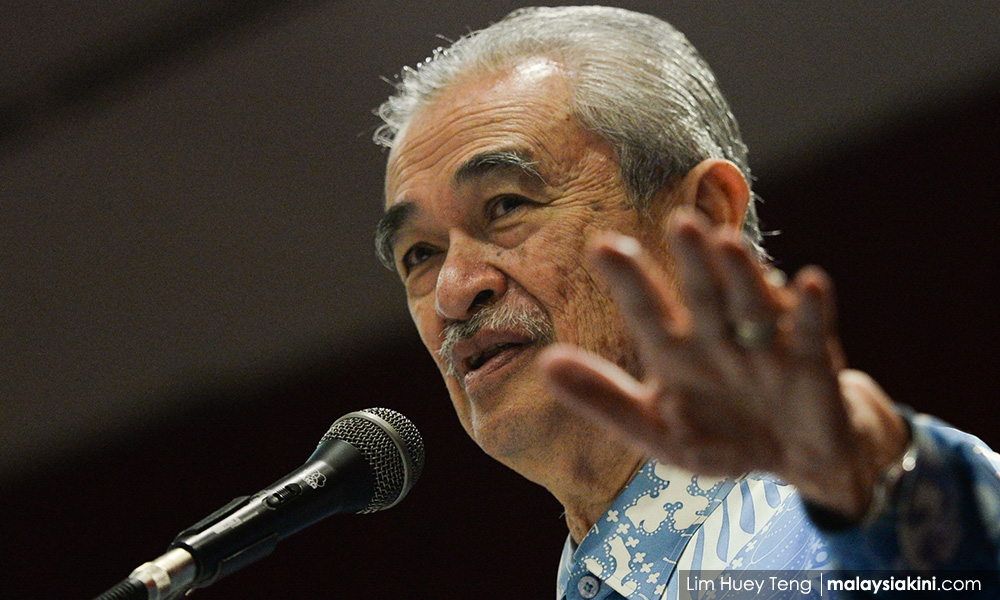
The incidence of petty crime was also rising. This was compounded by the high cost of living and the poor communication skills of government leaders. Pak Lah’s tendency to fall asleep during functions (he suffered from sleep apnea) did not help either.
But while there was no major issue that warranted urgent attention, the opposition alliance consisting of the Parti Keadilan Rakyat (PKR), the DAP and PAS had successfully projected themselves as a credible government in waiting. Their call for change was well received by younger voters in a way that cut across racial lines. The BN government had also failed to recognise the growing discontent of the middle classes.
To BN leaders, overconfident after winning every general election since independence, the 12th general elections would be like all the others. In the MCA in particular, it was business as usual.
As a result, the MCA lost badly. The number of MCA MPs was reduced from 31 to 15, and the number of state seats fell from 76 to 31.
In Penang, the MCA failed to win any parliamentary or state seat. In Negeri Sembilan, the MCA only managed to win one state seat. In Selangor, we managed to retain one state seat. Ong Tee Keat (who later became MCA president) won the only parliament seat in Selangor.
In Perak, the MCA managed to win one state seat. The only parliamentary seat in Perak was won by Kong Cho Ha. Johor, however, continued to be the fortress of MCA with four parliamentary seats and 12 state seats.
In response, President Ong declined any cabinet appointments. Taking responsibility for the party’s disastrous showing, he also decided not to defend the MCA presidency in the 2008 party election. It was, in fact, a most honourable thing to do.
The anti-government wave saw the BN lose its two-thirds majority in the national parliament for the first time since 1969. Four states (Penang, Kedah, Perak and Selangor) also fell into the hands of the opposition. Kelantan, of course, remained in the hands of PAS.
Within the BN, the blame game started immediately. When former prime minister Tun Dr Mahathir Mohamad, still politically influential despite his retirement in 2003, started to blame Pak Lah for the political tsunami, it was the beginning of the end for Pak Lah as well.
A new political landscape
On 24 March, 2008, as I was a panel speaker at a bipartisan political party forum organised by The Star, I said that it could no longer be business as usual for BN and the opposition parties.
For the first time, there was significant voting cut across racial lines. The Chinese voted for PAS, while Malays voted for DAP. The Chinese deserted the MCA and the Indians abandoned the MIC.
Some panel speakers, especially those from DAP and PKR, expressed confidence that ethnic-based political parties would become irrelevant and that a two-party or two-coalition system would develop. In other words, it would be the BN against an alliance made up of the PKR, DAP and PAS.
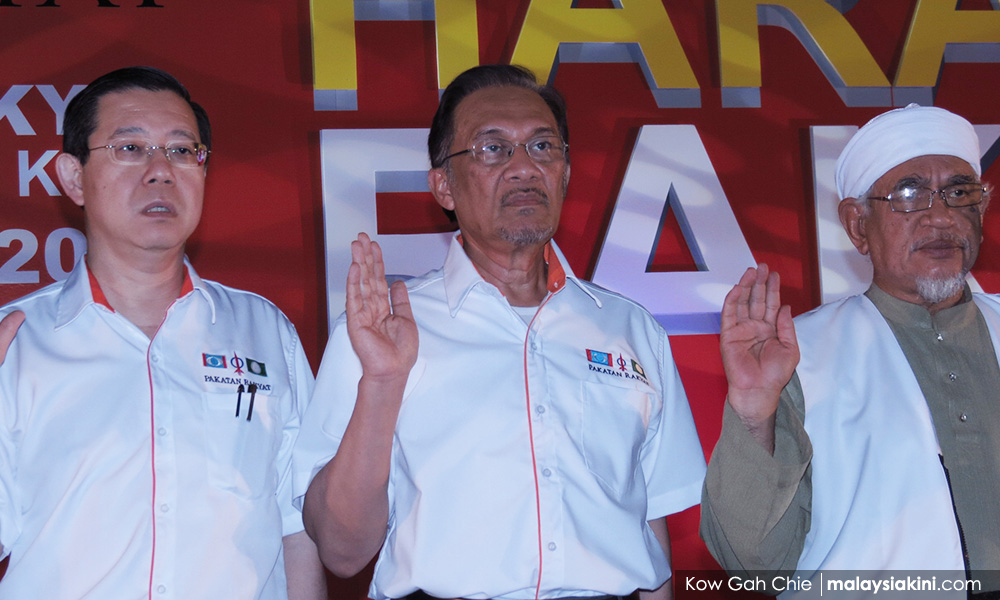
I cautioned against jumping to such conclusions. I believed that ethnic-based political parties would still be part of the political landscape for years to come.
It was true that public dissatisfaction towards the government cut across racial lines. It included issues such as inflation, crime, corruption, poor government delivery systems, policies perceived to only favour a privileged few, and the government’s apparent inability to handle sensitive issues.
These subjects affected Malaysians irrespective of race, and the people had united to express their disapproval. But once these issues were addressed, the old divisions would re-emerge. Hence, I argued, we should not be too quick to jump to the conclusion that politics from then on would be race-blind.
I cautioned the audience and the speakers that the opposition-controlled states would also be facing major challenges. Could they deliver on their promises and usher in the change as promised in their slogans?
Following their success, opposition political parties also faced a wide range of other difficulties. These included the following:
1. Could the disparate parties in the alliance cooperate to administer the states they controlled? Or would they bicker among themselves about who was the senior partner? Today, PAS has withdrawn from the coalition in the state government of Selangor and Penang, and has once again become the DAP’s bitter enemy.
2. Other than PAS, the opposition parties had no experience in administering a state government. Of course, the opposition parties could learn, but if they were slow to adjust, they would be shown the door by the voters, and suffer the same fate as the BN. This certainly happened to the Pakatan Rakyat in Perak.
3. With opposition parties now controlling several states, the federal-state relationship had acquired a new dimension. Would it be one of confrontation or cooperation? Or could governments at the two levels find a way of working towards a win-win situation?
4. Getting cooperation from a public service dominated by an ethnic group used to serving a government dominated by an Umno-led coalition would be a challenge.
I also argued that the BN should not underestimate the staying power of the opposition political parties. Moreover, if the opposition parties administered the states they controlled well, they could eventually pose a tremendous challenge to the BN at the national level. The point was that if the ruling coalition did not change, then it would be changed by the voters.
I agreed that the MCA would have greater difficulty recruiting young Chinese members, but I did not agree with those who argued there would be an exodus of MCA members to the opposition.
Time has proven these predictions true. Post-2008 and even 2013, we have not seen a significant number of MCA members defecting to opposition parties. But I believe it is important that the MCA acknowledge its weaknesses, otherwise it will continue to have difficulty recruiting new members, especially in opposition-controlled states.
Part 1: My resignation and its aftermath
Part 2: The sex DVD - who were the culprits?
Part 3: Finding my replacement for GE13 and the PKFZ scandal
Part 4: Opponents’ attempt to bury me made me work harder
Part 5: How MCA came to own The Star
Part 6: I ensured transparency in MCA's purchase of office tower
Part 7: ‘Avoid factionalism, embrace unity’ - Soi Lek’s parting words to MCA
Part 8: Setting aside personal feelings in 2013 MCA elections
Part 9: 'Muhyiddin told MCA to make a stand on 1MDB'
Part 10: The eclipse of Najib's achievements by 1MDB scandal
Part 11: Broken trust: The Chinese community’s frustration with MCA
Part 12: The hypocrites in the MCA
CHUA SOI LEK is a former health minister and MCA president. Like Me or Hate Me: Rising from the Political Ashes is now available in all good bookstores at RM59 (paperback, English and Chinese) and RM99 (hardcover, English only). It is also available at MPH Online.
The views expressed here are those of the author/contributor and do not necessarily represent the views of Malaysiakini.


Report this comment
Are you sure you want to delete this comment?
This action cannot be undone.