


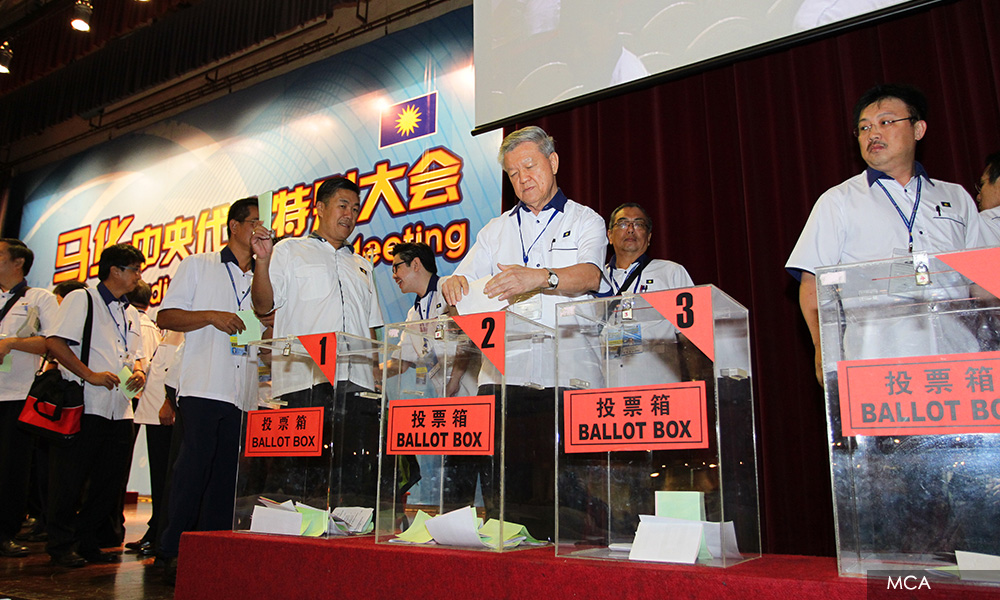

Soi Lek: Setting aside personal feelings in 2013 MCA elections
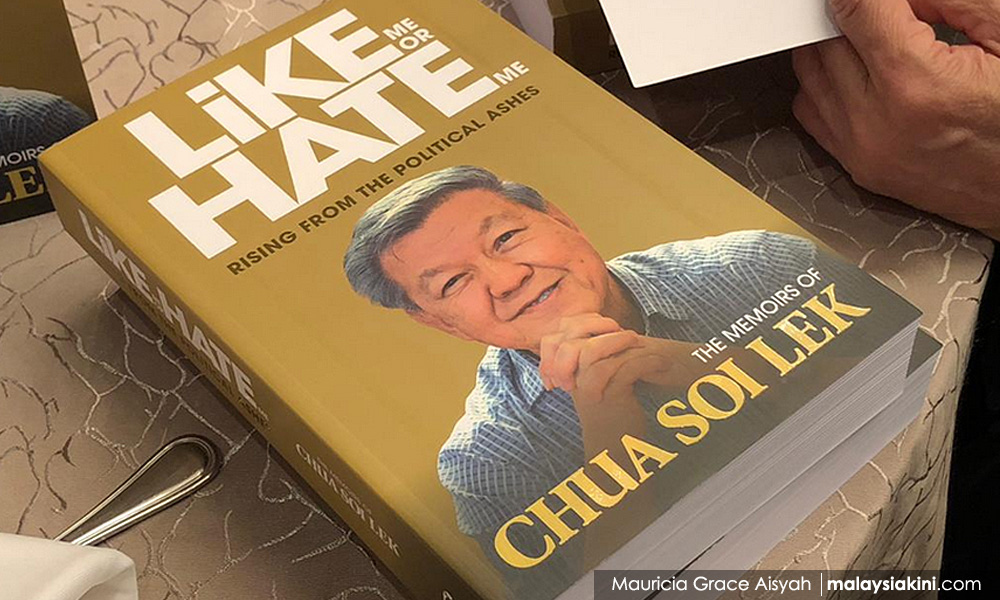
Editor’s note: This is the eighth part of a series of excerpts from former health minister and MCA president Chua Soi Lek’s book, 'Like Me or Hate Me: Rising from the Political Ashes'.
BOOK EXCERPT | The 2013 party election was the first time I was not involved directly as a candidate since I first stood for a position on the central committee in 1989.
But while I was not an active participant, as the incumbent president I had to ensure that the AGM and party election proceeded smoothly. If there were any hitches, my comrades would put the blame on me.
That said, I was definitely much more relaxed. Finally, I no longer felt the burden and pressures resulting from my position as party president.
Discouraging factionalism
In the 2013 party election, it was important that I put my personal feelings and preferences regarding the major candidates aside. I had not only to be fair but also to be seen to be fair. With this in mind, I refused to openly endorse any of the presidential or deputy presidential candidates.
Of course, as MCA president, I had always had an uneasy relationship with Liow Tiong Lai. Because of this, my supporters expected me to campaign openly against his candidacy. I refused. I also resisted pressure to publicly endorse Tiong Lai’s opponent, Gan Ping Sieu.
On many occasions after the May 2013 general elections I had described Tiong Lai as a weak and indecisive leader. But as the party elections approached, I thought it would be wiser not say anything that would exacerbate party factionalism. Besides, I did not believe in fighting proxy wars.
However, I did campaign for candidates standing for the positions of vice-president and central committee member. I knew that when Tiong Lai became president, he would revoke the party’s earlier decision not to enter the cabinet. And having done that, he would likely be appointed as a minister.
As a former cabinet minister and party deputy president, he already had a lot of influence during the campaign leading up to the 2013 party election. By supporting candidates that were not part of his group, I hoped to prevent a clean sweep by Tiong Lai and his team in the central committee.
My son, Chua Tee Yong, stood for one of the vice-presidential positions. He had his own team, which consisted of another vice-presidential candidate and 16 other candidates hoping to be elected to the central committee.
During the campaign, I talked about party unity and stressed that the new president should not attempt to sideline everyone who did not agree with him. The MCA should not practise the politics of vengeance. There should be no witch-hunt.
Instead, after the election all elected central committee members should work as a team. The party could not afford to be torn apart yet again. The new president should be big-hearted enough to accept all successful candidates. Labels such as “Chua’s people” and “Liow’s people” had to be avoided...
Editor’s note: This is the eighth part of a series of excerpts from former health minister and MCA president Chua Soi Lek’s book, 'Like Me or Hate Me: Rising from the Political Ashes'.
BOOK EXCERPT | The 2013 party election was the first time I was not involved directly as a candidate since I first stood for a position on the central committee in 1989.
But while I was not an active participant, as the incumbent president I had to ensure that the AGM and party election proceeded smoothly. If there were any hitches, my comrades would put the blame on me.
That said, I was definitely much more relaxed. Finally, I no longer felt the burden and pressures resulting from my position as party president.
Discouraging factionalism
In the 2013 party election, it was important that I put my personal feelings and preferences regarding the major candidates aside. I had not only to be fair but also to be seen to be fair. With this in mind, I refused to openly endorse any of the presidential or deputy presidential candidates.
Of course, as MCA president, I had always had an uneasy relationship with Liow Tiong Lai. Because of this, my supporters expected me to campaign openly against his candidacy. I refused. I also resisted pressure to publicly endorse Tiong Lai’s opponent, Gan Ping Sieu.
On many occasions after the May 2013 general elections I had described Tiong Lai as a weak and indecisive leader. But as the party elections approached, I thought it would be wiser not say anything that would exacerbate party factionalism. Besides, I did not believe in fighting proxy wars.
However, I did campaign for candidates standing for the positions of vice-president and central committee member. I knew that when Tiong Lai became president, he would revoke the party’s earlier decision not to enter the cabinet. And having done that, he would likely be appointed as a minister.
As a former cabinet minister and party deputy president, he already had a lot of influence during the campaign leading up to the 2013 party election. By supporting candidates that were not part of his group, I hoped to prevent a clean sweep by Tiong Lai and his team in the central committee.
My son, Chua Tee Yong, stood for one of the vice-presidential positions. He had his own team, which consisted of another vice-presidential candidate and 16 other candidates hoping to be elected to the central committee.
During the campaign, I talked about party unity and stressed that the new president should not attempt to sideline everyone who did not agree with him. The MCA should not practise the politics of vengeance. There should be no witch-hunt.
Instead, after the election all elected central committee members should work as a team. The party could not afford to be torn apart yet again. The new president should be big-hearted enough to accept all successful candidates. Labels such as “Chua’s people” and “Liow’s people” had to be avoided.
Election campaign process
Like all MCA campaigns, the various candidates attend either a lunch or a dinner followed by a meeting with the central delegates during the campaign period.
Attendance at these gatherings was no indication of political support. Some central delegates came to listen to what the candidates had to say and what they planned to do after the election.
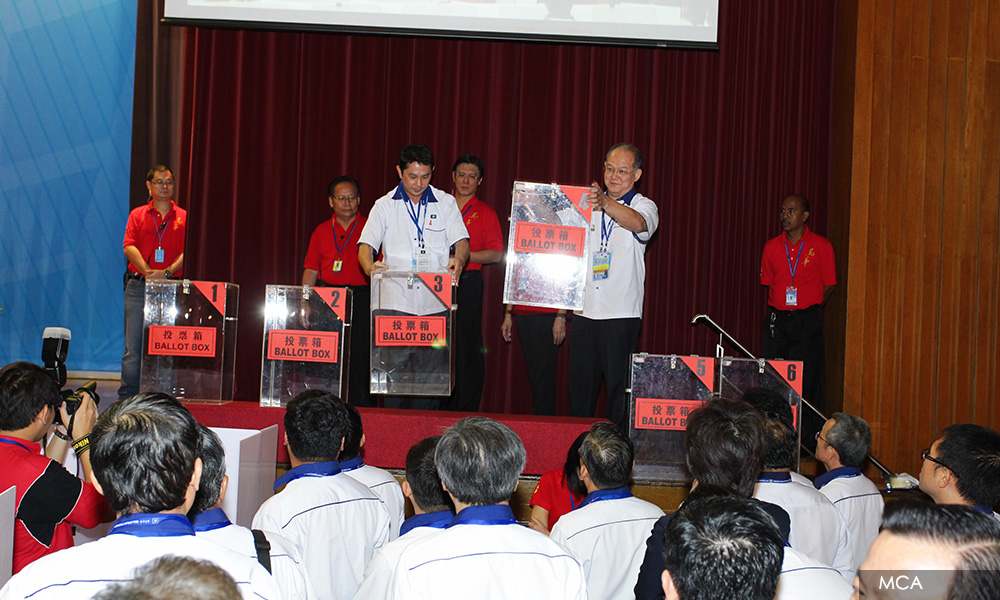
Hence, the ability of a candidate to communicate and articulate his or her thoughts effectively was a tremendous advantage. After all, in gatherings like this, there are many speakers and the dinner could be a noisy affair.
Ong Tee Keat’s attempt to make a comeback
Just before nomination day, Ong Tee Keat contacted me directly and asked for a meeting. We subsequently met twice in a hotel in Kuala Lumpur. He came to the point very quickly. He wanted to make a comeback and asked me to support him.
I was equally frank. I told him that since he had not participated in MCA activities since 2010, he had lost touch with MCA grass-roots members.
I said I would not lend him my support since he was unlikely to win. Even if I supported him, my supporters would not toe the line. In fact, I told Tee Keat I believed his support within the party was probably in the range of five to 10 percent.
He was naturally disappointed and insisted that he had done his homework. Consequently, he believed he still had substantial support.
I advised him to take a rest or work with Gan Ping Sieu, the other candidate who was contesting the presidency. But despite the fact that Ping Sieu and Tee Keat were close friends, Tee Keat refused to accept my advice.
After the meeting with Tee Keat, I began to wonder what made him so confident that he had enough support in the party to make a comeback. I also told Ping Sieu what transpired between Tee Keat (photo) and me. I did not want Ping Sieu to believe that I supported Tee Keat.
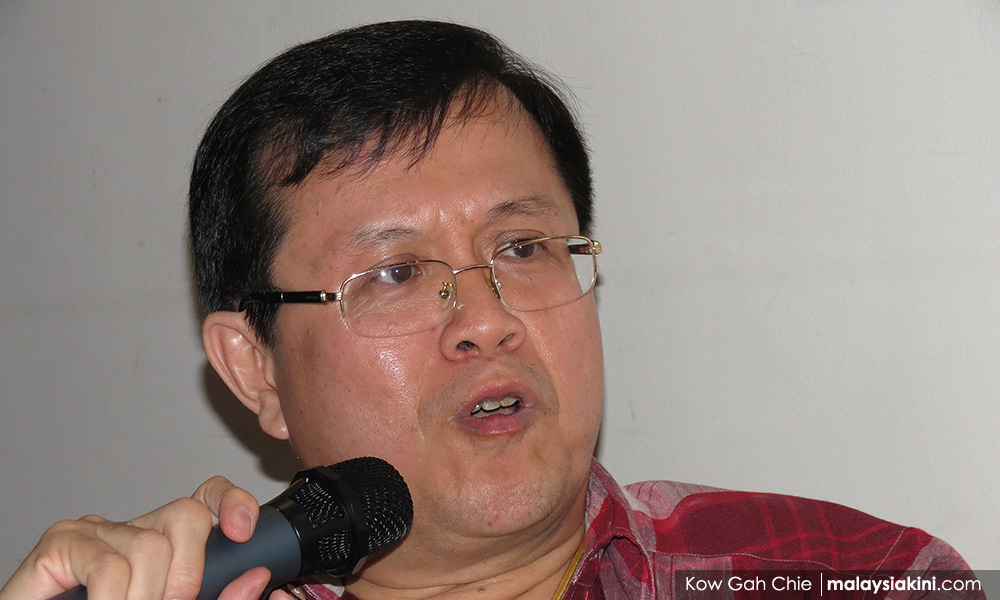
Meanwhile, despite my advice, Tee Keat went on to contest the presidency. This marked Tee Keat’s second failed attempt to be elected. The first was in the party polls in March 2010.
The campaign period was short—less than five days. Of course, many candidates had begun to campaign well before nomination day. As a result, most of the delegates had already decided whom they would support.
The gatherings hosted by the candidates were thus mainly designed to solidify that support. Naturally, some candidates were also hopeful that a few delegates could be persuaded to change their minds at the last minute.
Traditionally, central delegates vote according to cai dan (the semi-official lists produced by faction leaders). However, in recent years more and more central delegates have been making up their own minds.
If all the party’s central delegates had followed the cai dan, I would have lost the election as the deputy president in 2008 and president in 2010. Hence, candidates in MCA party elections can no longer depend on the cai dan to win in the party election.
Fast-forward to the party AGM and voting day in December 2013. Right up to the last minute before nominations closed, there were colleagues trying to persuade me to do an about-turn and defend my position as president.
But I felt I had made the right decision. After being actively involved in politics for nearly three decades, I felt it was time for me to withdraw.
Of course, I had mixed feelings. There was a sense of nostalgia, but at the same time a feeling of elation arising from the expectation that I would finally have time to do what I wanted to do. I will let my party comrades judge whether or not I chose the right time to retire.
On the day of the election, I arrived at the MCA party headquarters early and had breakfast with the central delegates. After breakfast, I began moving around to thank them and to say goodbye to my comrades. Many were keen to take photos, reminding me that after the voting began at noon I would no longer be party president.
The press also wanted to enquire about my plans. Jokingly, I said that after retiring I would return to my hometown to plant sweet potatoes. Most of the journalists present burst out laughing, saying that they knew I was the sort of person who could not sit down and do nothing. They believed I would probably be active in some other way.
Final presidential address
Although my presidential speech at the party AGM was in effect my swansong, I did not want to make it too long. However, I also felt there were several things that needed to be reiterated.
I began by taking the opportunity to congratulate the prime minister for leading the Barisan Nasional and retaining control of Putrajaya. Umno had also managed to increase its number of MPs from 79 previously to 88.
Sadly, I could not say the same for the MCA. The results of the 13th general elections were the worst ever for the party. MCA representation had been reduced to seven MPs and 11 state assemblymen.
As the president of the party, I had to shoulder this responsibility. Hence, I repeated that I would not be defending my post. It was important to walk the talk.
The dismal performance of the MCA, Gerakan and MIC in the election clearly proved my point that the two-party system in Malaysia had degenerated into an unhealthy racial and political divide.
The Malays and bumiputeras were in power both in the state and federal levels, while the Chinese political strength was represented by the opposition.
Even with the MCA accepting government posts at the state and federal levels, the party representation did not reflect the racial composition of the community. This was due to the MCA’s rejection by Chinese voters.
Speaking directly to the prime minister, I said, “Sir, it is also a challenge to you as the BN chief, Umno chairman and prime minister that there will be tremendous pressure to reward voters who voted BN. In short, ignore the Chinese and Indian voters. I reminded the PM that BN must not only seen to be fair but its policies should be inclusive, so as not to be interpreted as punishing the Chinese.”
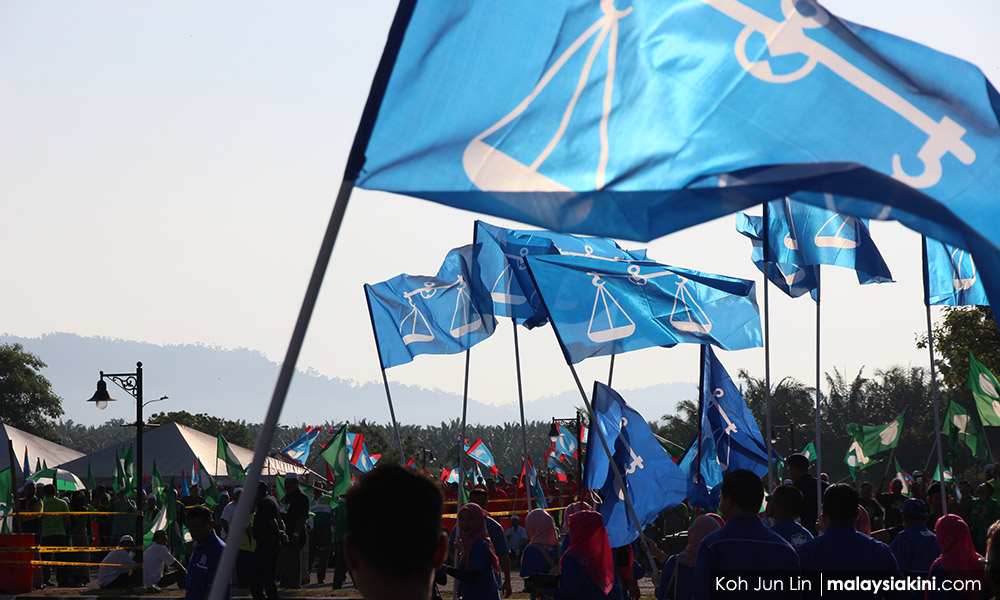
The BN needed to implement affirmative action policies based on need. Since bumiputeras formed the majority, they would still benefit the most. The MCA believed that continued handouts would not solve the problems facing the country.
There was also a need to avoid treating the bumiputeras as a homogeneous ethnic group. This was because there were glaring disparities among the educated, rich and poor, including the bumiputeras in Sabah and Sarawak.
There also needed to be a review of affirmative policies, with a view to discovering where it had been successful in uplifting the economic status of bumiputeras and where it had failed.
Right-thinking Malaysians would not begrudge the government in its efforts to help socially and economically disadvantaged groups. But there would be strong resentment if handouts were given to the rich.
I also highlighted the continuing problem of security. Malaysians looked forward to the day where they could walk the streets without fear of being robbed. The crime situation had also negatively impacted our efforts to promote tourism and attract investment.
Rationalisation and subsidies
The MCA, I said, welcomed the rationalisation of subsidies so that targeted groups would receive the benefits. However, Malaysians could not continue to live in a heavily subsidised environment—from electricity to fuel, education, and medical care.
We also expected that the rationalisation of subsidies would lead to a rise in the cost of living and greatly impact low-income groups.
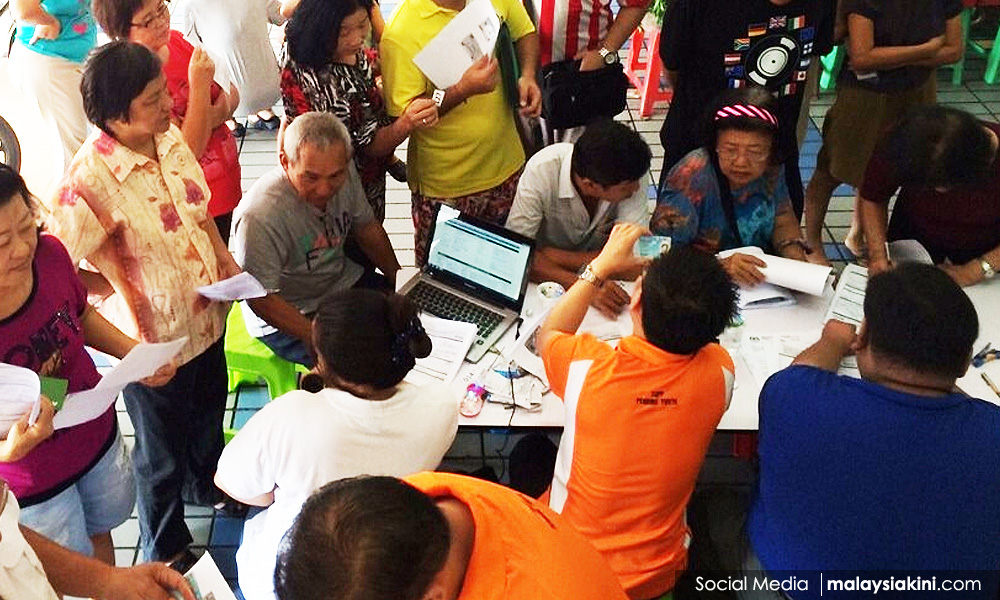
In this respect, the Bantuan Rakyat 1Malaysia programme was helpful. However, the government had to undertake more initiatives to cushion the impact on the low- income group.
Government wastage
Another concern was the fact that the rate of increase in government expenditure was exceeding the rise in revenue. This was not sustainable, as it would eventually eat into the development expenditure.
The Auditor-General’s yearly report had highlighted blatant abuses and leakages in procurements. The government should therefore exercise more stringent controls on expenditure and discipline those responsible for abuses.
Affordable housing
The escalating prices of property, especially in Klang Valley, Johor Bahru, Penang Island and Kota Kinabalu meant that even the middle-class citizens could not afford to buy a terrace house.
The BN had promised to deliver one million affordable homes in the following five years. In pursuing this goal, the government should not allow political patronage and abuse to creep in. The income of the applicant should be the yardstick when it came to allocating these houses.
Corruption
The public also saw corruption as a major cause for concern. One way of dealing with this would be to ensure that projects went through a tender process instead of direct negotiations. The award of the project should be based on technical competence and not on a who-knows-who basis.
It was time, I said, for the government to weed out the rent-seekers. Investors and local businessmen want a fairer business environment with an emphasis on meritocracy, inclusiveness and transparency.
Countering lies
The dissemination of information by the government had been ineffective in countering the lies spread by the opposition. This had provided a gateway for the opposition to make inroads by spinning webs of deceit to win support.
Every ministry should therefore have a special unit entrusted to respond to the lies spread on the Internet. I referred specifically to the lie regarding the alleged 40,000 Bangladeshi voters as an example of the failure of government machinery to counter the problem.
Education
The deteriorating standard of education, especially in maths, science and English, was of great concern to all parents. I emphasised that Chinese education would continue to flourish.
It is the duty of the government of the day to resolve all issues confronting Chinese primary schools, secondary schools and even Chinese independent schools.
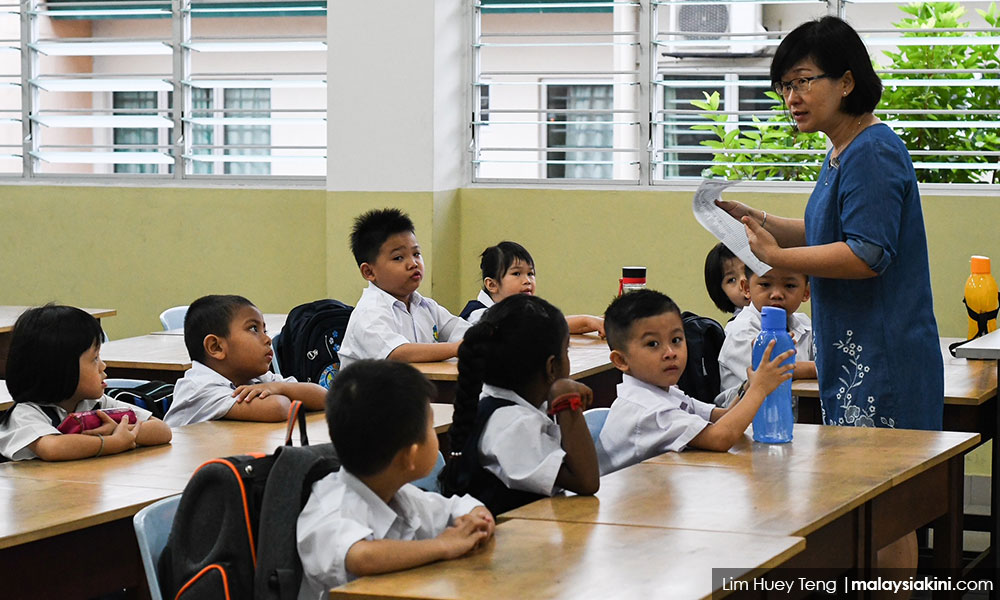
The government, I said, should consider recognising the UEC qualification for entry into public institutions of higher learning. It was rather peculiar that Malaysia did not recognise the UEC, even though it was recognised by universities in Singapore, China, Taiwan, Australia, Canada, Hong Kong, the United States and the United Kingdom.
BN’s policy of moderation
I also urged the government to come down hard on racial and religious extremists. Keeping quiet or adopting a don’t-care (tidak apa) attitude would not inspire confidence among the rakyat.
No race should accuse another of having shortcomings and no race should be jealous of the success of another. We could only move forward, I said, when we can embrace our differences. If we were united, there were endless possibilities.
MCA leadership
MCA central delegates were about to elect a new team of leaders to take charge of the party. It was the fervent hope of all MCA members that the new central committee would be united and that there would not be any witch-hunts.
If there were, I pointed out, all talk of transforming the party would be reduced to lip service. We did not want a situation where the winner takes all and the loser loses everything. We should also reject the evil of money politics.
The future of the MCA depends on unity, love for the party, sacrifice, hard work and loyalty by all members. The new leadership should accommodate the different factions and voices in the party, so that it can move forward.
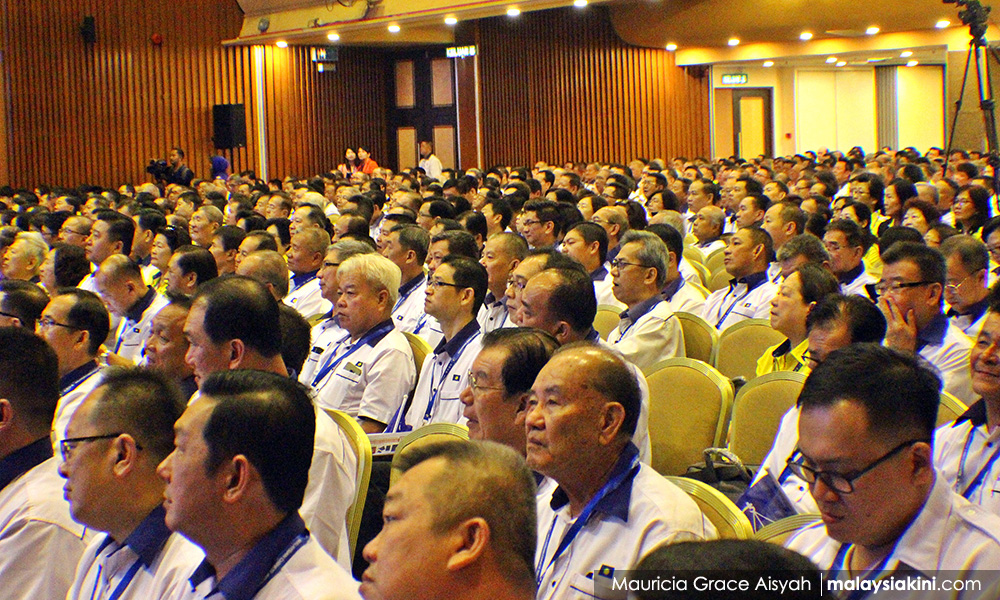
There was a lot of work to be done, particularly when it came to reuniting, reorganising and restructuring, in line with the transformation process ahead of the next general election.
After the party election, I was still a central delegate and I have continued to play a role in this capacity. As for the future direction of MCA, it is best left to the new leadership to chart a new course.
Election results
The results of the election were much as I expected. Ong Tee Keat secured a mere 160 votes out of the 2,346 votes cast. Although Gan Ping Sieu was a junior leader, he did well in his first attempt to win the presidency.
He garnered 1,000 votes, while the far more senior Liow Tiong Lai secured 1,186 votes. This meant that Tiong Lai won the presidency with a majority of 186 votes.
Since the votes cast for Tee Keat would never have gone to Tiong Lai, we can combine Tee Keat’s and Ping Sieu’s votes to get a better assessment of Tiong Lai’s support in the party. Looking at things this way, Liow Tiong Lai (photo) won the presidency by a majority of just 26 votes.
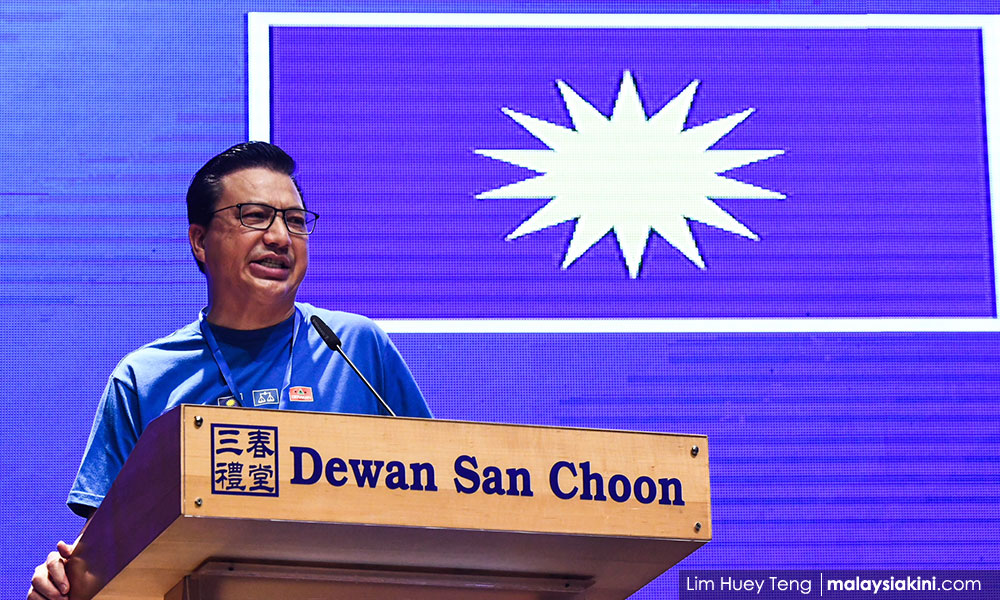
In the race for the deputy presidency, Wee Ka Siong won as expected, securing a total of 1,408 votes against Donald Lim with 927 votes. Tee Yong and his teammate Lee Chee Leong took the two vice-presidential positions. As for the central committee, all but three in Tee Yong’s team were successful.
The election thus demonstrated the wisdom of the central delegates. Despite all forms of cai dan being promoted by various leaders, the elected members of central committee were a mixed batch. Some were closely aligned to Liow and some to me.
My observations of the MCA elections suggests that those who are perceived to be neutral or friendly to all factions generally receive a large number of votes.
However, because they typically do not have strong grass-roots support, such central committee members who lose their government posts also generally lose in subsequent party elections.
Let me give an example. A certain MP always secured one of the top five positions in the central committee during party elections when he was a deputy minister. Then, when he became a minister he was twice elected vice-president with the highest vote.
However, when he was dropped as a minister but still served as an MP, he was not successful in the subsequent party vice-presidential race.
This clearly demonstrates that an official government position is important to ensure the success of a candidate in the party election. But when candidates have no official government position and suffer from poor grass-roots support, they are easily defeated.
Part 1: My resignation and its aftermath
Part 2: The sex DVD - who were the culprits?
Part 3: Finding my replacement for GE13 and the PKFZ scandal
Part 4: Opponents’ attempt to bury me made me work harder
Part 5: How MCA came to own The Star
Part 6: I ensured transparency in MCA's purchase of office tower
Part 7: ‘Avoid factionalism, embrace unity’ - Soi Lek’s parting words to MCA
Part 8: Setting aside personal feelings in 2013 MCA elections
Part 9: 'Muhyiddin told MCA to make a stand on 1MDB'
Part 10: The eclipse of Najib's achievements by 1MDB scandal
Part 11: Broken trust: The Chinese community’s frustration with MCA
Part 12: The hypocrites in the MCA
CHUA SOI LEK is a former health minister and MCA president. Like Me or Hate Me: Rising from the Political Ashes is now available in all good bookstores at RM59 (paperback, English and Chinese) and RM99 (hardcover, English only). It is also available at MPH Online.
The views expressed here are those of the author/contributor and do not necessarily represent the views of Malaysiakini.


Report this comment
Are you sure you want to delete this comment?
This action cannot be undone.