


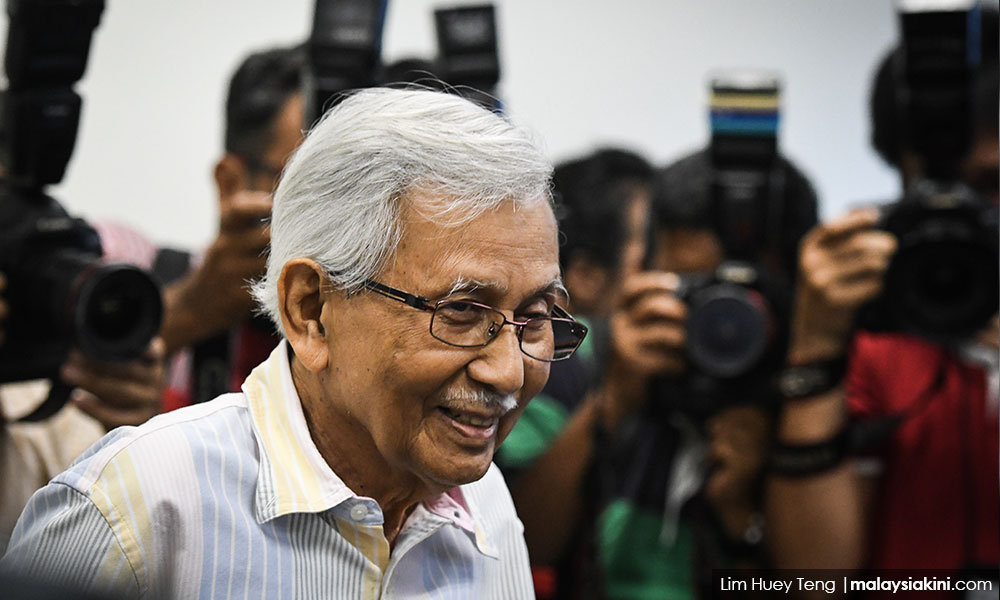

The enigma of Daim Zainuddin
BOOK REVIEW | Daim Zainuddin has been — and remains — an influential Malaysian political and business figure. A former prominent politician within Umno, close confidant and principal economic adviser to Dr Mahathir Mohamad during his first term as prime minister, and generally recognised as the architect of major reforms that rescued Malaysia’s economy during the major financial crises of the Mahathir era, Daim has long been regarded as a gifted and innovative politician as well as an exemplary Malay success story.
His biographer, Michael Backman, has been hailed as a leading interpreter of Asian political, economic and cultural affairs. One would therefore anticipate a detailed, robust and perhaps controversial biography (‘Daim Zainuddin: Malaysia’s Revolutionary and Troubleshooter’, River Books: 2018).
Backman provides us with a general outline of Daim’s life and career. Born in 1938 into a large family in Alor Setar, Kedah, at his father’s insistence, and rather unusually for a Malay of that period, Daim received an English education. He initially worked as a teacher, but later studied law in London. Following his return to Malaya in 1959, Daim practised in various legal firms. In 1968, convinced that law would not provide the fulfilment or wealth that he sought, he turned his hand to business.
However, his first two commercial ventures — a salt business and plastics production — were failures. His fortunes changed after he branched into real estate development following the acquisition of a valuable piece of land in Maluri, outside Kuala Lumpur. He later diversified his holdings by investing in the stock market. Daim also acted as a business consultant to Mahathir, then the deputy prime minister.
He was appointed a senator in 1980 and was elected to parliament in 1982, representing Kuala Muda in his home state of Kedah. Daim assumed the role of treasurer of the ruling Umno party in 1981. In 1984 he was appointed finance minister, but continued to act as Umno treasurer. Between 1991 and 1998 Daim was, at his own choice, out of the cabinet. He returned, at Mahathir’s request, to manage the Malaysian economy throughout the Asian financial crisis of 1997–1998.
He resigned from this position in 2001 and later left politics to concentrate on his business affairs. More recently, he was asked to chair a Council of Eminent Persons in the aftermath of Mahathir’s election victory in May 2018 (a development not covered in the book).
It is the business and political aspects of Daim’s career on which Backman necessarily concentrates. He claims that Daim was a good politician who was approachable, who paid close attention to the needs of his constituents, and that his intelligence, pragmatism and disciplined approach to the conduct of office served him well in his political career. As Lee Kuan Yew once noted, Daim was a quick and incisive thinker and delivered on his promises.
Backman’s narrative appears to be largely constructed around a series of interviews conducted with Daim. He is generally an uncritical observer, and there is little analysis of the claims made on Daim’s behalf. Evidence or source material that might contradict or unsettle his assertions are either overlooked or dismissed as little more than hearsay.
For example, Backman accepts at face value Daim’s claim that throughout his career he was entirely free of any financial, political or general ethical impropriety. He ignores the assertion made by Edmund Terence Gomez and Jomo KS in their book, ‘Malaysia’s Political Economy: Politics, Patronage and Profits’, that Daim acquired “a lucrative piece of land on the outskirts of Kuala Lumpur”, land that was to be the source of his initial business success, largely because of his close association with Harun Idris, the Selangor menteri besar.
Similarly, Backman claims that when Daim took over the management of Fleet Holdings, Umno’s investment arm, the previous occupant, Tengku Razaleigh Hamzah — a resolute opponent of Mahathir and Daim throughout the bitter 1987 Umno factional dispute — had left the finances in a “scandalous” mess.
But this conflicts with Barry Wain’s contention in ‘Malaysian Maverick: Mahathir Mohamad in Turbulent Times’ that “confidential Umno financial accounts, professionally audited and obtained by the author … confirmed that Daim inherited a party in sound financial condition when he became treasurer”.
More astonishingly, Backman accepts without qualm Daim’s claim that he separated his official duties from his wider business dealings and did not profit from them.
This is contradicted by an array of compelling evidence provided by a wide range of scholarly and journalistic sources, all of which suggest that Daim melded his personal and political interests. As Wain comments: “By his actions, Daim made it clear that he was not going to let conventional notions of conflict of interest interfere with the way he ran his private business empire, the economy or Umno’s financial affairs. They became deeply entangled...
BOOK REVIEW | Daim Zainuddin has been — and remains — an influential Malaysian political and business figure. A former prominent politician within Umno, close confidant and principal economic adviser to Dr Mahathir Mohamad during his first term as prime minister, and generally recognised as the architect of major reforms that rescued Malaysia’s economy during the major financial crises of the Mahathir era, Daim has long been regarded as a gifted and innovative politician, as well as an exemplary Malay success story.
His biographer, Michael Backman, has been hailed as a leading interpreter of Asian political, economic and cultural affairs. One would therefore anticipate a detailed, robust and perhaps controversial biography (‘Daim Zainuddin: Malaysia’s Revolutionary and Troubleshooter’, River Books: 2018).
Backman provides us with a general outline of Daim’s life and career. Born in 1938 into a large family in Alor Setar, Kedah, at his father’s insistence, and rather unusually for a Malay of that period, Daim received an English education. He initially worked as a teacher, but later studied law in London. Following his return to Malaya in 1959, Daim practised in various legal firms. In 1968, convinced that law would not provide the fulfilment or wealth that he sought, he turned his hand to business.
However, his first two commercial ventures — a salt business and plastics production — were failures. His fortunes changed after he branched into real estate development following the acquisition of a valuable piece of land in Maluri, outside Kuala Lumpur. He later diversified his holdings by investing in the stock market. Daim also acted as a business consultant to Mahathir, then the deputy prime minister.
He was appointed a senator in 1980 and was elected to parliament in 1982, representing Kuala Muda in his home state of Kedah. Daim assumed the role of treasurer of the ruling Umno party in 1981. In 1984 he was appointed finance minister, but continued to act as Umno treasurer. Between 1991 and 1998 Daim was, at his own choice, out of the cabinet. He returned, at Mahathir’s request, to manage the Malaysian economy throughout the Asian financial crisis of 1997–1998.
He resigned from this position in 2001 and later left politics to concentrate on his business affairs. More recently, he was asked to chair a Council of Eminent Persons in the aftermath of Mahathir’s election victory in May 2018 (a development not covered in the book).
It is the business and political aspects of Daim’s career on which Backman necessarily concentrates. He claims that Daim was a good politician who was approachable, who paid close attention to the needs of his constituents, and that his intelligence, pragmatism and disciplined approach to the conduct of office served him well in his political career. As Lee Kuan Yew once noted, Daim was a quick and incisive thinker and delivered on his promises.
Backman’s narrative appears to be largely constructed around a series of interviews conducted with Daim. He is generally an uncritical observer, and there is little analysis of the claims made on Daim’s behalf. Evidence or source material that might contradict or unsettle his assertions are either overlooked or dismissed as little more than hearsay.
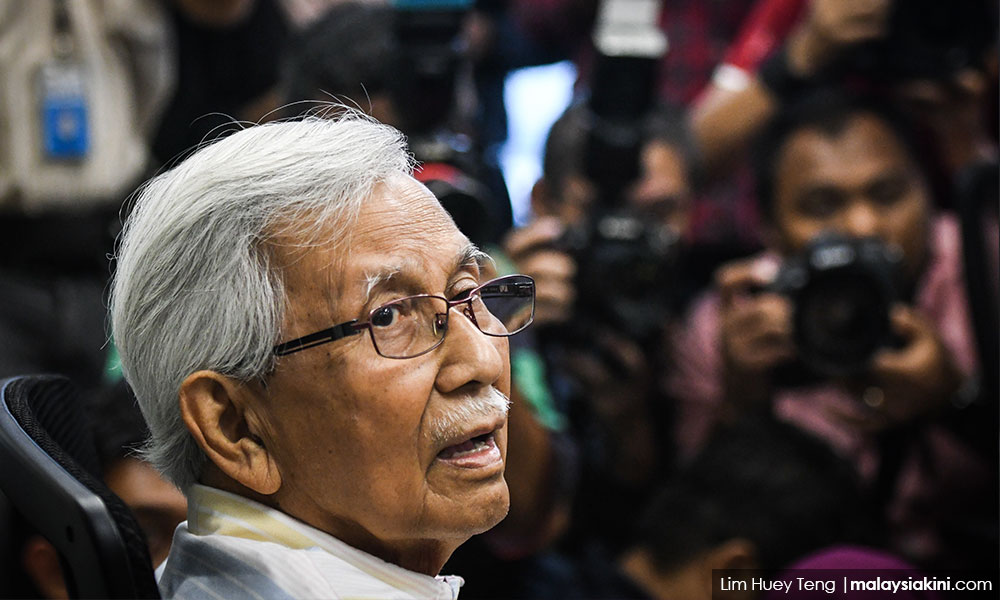
For example, Backman accepts at face value Daim’s claim that throughout his career he was free of any financial, political or general ethical impropriety. He ignores the assertion made by Edmund Terence Gomez and Jomo KS in their book, ‘Malaysia’s Political Economy: Politics, Patronage and Profits’, that Daim acquired “a lucrative piece of land on the outskirts of Kuala Lumpur”, land that was to be the source of his initial business success, largely because of his close association with Harun Idris, the Selangor menteri besar.
Similarly, Backman claims that when Daim took over the management of Fleet Holdings, Umno’s investment arm, the previous occupant, Tengku Razaleigh Hamzah — a resolute opponent of Mahathir and Daim throughout the bitter 1987 Umno factional dispute — had left the finances in a “scandalous” mess.
But this conflicts with Barry Wain’s contention in ‘Malaysian Maverick: Mahathir Mohamad in Turbulent Times’ that “confidential Umno financial accounts, professionally audited and obtained by the author … confirmed that Daim inherited a party in sound financial condition when he became treasurer”.
More astonishingly, Backman accepts without qualm Daim’s claim that he separated his official duties from his wider business dealings and did not profit from them.
This is contradicted by an array of compelling evidence provided by a wide range of scholarly and journalistic sources, all of which suggest that Daim melded his personal and political interests. As Wain comments: “By his actions, Daim made it clear that he was not going to let conventional notions of conflict of interest interfere with the way he ran his private business empire, the economy or Umno’s financial affairs. They became deeply entangled.”
A class of instant entrepreneurs
A major thrust of Daim’s tenure as finance minister was the joint campaign undertaken with Mahathir to alleviate Malay poverty by creating a class of Malay entrepreneurs. Both men believed that this would not only dramatically increase Malay wealth, but also inspire self-confidence and ambition, and would, through the processes of “trickling down” of wealth and associated benefits and opportunities, galvanise and uplift the entire Malay community.
The creation of a class of instant entrepreneurs was Mahathir’s attempt to circumvent the lengthy processes of education, training and acquisition of skills within the broader Malay population. It involved hand-picked Malays who were awarded lucrative contracts that would allow them to develop business skills. Backman lightly glosses over, indeed appears to approve, the open and generous government patronage of supporters — systematic cronyism, by any other name — and concomitant denial of business opportunities to those who were known Umno opponents.
This process intensified with the privatisation of government-owned assets, many of which were awarded to figures linked to influential politicians. Backman dismisses the many allegations of corruption, impropriety and cronyism made by journalists and other observers with this complacent bromide:
“The real argument for many of them, particularly those in local academia, derives more from their clinging to outmoded tenets of socialism than from any overriding concern for due process … Essentially, they were socialists in a world being swept by pragmatism and a widespread preference for market solutions.” No evidence is offered to support this sweeping assertion.
Backman looks upon this measure as a success that changed Malaysia forever. However, these Malay-run companies, often merged into unwieldy conglomerates, were to subsequently founder in the chill winds of the Asian financial crisis. The conglomerates were poorly conceived, badly managed, overextended and undercapitalised. As Khoo Boo Teik remarks in ‘Beyond Mahathir: Malaysian Politics and Its Discontents’, they “suffered near demise at their very first collision with global forces”. They had manifestly failed to match the models they were meant to emulate, Japanese zaibatsu and South Korean chaebol, by achieving self-sufficiency and freeing themselves from dependency on government support.
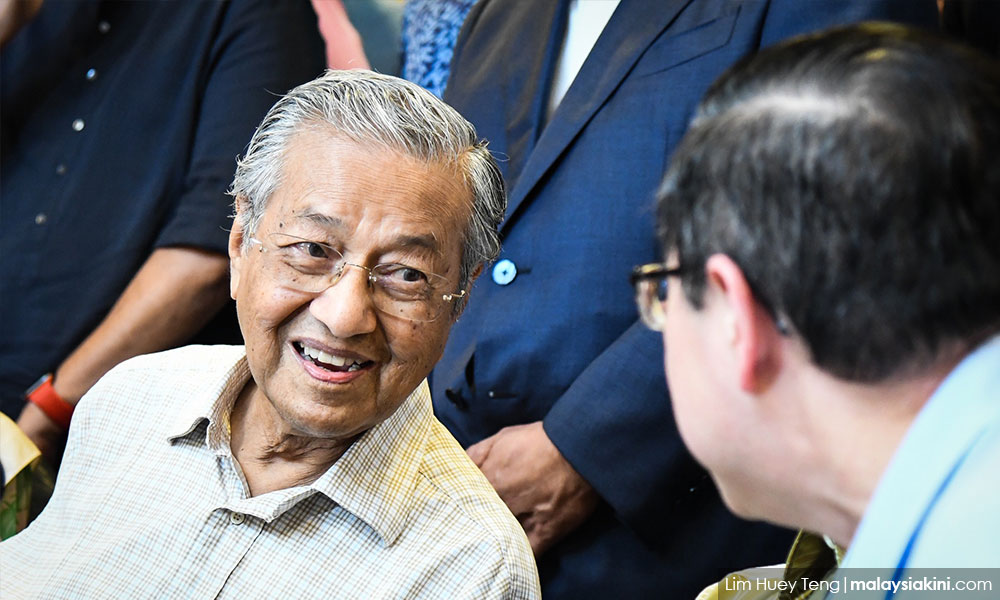
Mahathir and Daim bailed out most conglomerates using funds harvested from the national oil and gas company Petronas. Others reverted to government ownership. Allegations emerged at the time that considerable sums had been siphoned off throughout this period, allegations that Backman ignores. The conglomerates enriched a well-connected political elite and those close to influential Umno figures, but they did little to assist the wider Malay community. Indeed, the rise of money politics greatly increased income disparities among Malays.
It is Daim’s role as rescuer of the Malaysian economy, and the architect of financial and economic reform, which Backman regards as central to Daim’s long-term political reputation. He attributes an earlier financial crisis in 1985 to a fall in commodity prices, banking excesses and the dramatic failure of Maminco, the Malaysian entity which sought to regulate world tin prices, and which left the government with a mountain of tin and enormous debts.
However, Backman omits any mention of Daim’s own contribution to this recession, namely his “advice” to fund managers of public institutions to enter the stock market. These markets subsequently lost heavily when Kuala Lumpur Stock Exchange share prices plunged in November 1985. Daim later admitted culpability for offering this advice.
Daim’s response to the crisis was to curb government spending, review the management of state-owned companies, reduce the role of the public sector, expand private sector investment, and promote manufacturing and increase exports. Many Malay firms were provided with government contracts to allow them to remain buoyant. Daim used the crisis to enact a series of reforms, which included floating the ringgit and hastening the pace of privatisation and investment. The economy rebounded strongly with a boom in exports.
The later Asian financial crisis occurred in the wake of the near collapse of the Thai baht and subsequently extended to Indonesia, South Korea and the Philippines. Malaysia was implicated, to a large extent, by proximity and association. In June 1998 Daim, who had been out of the cabinet since 1991, was appointed special functions minister charged with checking recessionary trends. Wide differences of opinion as to how Malaysia should respond to the crisis opened up between Mahathir and Anwar Ibrahim, his finance minister.
Daim vs Anwar, redux
Observers noted that tensions between Anwar and Daim, resulting from the allocation of government contracts, had been discernible since 1994. These differences — between Anwar on one side, and Mahathir and Daim on the other — became more marked during the deepening of the crisis, especially as Anwar increasingly inclined towards a more orthodox economic approach to the imminent collapse of Malay conglomerates. Following Anwar’s removal from office, both Mahathir and Daim were quick to blame Anwar as complicit in both causing and exacerbating the crisis.

Following Anwar’s ouster, Daim was reappointed to the cabinet. He oversaw the establishment of a National Economic Action Council (NEAC) tasked with fulfilling four main objectives: to restore public and investor confidence; to avoid severe recession; to restore the national economy; and to strengthen the economic base of the economy. A key measure was the decision taken in August 1998 to introduce currency controls. These came into effect on Sept 1, 1998.
Derided as potentially ruinous by most textbook economists, the controls gave the government breathing space to take corrective measures and to introduce reforms which were needed to stabilise the economy. More importantly, they allowed Malaysia to avoid heavy-handed International Monetary Fund (IMF) intervention.
The failed Malay firms were either returned to government control or bailed out (Backman prefers the euphemism “recapitalised”, insisting there were no “bailouts”), and Daim oversaw reforms to corporate governance, and to the stockbroking and banking sectors. Mahathir and Daim’s management of the economy and the strength of the subsequent recovery were both widely lauded.
Daim was reappointed Umno treasurer in 2000. The same year Mahathir and Daim differed over the selection of possible appointees to head the influential Bank Negara. Daim resigned from the cabinet in 2001.
Backman claims that the resignation was spurred by Daim’s belief that having successfully restored the Malaysian economy to health, and completed an ambitious programme of economic reform, his mission was complete. In political terms, he had nothing left to achieve. He also insists that Daim’s departure had nothing to do with personal differences with Mahathir. He does not mention, let alone investigate, Mahathir’s comment that he had grown weary of defending Daim against allegations of corruption, and more specifically of “trying to whitewash him, literally”.
Backman’s closeness to his subject leads him to dismiss Daim’s opponents as at best second-rate figures. Those impugned include Tengku Razaleigh Hamzah, the former deputy prime minister Musa Hitam (adjudged by many as “the best prime minister Malaysia never had”), and Anwar who is portrayed as a “sloppy” operator, and who was “disliked by the Malaysian elite”. Backman regurgitates the tired and discredited canard that the protests against Anwar’s arrest in 1998 were stirred up by Indonesian supporters, and appears to condone the brutal response that met these protests.
The lack of wider research and the tendency to offer personal opinion as fact leads Backman to proffer dubious and often risible conclusions. He constantly underestimates the authoritarianism of the Mahathir years, and makes no mention of the armoury of repressive measures available to Malaysian prime ministers, and the willingness throughout the Mahathir years to silence dissent. Backman contends, without any corroborating evidence, that “almost all Malaysians of any ethnicity support the New Economic Policy and its successor the National Development Policy”.
One can safely assume that Backman has never delved much into online opinion, read the columns of Malaysiakini or mixed too widely in Malaysian society. Similarly, Backman makes the extraordinary claim that Malaysia, a country in which “race” has been a political obsession for generations, has never produced racist chauvinists equivalent to France’s Marine Le Pen or Germany’s neo-Nazis.
Notwithstanding the reputation of the author, this is a slight, one-dimensional and disappointing work. Backman fails to contextualise his study or root his research in the rich terrain of Malaysian history, politics and culture. His proximity to his subject, and his all-too-eager dismissal of criticisms and alternative perspectives, converts this book, despite its explicit disclaimer, into little more than an extended encomium, a hagiography.
CARL VADIVELLA BELLE is the author of ‘Tragic Orphans: Indians in Malaysia’. Reprinted with the kind permission of Mekong Review.



Report this comment
Are you sure you want to delete this comment?
This action cannot be undone.