


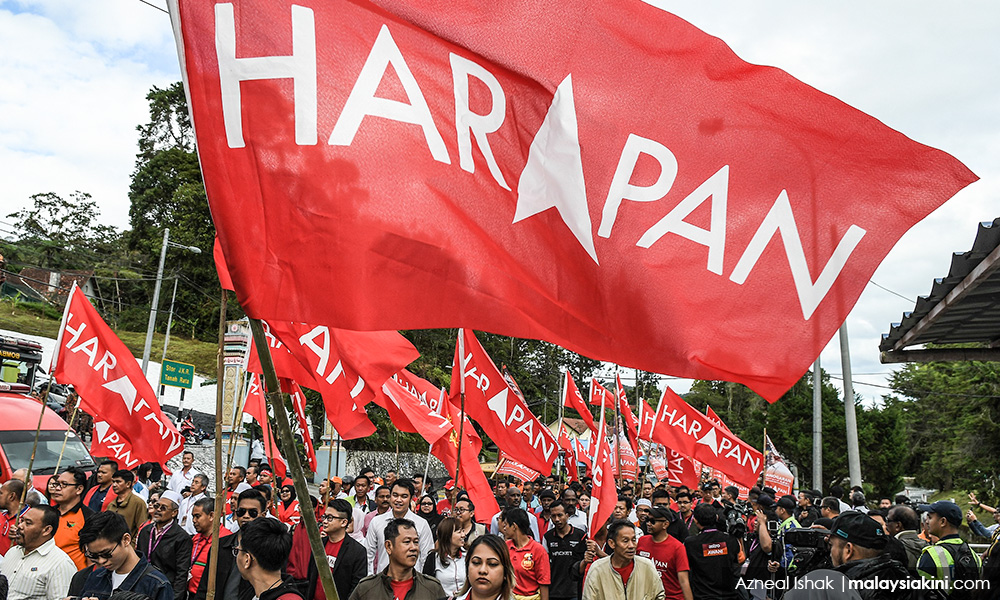

As support ebbs, how can Harapan turn the tide?
The Sandakan by-election on May 11 is likely to end a run of defeats for the ruling coalition.
But given that it is happening in a part of Malaysia where the Umno-PAS marriage is not a factor, the contest does not offer a true picture of the current sentiment about the government.
More damning is the recent Merdeka Center survey which indicates the government and Prime Minister Dr Mahathir Mohamad are fast losing support among the people...
The Sandakan by-election on May 11 is likely to end a run of defeats for the ruling coalition.
But given that it is happening in a part of Malaysia where the Umno-PAS marriage is not a factor, the contest does not offer a true picture of the current sentiment about the government.
More damning is the recent Merdeka Center survey which indicates the government and Prime Minister Dr Mahathir Mohamad are fast losing support among the people.
The first year of Pakatan Harapan's rule has also disappointed those who had high expectations of the government to institute crucial reforms.
The key question is, how can Harapan reverse its political fortunes?
'Harapan must act fast'
Universiti Kebangsaan Malaysia's Shamsul Amri Baharuddin thinks it is not too late for Harapan, but said that it needs to act fast.
“The central issue is that Harapan has made many U-turns. It has to restudy in detail its original manifesto and see where it has deviated, gone off the rail or made U-turns,” he told Malaysiakini.
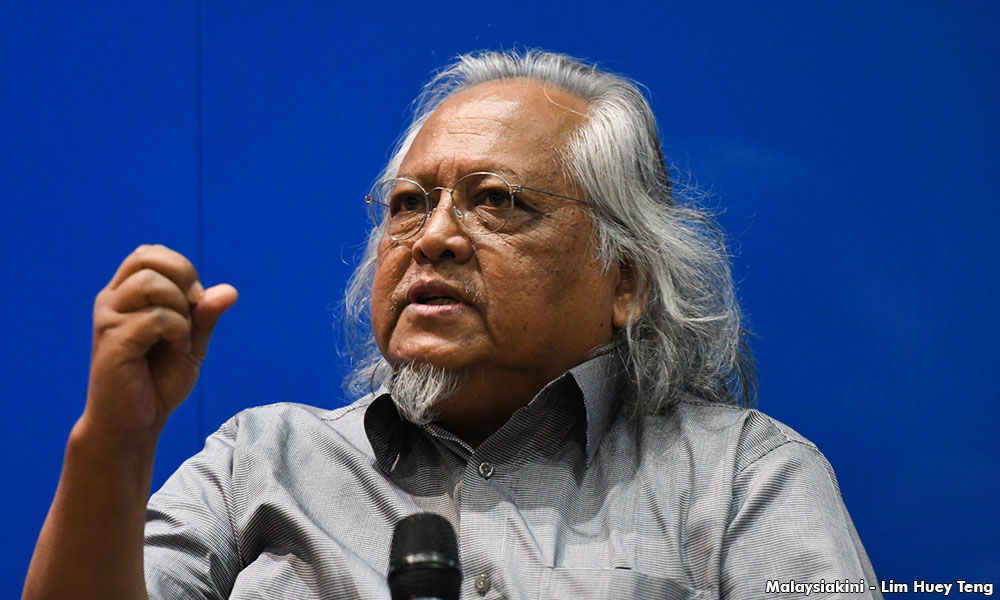
Shamsul (photo) also pointed to the conflicting aspirations of Harapan's component parties, with only some members truly committed to a reform agenda and a New Malaysia.
“Within Harapan there is a silent discontent between the pro-rakyat vs pro-bumiputera.
"The latter is dominating because of Mahathir, while the pro-rakyat is unhappy but doesn't want to sacrifice (PKR president) Anwar Ibrahim's chances of becoming prime minister," he said.
“It is this unsettled, unstable contests within Harapan that shape conflicts in policy making and implementation.
"Compounded by inexperienced leaders at the federal and state level, Haparan looks like a walking ghost."
However, Shamsul said it is not too late to reach out to rural Malays.
“Rural Malays can be persuaded quite easily, as the 14th general election showed, but they can swing back, as we are seeing now,” he added.
To cement its position, the academic said, Harapan has to invest big funds to solve Felda settlers' financial and social problems.
“The Felda settlers are worth 54 parliamentary seats and around 150 state seats. Helping them will change the political perception of Harapan as an anti-Malay coalition.
“Besides the battle of the 'periuk nasi' (rice bowl), it is also a battle of the psyche that is raging now."

The issue of the transition of power between Mahathir and Anwar still feels like a sticking point in establishing Harapan's long-term viability.
“The clear definition of transition is not in Mahathir's plan. He is still blaming the past government," Shamsul said.
"Mahathir has quick-fixed the BN government. He can't undo that."
Shamsul also pointed to the slew of charges against former premier Najib Abdul Razak and Umno president Ahmad Zahid Hamidi.
“The rural Malays are amazed at how many charges have been slapped on Najib and Zahid. It is not necessary if four or five are enough to send them to jail.
“It is seen as 'politik dendam' (revenge politics), and this is what the rural Malays can't stomach. Perhaps Mahathir's retirement is the quick fix,” he suggested.
Two quick solutions
Sharing his views, analyst Wong Chin Huat of the Jeffery Sachs Centre on Sustainable Development said Harapan's problem is mainly caused by a trust deficit among Malays.
“Instigated by Umno and PAS, Malays are caught in a zero-sum game mindset in which they constantly fear that they would be worse off.
“If this can be solved, Harapan can do more to woo the non-Malays too,” he added.

Wong (photo) recommended two quick solutions.
“With economic interests (subsidies and allowances) – give aid that targets sub-groups of (predominantly Malay) B40, such as motorcyclists, public transport users, and single mothers,” he added.
He also suggested that cultural efforts are essential.
“Put more efforts to strengthen the Malay language, not by imposing its usage on non-Malays, but by increasing its value as a language of knowledge, of economy, and of basic science.
“The emphasis of English over Malay may please middle-class Malays but it is alienating many B40 Malays who are monolingual.
“It also surrenders that key constituency to PAS, as Malay popular publications today are rather narrow in interest: religion, romance, ghosts."
Dismantle race and religious politics
Activist Fadiah Nadwa Fikri (photo) called for something altogether more drastic – the dismantling of race and religious-based politics.

Fadiah was one of the first people to experience the conflicting messages of the Harapan administration when investigated for sedition after writing an article questioning the royal institution.
“The game that involves race and religion can only be addressed and contested if the powers-that-be decide to not only stop playing it, but also dismantle it once and for all.
“As long as they feel that it is necessary to defend and retain the existing racist structures that allow the poisonous politics to fester, not much will change.
“Only politics that is anti-racist can smash the racism that continues to empower the siege mentality among most Malay-Muslims in the country,” she said.
However, Fadiah recognised it is unlikely that the current administration would have the vision and ability to abandon communal and religion-based politics, which would see Mahathir's own party Bersatu being dissolved.
“Power will only concede when there is a strong demand from the people but unfortunately the people are conditioned by the effect of institutional racism.
“These are the lies that have been repeated by the state and its institutions on a daily basis – the education system, the media etc.
“Poor Malays are never part of the equation, but the racism has blinded them from seeing who the real enemies are,” she added.
Good work, better communication needed
Writer Kee Thuan Chye believes that Harapan has done good work, but said that its communication could be better managed.
“Let the public know the good things which are done. Conveying the information to the public is important.
"Use the communication channels at its disposal, like RTM.
“Harapan has to address the needs of the B40. It is good that the East Coast Rail Link *ECRL) and Bandar Malaysia are back on track. It will give the economy a boost,” he added.
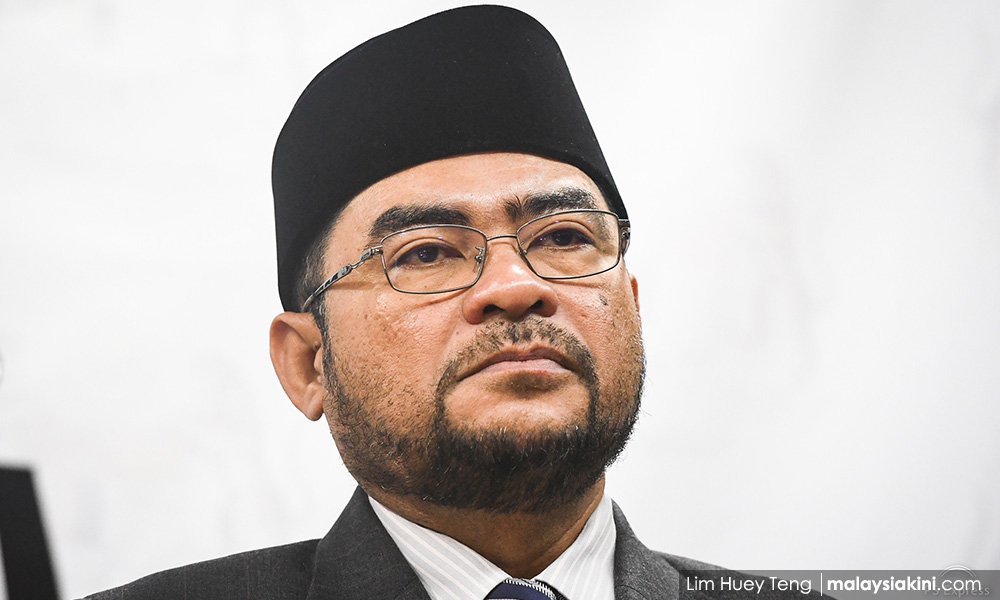
Kee said that Minister in the Prime Minister's Department in charge of Islamic Affairs, Mujahid Yusof Rawa (photo) has a key role to play in disseminating Harapan's message.

“He walks a tightrope, but of late he has been promoting interfaith harmony. People tend to clobber someone when he does wrong and ignore their good.
"Even so, there is more he can do to make Muslims in the country to feel that they need not worry about the status and position of Islam.
"This is of paramount concern," added Kee, author of The People's Victory.
Harapan has not broken new ground
Lee Hwok Aun, a senior fellow at the Iseas-Yusof Ishak Institute feels that Harapan must be bold and break new ground.
"The government must lead the nation in finding new mutual understandings, compromises and integrated solutions.
“The BN mode of racial politics and racial quotas is stressing the nation, but Harapan has not broken new ground, as exemplified in the matriculation enrolment dilemma," he said.
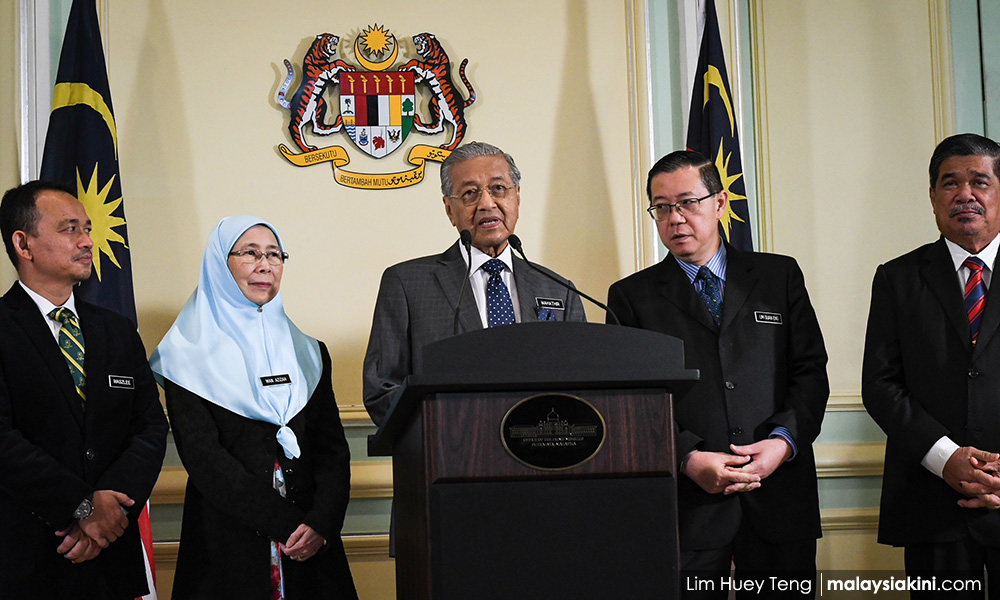
Lee urged the new government to back its talk with action, particularly when it comes to helping the poor and implementing fair policies.
"The principle of helping the poor regardless of race resonates widely – and it is most applicable in education, but Harapan has not pursued this, even while continually spouting the rhetoric of 'needs-based affirmative action'.
"I don’t see why it is so difficult to acknowledge that non-Malays have legitimate grounds to feel the system is unfair, and that Malays are anxious over the loss of access to opportunity if quotas are taken away," he said.
Lee believes the people are willing to give the new government more time, but it needs to address issues rather than sweep them under the carpet.
"The Merdeka Center survey shows that a majority of Malaysians are willing to give Harapan more time to deliver on its promises.
“The survey also shows the rakyat, especially the Chinese, place a high premium on preserving Malay interests and fair treatment of all," he added.




Report this comment
Are you sure you want to delete this comment?
This action cannot be undone.