


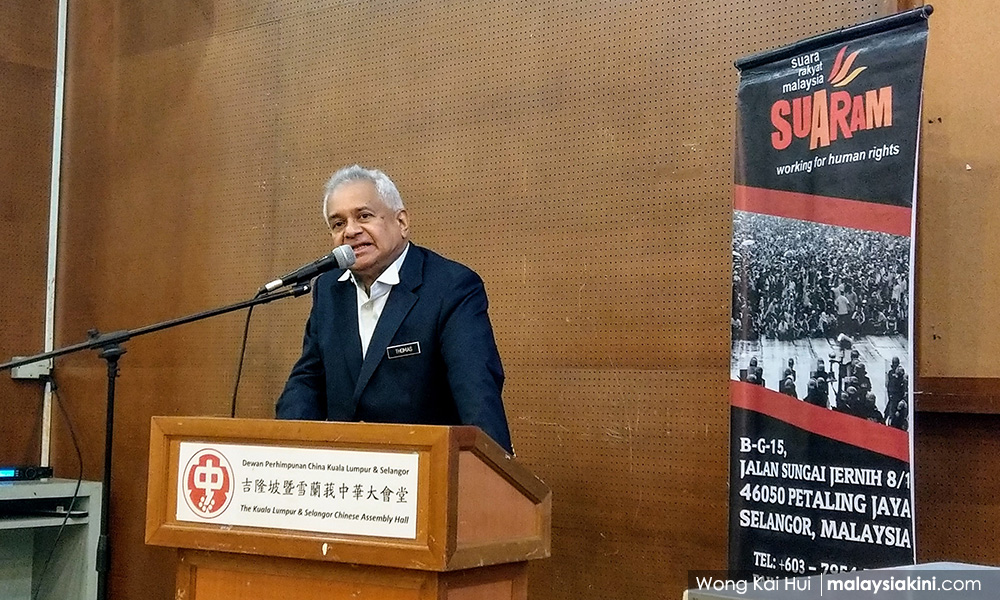

AG urges civil society to keep on 'troubling politicians'
Attorney-General Tommy Thomas has called on civil society groups to continue speaking up to keep the government on its toes.
Thomas said that as the expectations of the new government are so high, it is inevitable that some have become disillusioned...
Attorney-General Tommy Thomas has called on civil society groups to continue speaking up to keep the government on its toes.
Thomas said that as the expectations of the new government are so high, it is inevitable that some have become disillusioned.
However, he urged civil society to continue "troubling" politicians and pushing for reform.
"I think all of you have become complacent after May 10, and expecting the government or myself to perform miracles,” he said at the launch of Suaram's 2018 Malaysia Human Rights Report today.
Thomas is the first attorney-general to attend the launch of Suaram’s report.
"My call to all of you is to carry on the struggle. The journey has started, but there are a lot of obstacles to be overcome."
The great difference between yesterday and today, Thomas noted, is that Malaysians can now speak up without fear.
"Surely you will notice over the last 12 months that Malaysia is now a much freer country. There is so much more space, so make use of it," he urged attendees.
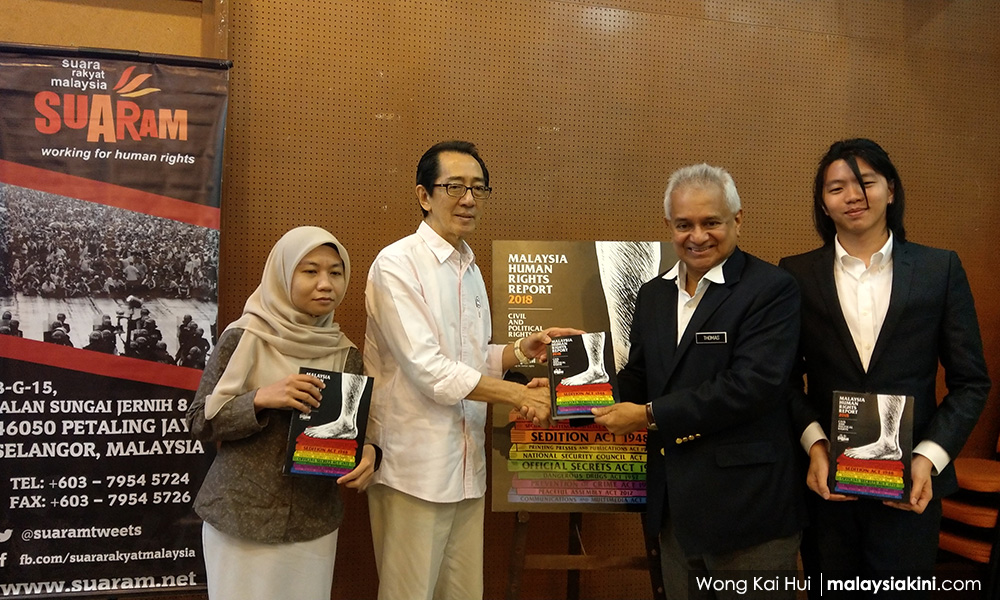
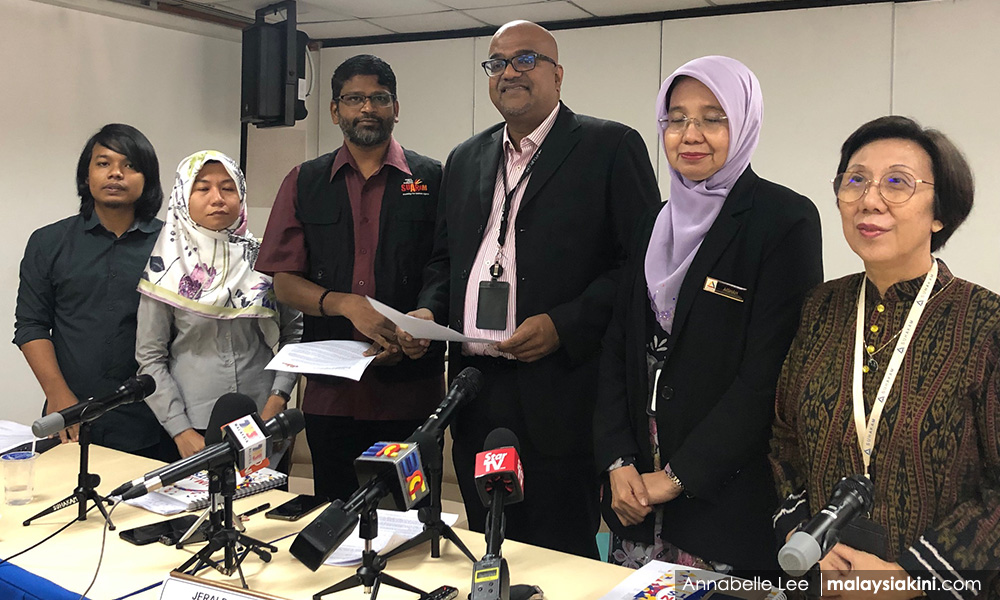
The 2018 Malaysia Human Rights Report was launched by Thomas, Suaram advisers Kua Kia Soong and Farida Mohd, and project coordinator Dobby Chew.
'Political decision'
In his speech earlier, Kua had criticised the U-turns over the ratification of United Nations International Convention on the Elimination of All Forms of Racial Discrimination and the Rome Statute of the International Criminal Court, questioning if the term 'New Malaysia' is justifiable.
Read more: Suaram: Freedom of expression 'better, but not great' after May 9
Thomas responded by saying that he found no legal impediment to ratifying either convention, but that it was a "political decision" by the cabinet.
"So, what should you do? You should go and meet them (cabinet), catch them and ask why are you not implementing it?
"There are four more years, so we don't have to give up hope.
“Please catch the politicians, disturb them, trouble them. All reforms come from the cabinet," he said.
Thomas further explained that in many cases, the Attorney-General's Chambers is only given instructions to draft bills following the cabinet's decision.
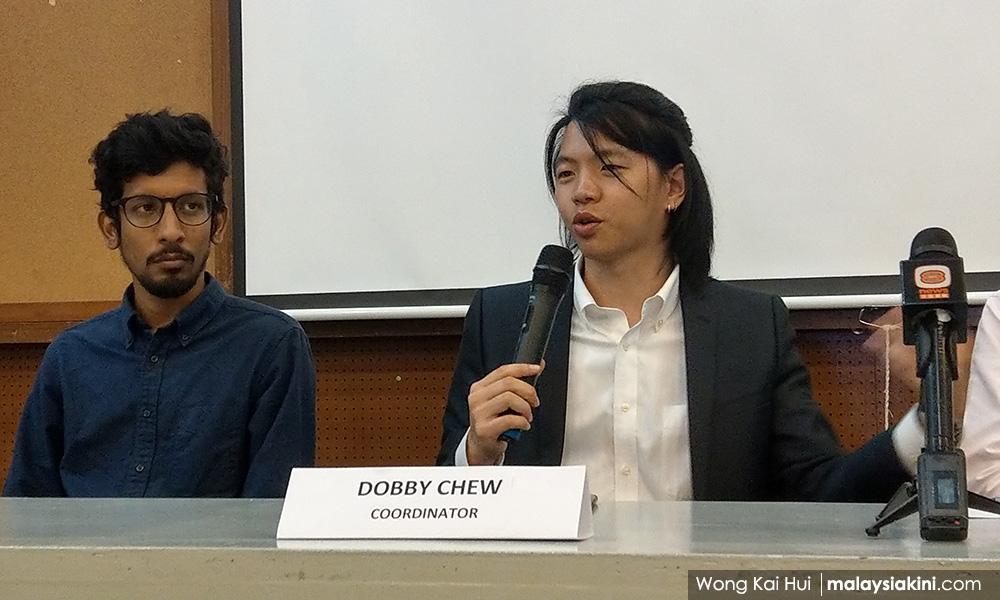
Chew, meanwhile, pointed out that there have been no updates on the reform, repeal or amendments of the laws that allow detention without trial.
These include the Security Offences (Special Measures) Act 2012, Prevention of Crime Act 1959, Prevention of Terrorism Act 2015, and the Dangerous Drugs (Special Preventive Measures) Act 1985.
According to Suaram's media monitoring or case management, a total of 235 cases of detention without trial were documented in 2018.


Report this comment
Are you sure you want to delete this comment?
This action cannot be undone.