



Gov't working on proposal allowing Parliament to appoint MACC chief
The government has agreed to transfer the power to appoint the MACC chief commissioner from the prime minister to the Parliamentary Special Select Committee on Public Appointments.
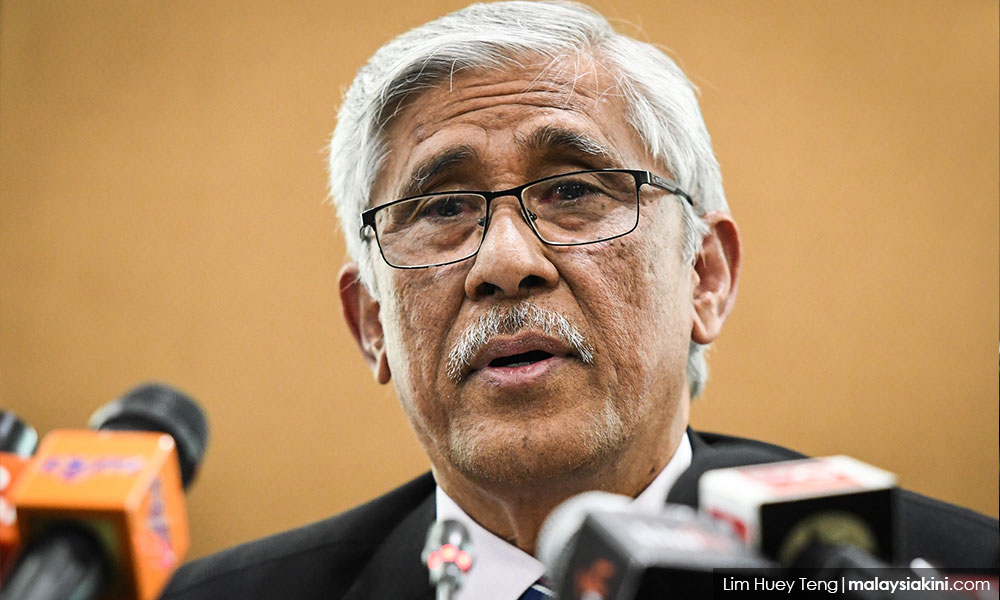
National Centre for Governance, Integrity and Anti Corruption (GIACC) director-general Abu Kassim Mohamed (photo, above) said the government also agreed that the dismissal or termination of the MACC's head should also be decided by an independent committee instead of just the will of the prime minister, similar to when a tribunal is formed to dismiss a judge...
The government has agreed to transfer the power to appoint the MACC chief commissioner from the prime minister to the Parliamentary Special Select Committee on Public Appointments.
National Centre for Governance, Integrity and Anti Corruption (GIACC) director-general Abu Kassim Mohamed (photo, above) said the government also agreed that the dismissal or termination of the MACC's head should also be decided by an independent committee instead of just the will of the prime minister, similar to when a tribunal is formed to dismiss a judge.
"One of (our) initiative is to make sure the appointment and dismissal of the chief commissioner are done according to the Jakarta Declaration, where protection given to the tenure of a chief commissioner.
"(Only then), they will feel free in taking action without fear in doing their job," he said during a question-and-answer session at an anti-corruption forum.
Abu Kassim said such a move was already in the pipeline of the National Anti-Corruption Plan (NACP) 2019-2023 which was released in January.
He, however, said the government needs to seek an amendment to the Federal Constitution, which spells out the appointment and termination of the MACC chief commissioner.
Abu Kassim said this would be quite challenging for the Pakatan Harapan government which does not command a two-thirds majority needed to amend the Federal Constitution in Parliament.
"They (the relevant officers) are doing more research because we need to have a strong justification to bring (the matter) to the cabinet," he told media later.
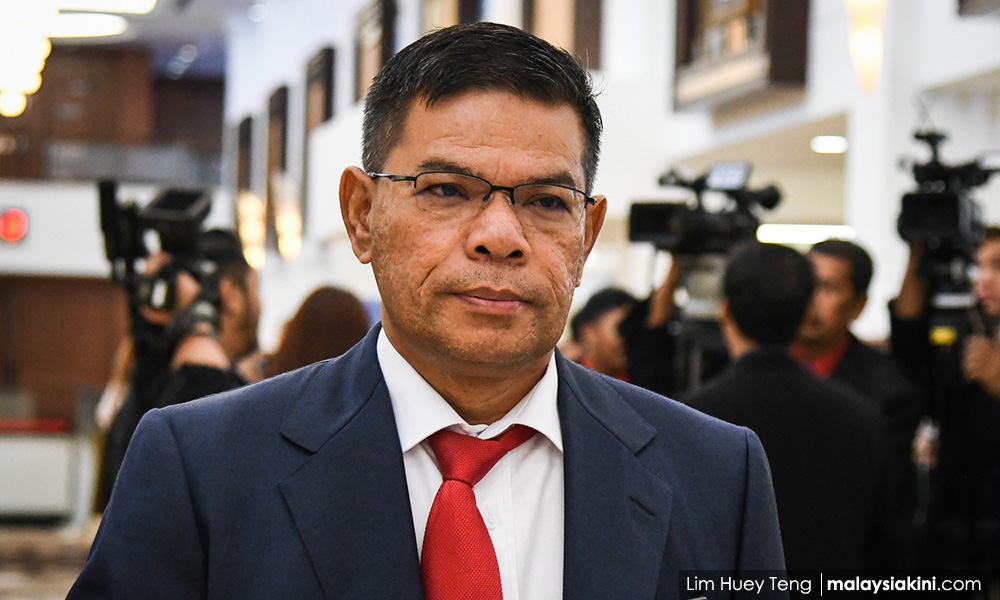
Meanwhile, in his closing remark at the anti-corruption forum, Domestic Trade and Consumer Affairs Minister Saifuddin Nasution Ismail (photo) raised his concern about the level of corruption involving the public service.
"The recent data released by MACC revealed that 46.3 percent out of the 4,860 individuals detained for graft from 2014 to June 2019 were civil servants.
"This is a grave cause for concern," he said.
"Most of the graft cases involved staff from the procurement sector and 53.4 percent out of the 4,860 individuals detained were aged 40 and below," he said.
"A study conducted by MACC revealed that 22.1 percent of the respondents from the civil service said that they were willing to receive bribes if they had power or position," he said.
"This shows an urgent need for the government to institutionalise anti-corruption efforts," he said.
Saifuddin said his ministry will be among the first ministries to develop an Organisational Anti-Corruption Plan (OACP) based on the National Anti-Corruption Plan (NACP), which will be launched at the end of September.
A total of 94 initiatives will be carried out via OACP, including channels for anonymous reporting and a reward system for those who report cases of corruption, he said.
The government will also prohibit the support letters issued by influential persons when carrying out official duties, he said.



Are you sure you want to delete this comment?
This action cannot be undone.