



'Not good for anti-corruption agencies to be given prosecution powers'
Anti-corruption agencies should not be given prosecutorial powers to ensure check and balance in its operations, according to an international specialist.
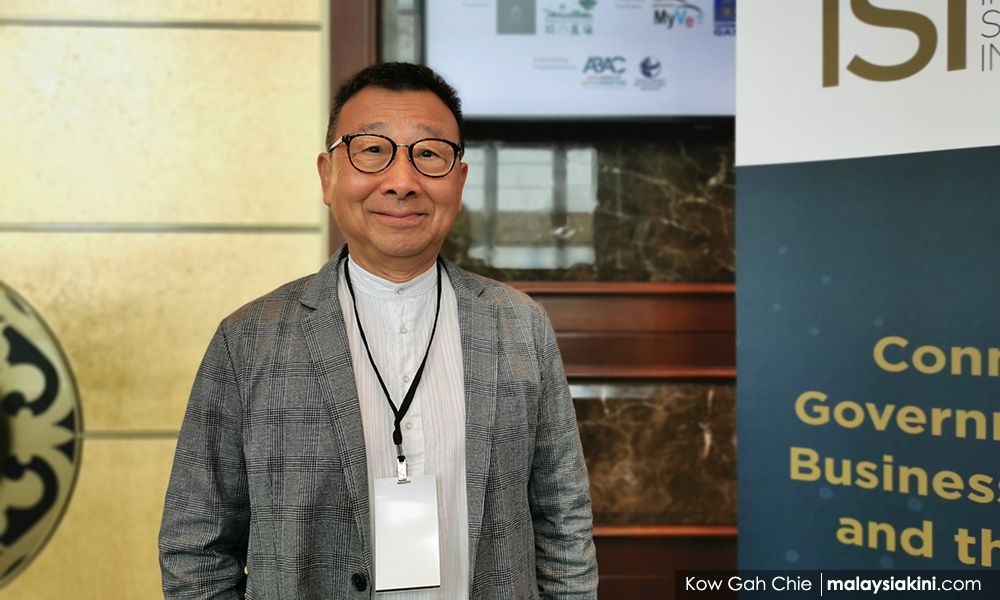
Hong Kong's former Independent Commission Against Corruption (ICAC) deputy commissioner and head of operations Tony Kwok believes that this is because an agency may not act fairly if thus empowered...
Anti-corruption agencies should not be given prosecutorial powers to ensure check and balance in its operations, according to an international specialist.
Hong Kong's former Independent Commission Against Corruption (ICAC) deputy commissioner and head of operations Tony Kwok believes that this is because an agency may not act fairly if thus empowered.
"The anti-corruption agencies in Singapore, Hong Kong and Malaysia only investigate, and let the attorney-general and justice department decide on the prosecution.
"The good point is that there will be a check and balance. If you have both the powers to investigate and prosecute, when you investigate, you are already biased.
"So theoretically, I would suggest that it is better to have this kind of check and balance," he said during an anti-corruption forum in Petaling Jaya today.
However, Kwok added that such prosecutorial powers can be given to anti-corruption agencies if prosecutors are already corrupt.
Calls to grant the MACC prosecution powers were repeatedly turned down under the previous BN administration.
This led to critics deriding the commission as 'toothless', powerless to act against 'big fish' in graft cases instead of nabbing 'small fries.'

'Anti-graft agencies must be independent'
At today's forum, Kwok said the head of an anti-corruption agency should not be appointed by the country's leader, and that its independence should be constitutionally protected.
"If the prime minister can appoint anyone he likes and dismiss the head of anti-corruption agency at his own will, how can this guy enjoy independence?" he asked.
Kwok also suggested that university students be given a special session on corruption before they graduate to the outside world to have a better understanding of conflicts of interest.
"One thing we ignored is the universities. If they (students) do not have a clue what do you mean by corruption and conflict of interest, we will be in trouble," he said, adding that countries should have specific laws to address such conflicts.
'CPI unfair'
Meanwhile, Kwok also said global usage of Transparency International's Corruption Perception Index (CPI) to measure each country's level of corruption.
He said this when asked by the moderator comment on the Berlin-based NGO's annual survey and whether it reflects reality.
In his response, Kwok noted that the top five 'least corrupt' countries on the CPI index were the countries do not have a separate anti-corruption agency.
He said countries that have taken the fight against corruption seriously would have the matter highlighted in the media, hence worsening the public perception towards the level of corruption and reducing the CPI ranking.
Citing Hong Kong as an example, he said Hong Kong's ranking worsened after sending its former chief executive Donald Tsang to jail over a charge of misconduct in public office.
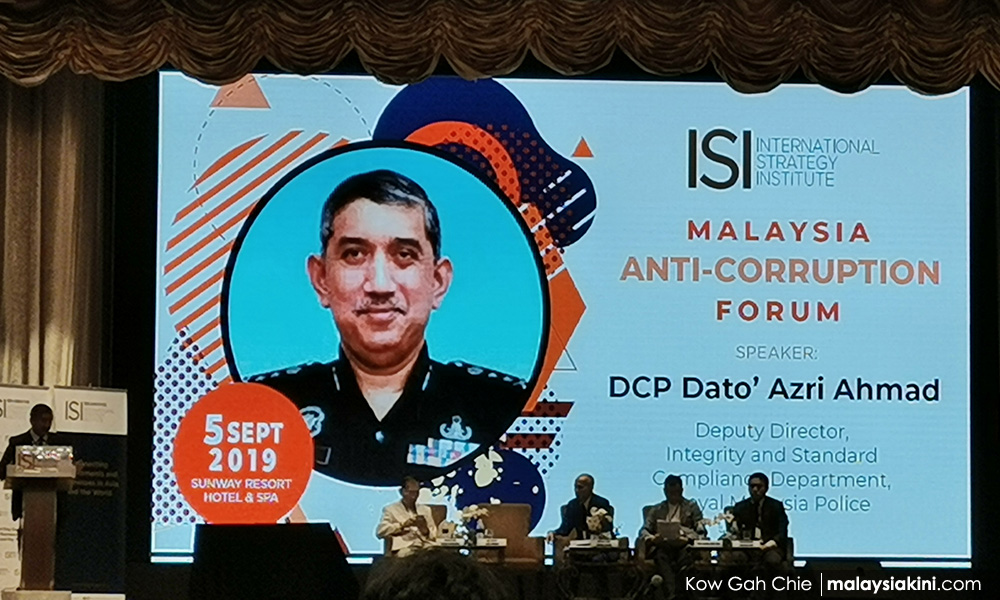
Concurring, Royal Malaysian Police Integrity and Standard Compliance Department deputy director Azri Ahmad said relevant parties should not use "perception" to measure corruption and crime.
"Why not we amend the corruption perception index to 'corruption reality index', to show the actual (situation)?" asked Azri.
He said the police found it challenging to correct the perception of the general public on crime and corruption.
"There is a problem faced by the police.... The public perception of the Royal Malaysia Police," he said.
The news about corruption and crime, including misinformation, travels so fast, he said.


Are you sure you want to delete this comment?
This action cannot be undone.