




Ombudsman, IPCMC play different roles
Malaysia could do with an ombudsman provided it is not created to substitute the proposed Independent Police Misconduct and Complaints Commission ( IPCMC ), said a senior lawyer.
Malaysia could do with an ombudsman provided it is not created to substitute the proposed Independent Police Misconduct and Complaints Commission ( IPCMC ), said a senior lawyer.
Malaysian Bar vice-president Ambiga Sreenevasen said an ombudsman could help improve public service delivery which is the thrust of the present government.
 "We should have both. Having an ombudsman-type mechanism is also a good idea especially to prevent abuse of power.
"It would have more restricted powers than a body like the IPCMC but not as a replacement for the latter," she said when contacted today.
Ambiga said much depended on which ombudsman model was being considered, such as the UK's Parliamentary Commissioner for Administration which cannot investigate criminal activities.
"Despite this, the UK also has a police complaints commission," she said, noting the lack of details on the ombudsman idea.
"At the moment, we don't know what is meant by ombudsman, we don't know the scope, function and powers but I think probably the one being considered is the UK model.
"The major difference would be the greater powers wielded by the IPCMC compared to an ombudsman which has strictly administrative functions."
The ombudsman idea was floated by Minister in the Prime Minister's Department Mohd Nazri Abdul Aziz when he announced it on April 9 as a replacement of the proposed IPCMC.
He reportedly said the government rejected the IPCMC following strong opposition from the police and that the Attorney-General was already studying the ombudsman proposal.
Jumping the gun
In an immediate and direct contradiction, Deputy Prime Minister Najib Abdul Razak clarified that the government had yet to decide on the IPCMC.
On April 7, the Bar Council launched a nationwide signature campaign to push for the formation of the IPCMC as recommended.
Its online version has registered over 3,100 signatures to date.
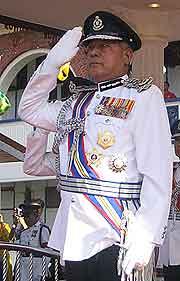 In addressing the police's concerns over the absence of an avenue for appeal or a right to be heard, Ambiga reiterated the Bar Council's support for a direct appeal or a judicial review to be added in the draft.
She stressed on the importance of engaging the police force without taking "an antagonistic approach" in trying to answer their concerns.
"There are a few bad hats who are spoiling the rest plus there are many reported cases where lives have been lost and abuses have been alleged."
"At the end of the day, we all know they are doing a critical job for us. Simply put, the path of the government is clear.
"No doubt there is opposition (to the IPCMC) but we should engage with the police and convince them that a very fair system is being set up, and make sure that is the case."
She acknowledged that the fears and concerns expressed by the police were understandable as their livelihood will be affected.
"However, the good cops don't ever have to worry about the IPCMC which is designed to address specific wrongdoings. It's only the ones who are mucking around that need be concerned.
"As long as safeguards are built into the system for a fair hearing for the personnel concerned, there should be no fear."
Furthermore, she said, the fact that the proposal was made by a royal commission of inquiry after having done two years worth of research must be given credence.
Fearful idea
Asked to comment, a senior police officer remained convinced that the IPCMC will erode the effectiveness of the force which would end up beholden to Parliament.
"The idea (of the IPCMC) is good for the checks and balances, but it's still a fearful idea in the sense that it's going to be above everything.
"The proposed body would be subservient to Parliament alone but we work for the government and people. The power to hire and fire lies with the government."
 The officer, who declined to be named, said the police already had "certain mechanisms to discharge our duties".
"Just leave it to us to handle our job as trained professionals. We have our own disciplinary bodies," he said, citing the Police Force Commission as being independent from police or government influence.
"Perhaps (we) can expand on this," he suggested but did not elaborate.
The police had previously recommended that this commission created under Article 140 of the Federal Constitution handle the discipline of its officers and personnel.
"The main grouses against the proposed IPCMC are the punitive aspects and the manner in which matters will be handled.
"Why demoralise the body (police force) that everyone is depending on just because of a few black sheep?" he asked, adding that whatever the government decides will be accepted.
Answerable to?
The officer with over 30 years service also warned that the IPCMC would lead to hesitation among personnel on duty in discharging their duties.
"It will make a policeman think many times before acting. It will also result in a loss of loyalty to the government and the profession because personnel will be more concerned about complying with the commission's requirements."
He said there is the fear of prejudice and bias even if they acted in good faith while on duty.
"How do you expect the police to do their duty if they are beholden to the IPCMC? From my experience, I can feel that if this is to materialise, there will be some sort of crisis.
"We don't want to go through the communist and al-Qaeda times just to prove that we're not lembik (soft)."
 Expressing frustration, he said ongoing efforts of tidying up the daily procedures of arrests, detention and counter service have largely gone unappreciated.
"It's very sickening... despite being paid peanuts and being the poorest-paid 'labour' in the country, we still do our job the best we can."
He said the fact is that the character of personnel reflects that of society as a whole.
"Not all of them in the force are good just as not everyone in society is good.
"But we're always in the process of weeding them (bad hats) out and taking stern action. We won't stand any nonsense."


Are you sure you want to delete this comment?
This action cannot be undone.