




Residents associations told to wield their power
"Sue local councils. Embarrass them publicly. That should prompt speedy action on our complaints," offered Ipoh City Watch (ICW) legal advisor Ernest Balasingam as a tip when dealing with errant local authorities.
"Sue local councils. Embarrass them publicly. That should prompt speedy action on our complaints," offered Ipoh City Watch (ICW) legal advisor Ernest Balasingam as a tip when dealing with errant local authorities.
"Residents associations (RAs) are very strong pockets of mandate and power which should come together to mobilise crucial grassroots support. Momentum is the keyword here."
Relating ICW's encounters with Ipoh City Hall, he said such efforts have yielded 99 percent success rate in his residential area in stopping unplanned development.
"Mobilisation is very important because local councils wear you down and try to break you. But you must persevere," he told about 70 people including RA heads, NGOs as well as political party representatives in Petaling Jaya today.
 ICW is a non-governmental organisation that strives to keep the local authority on its toes through public discourses and monitoring by its own free full-colour tabloid,
Ipoh Echo
, published fortnightly with a circulation of 5,000.
ICW is a non-governmental organisation that strives to keep the local authority on its toes through public discourses and monitoring by its own free full-colour tabloid,
Ipoh Echo
, published fortnightly with a circulation of 5,000.
Another proven trick, said Balasingam (left) when speaking on the experiences of RAs, was to engage and commit state assemblypersons and councillors.
"Don't antagonise them and don't sell them on their conscience. Just go on their greatness which is what they like, publicity-wise. Engage them and get them involved in your efforts."
He also noted that local councils were now resorting to secrecy laws when grilled under the three governing laws - Town and Country Planning Act 1976, Local Government Act 1976 and Street, Drainage and Building Act 1974.
Citizens' campaign
The Women's Development Collective (WDC), under an organising committee, is spearheading a national campaign to reinstate local elections following reports of alleged financial mismanagement and bad treatment by the PJ Municipal Council in recent years.
 As example, WDC executive director Maria Chin Abdullah (left), who facilitated the concluding discussion, recounted the MPPJ attempt to abort the public consultation by demanding for a police permit some hours before the event.
She said the booking for the community hall was paid in cash three weeks ago after confirming with MPPJ that no permit was required.
"Suddenly yesterday, I was summoned to the MPPJ at about 3pm and told that the keys will not be handed over without a police permit."
At the police station, she said, an officer told her that no permit was required but given MPPJ's request, one was issued within 90 minutes.
"When I returned to MPPJ with the permit, I told the president (Ahmad Termizi Puteh) how totally disappointed I felt at being treated this way.
"I ticked him off for the intolerant behaviour towards open and transparent discussions displayed by senior staff who remarked that the event was political and anti-MPPJ."
Fractious relationship
The last few weeks have seen angry clashes between RAs and Rukun Tetangga (Neighbourhood Watch) in PJ and the MPPJ over continued non-disclosure of the full statement of accounts despite repeated requests by ratepayers.
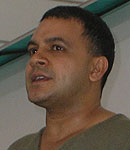 Asked to comment briefly from the floor on the latest skirmish, Section 5 RA legal advisor Derek Fernandez (right), an expert in planning laws, blamed it on the arrogance of the local council in refusing to be transparent.
"Most times, local governments feel they are the office boy of the state government and forget that they are themselves a government with duties and obligations towards ratepayers.
"It's all about basic needs and amenities, and since the basics are in a disgraceful state we need local elections to set things right."
Lawyer-politician R Sivarasa said although local election was a 40-year-old discussion, many had missed the experience of how it had worked well since before Merdeka.
"It was scrapped for purely political reasons. We all know that but it doesn't mean we cannot bring back local elections especially now when there is a real need for it," he said, adding that the Local Government Act has to be amended for this.
He proposed that decision-makers in the state and federal governments be made the lobby point for the campaign.
During the question-and-answer session, concerns were raised on how to galvanise public action in support of the third vote campaign, the format of conducting the elections and whether the previous formula will be used.
 Highland Towers victim Phang Ah Hing (right) who lost his mother, wife and son when their condominium block collapsed like a deck of cards in the 1993 tragedy which claimed 48 lives shared his disappointment that Ampang Jaya Municipal Council (MPAJ) was let off the hook.
"At the 10th memorial on Dec 11 last year, MPAJ was still arrogant as seen from news headlines that no compensation will be paid at all.
"The Federal Court judgment was devastating and caused so much more misery to the living relatives, and all because of a legal provision which gave full immunity to the local council."
Remove bad laws
He repeatedly appealed for public support to propose an amendment to Section 95(2) of the Street, Drainage and Building Act to ensure full accountability of the approving authority for building plans.
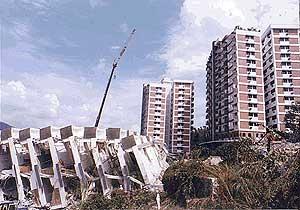 "Technically, we victims of the collapsed Block 1 have not filed for damages following the tragedy but following the decision by the highest court in the land, we don't expect anything different even if we do."
All Women's Action Society executive director Honey Tan, who provided a brief background on local elections, said the third vote was scrapped on allegations of maladministration and malpractice, which prompted a royal commission to be set up in 1965 resulting in the Athi Nahappan Report.
"But how different are we now compared with the time all the various reports were written? As you know, the original reason for banning local elections is now happening on an even greater scale.
"Remember, elections do not equal good governance. It's merely a first step. There must be in-built checks and balances within any system of governance for it to be effective."
In his paper earlier, Victor Oorjitham, a former local councillor, said important guidelines regarding appointments had been abandoned after the 1980s.
"Sometime after the 80s, guidelines for appointments not to be based on racial or political considerations were gradually eroded, and political appointments were made.
"Most local councils today are dominated by appointees from component parties of the Barisan Nasional."
A draft charter on local democracy and elected local government was later introduced for public deliberation before being finalised for endorsement in the national campaign.
A proposal was made to add Principle 10 of the Rio Declaration on environmental issues for citizens to be given access to relevant and related information, an opportunity to participate in decision-making and access to justice.
Other suggestions included engaging the Parliamentary Caucus on Human Rights, to make public the Athi Nahappan Report which recommended reinstatement of local government elections and to ensure that the charter was an all-inclusive document.


Are you sure you want to delete this comment?
This action cannot be undone.