




Experts: Tobacco firm’s ‘smoke-free’ promise a smokescreen
SPECIAL REPORT | Launched in Malaysia in 2018, Philip Morris International's (PMI) “alternative to smoking” device, Iqos, has attracted some 50,000 smokers in Malaysia in its first year, the tobacco giant said.
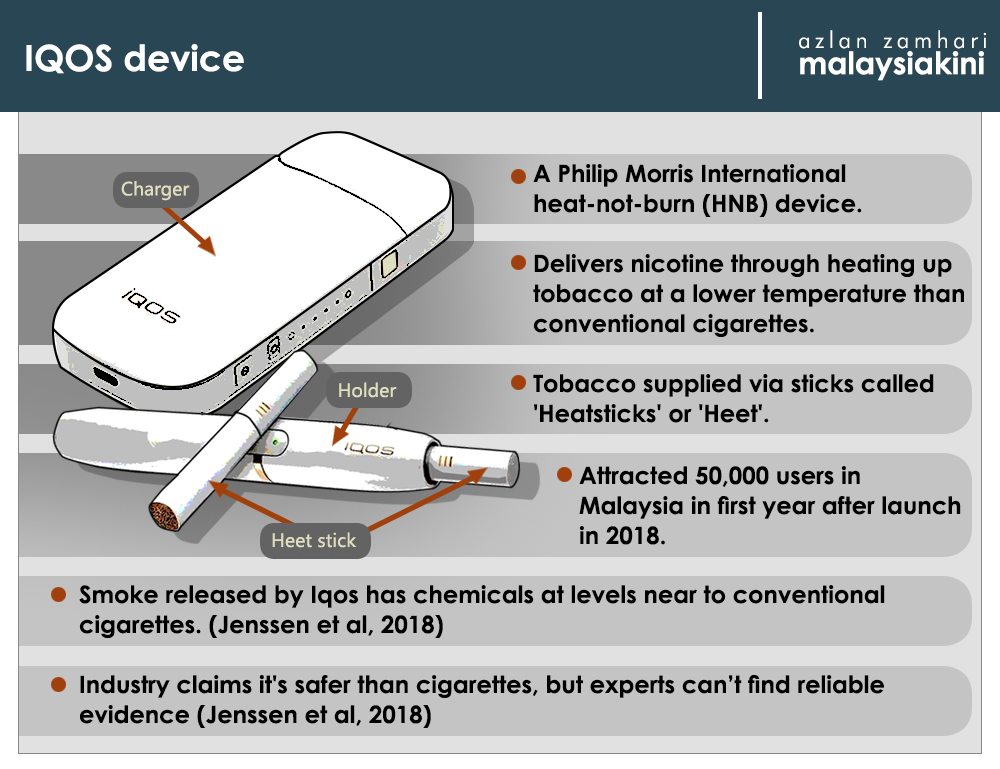
Part of the company’s “smoke-free” vision of the future, the device is marketed to only emit vapour, helping smokers avoid the detrimental effects of smoking conventional cigarettes, without having to give up nicotine.
The first of its kind to be legally sold in Malaysia, the Iqos and their tobacco inserts Heatsticks or Heet, are regulated like cigarettes.
Regulated as a tobacco product, Iqos and its Heasticks cannot be sold to children nor are they advertised regularly. Each pack comes with a warning label that tobacco kills.
But on social media, the rules are hazy.
On Instagram, where about seven percent of Malaysian users are aged 13 to 17, Malaysian supermodels, race car drivers and celebrities post photos with Iqos devices.
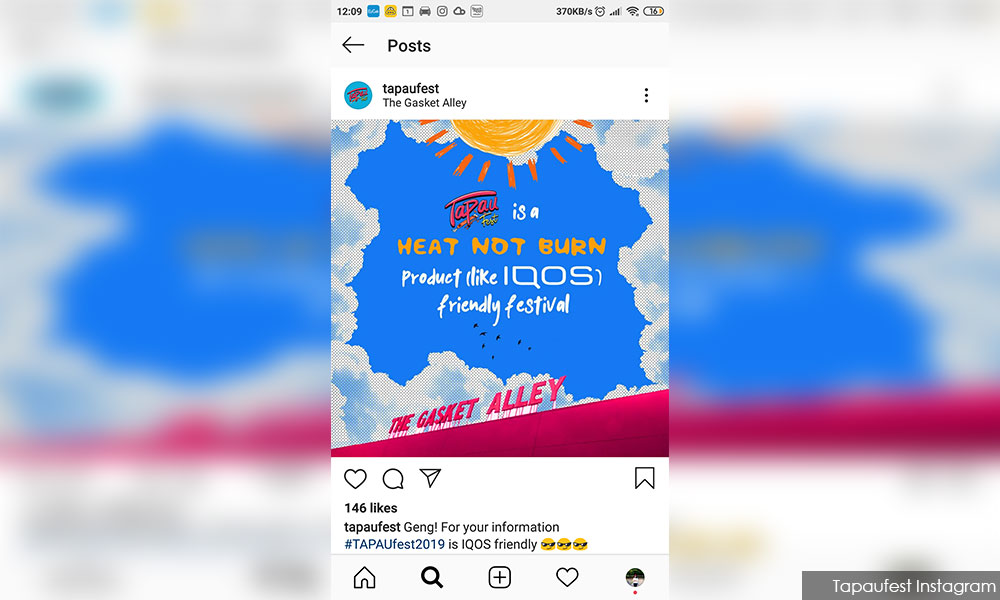
Last year, a music festival in the Klang Valley targeting a youth crowd was branded “Iqos-friendly event” where the devices could be used anywhere, even indoors...
SPECIAL REPORT | Launched in Malaysia in 2018, Philip Morris International's (PMI) “alternative to smoking” device, Iqos, has attracted some 50,000 smokers in Malaysia in its first year, the tobacco giant said.
Part of the company’s “smoke-free” vision of the future, the device is marketed to only emit vapour, helping smokers avoid the detrimental effects of smoking conventional cigarettes, without having to give up nicotine.
The first of its kind to be legally sold in Malaysia, the Iqos and their tobacco inserts Heatsticks or Heet, are regulated like cigarettes.
Regulated as a tobacco product, Iqos and its Heatsticks cannot be sold to children and neither are they advertised regularly. Each pack comes with a warning label that tobacco kills.
But on social media, the rules are hazy.
On Instagram, where about seven percent of Malaysian users are aged 13 to 17, Malaysian supermodels, race car drivers and celebrities post photos with Iqos devices.
Last year, a music festival in the Klang Valley targeting a youth crowd was branded “Iqos-friendly event” where the devices could be used anywhere, even indoors.
A smoke-free vision
PMI’s “smoke-free” vision for the future was first laid out in 2017. André Calantzopoulos, the previously camera-shy chief executive, started giving interviews about his company’s “transformation”. He wanted to switch smokers to PMI’s new range of cigarette alternatives, which he said would improve public health.
Two years ago PMI said it could stop selling cigarettes by 2030 in the UK. A global campaign called “Unsmoke Your World”, promoting the idea that anyone could become an “Unsmoker”, was released a year later.
PMI could be “part of the solution” to smoking, executives said. It hired advertising, PR and lobbying companies to promote a narrative of a new purpose-led, responsible business.
Careful scrutiny of its activities and internal documents by London’s Bureau of Investigative Journalism reveals that much of the campaign is spin, rather than substance.
The Unsmoke mission is a marketing campaign for PMI’s new range of cigarette alternatives and a blatant attempt to rehabilitate the company’s image so it can once again seek to influence policy and regulations.
Arguably, it has succeeded: although smoking rates have fallen in the past decade, PMI’s profits and share price have increased.
Some experts fear that if the company’s narrative is taken at face value, PMI will continue to sell billions of cigarettes worldwide while promoting itself as “part of the solution” to smoking.
It could lure a new generation into addiction with its new products, whose long-term health risks are unknown, and discourage people who might have quit altogether from doing so.
Iqos events around the world attract young people with concerts and celebrity guests.

Iqos events around the world attract young people with concerts and celebrity guests.
“The multi-billion-dollar tobacco industry will do everything they can to stay in business,” said Dr Vinayak Prasad, head of the World Health Organisation’s (WHO) tobacco control division. He believes that what they are saying is far from reality.
“If they really want to be a part of the solution, they should go tobacco-free, not smoke-free. If they are genuine about a tobacco-free society, they will readily embrace anything to reduce the demand for all forms of tobacco products.”

PMI vice-president Dr Moira Gilchrist.
Dr Moira Gilchrist, a vice-president of PMI, told the Bureau: “Our vision is that one day, smoke-free products will replace cigarettes. The sooner the world transitions away from cigarettes, the sooner we can stop making them.”
The era of Iqos
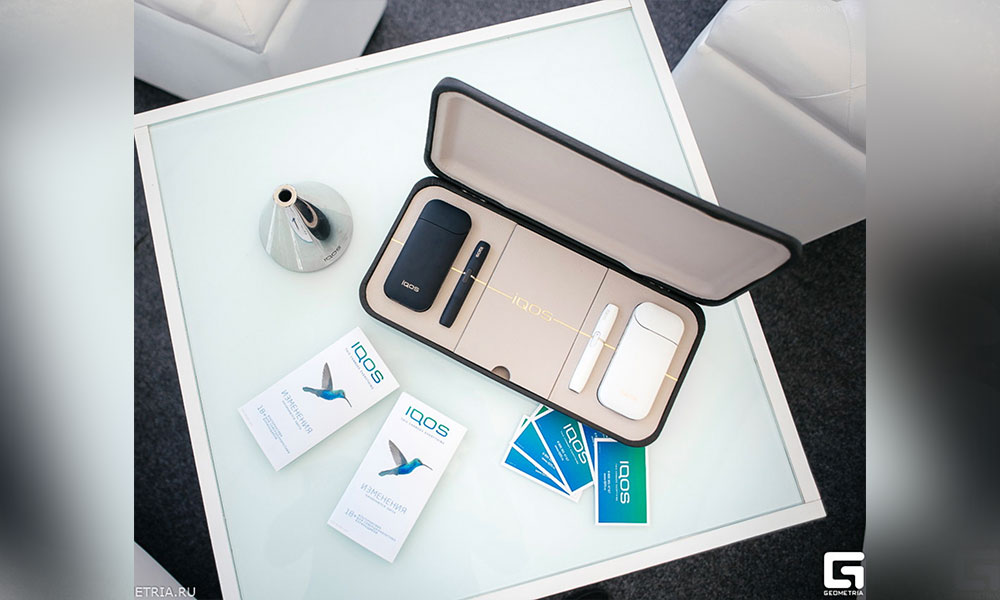
Iqos is a sleek gadget that looks like a cross between an iPhone and an expensive pen. It is widely believed to be an acronym for “I Quit Ordinary Smoking” – although this is consistently denied by the company – and is now available in 52 countries worldwide.
It looks like an e-cigarette, or vape, but there is a key difference: it contains tobacco, where e-cigarettes only hold a nicotine solution.
The Heets, which is a stick of tobacco developed especially for the Iqos, is inserted into the Iqos device and warmed to 350 degrees Celsius (much lower than the 800 degrees of a burning cigarette) until tendrils of aerosol are released. This mimics the rituals of smoking and gives users a satisfying kick of nicotine while inhaling fewer carcinogens.
Calantzopoulos, a Greek electrical engineer who has spent 35 years working for PMI, says he was smoking a pack a day until he switched to Iqos, his personal journey neatly echoing that of his company.
PMI calls Iqos a heated tobacco or “heat-not-burn” device; it is part of a new class of products sitting between vapes and traditional cigarettes.
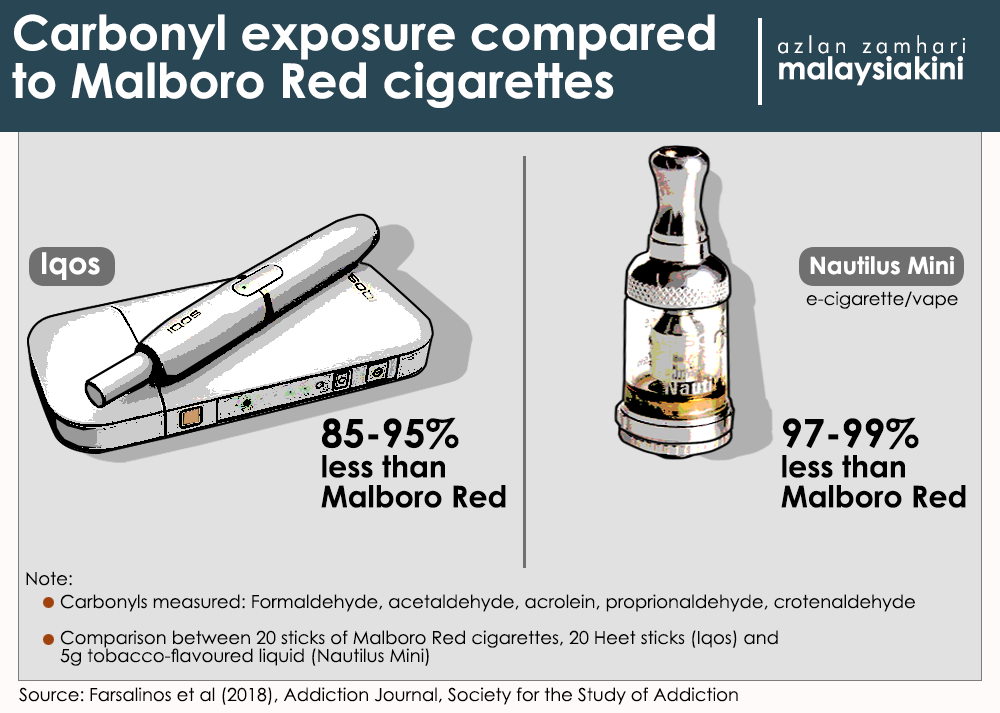
There is a consensus that switching to vaping offers the best health benefits to smokers after quitting or using patches, gum or prescription drugs that lower cravings.
Heated tobacco products release fewer harmful chemicals than cigarette smoke, but more than e-cigarettes do. Neither product has been around long enough for experts to be sure that reducing the levels of toxic chemicals also reduces overall rates of disease.
Some studies have also found that Iqos emits higher levels of other chemicals than cigarettes, but not the ones known to be dangerous. Although these are not toxic in the short term, it is not known if they could have health effects over a longer period of use.
PMI said its testing on Iqos showed the concentrations of these chemicals “are below the level of toxicological concern”.
Promoting a worse evil
Some question why, if PMI wants to be “part of the solution” to smoking, it chose to heavily promote a heated tobacco product rather than an e-cigarette, when the potential health benefits of the latter are widely considered greater.
The answer comes down to economics, said Erik Bloomquist, a tobacco industry analyst. PMI could more easily adapt its cigarette manufacturing to make Heatsticks (Heet), while the profit margins for many e-cigarettes, especially those where users change the liquids and heating coils themselves, are miniscule.

Iqos was first launched in Japan, where e-cigarettes are banned, and within four years gained nearly 16 percent of its overall tobacco market. Experts believe its introduction has led to falling cigarette sales. Iqos has also been a hit in South Korea, Russia and Italy.
PMI says that 10 million smokers have switched to Iqos since it was launched. Calantzopoulos’s new ambition is to switch 40 million smokers from cigarettes to PMI’s alternative products by 2025.
He describes the situation as a win-win: better for the smoker, and better for PMI, which can get better profit margins from Iqos if it is subject to lower taxes than cigarettes.
The company’s executives are working hard all around the world trying to persuade governments not to tax Iqos like a cigarette, to the chagrin of the WHO, which has advised against such a concession.
PMI said Iqos helps smokers, who find vapes unappealing, to give up cigarettes.
“What is most important is that adult smokers have access to a product that they are able to switch to and completely quit smoking cigarettes.” The company said it lobbied governments “because products like e-cigarettes and heated tobacco products should not be banned”.
Making tobacco cool again
Calantzopoulos will be wary of the backlash faced by Juul, the maker of America’s most popular e-cigarette, over accusations its early marketing appealed to teenagers.
The company denies it ever targeted children but has since faced congressional hearings, federal investigations and hundreds of lawsuits.
It is against this backdrop that Calantzopoulos maintains he only wants Iqos targeted at the world’s 1.1 billion adult smokers. However, a small Italian study found nearly half of people who had tried the product had never smoked.
PMI’s CEO Calantzopoulus wants Iqos targeted at adult smokers only, but its marketing campaign suggests otherwise.

PMI’s CEO Andre Calantzopoulus wants Iqos targeted at adult smokers only but its marketing campaign suggests otherwise.
PMI appears to have at times recruited occasional or social smokers to promote its devices. “I don’t smoke often, maybe only when I am at a party or having a glass of wine with some friends, but I was interested to find out about this device because it didn't seem like just another electronic cigarette,” Gabriele Gzimailaite, a London fashion blogger, told her readers in November 2017.
Gzimailaite, who has 120,000 Instagram followers, had been flown out to Milan by PMI for an Iqos party, where she posed against an Iqos-branded wall and posted pictures of the device.
Four months later PMI paid for her stay at the luxurious Rosewood Hotel in London, which has launched Iqos-friendly rooms. Gzimailaite posted a picture of herself posing in a marble bubble bath, drinking a glass of rosé with her black Iqos and a magazine at her side.
Calantzopoulos’ promise not to target non-smokers or teenagers is disingenuous, activists say. They argue that if PMI convinced its existing customers to switch to Iqos without attracting new ones, as it claims it wants to do, the company would go out of business within a generation.
“The main purpose is to prevent smokers who could be quitters to stay consumers of their products,” said Pascal Diethelm, president of Oxysuisse, a Swiss NGO dedicated to tobacco prevention. But even that could not sustain the company indefinitely – those smokers will die. PMI needs young people to create a new market, he said.
Diethelm points to investor presentations which appear to show PMI using the “theory of diffusion of innovation”. This is where there are “early adopters” of a product, who tend to be richer and more privileged than the rest of the population.
As this group adopts the product they serve as influencers on the rest of the market, including young people. Diethelm believes this is why Iqos is being marketed as a luxury, hi-tech, aspirational product.
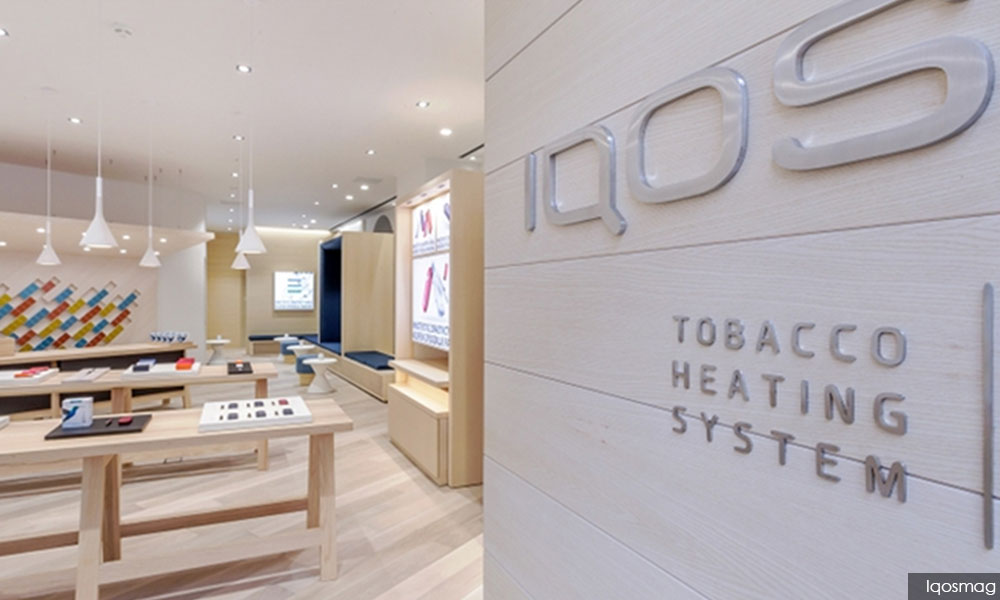
A visit to an Iqos shop does nothing to dispel this belief. It looks like an Apple store, with big museum table-cases displaying the latest devices. Colourful products are displayed in a rainbow on the wall, and young, hipster shop assistants stand ready to help.
While smoking rates fell in Japan after the introduction of Iqos, public health experts are concerned that not all smokers will switch completely from cigarettes.
Independent studies and PMI’s own research show that many people tend to carry on smoking while using the device, negating the health benefits.
“Iqos probably falls halfway in between e-cigarettes and cigarettes on a toxic exposure scale,” said Richard O’Connor, professor of oncology at Roswell Park Comprehensive Cancer Center.
“So basically, there would be no real benefit to somebody who uses both products at the same time.”
PMI did not dispute this.
A version of this article was first published by the Bureau of Investigative Journalism.
Tomorrow: Behind the ‘smokescreen’ of Philip Morris International’s anti-smoking campaign
Sunday: On social media, youths are target market for new smoking device





Report this comment
Are you sure you want to delete this comment?
This action cannot be undone.