


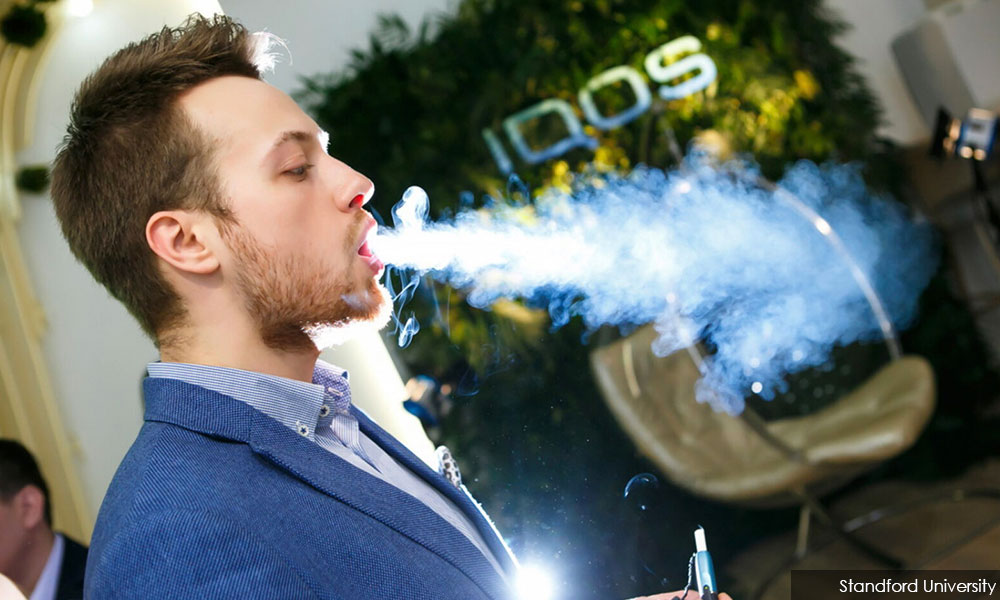

Behind the ‘smokescreen’ of a tobacco giant’s anti-smoking campaign
SPECIAL REPORT | Tobacco giant Philip Morris International's (PMI) announcement in 2017 that it was pushing for a “smoke-free” future, created a stir in the market.
The idea was to phase out smoking of conventional cigarettes by moving smokers to its flagship product, the Iqos, a device largely known as a “heat-not-burn” device.
The marketing campaign for Iqos recasts the tobacco giant as part of the solution against smoking, a habit which kills millions worldwide every year. However, this aim of phasing out cigarettes does not gel with a number of its business practices.
Its revenues from alternative products shot up from 0.2 percent in 2015 to almost 20 percent in 2019, but the vast majority still came from cigarettes. The company sold more than 740 billion cigarettes worldwide in 2018 and is only reducing its production by a few percentage points a year...
SPECIAL REPORT | Tobacco giant Philip Morris International's (PMI) announcement in 2017 that it was pushing for a “smoke-free” future, created a stir in the market.
The idea was to phase out smoking of conventional cigarettes by moving smokers to its flagship product, the Iqos, a device largely known as a “heat-not-burn” device.
The marketing campaign for Iqos recasts the tobacco giant as part of the solution against smoking, a habit which kills millions worldwide every year. However, this aim of phasing out cigarettes does not gel with a number of its business practices.
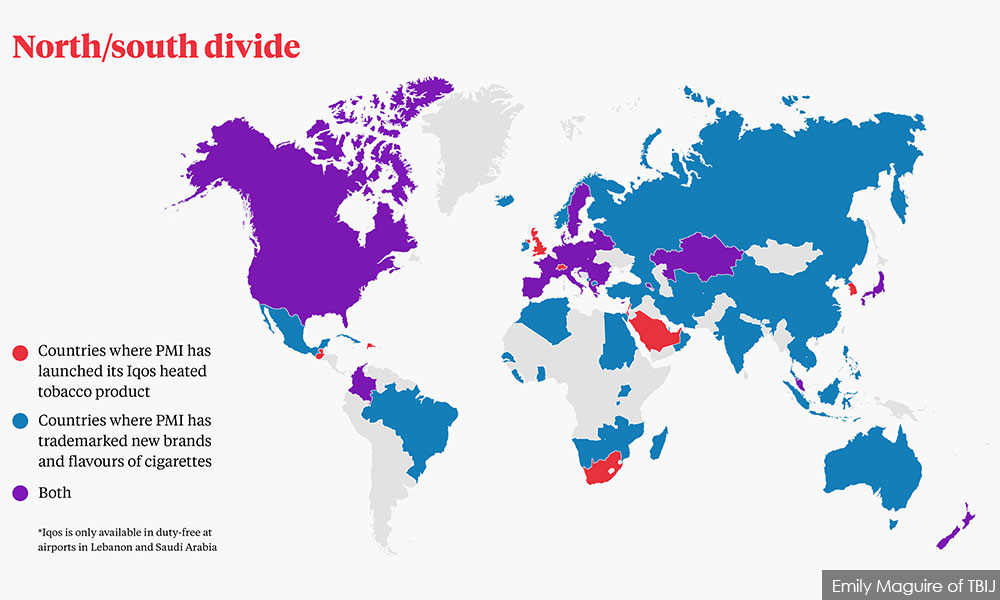
Its revenues from alternative products shot up from 0.2 percent in 2015 to almost 20 percent in 2019, but the vast majority still came from cigarettes. The company sold more than 740 billion cigarettes worldwide in 2018 and is only reducing its production by a few percentage points a year.

Andre Calantzopoulos, PMI CEO, has also repeatedly reassured investors that PMI wants to remain a leader in cigarettes and will not give up market share to its competitors.
Since it announced its aim to stop selling cigarettes, it has acquired a new cigarette company, launched a new brand, and added enticing new flavours such as Splash Mega Purple and Fusion Summer.
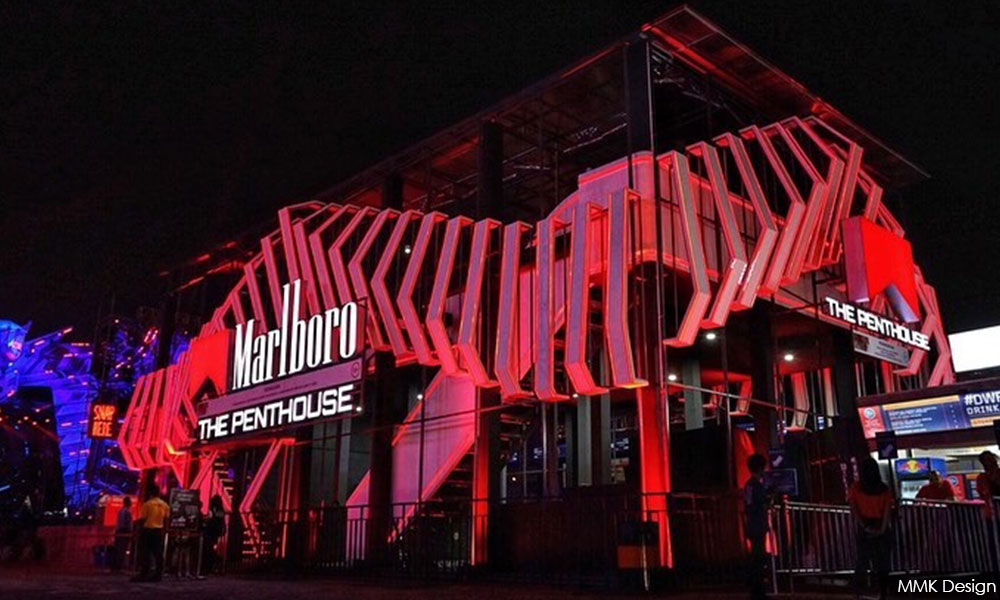
It has also launched legal action against anti-smoking policies in countries like the Philippines, and has carried on advertising cigarettes in countries that permit it.

Richard O’Connor, who until recently sat on the US Tobacco Products Scientific Advisory Committee advising the FDA, believes the company could easily switch many more people away from cigarettes if it wanted to.
“They can stop marketing cigarettes and market the heck out of Iqos and actively encourage people to use it. If you want to shift the market and you control most of that market, you could easily do it,” the professor of oncology at Roswell Park Comprehensive Cancer Centre believes.
“They might lose a few share points on their stock, but I think it would be a much more rigorous demonstration that they really are changing.”
From pariah to 'part of the solution'
Tobacco is still the leading cause of preventable death around the world, killing eight million people a year and harming millions more. There is now indisputable evidence that smoking causes multiple types of cancer, heart disease and respiratory illnesses, killing up to half of those who light up.
In 2006, Judge Gladys Kessler issued an extensive and damning set of findings during a landmark judgment against Philip Morris US, from which PMI later split. She cited evidence of the company’s decades-long campaign to hide the hazardous effects of smoking and secondhand smoke.
Philip Morris had lied about the addictiveness of nicotine; manipulated nicotine levels to keep people addicted; misled the public about the health benefits of “low tar” or “light” cigarettes and marketed cigarettes to teenagers.
Philip Morris had “marketed and sold their lethal product with zeal, with deception, with a single-minded focus on their financial success, and without regard for the human tragedy or social costs that success exacted,” she said.
By the start of the 21st century, PMI and the other tobacco companies were seen as pariahs in most industrialised countries, where social norms around smoking were changing.
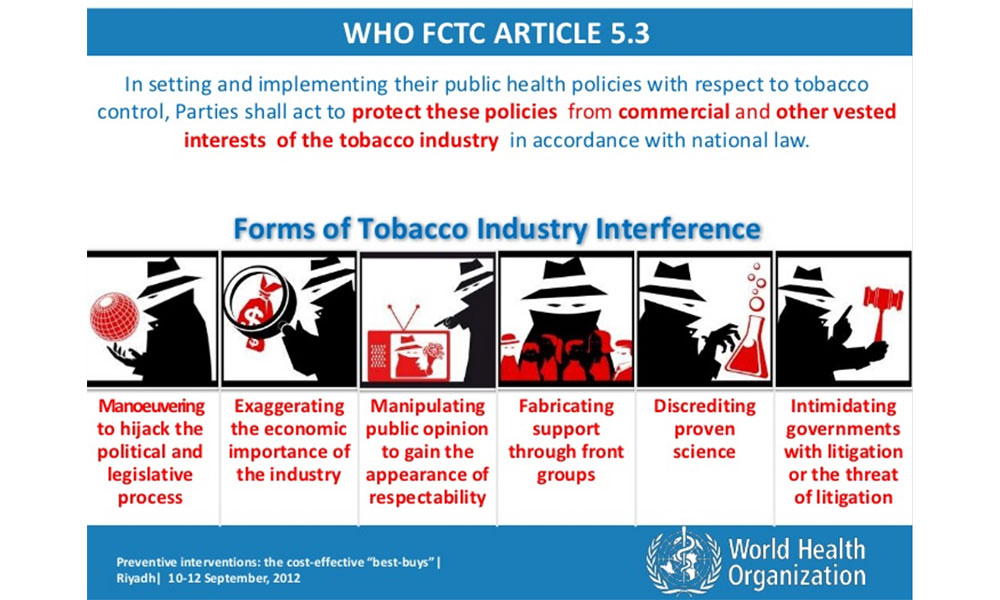
In 2003, an international WHO treaty was launched and widely adopted, mandating countries to adopt tried-and-tested policies to stop smoking.
These included restricting contact with the industry and resisting its attempts to interfere in policy, entrenching tobacco companies’ status as distrusted outsiders.
“I think they [tobacco companies] could just see that the summit of the power and untouchable space that they inhabited for a very long time was not guaranteed for them anymore,” said Professor Johanna Cohen, director of the Institute for Global Tobacco Control at John Hopkins University.
‘Normalisation plan’
By 2014, when Iqos was launched in Japan, PMI knew it needed to change its image. Internal documents uncovered by Reuters in 2017 reveal it feared measures such as litigation and bans on political contributions, charitable donations and tobacco industry market research.
It launched a 10-year plan called “Normalisation”. Its new objective was to “establish PMI as a trusted and indispensable partner, leading its sector and bringing solutions to the table”.
To achieve this it would “be ‘for’ something”, establishing a “forward-looking, motivational and credible” purpose statement.
It would also “balance the debate” by exposing the “double standards” of anti-tobacco campaigners and amplifying the voices of people who favoured harm reduction – those supportive of offering smokers alternative products.
PMI planned to foster relationships with politicians, international organisations, NGOs, academics, scientists, researchers and the media, to promote its new purpose and products.
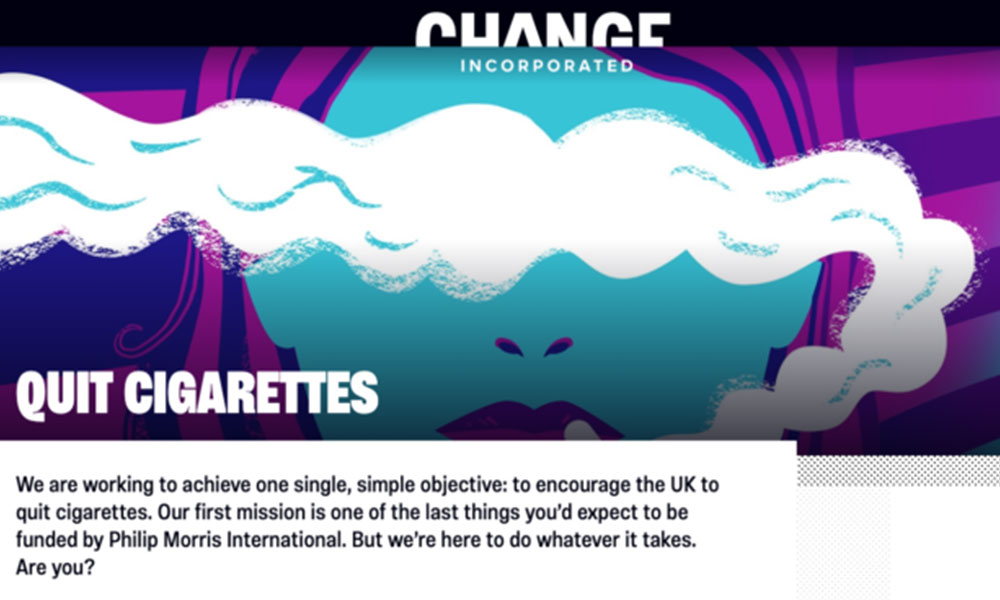
Vice’s supplement, sponsored by Philip Morris International
In the UK, PMI hired Pagefield, a PR company, to help to launch Iqos. In a blog post, the company describes the work as a good example of “helping distrusted companies gain acceptance”. Pagefield described the success of its strategy: “purpose was put before product and that made for a more captivating story”.
The normalisation strategy appears to be in full swing in the UK. After Iqos was launched, PMI executives appeared on ITV’s Good Morning Britain, BBC Radio 4’s Today programme and BBC Hard Talk describing the company’s transformation.
It bought newspaper adverts and paid for events. It even funded a new website by Vice, Change Incorporated, that would publish articles on ending smoking, and sponsored Gay Star News’s health section.
Rehabilitating image
As promised, it also forged relationships with politicians. In July 2018, it hosted a session in Westminster on how the company could work with MPs to “deliver a smoke-free future” with the Scottish MP Ross Thomson.
It put up a stand at the Conservative party conference every year from 2017 to 2019, promoting its campaign to British politicians and their teams.
Despite its flagship product not being an e-cigarette, it was a founding member of the UK Vaping Industry Association (UKVIA), which funds an all-party parliamentary group on vaping, giving it access to British politicians.
PMI has always tried to rehabilitate its image, but its move into cigarette alternatives gave it a more persuasive message, said Deborah Arnott, chief executive of the campaigning public health charity Action on Smoking and Health.
“The coal industry spent an awful long time saying it supports green measures when what it was doing in practice was very different, the same is true for PMI,” she said.
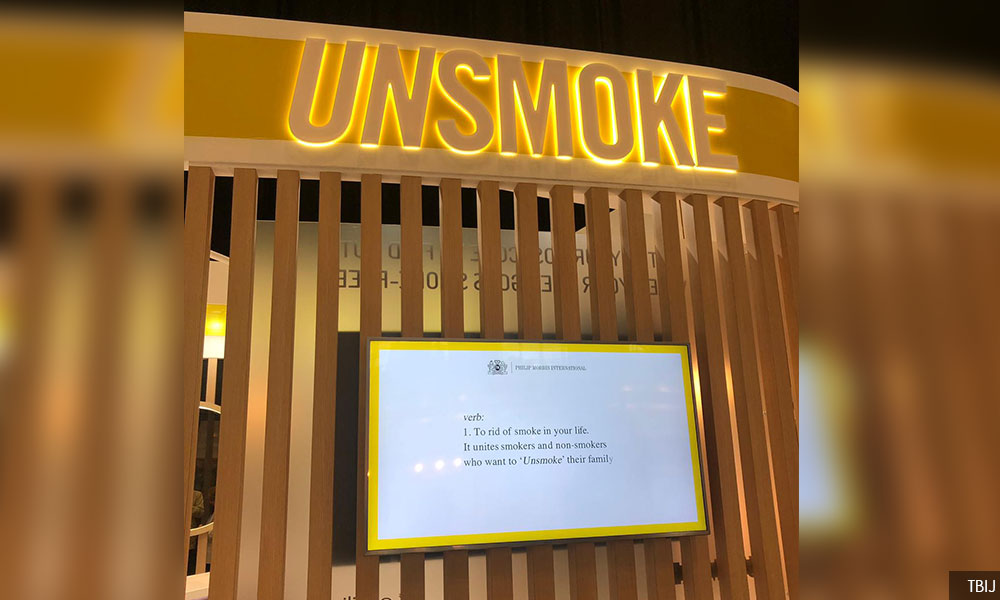
PMI’s Unsmoke stand at the UK’s Conservative Party conference in 2019.
PMI’s PR offensive took place on several different battlegrounds.
In 2017 it announced it was setting up an independent organisation, the Foundation for a Smoke-Free World, to pay for research on ending the smoking epidemic – and it would hand over US$80 million (RM338.4 million) a year for 12 years to this new non-profit.
In a massive publicity coup a former WHO executive, Derek Yach, was hired to lead it.
The WHO itself publicly refused to engage with the Foundation, identifying it as an organisation that “further[s] the interests of the tobacco industry”. It told governments and the public health community to follow its lead. It was soon being described in some quarters as a front group for PMI.
The Foundation says it “funds research, promotes innovation, and supports collaborative initiatives to accelerate progress in reducing harm and deaths from smoking”.
Its health research grants have been largely focused on harm reduction, not ending smoking, in line with PMI’s needs to normalise and legitimise cigarette alternatives like Iqos. Some of the recipients of its grants have links with the tobacco industry.
An analysis by the University of Bath of the Foundation’s latest published tax returns reveals that it spent more on hiring PR and communications agencies than scientific research. The university is a research partner of STOP, the global tobacco control campaign.
Tess Legg, co-author of the Bath report, believes that the Foundation is not simply a scientific research organisation.
“The Foundation is promoting PMI’s rhetoric on harm reduction, next generation products and the role the tobacco industry wants to play in science and policy-making, but often without the reader or the listener being aware that these messages are funded by the tobacco industry,” she said.
The Foundation said its 2019 tax returns would show it is now spending most of its budget on research.
A spokesman added: “There is no tobacco industry influence on the Foundation’s work.”
A version of this article was first published by the Bureau of Investigative Journalism.
Yesterday: Experts: Tobacco firm’s ‘smoke-free’ promise a smokescreen
Tomorrow: On social media, youths are target market for new smoking devices





Report this comment
Are you sure you want to delete this comment?
This action cannot be undone.