




World Bank predicts -0.1pct GDP growth for M'sia in 2020
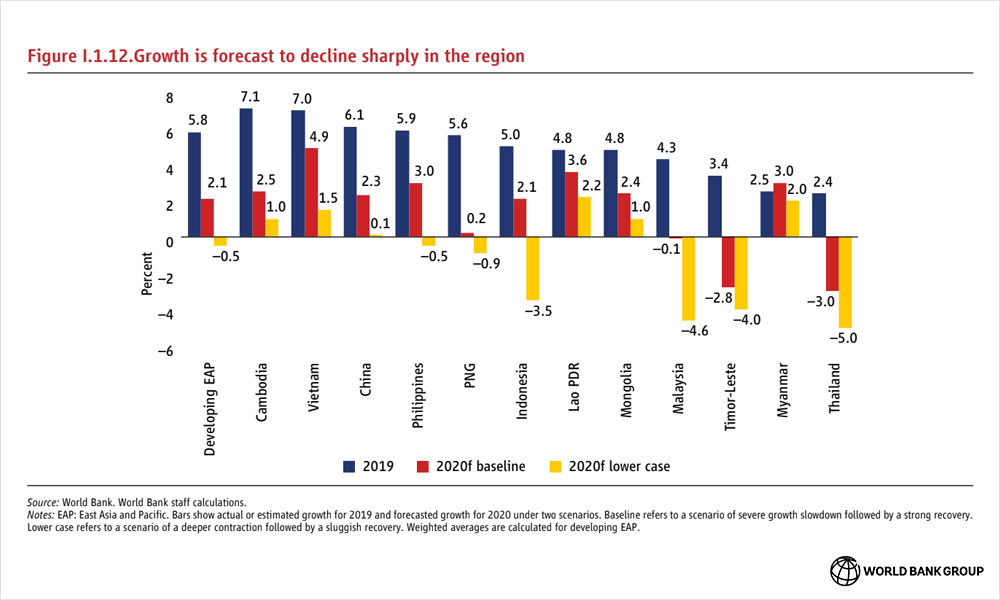
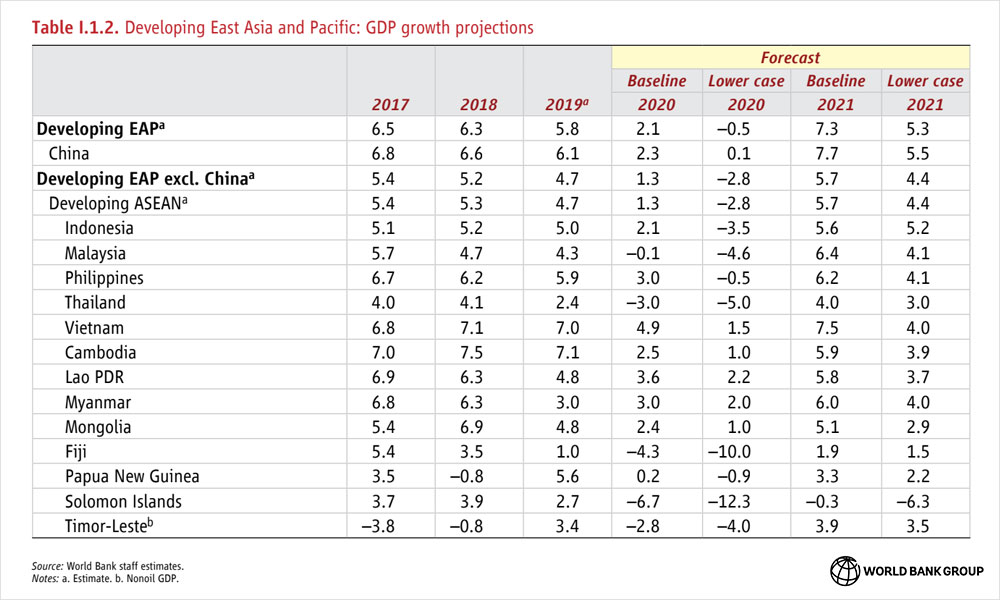
The World Bank has predicted that 2020 will be a recessionary year for Malaysia with forecasted GDP growth at -0.1 percent.
In its April edition of East Asia and Pacific Economic Update, the World Bank forecasted only two Asean countries will face negative growth in 2020, with the other being Thailand....
The World Bank has predicted that 2020 will be a recessionary year for Malaysia with forecasted GDP growth at -0.1 percent.
In its April edition of East Asia and Pacific Economic Update, the World Bank forecasted only two Asean countries will face negative growth this year, with the other being Thailand.
The World Bank said the forecast took into consideration that Malaysia's growth has been slowing since the second half of 2019 and is facing large-scale economic disruptions now, which could extend for most of the year.
"It is important to note that this estimate has a large degree of uncertainty, conditional on the rapid developments of the outbreak domestically and globally, and the subsequent policy responses," it said.
The World Bank expected net exports and investments to contract in 2020 while private consumption - the most important engine of Malaysian growth - will see its growth rate shrink from 7.6 percent in 2019 to 1.6 percent this year.
"More significant are the expected employment and income losses among the bottom 40 percent and even the middle 40 percent.
"Effective economic relief for those affected will depend on both means-tested social assistance such as Bantuan Prihatin Rakyat and the ongoing Bantuan Sara Hidup programme and employment-based social insurance such as EPF and Employment Insurance Scheme," said the World Bank.
Apart from economic challenges, the World Bank said Malaysia is also facing stability issues on the political front due to a recent change in government and limited fiscal space.
"More targeted fiscal policy interventions would be needed to help mitigate the impact of the crisis on vulnerable households and businesses, as well as increase public health capacity.
"This is further complicated by the plunge in commodity prices, which would put additional strain on fiscal space and in turn may increase the burden on monetary policy as a key policy tool," it said.
Although Putrajaya has introduced a stimulus plan amounting to RM250 billion last week, the direct fiscal injection only amounted to RM25 billion, or 1.26 percent of the GDP in 2019.
Putrajaya expected that Malaysia's budget deficit will widen to 4 percent of GDP in 2020.
Related story:




Report this comment
Are you sure you want to delete this comment?
This action cannot be undone.