


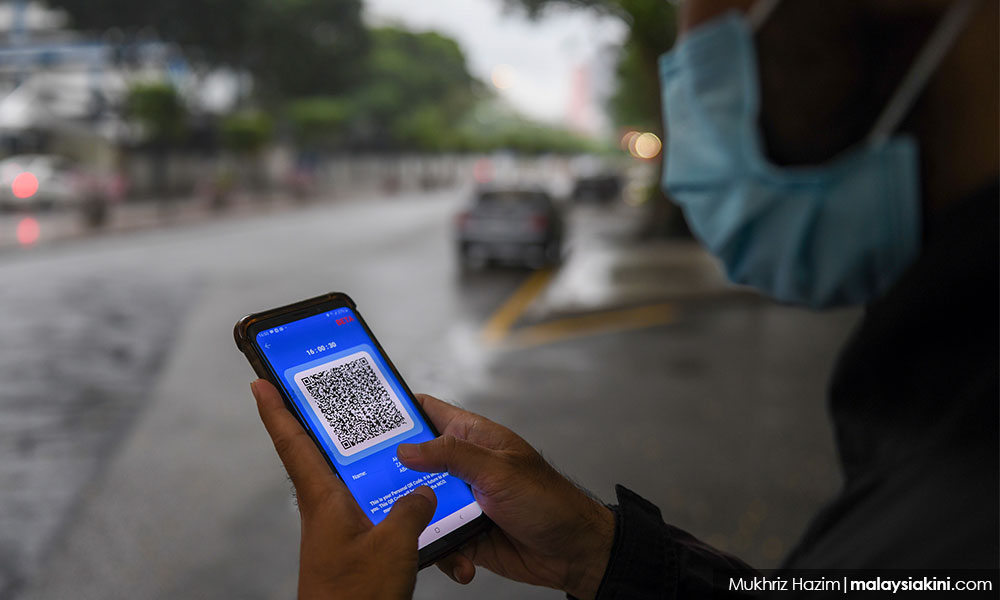

Prominent journal urges for public consultation on contact tracing apps
CORONAVIRUS | The influential scientific journal Nature has urged governments around the world to engage stakeholders to help ensure that contact tracing apps are both safe and effective.
In an editorial published yesterday, the journal noted that countries around the world are rushing to apps for contact tracing in a bid to curb the Covid-19 pandemic....
CORONAVIRUS | The influential scientific journal Nature has urged governments around the world to engage stakeholders to help ensure that contact tracing apps are both safe and effective.
In an editorial published yesterday, the journal noted that countries around the world are rushing to apps for contact tracing in a bid to curb the Covid-19 pandemic.
Despite asking citizens to give up personal data, there is little public consultation regarding the smartphone applications, and scant evidence has been published on whether it would help identify infected people who have yet to be tested for the disease.
As with any health intervention, the journal argued that such applications must meet the highest standards of safety and efficacy.
“Researchers and policymakers have worked hard over many decades to ensure that medicines, vaccines and health-care products conform to agreed standards of safety and efficacy. These often need to be global standards.
“Covid-19 smartphone apps are a health-care intervention, too, and will potentially affect hundreds of millions of lives. But they are being rolled out without pilot studies or risk assessments being published.
“It’s not that digital contact tracing shouldn’t be done, but it should not be a substitute for human contact-tracing teams; nor should it be seen as a replacement for necessary Covid-19 testing.
“Speed is, of course, of the essence - but so is due diligence and due process. This includes public dialogue; more involvement from researchers, including those who study ethics, law and public engagement; and a cast-iron commitment from governments that the information being harvested is secure and will only ever be used for the reasons it is being requested,” it said.
Previously, a group of University of Oxford-based researchers found that Covid-19 spreads too fast for traditional contact tracing methods to keep up.
However, their mathematical models showed that efforts to contain the disease would be vastly more successful if a weeks’ worth of manual contact tracing could be reduced to an instant using a smartphone app.
“Digital contact tracing could play a critical role in avoiding or leaving lockdown,” they said in the paper published in the journal Science last month.
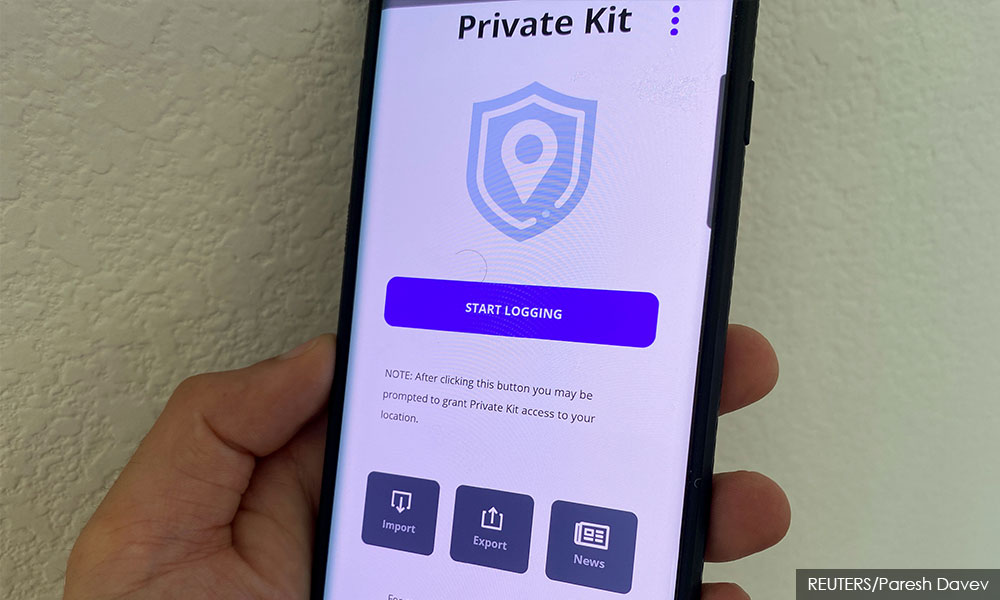
Many contact tracing apps rely on a smartphone’s Bluetooth technology to work, though some also record location data.
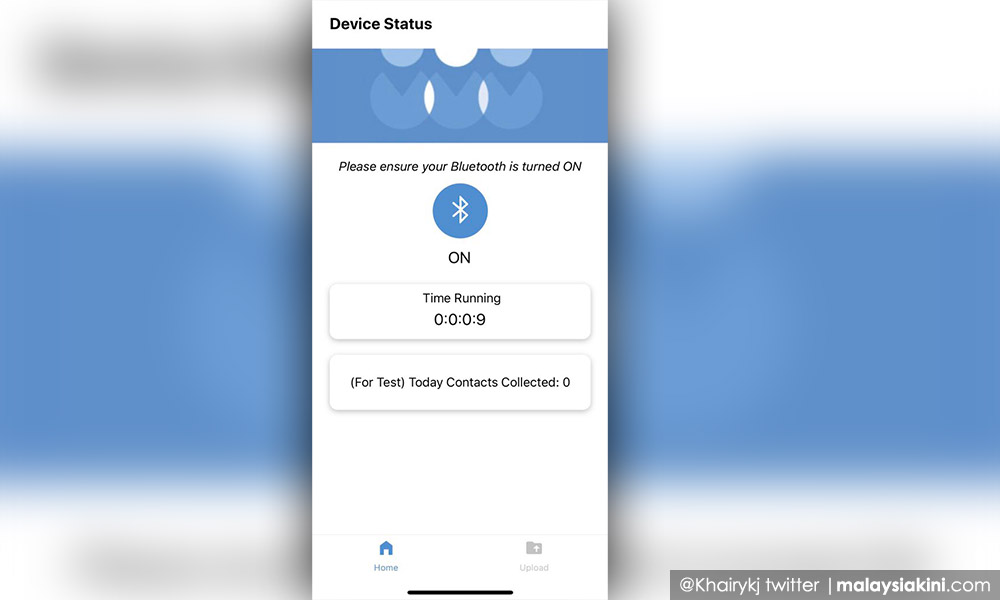
These short-range radios are used to conduct digital "handshakes" between the user’s phones and other phones running the app, and a temporary record of such interactions is kept. Some implementations keep the record on the users’ phones, while others store data in a centralised server.
If an app user later tests positive, an alert could be sent out to potential close contacts to tell them to isolate themselves and get tested.
The technology giants Google and Apple are currently collaborating on a contact tracing app, which is aimed for release in mid-May.
Science, Technology and Innovation Minister Khairy Jamaluddin said Malaysia is developing the MyTrace app.
He said the app will be available to iOS and Android platforms, and would not record location data to protect users’ privacy.
Singapore already has the TraceTogether app, while Europe clashed over different app platforms and privacy concerns of each platform.
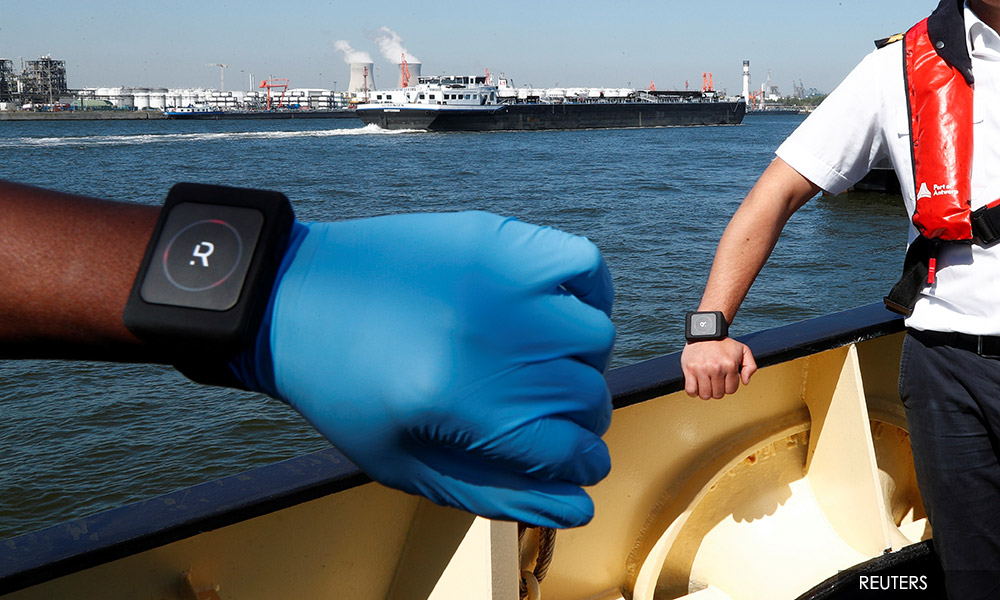
Some firms have eschewed smartphones altogether, and have resorted to wearable devices that have a shorter range than Bluetooth to enforce social distancing at the workplace and facilitate contact tracing.
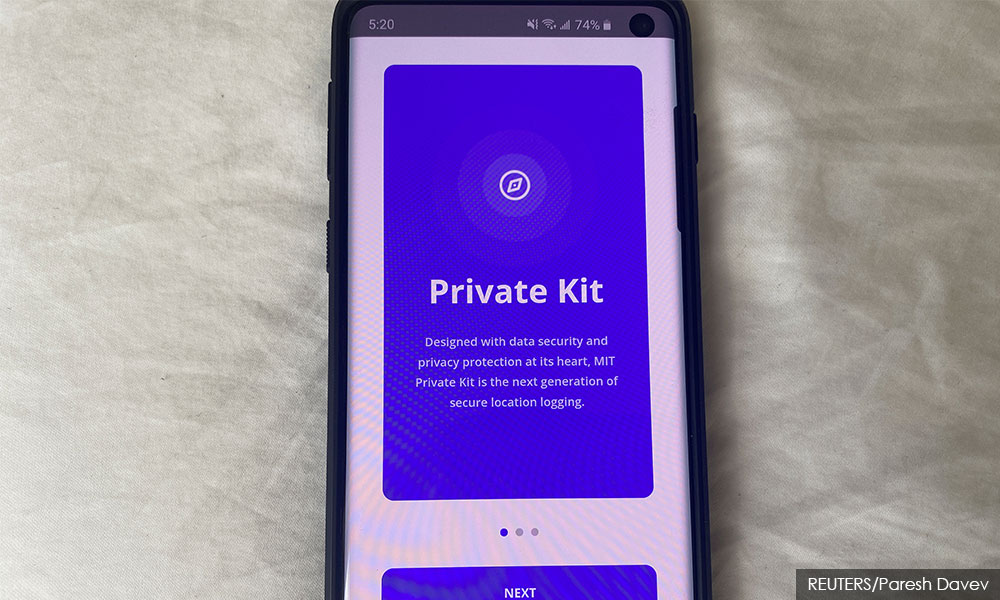
Cyber-intelligence firms have also pitched their capabilities to trace close contacts even without consent, much to the alarm of privacy advocates.
Echoing such concerns, Nature noted that researchers have already demonstrated the ability to re-identify individuals even from anonymised and aggregated datasets that are incomplete, and it is becoming easier to do so.
In addition, Bluetooth technology has a history of security breaches, and storing data in a centralised location instead of individual phones could make it more susceptible to hacking.
“Smartphone users are usually advised to turn off Bluetooth when it is not needed, and especially when in close proximity to other phone users.
“But to work, Covid-19 apps need users to keep Bluetooth running - particularly when they are in public places,” it said.
It also noted that for Singapore, one-fifth of its population has already installed the TraceTogether app. Yet despite this, this means that at any chance encounter between two random individuals, there is only a four percent chance that both would have the app.
For comparison, researchers at Oxford University’s Big Data Institute have argued that at last 60 percent of a population needs to install contact tracing apps to achieve “digital herd immunity”.
“This points to one of the deepest flaws in digital contract-tracing plans anywhere: the fact that only a fraction of any population is likely to have the app at all. And such efforts will miss out anyone who, for any reason, doesn’t have a smartphone,” Nature said.
Keep up with the latest information on the outbreak in the country with Malaysiakini's free Covid-19 tracker.
Malaysiakini is providing free access to the most important updates on the coronavirus pandemic. You can find them here.
Help keep independent media alive - subscribe to Malaysiakini.



Report this comment
Are you sure you want to delete this comment?
This action cannot be undone.