


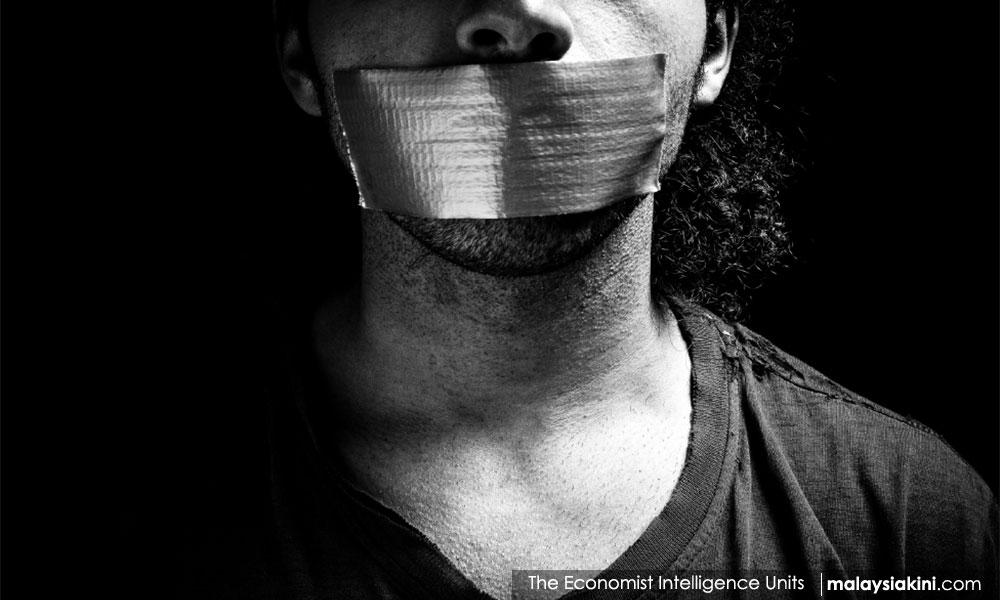

Rights group: Threat to use full brunt of law to stifle free speech worrying
A human rights group today lambasted the Home Ministry for threatening to use the full brunt of the law – including the Sedition Act and Penal Code – to take action against those the government deems as having spread “fake news”.
In a statement, Amnesty International Malaysia said the warning issued by Home Minister Hamzah Zainudin shows that the government has complete disregard of Malaysians' right to freedom of speech.
- Updated 5.24pm: Comment from LFL director.
A human rights group today lambasted the Home Ministry for threatening to use the full brunt of the law – including the Sedition Act and Penal Code – to take action against those the government deems as having spread “fake news”.
In a statement, Amnesty International Malaysia said the warning issued by Home Minister Hamzah Zainudin shows that the government has complete disregard of Malaysians' right to freedom of speech.
The body's interim executive director Preethi Bhardwaj also pointed out that it is worrying that the new government is increasing its use of the laws to silence critics.
"The government’s threat to continue using repressive provisions that limit citizens’ right to freedom of expression demonstrates a complete disregard for free speech.
"There is a real danger that these laws could be used arbitrarily to silence legitimate government criticism and dissenting opinions.
"Laws that criminalise the peaceful exercise of freedom of expression are overly harsh and vague, and have no place in society,” she said.
Yesterday, Hamzah (photo) issued a statement warning those who spread false information and “seditious” news.
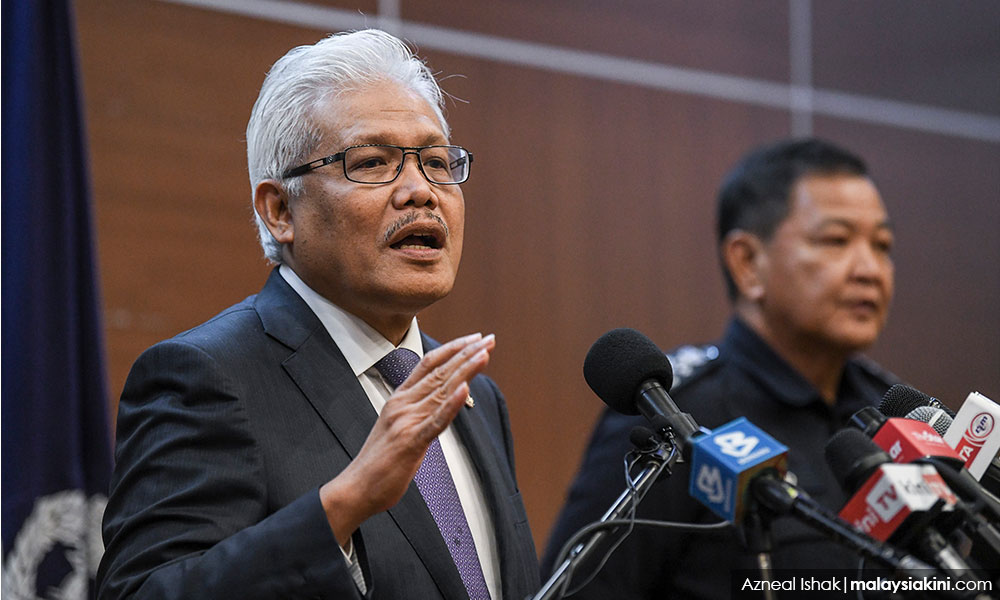
Hamzah had said the ministry was concerned over the rising number of police investigations into the spread of such information and that they would not hesitate in taking action based on all available laws like the Penal Code, the Communications and Multimedia Act 1998 and the Sedition Act 1948.
Bhardwaj, however, cited several recent cases where individuals were prosecuted for making comments on social media, including under Section 505 of the Penal Code that stipulates the offence of making statements conducing to public mischief.
She said that the rise in the number of such prosecutions was alarming, and expressed concern that it had been used before by previous governments to jail individuals who dared to speak against the authorities.
Among the cases that Bhardwaj cited are of radio personality Patrick Teoh (photo), who was arrested on May 9 for allegedly insulting Johor Crown Prince Tunku Ismail Sultan Ibrahim on Facebook and 20-year-old shopkeeper Nurshahira Mohd Mizuar who was sentenced to an RM10,000 fine as well as three months in jail for insulting the police for ordering her to return home under the movement control order (MCO).

Bhardwaj also cited the case of businessperson Shamsubahrin Ismail who was charged over remarks he allegedly made on social media criticising the government’s prosecution of those violating the quarantine orders.
"Investigations against Nurshahira, Shamsubahrin, and Teoh were all based on alleged violations of Section 233 of the Communications and Multimedia Act (CMA).
"Amnesty International Malaysia has repeatedly called on the government to repeal this and similar provisions – such as Section 505 of the Penal Code which defines the offence of ‘statements conducing to public mischief’ – due to its broadly defined offences.
"Previous governments have used the Communications and Multimedia Act to persecute and jail political opponents as well as activists who dared to speak up against the authorities.
"We cannot return to such bleak times. It is extremely worrying that the new government is increasing its use of such provisions to stifle free expression once again," she said in the statement.
Bhardwaj noted that combatting misinformation is also as important during a pandemic, but stressed that limitations to freedom of expression must be "necessary and proportionate" for the protection of public health.
It also must only be conducted under a clear and accessible law, which according to her, Section 233 of the CMA falls short of.
"Blanket prohibitions based on unclear terms like “misinformation” and “fake news” are neither necessary nor proportionate for the protection of public health and are therefore incompatible with the right to freedom of expression.
"On the contrary, they could cause individuals and the media to practise self-censorship for fear of arrest, stemming the proper flow of information that may be valuable in times of crisis, or be used to target critical voices.
"We urge the government to drop criminal charges against those accused of spreading ‘fake news’ as well as release those detained for similar offences.
"The best way to pre-empt misinformation is through a reliable and prompt system of accurate information that leads to increased trust in the government by the general public,” said Bhardwaj.
Similarly, Lawyers for Liberty (LFL) has also expressed concerns over the remarks made by Hamzah.
"The home minister had classified comments on the royal institution, race, religion, status, position, privilege, sovereignty and rights under the Federal Constitution as potentially seditious," said LFL director Melissa Sasidaran in a statement today.
"But these are also issues of public concern which all Malaysians should be free to discuss and debate in a democratic society.
"After many years of independence, Malaysians must surely now be able to have informed public debates on issues of concern without the authorities resorting to sedition and other coercive measures."
Hamzah's statement, she said, is a worrying indication of things to come, as it sets the scene for a return of the Sedition Act and other similar laws which stifled freedom of expression.
"It is a concern that the home minister referred to the Sedition Act, a law from the colonial era which was not even enacted by our independent Parliament," Melissa said.
It is a piece of legislation which unreasonably restricts freedom of expression and should be abolished as it has in many other countries, she added.
While she acknowledged that the spread of disinformation and other forms of dangerous speech are serious concerns, the authorities should not use that as an excuse to classify everything perceived to be "sensitive" as sedition or fake news.
"In any case, there are many ways in which the government and the authorities can tackle these issues without resorting to criminalising speech," she said.
Melissa said the threshold for legal restrictions on freedom of expression must remain high, especially when it is not hateful, threatening or inciting violence.
"We call upon the Home Ministry and the authorities not to rely on harsher laws when there are less intrusive measures available to counter disinformation or speech which may cause genuine danger, while still protecting the right to freedom of expression guaranteed under the constitution," she said.



Are you sure you want to delete this comment?
This action cannot be undone.