


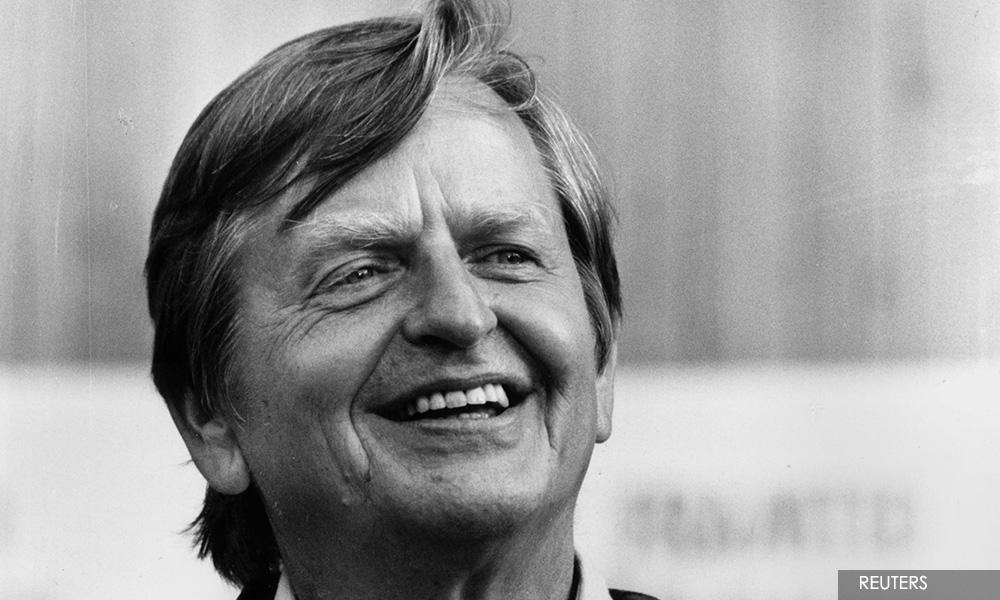

Swedes await answer to riddle of Olof Palme's 1986 murder
Swedes may get an answer on Wednesday to the mystery of who shot Social Democrat Prime Minister Olof Palme when the Swedish prosecutor in charge of the case presents his conclusions to an investigation that has lasted 34 years.
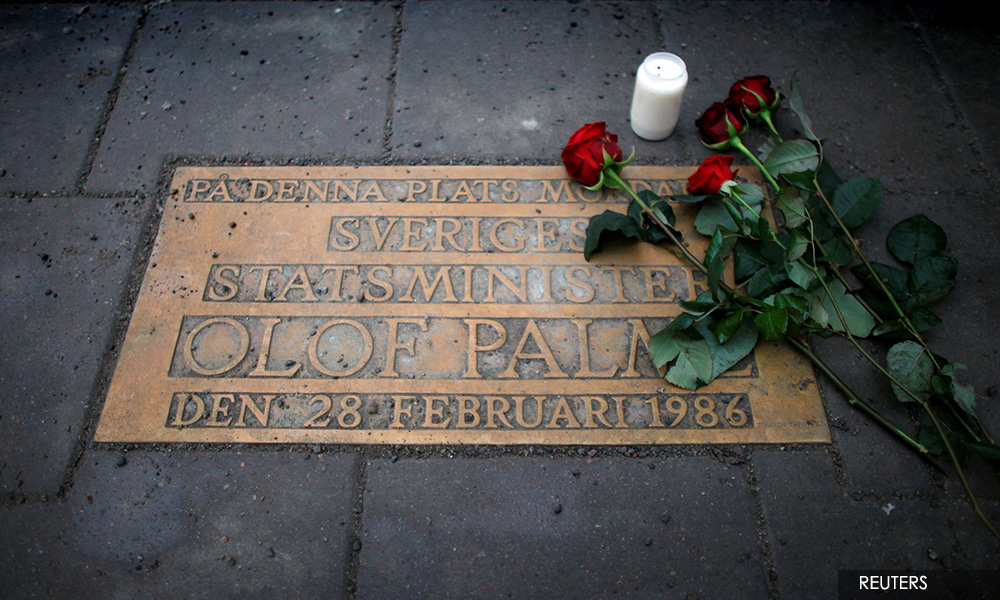
Palme was shot dead in central Stockholm in 1986 after a visit to the cinema with his wife and son. The murder sparked a massive manhunt and a plethora of conspiracy theories involving shadowy forces ranging from the CIA and Kurdish separatists to the South African security services.
Swedes may get an answer on Wednesday to the mystery of who shot Social Democrat Prime Minister Olof Palme when the Swedish prosecutor in charge of the case presents his conclusions to an investigation that has lasted 34 years.
Palme was shot dead in central Stockholm in 1986 after a visit to the cinema with his wife and son. The murder sparked a massive manhunt and a plethora of conspiracy theories involving shadowy forces ranging from the CIA and Kurdish separatists to the South African security services.
While a petty criminal was convicted of Palme’s killing, the judgement was later overturned and the police’s failure to identify the culprit has left a scar on the psyche of a country that still prides itself on how safe it is to walk its streets.
Palme was prime minister between 1969 and 1976 and between 1982 and 1986. Some hail him as the architect of modern Sweden, but conservatives hated his anti-colonial views and criticism of the United States.
So many years after the killing, few Swedes had expected a resolution of the nation’s most high-profile murder case, and prosecutor Krister Petersson’s announcement in February that he was close to wrapping it up ignited a storm of debate.
He has been tight-lipped since then, but on Wednesday, Petersson will announce his conclusions at a news conference that has attracted huge media attention, knocking coronavirus updates off many newspaper front pages.
A comment by Petersson that he may not be able to bring a prosecution has been seen as a suggestion that the suspected killer is already dead.
And naming a suspect may not end put an end to the conspiracy theories.
“If we get a clear answer, it will mean that one of the biggest political and judicial mysteries in Sweden has finally been solved,” Gunnar Wall, a journalist who has written several books about Palme’s killing, said.
“If what is put forward now is another uncertain hypothesis ...it will just strengthen the feeling that many people have that the Swedish justice system does not work very well.”
Some details about Palme’s life and death
- Olof Palme was born in Stockholm on Jan 30, 1927, the youngest child of a prominent and wealthy family.
- After studying law, he was elected to parliament in 1958, rising though the ranks of the left-wing Social Democrat party despite his patrician roots.
- He became prime minister in 1969 and led the expansion of Sweden’s welfare state. Increased taxation and stronger labour unions put him at odds with the business community and the political right.
- His 1972 condemnation of the US bombing of Hanoi during the Vietnam war strained diplomatic ties with the United States and Sweden hosted US citizens fleeing the draft.
- He was also a vocal supporter of economic sanctions against apartheid South Africa.
- After a period out of power, he served as prime minister again in 1982 until his death.
The murder
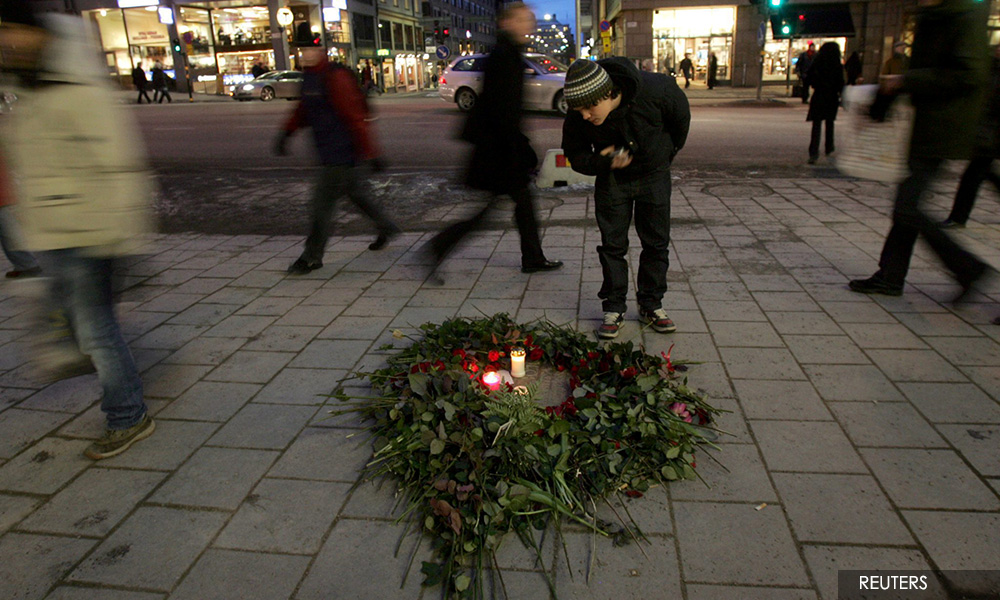
- On the night of Feb 28, 1986, Palme was shot once in the back at close range as he walked with his wife Lisbeth along a busy street in central Stockholm.
- The single bullet severed Palme’s spinal cord, killing him instantly. He was 59 years old. A second bullet grazed Lisbeth.
- Several witnesses glimpsed an assailant clad in a dark jacket or coat, who fled the scene into a dark alley and up a flight of steps to a road above.
- The murder weapon, believed to a Smith & Wesson .357 magnum revolver or similar weapon, was not recovered.
- A suspect with links to right-wing groups was taken into custody 17 days after the murder but was quickly released.
- The lead investigator resigned after no evidence was found in a 1987 raid on a bookshop linked to the Kurdish separatist group PKK, which had recently been named a terrorist organisation by Palme’s government.
- Christer Pettersson, who had a previous murder conviction, was convicted of the crime in 1989 but freed by a higher court amid doubts over the process by which Lisbeth identified him from a police line-up.
- Since his acquittal, no suspects have been arrested and the unsolved murder has frustrated four lead investigators.
- Swedish police visited South Africa in 1996 after a former police commander there alleged the murder had been directed by apartheid-era security forces seeking to silence critics abroad.
- Bestselling Swedish crime author and journalist Stieg Larsson was working on a theory connected to the South African security apparatus until his death in 2004.
- Other theories have fingered diverse groups ranging from right-wing elements in Sweden’s police to Croatian separatists.
- Thousands of people have been questioned and more than 130 people have confessed to the crime, which became a national obsession, with an army of amateur sleuths chasing the culprit and the 50 million Swedish crown (US$5.42 million) reward.
- Reuters




Are you sure you want to delete this comment?
This action cannot be undone.