


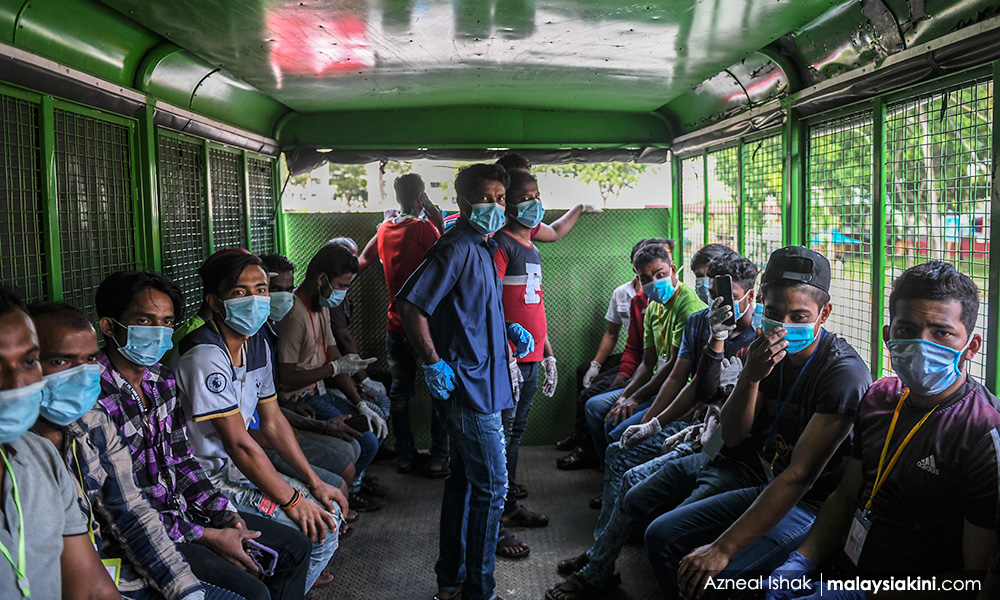

Covid-19: Neglecting migrant workers may backfire, think-tank study shows
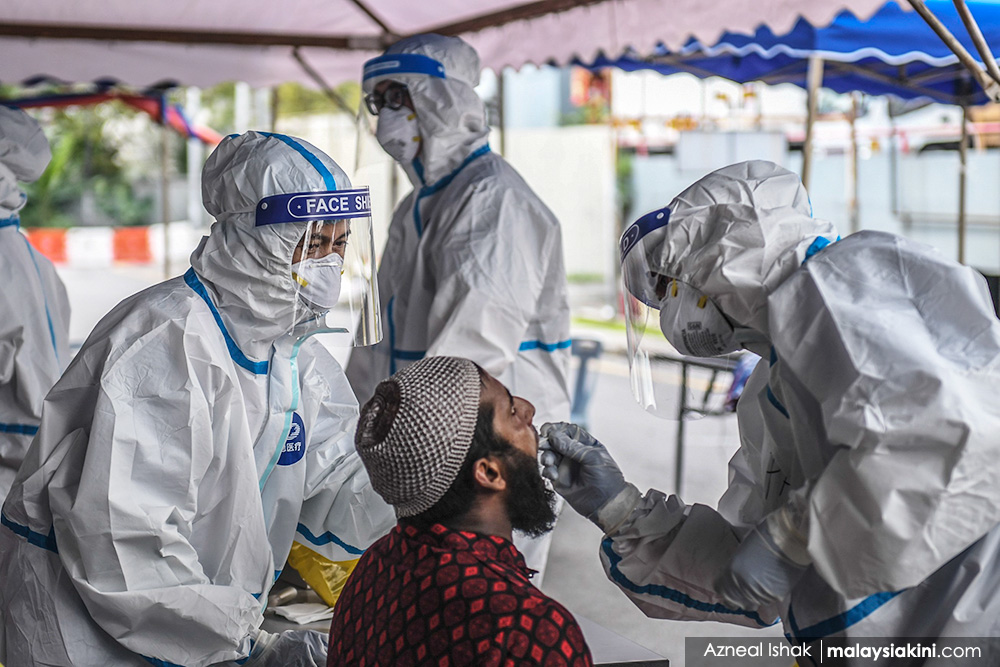
CORONAVIRUS | Going beyond human rights argument for the protection of migrant workers, the latest study by local think-tank Khazanah Research Institute (KRI) has suggested that there are also practical aspects to ensuring their welfare.
As the world wages war against Covid-19, KRI argued that failure to protect migrant workers would have an impact on public health and the economy, as already seen in neighbouring Singapore.
"Neglecting the basic healthcare needs of any human is a perfect incubator for a wider community spread.
"It risks straining the public healthcare system and lengthening lockdowns that hurt firms and workers," noted the three researchers - Tan Theng Theng, Nazihah Muhamad Noor and Jarud Romadan Khalidi - in the conclusion of their...
CORONAVIRUS | Going beyond human rights argument for the protection of migrant workers, the latest study by local think-tank Khazanah Research Institute (KRI) has suggested that there are also practical aspects to ensuring their welfare.
As the world wages war against Covid-19, KRI argued that failure to protect migrant workers would have an impact on public health and the economy, as already seen in neighbouring Singapore.
"Neglecting the basic healthcare needs of any human is a perfect incubator for a wider community spread.
"It risks straining the public healthcare system and lengthening lockdowns that hurt firms and workers," noted the three researchers - Tan Theng Theng, Nazihah Muhamad Noor and Jarud Romadan Khalidi - in the conclusion of their discussion paper titled "Covid-19: We Must Protect Foreign Workers".
"Similarly, if we fail to protect foreign workers’ livelihood, we are essentially putting our businesses and economy on the verge of closures and collapse.
"Therefore, as we learn from the experience of Singapore, it is important that we re-examine our priorities in the battle against the pandemic," they noted.
Citing official government statistics and findings from its past related studies, KRI concluded that the Malaysian economy has created an expanding demand for low and semi-skilled workers which has not been sufficiently supplied by the native local workforce.
Between 2010 and 2019, KRI said the number of Malaysians in the labour force with tertiary education increased the most by 1.8 million, followed by those with secondary education at 1.7 million.
However, those with primary and no formal education decreased by almost 450,000.
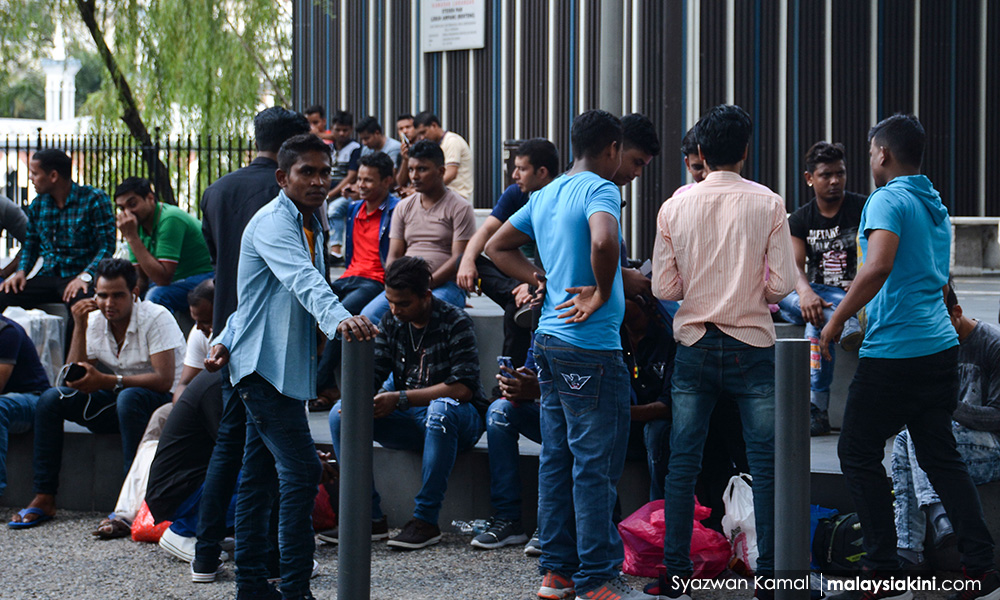
The employment of foreign workers was therefore partly a solution to the labour market mismatch, it said in addressing claims of foreigners "stealing" opportunities from locals and suppressing wages.
"On an aggregate level, the presence of foreign workers had a marginally positive impact on native’s employment and wages," it further said.
Given the reliance on foreign workers in certain economic sectors, KRI said inadequate support to preserve the employer-foreign employee relationships would risk a loss of nearly 50 percent of overall low-skilled workers, particularly in the agriculture, construction and manufacturing sectors.
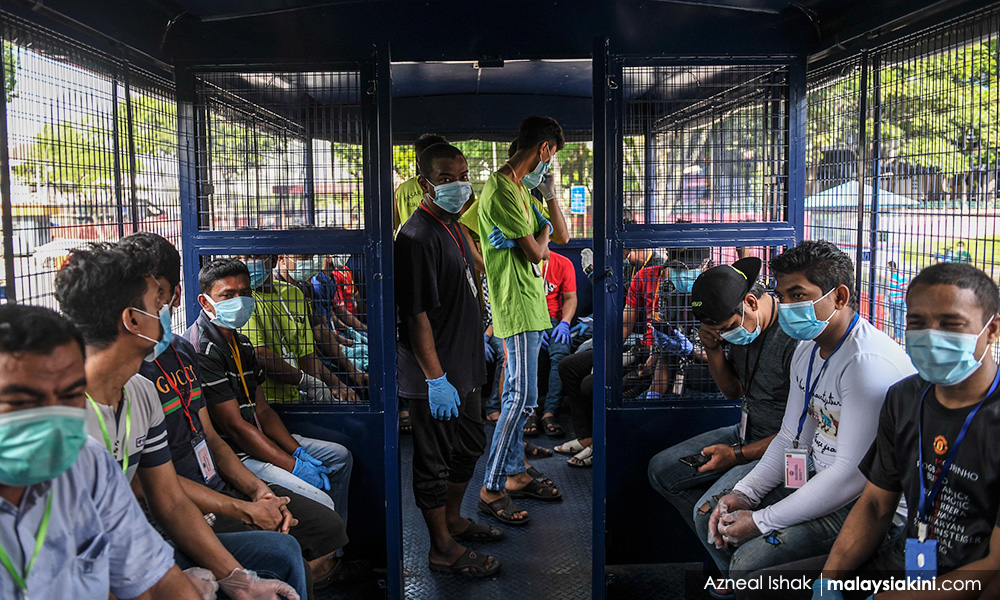
To counter the problem, the institute said it is crucial that Malaysia moves from detention to a treatment model of controlling infection among migrant workers.
This includes the government to convince a larger number of undocumented migrants to come forward for screening or treatment, without fear of arrests and deportation.
"In an unprecedented crisis like this, protecting our businesses could mean a radical move to legalise all undocumented workers and include them under any job retention measures for all foreign workers," KRI said.
In the earlier conditional movement control order phase, Master Builders Association of Malaysia president Foo Chek Lee said the construction sector is expected to face a labour shortage with an industry estimate of only 450,000 of its one million workers were "registered legal workers".
Defence Minister Ismail Sabri Yaakob had repeatedly defended the crackdown against undocumented migrants, despite an initial reassurance from the government that they would only be tested as part of efforts to contain the Covid-19 outbreak.
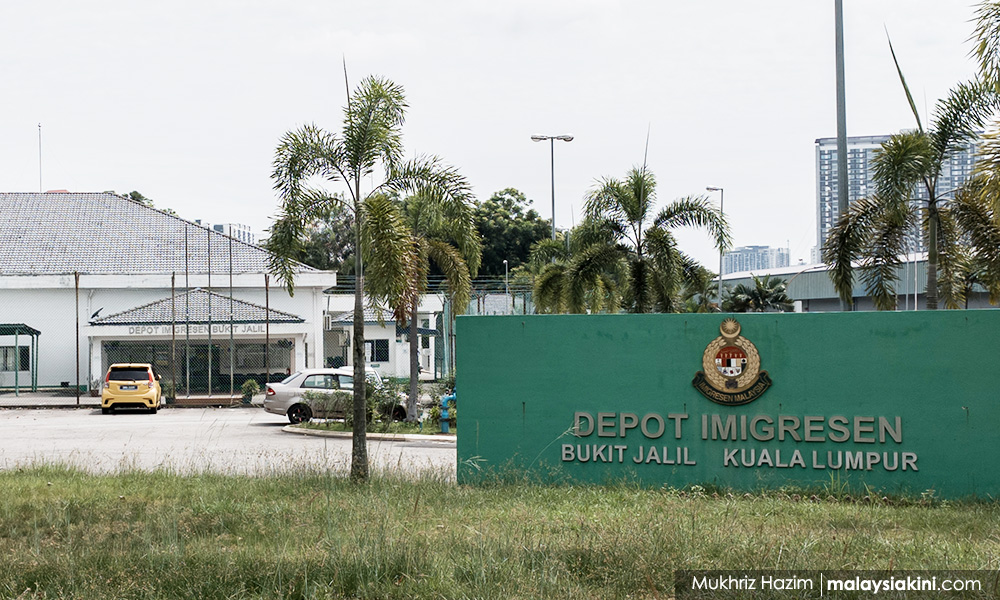
A recent Covid-19 outbreak at four Immigration depots eventually prompted the government to push for mass deportation of the detainees.



KRI and other foreigners loving NGOs must understand one thing, that foreigners are guests in Malaysia. If they had became burden to the country, just send them back. It is not our duty to take care of them and their well being. Many will argue with me about this. For an example, in Middle East where is the bastion of Islam, foreign workers and the locals dont mix much and once these foreigners become burden to the country, they will be send back immediately. Malaysia should practice the same thing. This what UAE is doing now for retrenched workers due to COVID-19. They are been send back to their home country rather than roaming in UAE.
"To counter the problem, the institute said it is crucial that Malaysia moves from detention to a treatment model of controlling infection among migrant workers". Undocumented and/or illegal foreign workers should be detained and deported period.If they are infected,they would be treated before deportation so what is the beef?As for those who are in Malaysia legally, yes our government and employers should house them in reasonable accommodations without cramping them but we should be like Singapore where they are housed in places where they could be traced and not simply everywhere! Article should address the issue of corruption in the importation of foreign workers and the responsibilities of their agents and employers.
Report this comment
Are you sure you want to delete this comment?
This action cannot be undone.