



M'sian economy to contract 3.1 pct in 2020, grow 6.9 pct in 2021 - World Bank
Malaysia’s economy was projected to contract by 3.1 percent in 2020 due to a sharp slowdown in economic activities caused by the Covid-19 pandemic. The country was expected to resume growth in 2021 at 6.9 percent as the outbreak eased, said the World Bank.
“The near-term outlook, however, is unusually uncertain at present," it said in 'Surviving the Storm', its latest edition of the World Bank's Malaysia Economic Monitor.
“The pandemic, coupled with a changing world of work, also raises the need for a...
Malaysia’s economy was projected to contract by 3.1 percent in 2020 due to a sharp slowdown in economic activities caused by the Covid-19 pandemic. The country was expected to resume growth in 2021 at 6.9 percent as the outbreak eased, said the World Bank.
“The near-term outlook, however, is unusually uncertain at present," it said in 'Surviving the Storm', its latest edition of the World Bank's Malaysia Economic Monitor.
“The pandemic, coupled with a changing world of work, also raises the need for a more enhanced social protection system in Malaysia," it explained.
The international financial institution said aggregate investment contracted for the fifth consecutive quarter by 4.6 percent in the first quarter of 2020 (Q1 2020), as compared to a contraction of 0.7 percent in Q4 2019, with broad-based weaknesses in both private and public investment.
Due to weak external demand, Malaysia’s exports of goods and services declined for a third consecutive quarter by 7.1 percent in Q1 2020 (Q4 2019: -3.4 percent), the largest decline since the global financial crisis in 2009, according to the report.
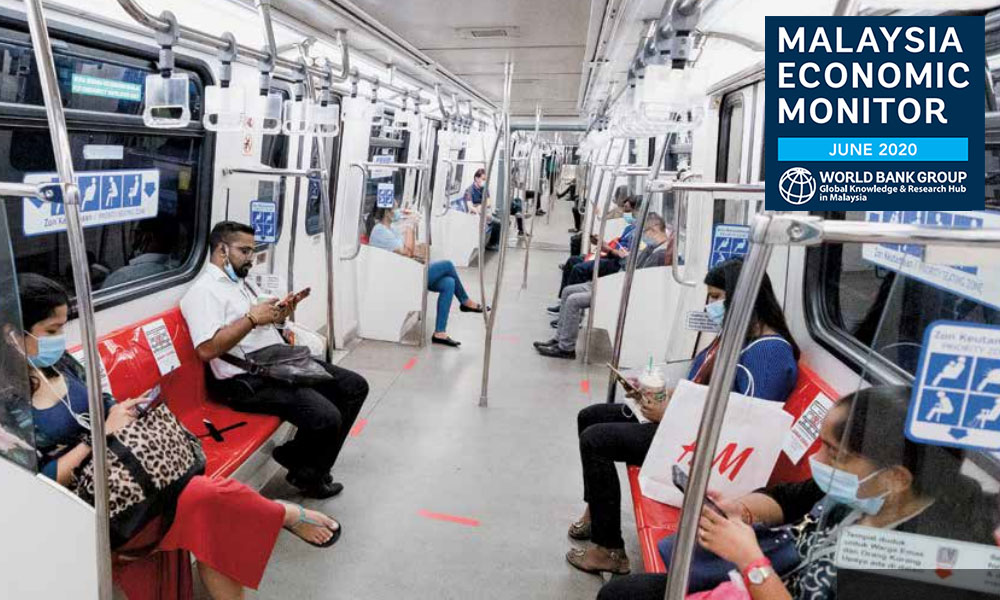
Private consumption moderated to 6.7 percent in Q1 2020, down from 8.1 percent in Q4 2019, largely reflecting the substantial impact of Covid-19 and the Movement Control Order - which impacted retail, travel, leisure, recreational spending, and consumption of durable goods.
World Bank Country Manager for Malaysia Firas Raad said important social protection measures were needed to help vulnerable Malaysians survive the current economic storm and thrive in a new post-pandemic reality.
“Protecting livelihoods is important so that those who lost their jobs and businesses are able to get back on their feet and contribute to Malaysia’s economic recovery,” he said.
The report recommended government efforts in the near-term to focus on supporting relief and recovery efforts by deepening social assistance for lower-income households, improving the delivery of social protection programmes, and promoting job recovery.
As the recovery continues, further rounds of cash transfers would remain vitally important to mitigate acute financial strains among the most vulnerable groups in the Malaysian society, and to support domestic consumption and human capital development during a severe economic downturn.
Over the medium and long term, support for lower-income groups could be gradually expanded to ensure that Malaysia’s social protection system provides a minimum level of protection to all households and individuals in need.
- Bernama




Are you sure you want to delete this comment?
This action cannot be undone.