


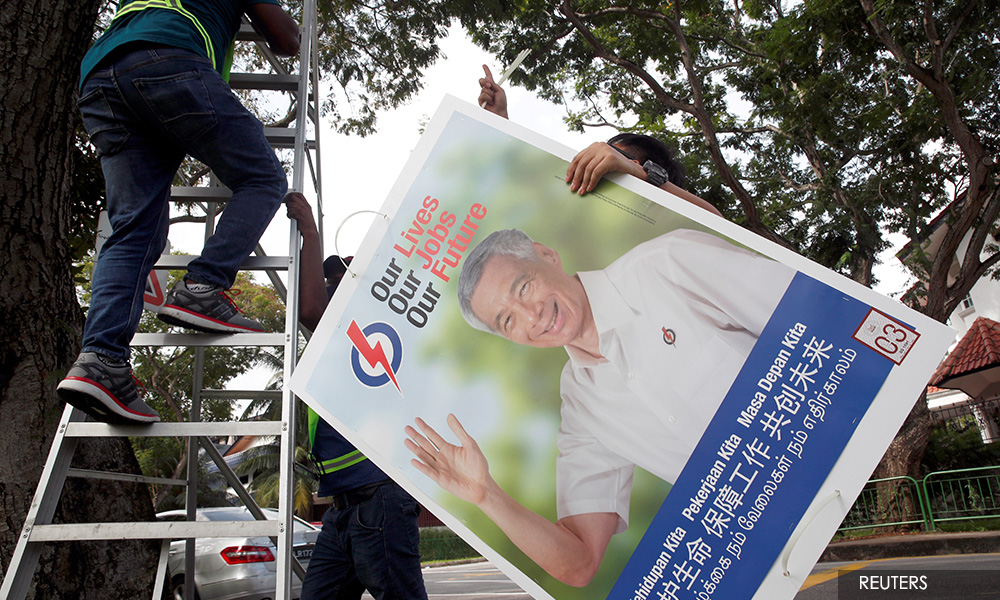

Opposition leaders fear clean sweep in Singapore polls
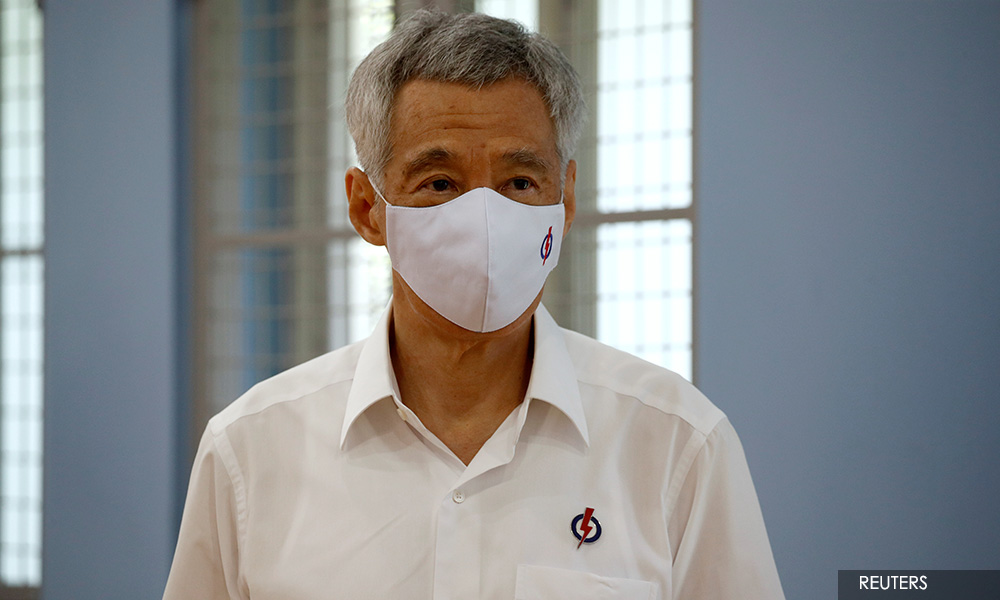
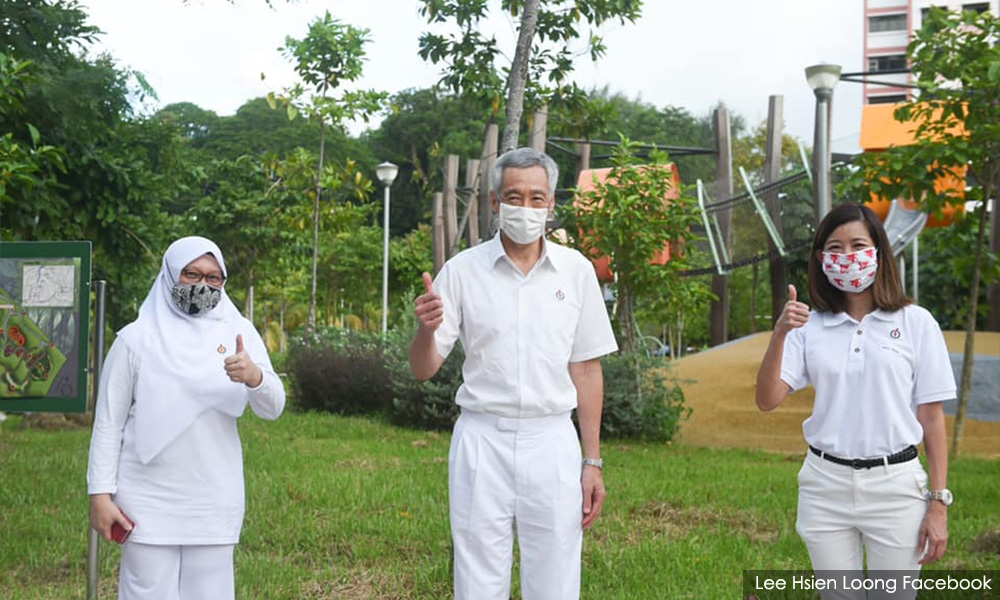
Singaporeans will this Friday take to the polls for their 13th general election since the island republic declared independence from Malaysia in 1965. Not long after the voting booths close, the ruling People’s Action Party (PAP) will almost certainly be announced as the winner.
That is not to imply any impropriety in the voting procedure but a reflection that the party of founding father Lee Kuan Yew has won every election handsomely and is so heavily favoured to do so once again that any other result is unimaginable.
It won more than 90 percent of the seats on the back of nearly 70 percent of the votes cast in the 2015 general election and considering that the current election is taking place in the shadow of Covid-19 related restrictions, opposition politicians are saying that the chances of PAP making a clean sweep of the seats are looking increasingly high...
Singaporeans will this Friday take to the polls for their 13th general election since the island republic declared independence from Malaysia in 1965. Not long after the voting booths close, the ruling People’s Action Party (PAP) will almost certainly be announced as the winner.
That is not to imply any impropriety in the voting procedure but a reflection that the party of founding father Lee Kuan Yew has won every election handsomely and is so heavily favoured to do so once again that any other result is unimaginable.
It won more than 90 percent of the seats on the back of nearly 70 percent of the votes cast in the 2015 general election and considering that the current election is taking place in the shadow of Covid-19 related restrictions, opposition politicians are saying that the chances of PAP making a clean sweep of the seats are looking increasingly high.
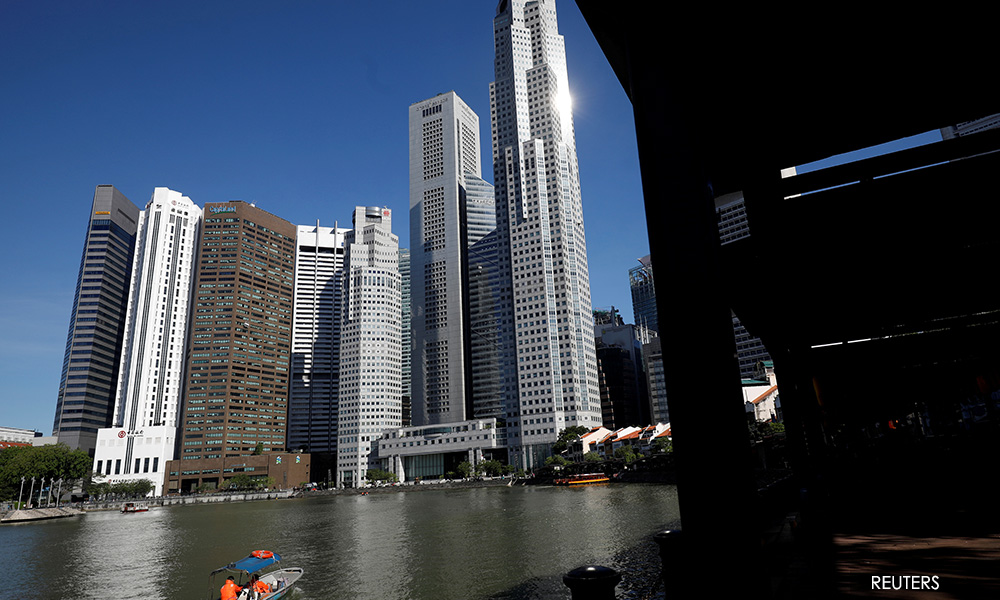
With Singapore enjoying a GDP per capita of US$64,581.94, which ranks among the Top 10 in the world, and has recorded impressive numbers in the Human Development Index, life expectancy and other prosperity indicators, it is likely that citizens will keep faith with the ruling party.
This is despite the attention given to Prime Minister Lee Hsien Loong’s younger brother Lee Hsien Yang, who has aligned himself with the newly founded opposition Progress Singapore Party led by former PAP MP Dr Tan Cheng Bock, who encouraged Singaporeans to vote for a change. Hsien Yang publicly backed the Progress Singapore Party, but disappointed supporters when he confirmed that he would not be a candidate in the election.
Seven-term veteran steps down
One of the outgoing PAP MPs is seven-term veteran deputy speaker Charles Chong, who is stepping down after nearly 32 years in Parliament. Chong gained a reputation as a ‘go-to’ candidate for PAP, with two crucial 51-49 percent wins over Workers Party candidates in Joo Chiat in 2011 and Punggol East in 2015.
Chong (below), who is still campaigning for PAP candidates, acknowledges that another dominating win for the party is on the cards.
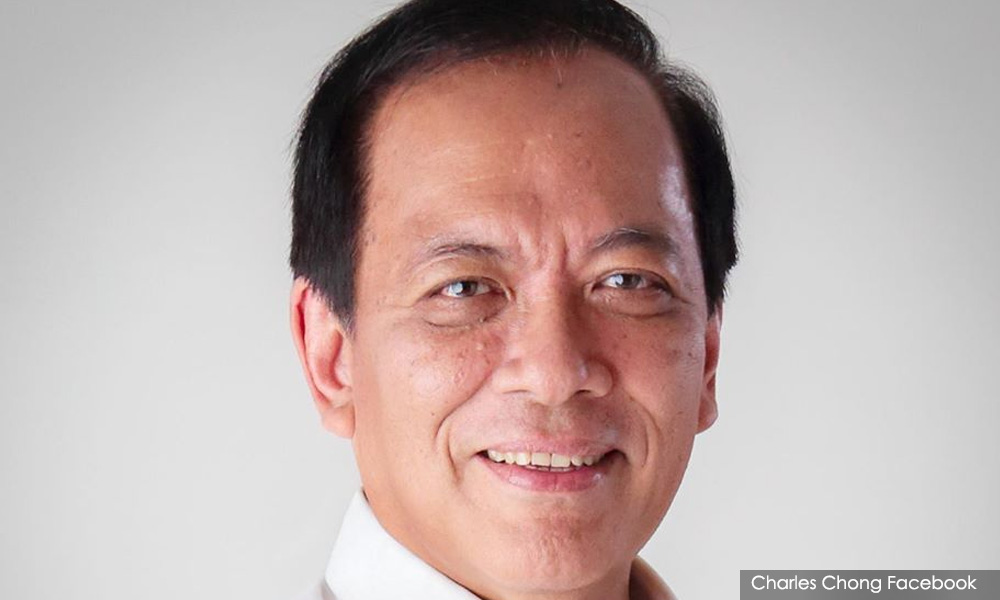
“Such a result is possible with the 'first past the post' system that we inherited,” he told Malaysiakini when asked about PAP winning over 90 percent of seats in the last parliamentary election. In the 2015 election, the PAP won 83 seats and the Workers Party won the remaining six.
“Some countries have attempted to remedy such situations with a 'proportional representation' system, where seats are allocated on the proportion of votes obtained by the parties contesting. There are shortcomings in both systems.
“In Singapore, we have tried our own remedy by amending the Constitution to have a guaranteed minimum number of opposition MPs (known as Non-Constituency MPs or NCMPs) in Parliament.
“Such NCMPs will have full voting rights as elected MPs and will be selected from the top 12 losing opposition candidates. Consequently, regardless of the outcome of the elections, there will be a minimum of 12 opposition MPs in Parliament. We also have the Nominated MP (NMP) scheme where segments of the population that are not represented, or under-represented, are brought in to provide more diversity of views,” Chong said.
The outgoing Parliament had three NCMPs, all members of the Workers Party – as the best performing losers.
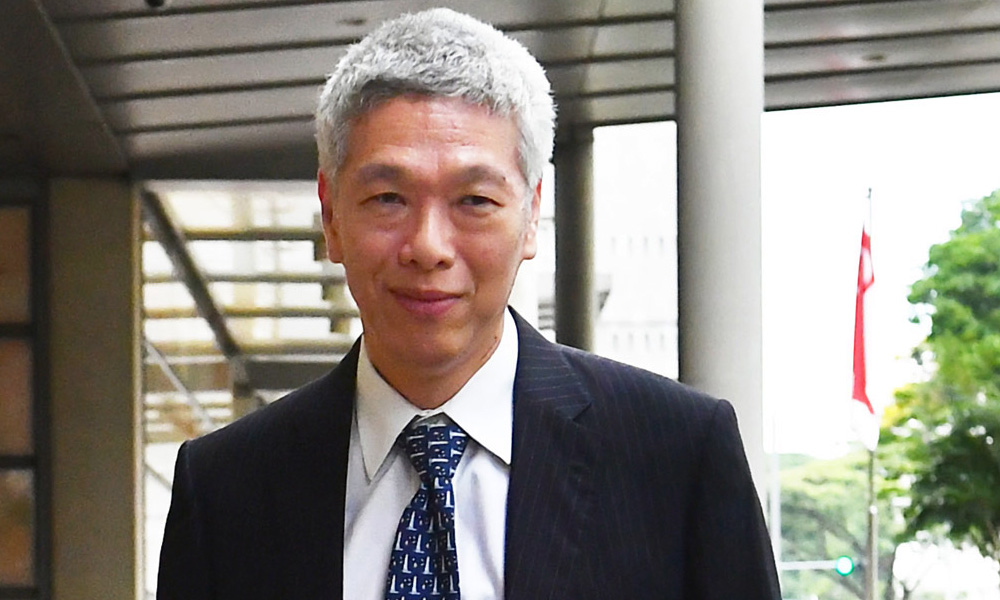
Chong said that the prospect of Kuan Yew’s son Hsien Yang (above) as a candidate would have been an interesting one if his motives were pure.
“If Hsien Yang has a better plan for Singapore, compared to the programmes put out by the PAP and the other political parties contesting the elections, then I am sad that he is not contesting.
“However, if he was in the fray in order to settle a family feud, then I am glad he is not contesting.”
Chong admits that the Covid-19 related restrictions have given the election campaign a different vibe, compared with past contests, as there will be no rallies and live speeches permitted.
“The restrictions affect all contending parties. However, this changed environment will favour parties that can adapt better to the use of new media and other forms of outreach and communication with their voters.”
He warned that nothing should be taken for granted.
“All candidates, if they know what's good for them, should treat the constituencies they are contesting as battleground constituencies. Voters really dislike candidates who are complacent and take them for granted.
“With the uncertainties and challenges ahead, voters naturally would expect parties to come up with solutions that would bring about economic recovery, secure their jobs and bring the country back to its feet.
“However, other evergreen and populist issues would likely also be raised - the cost of living, number of foreigners in the workforce, population increase, wage disparity, more support for SMEs and for the lower-income, etc,” Chong added.
While he could look back with some satisfaction at having played a role in Singapore’s development, he also said that political leaders should never be fully satisfied with what has been achieved.
“Nation-building is always a work in progress and is a never-ending task. It is now up to the next generation to take Singapore to the next level.”
Too many opposition parties?
The perceived disunity of the Singapore opposition is always a curious issue.
On the one hand, the parties have worked together to ensure straight fights between themselves and the PAP. On the other hand, there are a plethora of parties besides the Workers Party and the Progress Singapore Party, including the Singapore Democratic Party, National Solidarity Party, Singapore People’s Party, Reform Party, People’s Power Party, People’s Voice and Red Dot United – some of which have splintered from others. Their inability to present themselves as a formal coalition could be one reason the Singapore opposition has failed to win big.
Chong said: “It is because we have diversity among the opposition parties, perhaps only united in the purpose of wanting to provide a check and balance to the government and not to take over and run the country. This is a rather low bar that many parties feel they can achieve on their own.
“More opposition, just for the sake of opposition, hardly benefits anyone. However, if we have an opposition that has a credible programme and the capability to form the government and implement its plans once in power, then it is a different story.”
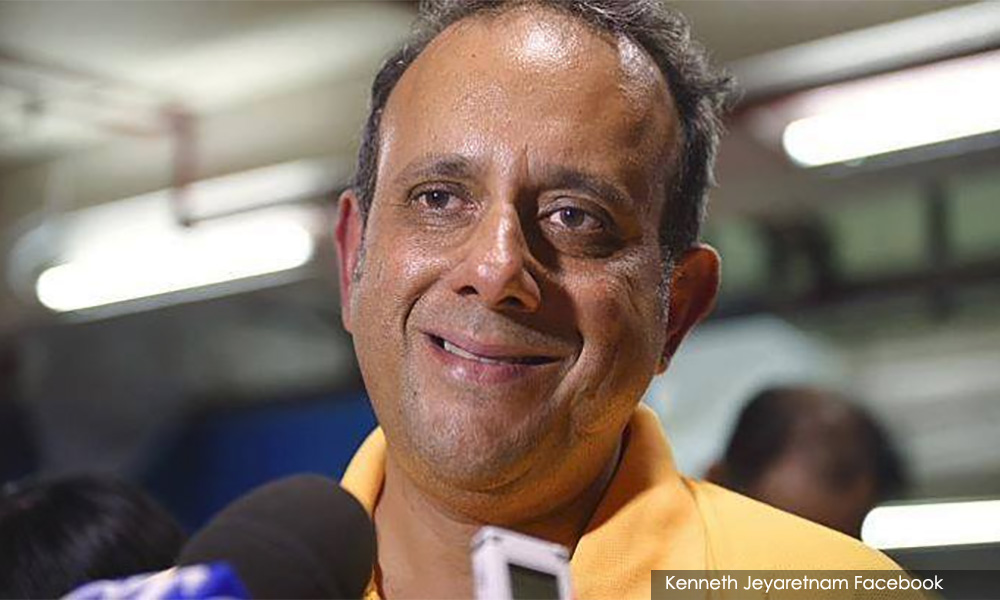
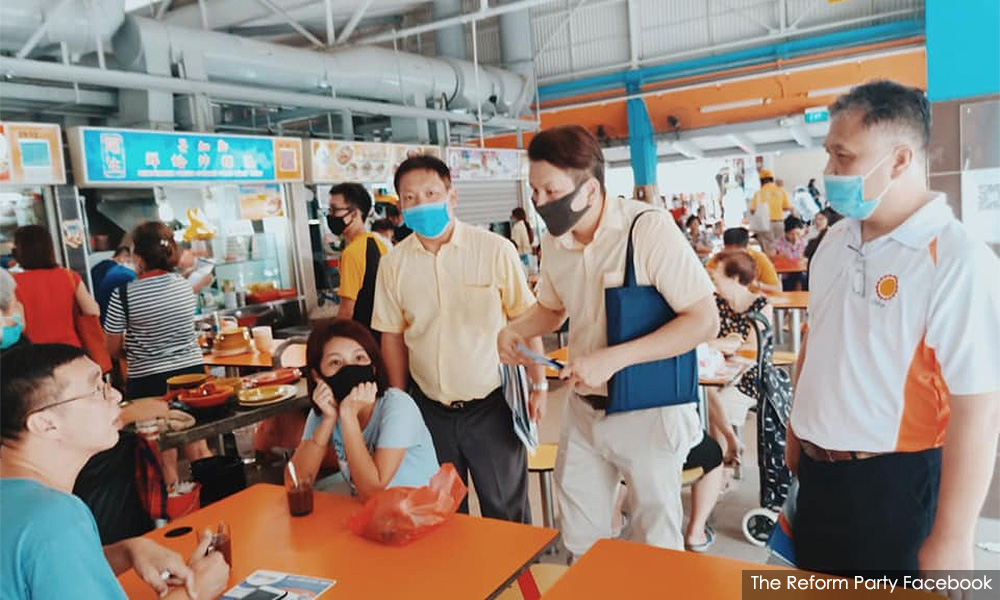
Kenneth Jeyaretnam (above) is secretary-general of the Reform Party and the elder son of the late Joshua Jeyaretnam, Singapore’s most notable opposition figure. He is leading the Reform Party’s team in the Ang Mo Kio group representation constituency (GRC).
A GRC is a constituency in Singapore in which teams of candidates, instead of individuals, compete to be elected as MPs. The GRC scheme was primarily implemented to enshrine minority representation as at least one of the MPs in a GRC must be a member of the Malay, Indian or another minority community.
Kenneth thinks the opposition parties in Singapore are doing their best in difficult circumstances.
“We were going to contest in West Coast GRC, but we conceded to Progress Singapore as Dr Tan was a former MP there. I see quite a lot of unity among the opposition,” he told Malaysiakini in a phone call.
“We may have some differences in philosophy, but I see our manifestos on economic issues as quite aligned. We seem to be moving towards that with similar ideas on universal healthcare, benefits for senior citizens and children, etc.
“Our proposal that spouses of ministers should not be allowed to occupy top posts that are an egregious conflict of interest is also popular with other opposition parties," he said, in reference to PM Lee being the head of the country’s sovereign wealth fund while his wife, Ho Ching, is the head of state investment firm Temasek Holdings.
“Essentially, we want to replace the PAP deal of austerity for the ordinary Singaporean but opulent, and in many cases, secret salaries and riches for the PM and his wife, PAP ministers, their spouses, and their supporters with a better and fairer society for Singaporeans,” Kenneth added.
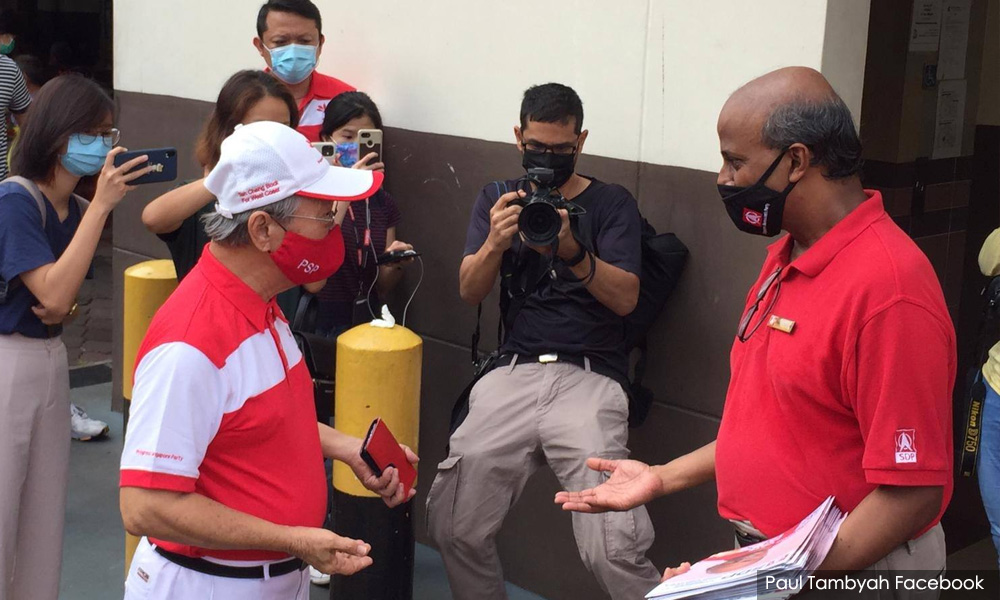
He then went on to blast the PAP’s decision to call for an election at this time.
“It’s never been free and fair at the best of times. I think it’s very irresponsible of the government to call for one now. They have made no allowance for the pandemic when they could have put it off until much later, when the Covid-19 situation would have improved.
“I think it’s clear the PAP wants to take advantage of the panic and fear felt by Singaporeans who would be unwilling to take risks, given the present circumstances,” he said, adding that opposition campaigns were being seriously hampered by the absence of physical rallies which were key to reaching voters.
“I think it’s a real risk now that the PAP may pick up 100 percent of the seats in the election,” he said. "They are also trying to push this ridiculous narrative that the NCMP will provide an opposition voice and that's enough.
“This is the first election without compulsory voting and PAP have all the mechanisms to get elderly voters to the polls,” added Kenneth, who himself is under a 14-day quarantine as he had to visit his son in the UK after the latter suffered injuries in a cycling accident.
Critics have also cited the usage of the newly-minted Protection from Online Falsehoods and Manipulation Act, under which the authorities have ordered that online references to some comments made by opposition figures on key issues must carry a warning that the content contains false information.
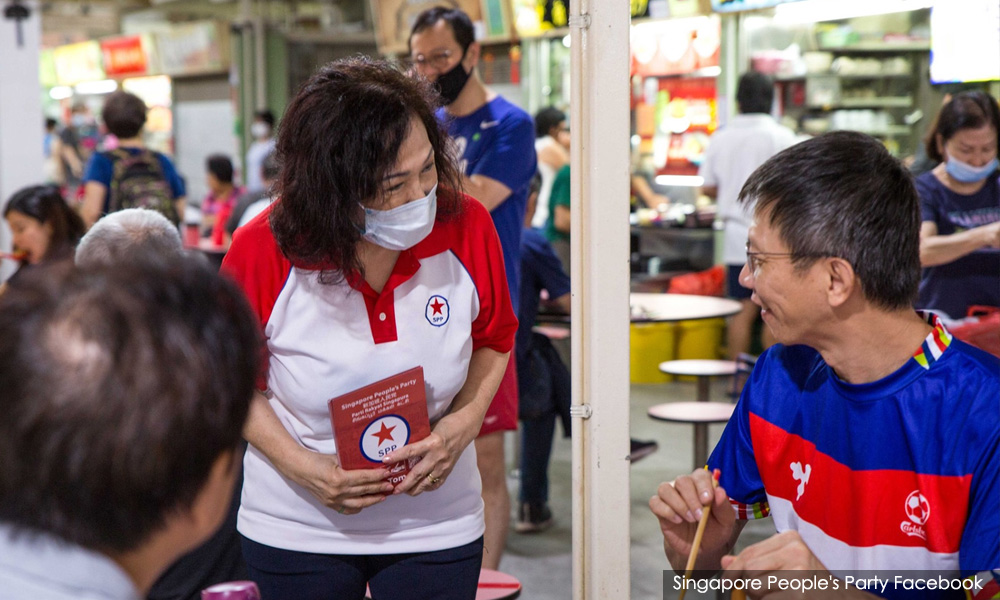
The law, which came into effect last year, has repeatedly been directed at opposition figures and is viewed as a tool for muzzling criticism of the PAP administration.
Since campaigning began on July 1, opposition candidates have been cited for comments made on government spending for foreign students, plans to grow the country’s 5.7 million population to 10 million and government advisories that discouraged Covid-19 testing for foreign workers.
A tightly-controlled affair
Singapore elections were not always such a one-way street. In the 1950s, legislative elections saw keen contests involving the Progressive Party and the Labour Front, which provided two Chief Ministers in David Marshall and Lim Yew Hock. The victory of Lee Kuan Yew’s PAP in 1959 heralded a major turnaround, but even the 1963 elections saw a keen contest between PAP and Barisan Sosialis, which bagged 13 seats in the 51-member Parliament.
However many Barisan Sosialis leaders such as Lim Chin Siong, Said Zahari, James Puthucheary, Chia Thye Poh and Lim Hock Siew were accused of subversive communist struggles and detained without trial under Operation Coldstore. This led to a period from 1966 to 1981 when the PAP did not even face a single member of the opposition in Parliament and the party has since enjoyed a dominant role throughout Singapore’s history as an independent nation.
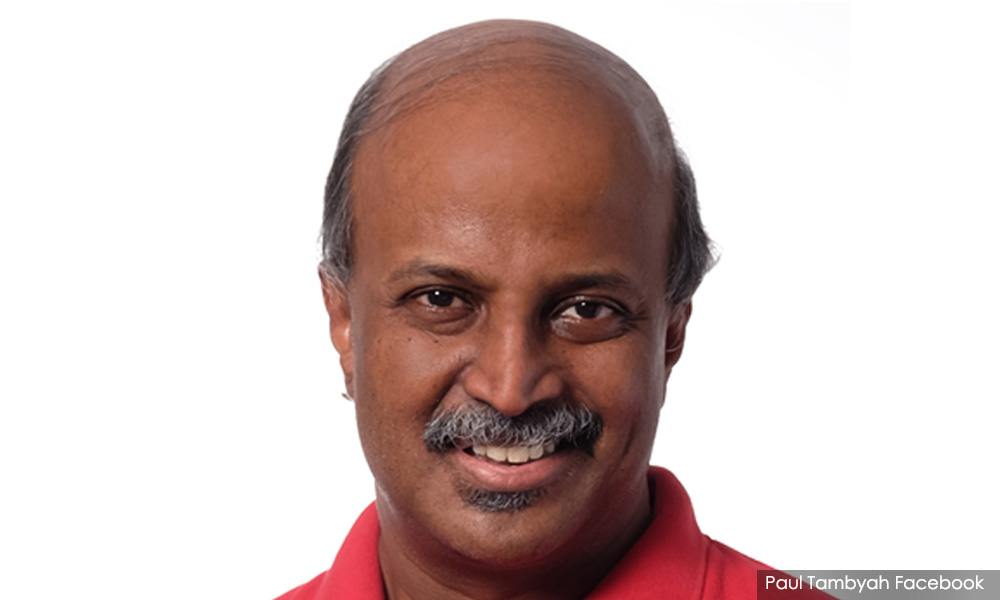
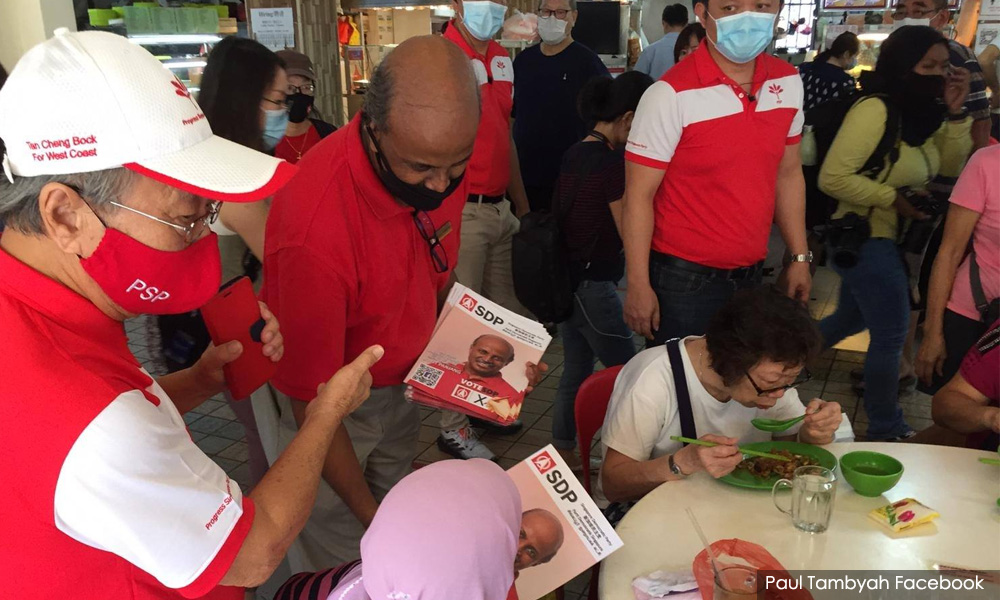
Singapore Democratic Party president Dr Paul Anantharajah Tambyah (above) is a doctor and professor of infectious diseases who says it is costly and painful to be part of the opposition to a seemingly impregnable government, but that “the people of Singapore are worth it.”
Tambyah, who is facing an uphill struggle in the Bukit Panjang race, said: “Unfortunately, this election could be worse as it is called in the middle of a pandemic, with severe restrictions on outreach efforts to residents and campaigning. There is a real possibility that the PAP will win 100 percent of the seats.
“It is extraordinarily difficult to campaign without large walkabouts, in-person rallies, being able to communicate directly with residents without using a mask (which means that hearing-impaired people, including older residents who lip-read) have trouble understanding us, and not even being able to shake anyone's hand means that this is an extremely difficult and different campaign.”
He feels that the opposition parties do not have much to worry about in terms of working with one another – especially in facing the common foe.
“As in all developed countries, there is a spectrum of political views and this is healthy for the development of democracy.
“What is not healthy is the significant restrictions on freedom of speech and expression. Right now, the key is to prevent an opposition wipeout and hopefully, in a more normal election, deny the PAP a two-thirds majority,” Tambyah said.
Tambyah is hopeful that Hsien Yang’s impact will be significant.
“He represents a significant sector of the establishment as a brigadier-general, former head of a major government-linked company, and of course as the brother of the prime minister.
“This sector has been traditionally supportive of the PAP. His outspoken support for alternative parties, including the SDP, suggests that many in the establishment believe (to use his words) that "the PAP has lost its way" said Tambyah, who believes the key issues of the election to be jobs, the economy and public health.
Kenneth said he was hoping that Hsien Yang would have put himself up as a candidate.
“I was pleased by the fact that he said you can love Singapore, but not PAP. But everybody expected him to stand and he seems to have 'chickened out' at the last minute. In fact, the Reform Party invited him to head our team at Ang Mo Kio, but he declined,” he added.


At least the Opposition has Indian candidates. PAP has none. This reflects its role in Singapore as a one race party!
Report this comment
Are you sure you want to delete this comment?
This action cannot be undone.