



Recovery without reform is a losing game: EAC chief
INTERVIEW | As Malaysians brace for the economic devastation that will follow the Covid-19 outbreak, there is one team in Putrajaya focusing solely on the silver lining.
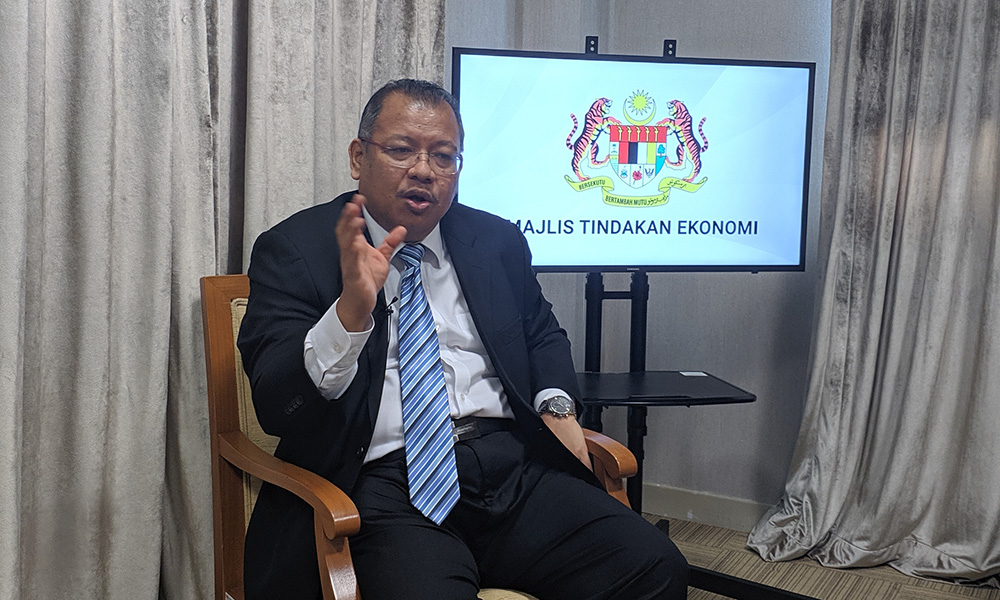
That team is the Economic Affairs Council secretariat, led by economist Noor Azlan Ghazali, who has been part of the council in its previous iterations dealing with a various crisis before...
INTERVIEW | As Malaysians brace for the economic devastation that will follow the Covid-19 outbreak, there is one team in Putrajaya focusing solely on the silver lining.
That team is the Economic Affairs Council secretariat, led by economist Noor Azlan Ghazali, who has been part of the council in its previous iterations dealing with various crises before.
In a recent interview with Malaysiakini in Putrajaya, Noor Azlan expressed hope that the economic crisis experienced today would spur much-needed reforms that had been put on the backburner.
“Recovery without reforms is a losing game. It will not produce lasting impact,” declared the 56-year-old.
“The issue is, are we going back to where we were before or are we heading towards where we aspire to be?”
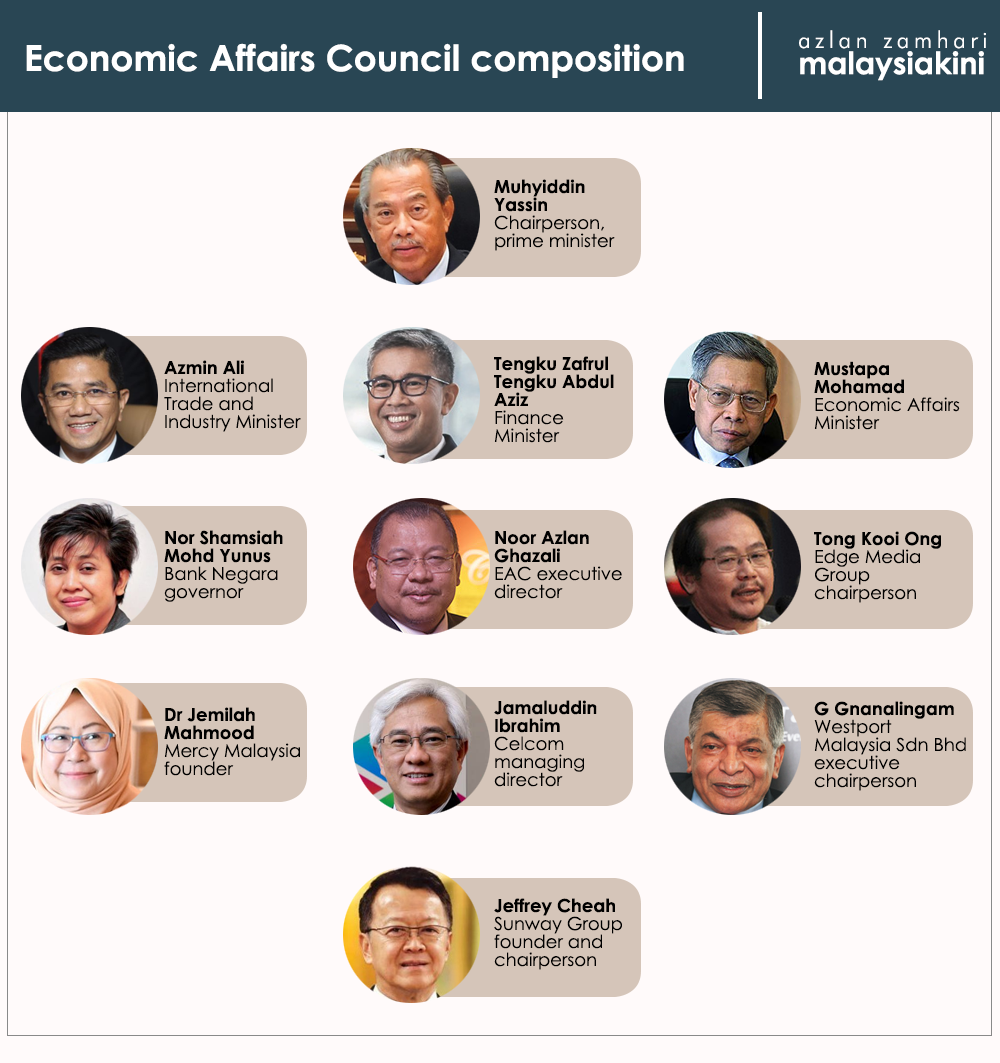
Noor Azlan’s team was formed shortly after the change in government in March and is currently tied down meeting stakeholders and drafting policy papers to be discussed by the council every Monday.
However, the team will also be in charge of policy proposals on long-term economic reforms which must be implemented once the recovery phase of the movement control order (MCO) is over.
Noor Azlan said coping with the Covid-19 outbreak has helped the government, businesses and people realise many systemic, structural, legal and cultural issues that need to be addressed.
Covid-19-push
For instance, he said government departments and agencies had trouble connecting with each other during the early stage of the MCO, which dictated that most government offices be shut.
Educators weren’t ready to implement online classrooms, he said. Other issues include whether contracts can be signed digitally or how complex digital transactions could be captured in the tax system.

These issues, said Noor Azlan, were part of what he called the “Covid-19-push” - a landscape which encourages private citizens, businesses and the government to recognise existing problems in the economy and drive them to adopt new mindsets and technologies to move forward.
“We still have a long way to go. One good thing is that there is a push. A lot of things we thought would take 10 years are happening now.
“For a long time, there was quite a debate on whether faculty members should teach online.
"Now that campuses are closed… everybody is scrambling to ensure that they can teach online,” said the former vice-chancellor of Universiti Kebangsaan Malaysia.
On a larger scale, Noor Azlan described managing the economy during uncertain times is akin to managing a lumbering cruise ship, where foresight and proper planning was critical.
“Managing the economy is more like a Titanic. When we talk about shifting to prepare for the industrial revolution 4.0, it takes the people, capability, capacity, training and schooling system to adjust so that we can produce talent with capabilities. It takes time to achieve the desired effect,” he said.
Curbing addiction to cheap labour
In terms of mindset, Noor Azlan said the biggest challenge is teaching Malaysians and businesses that cheap is not always good - which has led to a reliance on foreign workers that the EAC hopes to address.
Foreign workers who perform jobs considered undesirable to Malaysians, he said, often carry out their duties according to standards which do not conform to Malaysian norms.

“They can do a job at half the price of a Malaysian because they have different standards. They can live 20 persons in a house.
“I’ve seen construction workers who use drain water for cement mixing in the absence of treated water. (Some) do not care. They use their own standards,” he added.
Noor Azlan said although Malaysians are open to foreign workers, visiting workers must conform to local standards and locals must be willing to pay the price.
There is renewed debate on the large presence of foreign labourers after it was discovered that many lived in cramp and unhygienic conditions which allowed the Covid-19 virus to spread.
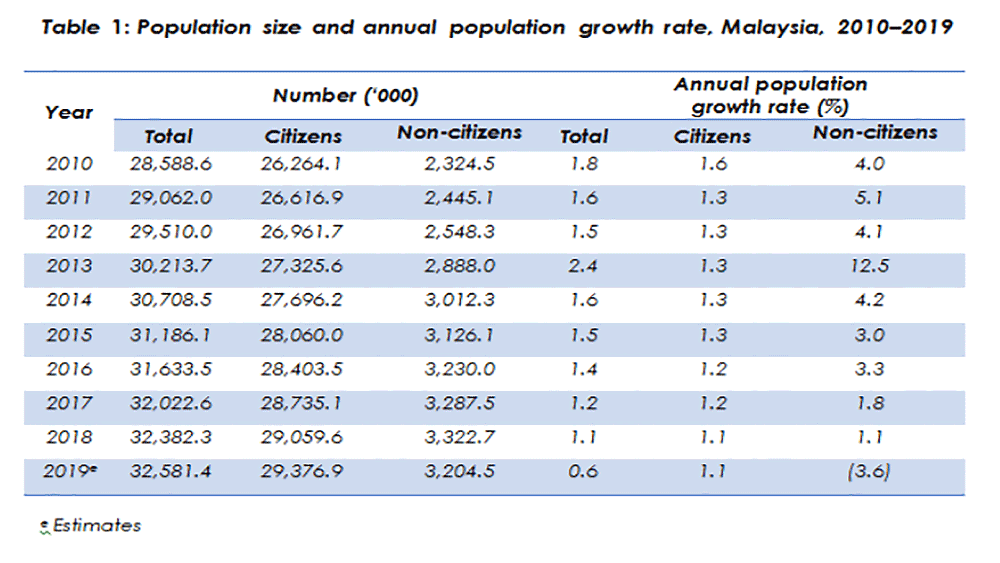
According to the Department of Statistics, in 2019, an estimated one in ten residents in Malaysia was a foreigner, up from one in 12.5 in 2000. Both figures are likely an underestimate because it did not account for undocumented migrants.
For Noor Azlan, the solution to the reliance on cheap foreign labour was for businesses to automate and increase wages.
“When income is low and stagnant, people want cheap and do not care about, say, safety. When I was living in the US, if I were to call a plumber, he would be expensive because of licensing, insurance and other standards. Not just anyone could work in plumbing.
“We need to prepare mindsets and capabilities to raise income. I believe, when income is high, people will demand standards,” he said.
Rethinking the supply chain
On the government’s wage subsidy scheme, Noor Azlan said the current approach was to target vulnerable groups - those earning RM4,000 and below.
Malaysia does not have the luxury of a more robust scheme, such as Singapore, which is subsidising 75 percent of locals' wages for 10 months to reduce job losses, he said.
Comparatively, the second phase of Malaysia’s wage subsidy scheme - RM600 for a maximum of 200 staff - amounted to 26 percent of the median wage of RM2,308.
Noor Azlan added Singapore was an unfair comparison given the many differences between the country and Malaysia.
On the Penjana economic recovery scheme, which outlined generous tax breaks for foreign and local investors to relocate their manufacturing facilities to Malaysia, he said this was done in recognition of how the world was rethinking the global supply chain, which was centred in China.
When it was pointed out that neighbouring countries had similar programmes since the start of the Covid-19 outbreak, he said Malaysia had advantages in talent, swift port clearance, facilities for expatriates and ease of doing business, among others.
“I would say Malaysia is quite attractive. Malaysia is a place that can offer a good location. I admit that there are challenges. If you talk to Malaysian Investment Development Authority (Mida), there are still a lot of issues.
“We are basically a country that is FDI friendly because to us foreign investors are important.
“No matter what, domestic investors are probably the most important. You must have your own local strength. The small and medium enterprises (SMEs) can build networks and clusters. We need to build more local companies as well,” he said.
Andy Heong and M Fakrull Halim contributed to this article




Are you sure you want to delete this comment?
This action cannot be undone.