


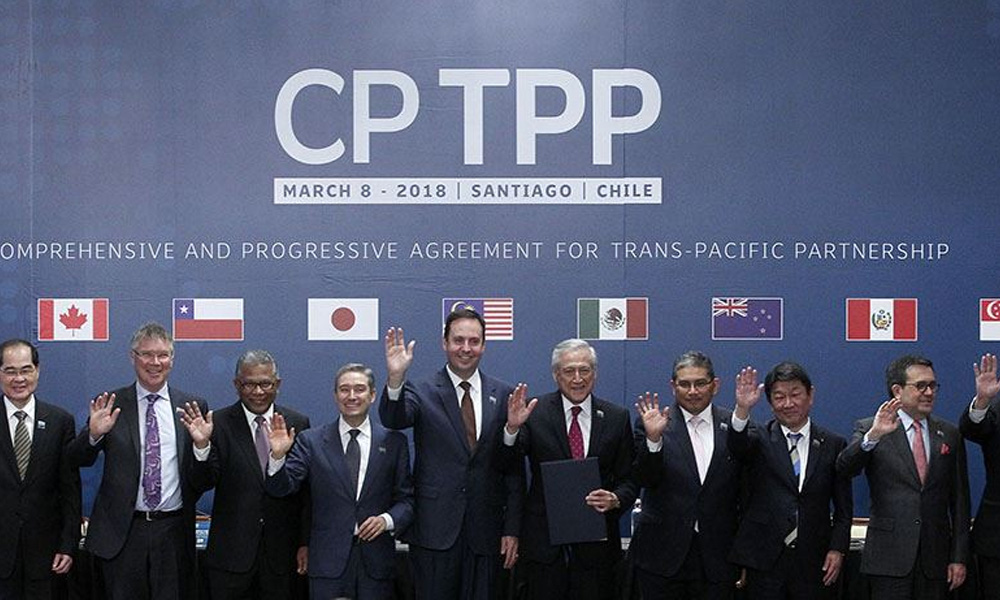

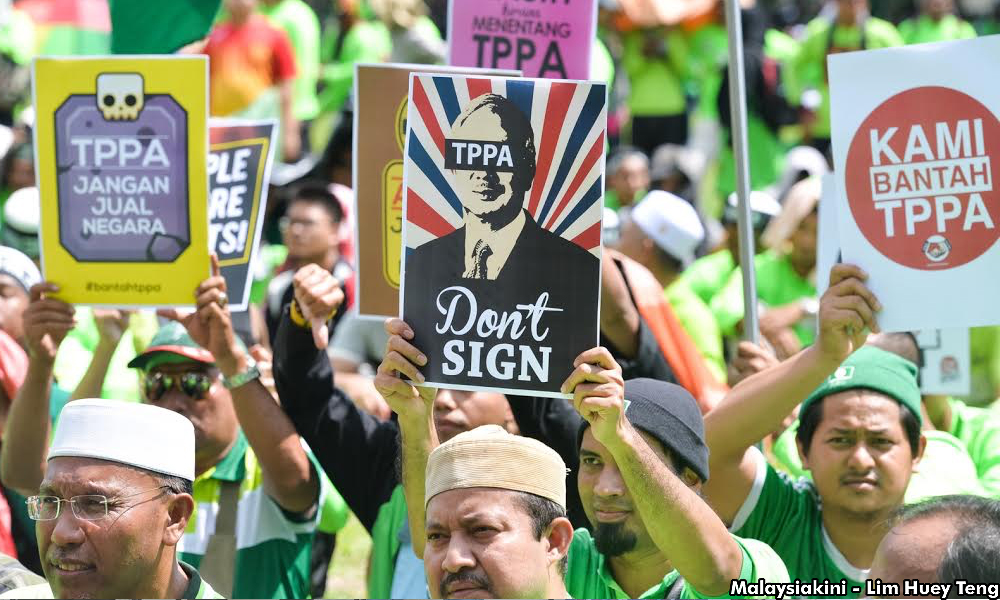
'We don't care about your political spats, but don't ratify CPTPP' - MTUC to govt
The Malaysian Trade Union Congress (MTUC) has urged the government not to endorse the Comprehensive and Progressive Agreement for Trans-Pacific Partnership (CPTPP) as it lacks protection for worker rights and may result in the removal of existing protections.
“MTUC strongly calls on the government not to endorse the ratification of the CPTPP, irrespective of whatever position the previous administration had taken on the free trade agreement.
The Malaysian Trade Union Congress (MTUC) has urged the government not to endorse the Comprehensive and Progressive Agreement for Trans-Pacific Partnership (CPTPP) as it lacks protection for worker rights and may result in the removal of existing protections.
“MTUC strongly calls on the government not to endorse the ratification of the CPTPP, irrespective of whatever position the previous administration had taken on the free trade agreement.
“MTUC does not wish to get caught in any political spat between the previous and present government, but we urge the government not to endorse joining the CPTPP as it poses significant threats to worker rights and puts a large number of jobs at risk under the guise of free trade.
“We find the CPTPP provides member countries with a lot of latitude to manoeuvre other nations in the group into removing important legislation on workers welfare and rights under the pretext of reducing tariff barriers and championing free trade,” said MTUC secretary-general J Solomon in a statement today.
Previously International Trade and Industry Minister Azmin Ali said that the former Pakatan Harapan government had agreed to endorse the ratification of CPTPP on Sept 5, 2018.
Harapan leaders have since claimed that the cabinet at that time had second thoughts about the decision in subsequent discussions.
Solomon said that trade unions around the world, including MTUC, have noted that the CPTPP would only benefit major corporations.
The agreement does not contain mechanisms to monitor the adherence of member countries to core standards and conventions by the International Labour Organisation (ILO), he added.
“It also does not have any provisions to ensure that violations of ILO standards are penalised.
“The CPTPP labour chapter also narrows the number of claims that can be taken against signatories for abuses of workers’ rights as it says violations must be “in a manner affecting trade”, he said.
Solomon said similar agreements in other parts of the world have shown that almost always no action is taken against perpetrators of such abuses.
Meanwhile, he said, the Investor-State Dispute Settlement (ISDS) in CPTPP allows foreign investors to sue governments for regulations or actions that threaten their ability to make profits.
“Similar mechanisms were used in the past to challenge minimum wage laws as well as other rules that affect workers, such as those on health and safety.
“The ISDS feature in CPTPP clearly poses a serious threat to the livelihood and welfare of workers in Malaysia.
“Corporations could deem unfair any change of policy that improves workers’ rights and conditions if they see it as a violation of their ‘legitimate expectations’, that is their expected profits,” Solomon said.
Not only that, but the CPTPP is also likely to result in job losses in some sectors due to increased imports from member countries, he said.
Meanwhile, Solomon said Azmin has not disputed the findings by the Economic Planning Unit (EPU) that by joining CPTPP, Malaysia imports would spike by RM10 billion against an increased of RM516 million in exports, resulting in Malaysia’s trade balance dipping by RM9.6 billion per year.
“Azmin has not presented a convincing case that would suggest it is in the interests of our workers, our economy and our society to join CPTPP,” he said.
MTUC is also concerned that the CPTPP would open up public procurement markets, which would, in turn, restrict the government’s ability to support local businesses that recognise trade unions or pay a living wage.
Solomon said it is clear that the CPTPP is not really about fair or free trade between the member countries as only a handful of the chapters deal directly on trade.
Instead, many of the chapters in the agreement are framed to benefit major corporations rather than the people, he said.
“If the Perikatan Nasional (PN) government chooses to endorse the ratification of the CPTPP, the government should ensure that any laws or amendments it introduces do not have any negative consequences for foreign investors, even though it benefits the workers and the people.
“This would pose serious questions about the government’s ability to act freely in the interest of the rakyat,” he said.
Solomon said there are more than enough compelling reasons why the government should not endorse the ratification of CPTPP unless member countries relent on major provisions that would adversely affect the economy and the livelihood as well as the well-being of workers in the country.
“Political spats between the previous and present government should not negate the facts and truth about the heavy price Malaysians will pay if Putrajaya agrees to endorse the ratification of the CPTPP based on a decision took by the previous cabinet that was never cast in stone to begin with,” he said.




Are you sure you want to delete this comment?
This action cannot be undone.