


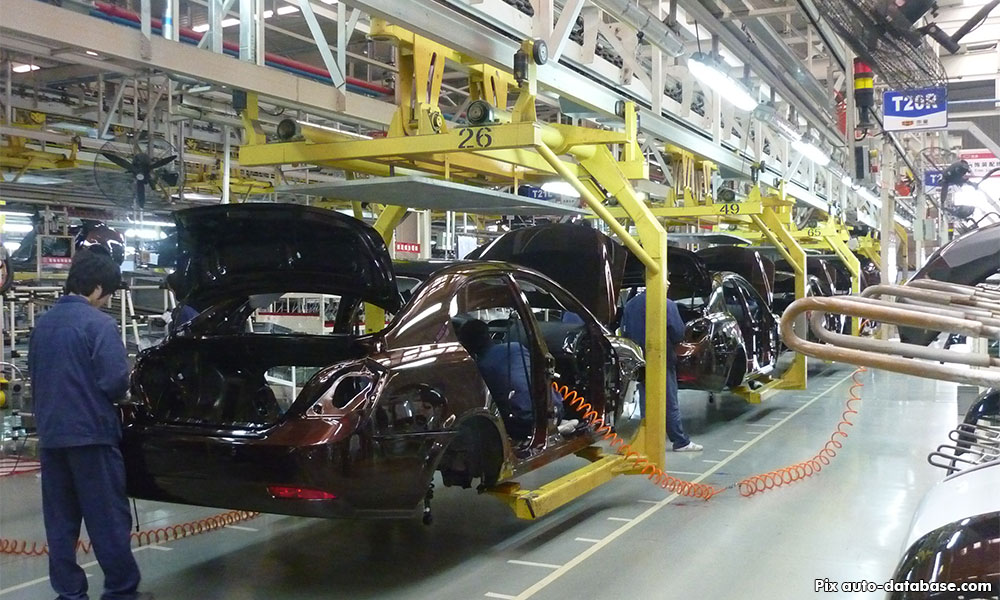

Survey: 41 pct of manufacturers can't survive 12 months
Over a third (41.1 percent) of Malaysian manufacturers believe that they would be unable to sustain their business beyond 12 months.
This was according to a survey of 549 manufacturers by the Federation of Malaysian Manufacturers (FMM) and the Malaysian Institute of Economic Research (MIER) in July.
Over a third (41.1 percent) of Malaysian manufacturers believe that they would be unable to sustain their business beyond 12 months.
This was according to a survey of 549 manufacturers by the Federation of Malaysian Manufacturers (FMM) and the Malaysian Institute of Economic Research (MIER) in July.
During that month, 2.2 percent of respondents said they are already winding down while another 38.9 percent responded that they could only sustain themselves up to 12 months.
Meanwhile, 34.2 percent believed that they could survive more than 12 months, while the remaining 24.6 percent said their businesses were not affected by the recent economic downturn.
Manufacturing is a key component of the Malaysian economy, contributing 21.46 percent of the gross domestic product (GDP) in 2019.
According to the Department of Statistics, manufacturing production was down 18.3 percent during the second quarter, primarily due to the shutdown of the economy in April.
The FMM-MIER survey said 66 percent of respondents said they need to reduce labour cost through freezing recruitment (43 percent), removing non-contractual allowances and benefits (21 percent), and eliminating part-timer jobs (19 percent).
Among respondents who are planning on utilising retrenchments to stay afloat, 42 percent said the exercise would take place in 2021 while 25 percent said it would be conducted by year-end.
"As of July 2020, 17 percent have already reduced their headcount by 10 percent to 30 percent," said FMM-MIER.
Meanwhile, the survey said most respondents who did not take up initiatives in the Penjana stimulus package revealed they were not part of the target group, involved in the targeted activity or do not meet the criteria.
FMM-MIER did not state the percentage of respondents who did not benefit from Penjana.
The most popular Penjana initiatives among respondents were tax deductions/capital allowance for Covid-19 related expenses, wage subsidies, reinvestment allowance for 2020 and 2021, tax deductions for flexible work arrangements and capital allowance on ICT equipment.
Respondents also proposed that the government introduce more tax reductions or waivers, energy discounts, further extension of wage subsidies, sales and service tax exemptions and a reduction in the personal tax rate.



Are you sure you want to delete this comment?
This action cannot be undone.