



Can Kedah extract 'clean' rare earth elements?
KINIGUIDE | Kedah Menteri Besar Muhammad Sanusi Md Nor caused a stir last week when he announced a permit being granted to explore the state’s rare earth resources.
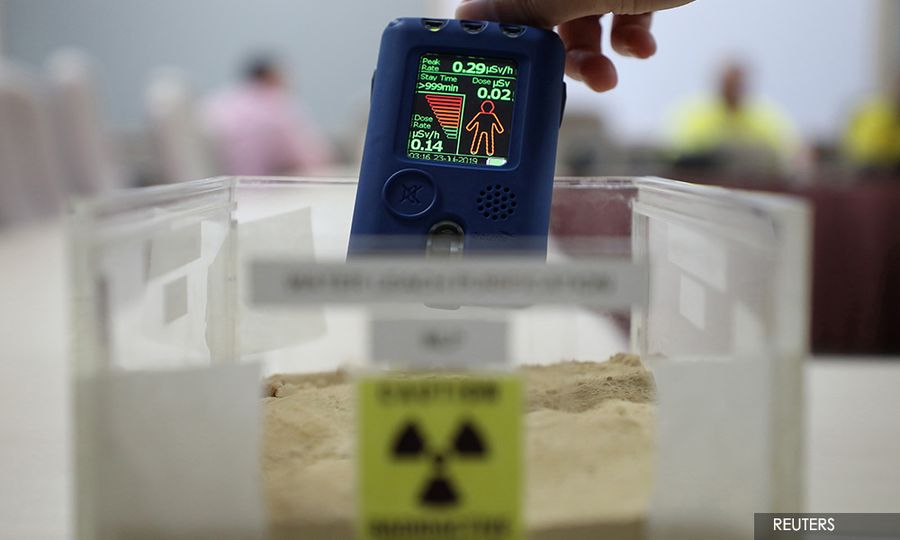
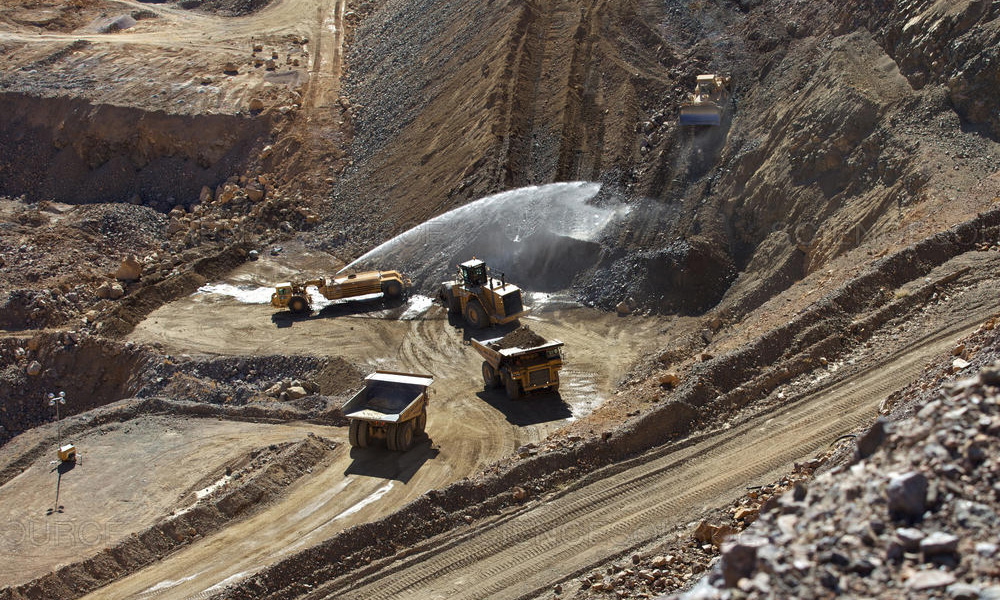
He boasted that the mineral would not be radioactive and its extraction “would not involve any mining” and not a single tree would be felled.
Despite his assurances, environmentalists have voiced concerns and called for more details regarding Kedah’s rare earth ambitions.
The Consumers Association of Penang (CAP) also highlighted risks posed by the rare earth industry, including examples from China and Malaysia.
In this instalment of KiniGuide, we look at Malaysia’s rare earth potential and how its 'green' credentials hold up.
What happened?
On Dec 2, Sanusi announced that his government awarded a permit to a company to conduct exploratory works to find rare earth elements (REEs) at an undisclosed location in Sik, Kedah.
He said the REEs are also found in Ulu Muda and Baling, Kedah, and Lenggong, Perak.
With the permit, the company is only allowed to use manual tools and no machinery, and would have to declare its findings to the government.
He said the company is based in Kuala Lumpur and is partnering with a foreign firm, but did not name the companies involved.
It should be noted that Kedah is not the first state to do so. Last year, the Perak menteri besar Inc signed a memorandum of understanding with China’s Chinalco GXNF Rare Earth Development to identify REEs in the state...
KINIGUIDE | Kedah Menteri Besar Muhammad Sanusi Md Nor caused a stir last week when he announced a permit being granted to explore the state’s rare earth resources.
He boasted that the mineral would not be radioactive and its extraction “would not involve any mining” and not a single tree would be felled.
Despite his assurances, environmentalists have voiced concerns and called for more details regarding Kedah’s rare earth ambitions.
The Consumers Association of Penang (CAP) also highlighted risks posed by the rare earth industry, including examples from China and Malaysia.
In this instalment of KiniGuide, we look at Malaysia’s rare earth potential and how its 'green' credentials hold up.
What happened?
On Dec 2, Sanusi announced that his government awarded a permit to a company to conduct exploratory works to find rare earth elements (REEs) at an undisclosed location in Sik, Kedah.
He said the REEs are also found in Ulu Muda and Baling, Kedah, and Lenggong, Perak.
With the permit, the company is only allowed to use manual tools and no machinery and would have to declare its findings to the government.
He said the company is based in Kuala Lumpur and is partnering with a foreign firm, but did not name the companies involved.
It should be noted that Kedah is not the first state to do so. Last year, the Perak Menteri Besar Inc signed a memorandum of understanding with China’s Chinalco GXNF Rare Earth Development to identify REEs in the state.

What are rare earth elements?
REEs refer to 17 metals and their oxides that have similar chemical properties but differ in their electronic and magnetic properties.
These are: scandium, yttrium, lanthanum, cerium, praseodymium, neodymium, promethium, samarium, europium, gadolinium, terbium, dysprosium, holmium, erbium, ytterbium, and lutetium.
Despite its name, REEs are relatively abundant in the earth’s crust. Apart from promethium that is radioactive and decays within decades, all other rare earth elements are more common than precious metals like gold or silver.
REEs are of comparable abundance to many industrial metals like copper, tin, zinc, and lead.
They are only "rare" in the sense that they are not usually concentrated in the form of ore veins like many economically important mineral resources, but instead tend to be dispersed throughout the ground.
This means large quantities of earth and rock would have to be processed to extract a small amount of REEs, and few places have high enough concentrations of REE to make the endeavour economically feasible.
What are they used for?
REEs are used in a variety of high-tech applications, with each element filling certain highly specific niches.
As examples, neodymium is used to make powerful magnets for loudspeakers, electric motors, hard disk drives, and wind turbine generators.
Erbium is used to make laser repeaters for long-range fibre optic communications. It is the only material with the right properties to make laser repeaters, making it indispensable for modern telecommunications.
Cerium is used to make polishing compounds for all manner of glassware, including lenses, screens, and mirrors. It is also used to make flints for lighters, and catalytic converters for reducing carbon monoxide emissions from cars and other vehicles.
Scandium is alloyed with aluminium to make materials that are both strong and light for the aerospace industry, while gadolinium is injected into patients as contrasting agents during magnetic resonance imaging (MRI) scans.
A number of REEs are also suited for making phosphors for CRT and LCD screens. Europium, for example, is the only material suited to produce the red phosphors on the screen that you may be using to read this article.
It is estimated that a mobile phone contains about 0.5g of REEs. According to a 2015 article by the Chem Matters magazine, an iPhone contained eight different REEs.
How much is there in Malaysia?
According to Sanusi’s office, Malaysia’s rare earth deposits are estimated to be worth RM43 trillion, of which RM60 billion are in Kedah.
Energy and Natural Resources Minister Shamsul Anuar Nasarah appeared to contradict Sanusi’s figures.
He said the country's total mineral resources amounted to RM4.11 trillion, of which non-radioactive REEs (NR-REE) amounted to 15.188 million tonnes worth RM741 billion.
In addition, he said studies would be conducted under the 12th Malaysia Plan for more precise mapping of the amount of NR-REE reserves.
It should be noted that the term "deposits" would include REEs that are not feasible to extract, so the actual amount that can be mined (REE reserves) may be lower.
According to the Minerals and Geoscience Department, Malaysia had already produced 114 metric tonnes of REE ores in 2019.
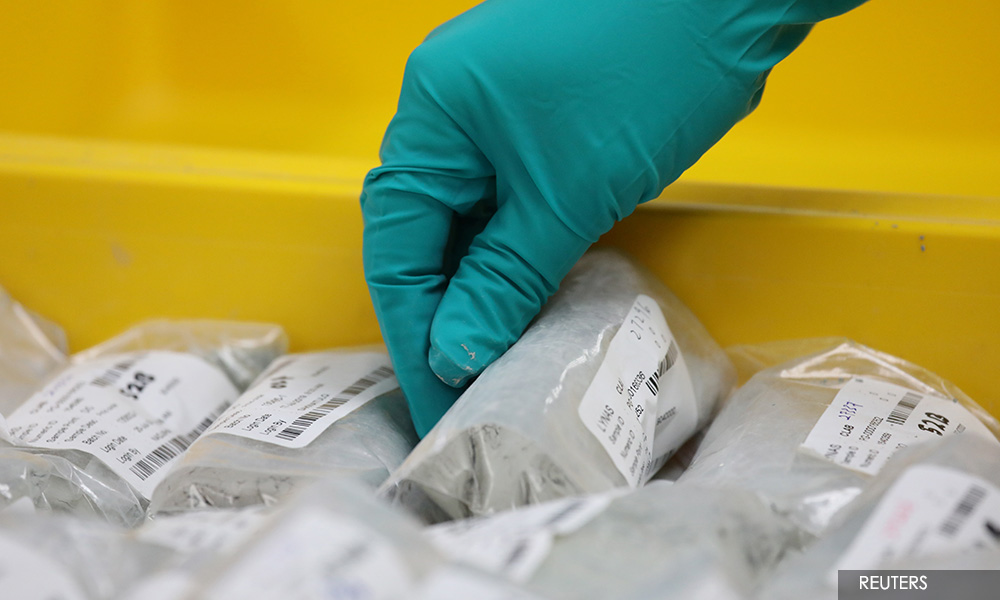
These came in the form of monazite and xenotime from Perak, which are by-products of the tin mining industry and could be reprocessed to extract REEs.
In April, allegedly illegal REE mining activities were reported near Kampung Lawang, Jedok, Tanah Merah, Kelantan.
What kind of REE is present in Malaysia, especially in Kedah?
Sanusi did not mention this in his press conference, apart from the fact that it won’t be radioactive and can be extracted through a pipe.
Currently, Malaysia’s rare earth mining activities are focused on monazite and xenotime. Production is small and only amounted to several hundred tonnes of the minerals per year.
According to a 2019 report by the Academy of Sciences Malaysia (ASM), monazite and xenotime are not present in sufficiently high concentrations in Malaysia to be mined by themselves but are instead produced as a by-product of the tin mining industry.
It should be noted that because REEs have similar chemical properties, they are also often found together. In other words, if one REE is present in the soil, then several others are likely to be present too.
A paper analysing a monazite sample purchased from a tin slag factory in Perak determined that it comprised primarily of light REEs – 30.19 percent cerium, and 14.68 percent lanthanum.
Eight other REEs such as neodymium and gadolinium were also detected in small quantities, as well as enough of the radioactive elements uranium and thorium to make the sample a radiation hazard.
However, Malaysia’s efforts in developing its future REE potential is more focused on exploiting the country’s ion-adsorption clay deposits rather than tin tailings.
Unlike tin tailings, these are touted to have the advantage of containing little-to-no uranium or thorium in the mix.
In these naturally occurring clay deposits, REEs have become attached to the surface of clay particles, which concentrates REEs in the clay and makes it easier to mine.
According to the ASM report, analysis of samples taken in Perak, Terengganu, Pahang, and Johor found that it contained “encouraging values” of light REEs as well as the more valuable heavy REEs.
The figures are as high as 6,835 parts per million (ppm) for light REEs and 404ppm for heavy REEs.
The report noted ion-adsorption clays with REE concentrations above 500ppm might be economically feasible for mining.
Citing a survey by the Mineral and Geoscience Department, the report also listed several other states where potentially exploitable REE deposits have been identified, namely Kelantan, Negeri Sembilan, Sarawak, and Sabah.
How will they be mined?
Sanusi said the mining would be done by boring a four-inch pipe into the ground, and the ore will be extracted through the pipe “bit by bit”.
This may be an allusion to the "in-situ leaching" method, which is the more modern of the two main methods used to extract REEs from ion-adsorption clay deposits.
In essence, this meant that chemicals would be injected into the soil to flush out the REEs, and the REE-rich solution is then pumped out for further processing to concentrate its contents. The ore concentrate is then ready to be sent to refineries for further processing.
According to a 2018 review article published in the journal MRS Energy & Sustainability, this entails drilling 80cm holes into the ground, each spaced two to three metres apart, to a depth about 3m.
An ammonium sulfate solution is then poured into the holes to leach the REEs out of the clay over 150 to 400 days.
According to the ASM report, the REE-rich solution is then drained out from the bottom of the ore body, and oxalic acid is added to the solution to produce REE precipitates.
When roasted, the precipitate becomes a mixture that is more than 92 percent rare earth oxides.
The method contrasts with the "heap leaching" method that was widely used to extract REEs from clay deposits in southern China, which caused widespread environmental damage until it was banned in 2011 and tougher regulations were introduced.
How will this affect the environment?
Sanusi has assured that with modern technology, not a single tree would be felled to make way for REE extraction.
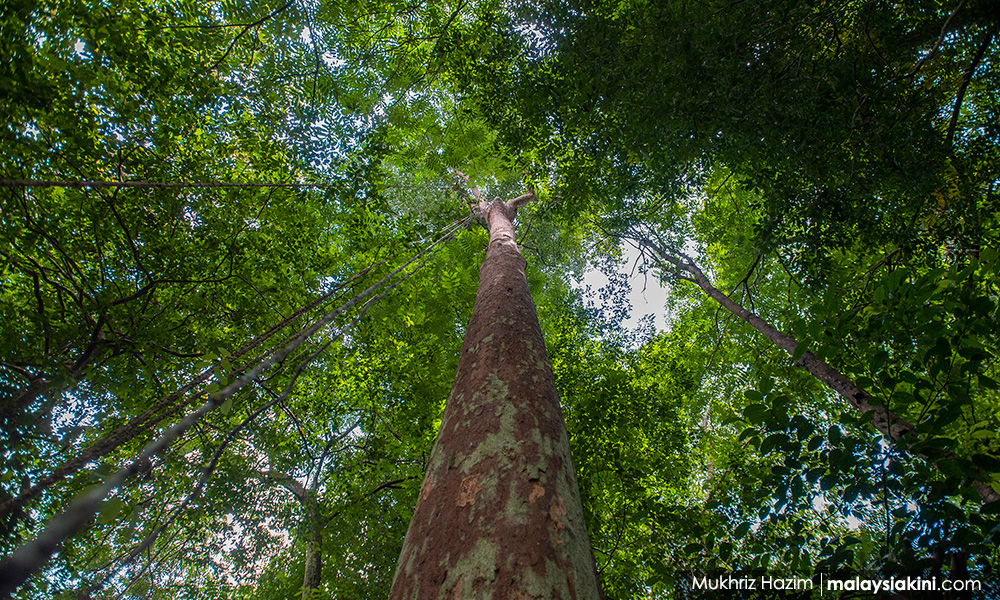
Moreover, he said the area being prospected has already been deforested two years ago, according to Berita Harian.
The review article in MRS Energy & Sustainability also said that by using the in-situ leaching method, most of the vegetation and topsoil would not need to be removed.
However, this does not mean it has a negligible environmental impact, as the review also noted that risks of groundwater, river, and soil pollution.
“As can be expected given the method, in-situ leaching causes groundwater contamination and potential landslides, while lowering recovery.
“High concentrations of ammonium sulfate, ammonium, sulfate and rare earth in the water, and elevated pH are reported.
“Streams are polluted and surface vegetation destroyed due to capillary action that draws the leach solution back into the topsoil,” the report noted.
Meanwhile, a 2013 paper published in the journal Environmental Development noted that more than 100 landslides reported in China’s Ganzhou region were attributed to in-situ leaching for REEs.
In other words, while trees may not need to be cut down to make way for mining activities, it could be poisoned or buried in landslides instead.
How is the damage being mitigated?
Shamsul said his ministry is still drafting standard operating procedures (SOPs) to ensure that REEs can be sustainably mined.
Among others, he said the SOPs would cover the entire mineral value chain from mining to waste disposal and the closing of the mine. No mining will be allowed in permanent forest reserves.
At least for now, no approvals for REE mining has been issued in Kedah or any other state.
Why is the public concerned?
There is distrust towards the authorities when it comes to REE due to the Bukit Merah incident in the 1980s where residents claim to have suffered from radioactive poisoning from waste produced by Asia Rare Earth Sdn Bhd factory's extraction of monazite.
Mitsubishi Chemical, a major shareholder in the company, never acknowledged responsibility but agreed to undertake a clean-up of the radioactive waste. The Perak factory closed down in 1994.
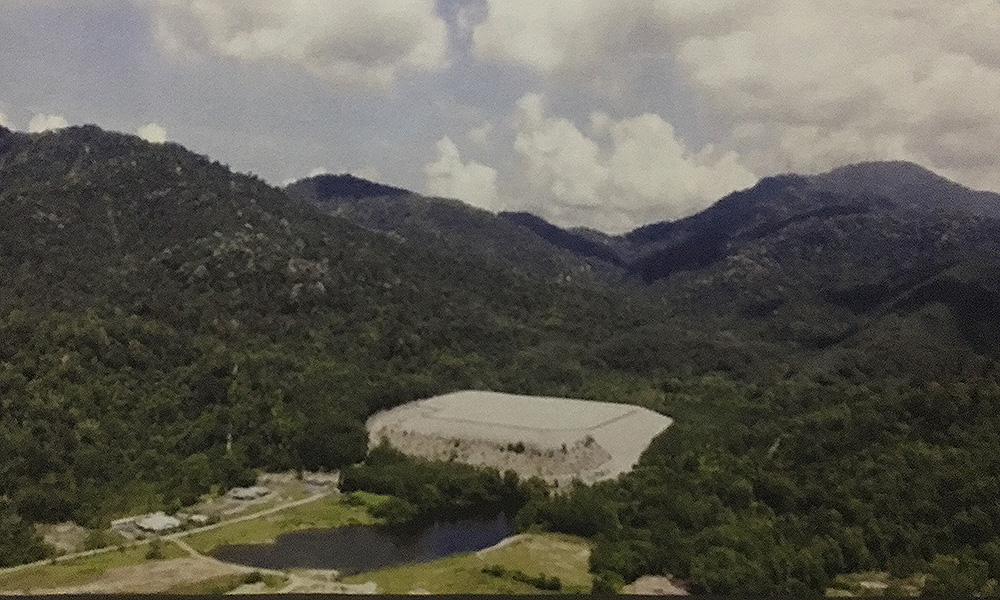
The New York Times, in a 2011 article, quoted the consultant overseeing the clean-up as saying that workers in protective gears had hauled 11,000 truckloads of radioactive contaminated material to be entombed inside a hill core, under more than 20 feet of clay and granite.
Around 80,000 steel barrels of radioactive waste were also removed from a concrete bunker, mixed with cement and gypsum and permanently stored in the hill.
Despite the then BN government led by Dr Mahathir Mohamad maintaining the facility was safe, the local community reportedly saw higher cancer cases.
In a more recent development, Lynas began processing rare earth minerals imported from Mount Weld, Australia in Gebeng, Kuantan. The factory began operation in 2012.
While the mineral extracted from Mount Weld is touted to have lower levels of thorium and uranium compared to other mines, and expert reviews assured that radiation levels at the Gebeng facility are within permitted levels, public distrust persists.
Even though the concentration of radioactive material in the waste by-product produced from the Gebeng plant is low, there is concern that there could be a build-up over time.
After years of protest, the Pakatan Harapan government in 2019 set a condition for Lynas to pre-process the mineral at Mount Weld, Australia so that the waste will remain there while the company is also required to build a permanent waste disposal facility for the waste that was already produced here since 2012.
With the latest venture into REE, the PN government has assured that it is only exploiting ion-adsorption clay deposits which contain little-to-no thorium or uranium, but it will likely need to overcome continued public distrust due to past experience.
This instalment of KiniGuide is compiled by KOH JUN LIN.



Report this comment
Are you sure you want to delete this comment?
This action cannot be undone.