




Private colleges flood media with 'deceptive ads'
The number of deceptive advertisements in the mass media by private colleges has reached worrying levels.
The number of deceptive advertisements in the mass media by private colleges has reached worrying levels.
The National Accreditation Board (LAN) said it has found "thousands of cases" of advertisements which flaunt regulations.
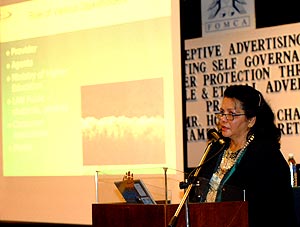 LAN senior corporate manager Zita Mohd Fahmi revealed that there were "2,786 false, deceptive and misleading advertisements" alone in the first half of this year.
Last year, the accreditation board found 101 infringements by 67 private colleges or universities, which included the display of LAN or Higher Education Ministry logos without approval.
"The logo is placed there just like that... It's as if to tell consumers that it (the college) has been accredited," she said at a conference on "Promoting self-governance and consumer protection through responsible and ethical advertising practice" held at Petaling Jaya yesterday.
According to her, such infringements appeared to continue despite warnings being sent to errant colleges.
Zita also pointed out the frequent used of vague descriptions in advertisements, such as "the real world demands a real education", "high on ranking", "focus on quality, chance to live out your dream" and "a tradition of excellence".
"Some advertisements included descriptions such as 'professional' engineering course. This confuses consumers."
She said that advertisements for colleges must be guided by "clear, accurate and true facts that can be proved".
"There must also not be false, misleading, wrongful statements," she said, adding that advertisers should not abuse the society's trust or exploit the ignorance, or the lack of knowledge, of consumers.
"Claims must be substantiated and verifiable. They must use public figures with consent, and only use testimonials if they are true."
New enforcement agency
In addition to a public education campaign, Zita argued that the proposed Malaysian Qualifications Agency (MQA), which is expected to be set up in October, will go some way in overcoming the problems.
MQA will be given more enforcement powers to go after errant colleges. The new agency will also create a more stringent accreditation process as well as a national centre to provide information on recognised institutions.
According to Zita, MQA will take over LAN's role in listing accredited courses and colleges. It will also establish an online register of courses and colleges accredited by the government for the benefit of local and foreign students.
However, a few parents at the conference repeatedly pressed Zita on the lack of effort by LAN to throw the book at unscrupulous institutions.
Zita explained that LAN did not have resources to punish errant educational institutions and expressed hope that MQA could do a better job.
Under present laws, colleges or universities can be fined up to RM200,000, or imprisonment up to two years, for stating that courses on offer are accredited when they are not.
They can also be fined up to RM50,000, or slapped with six months' jail, for advertisements which claim certain colleges of having 'university' status.
Zita also stressed that it was the consumers' duty to protect their own interest, and urged all parents and students not to blindly accept the information provided by educational institutions.
She revealed that even the Public Service Department's list of accredited private educational institutions "do not necessarily include the best schools in the world".


Are you sure you want to delete this comment?
This action cannot be undone.