




Push for first gender equality bill
Malaysia will learn from international experience in drafting a gender equality bill, and the creation of a commission as well as a tribunal that deals specifically with related issues.
Malaysia will learn from international experience in drafting a gender equality bill, and the creation of a commission as well as a tribunal that deals specifically with related issues.
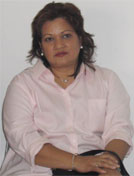
Women's Centre for Change (WCC) vice-president Zarizana Abdul Aziz said the impetus for new legislation came after Malaysia submitted its progress report under the Convention on the Elimination of All Forms of Discrimination Against Women (Cedaw) in May.
 "(Women, Family and Community Development Minister) Shahrizat (Abdul Jalil,
photo
) said she is studying the need for gender equality legislation and would set up a committee headed by Faizah (Mohd Tahir, secretary-general of the ministry)," she said today.
"(Women, Family and Community Development Minister) Shahrizat (Abdul Jalil,
photo
) said she is studying the need for gender equality legislation and would set up a committee headed by Faizah (Mohd Tahir, secretary-general of the ministry)," she said today.
"When the (Cedaw) committee studied the report, it contained remarks that there is a need for more effective legislation (in Malaysia). Also (arising from the case of) Beatrice Fernandez, we feel there is a strong need to have this legislation."
 She was referring to Fernandez (
photo
), a stewardess who was
sacked
in 1991 by Malaysia Airlines for refusing to resign when she became pregnant. She then lost a 14-year battle in March last year when the Federal Court rejected a petition to review employment terms deemed restrictive towards female employees.
She was referring to Fernandez (
photo
), a stewardess who was
sacked
in 1991 by Malaysia Airlines for refusing to resign when she became pregnant. She then lost a 14-year battle in March last year when the Federal Court rejected a petition to review employment terms deemed restrictive towards female employees.
Zarizana was speaking to reporters after the opening of the International Conference on Mechanisms and Legislation to Promote and Protect Gender Equality, held in Petaling Jaya.
Functions of bodies
The three-day conference, organised by WCC and Women Under Muslim Law, was officiated by Chief Judge of the High Court in Malaya, Siti Norma Yaakob. Participants include those from South Africa, Australia, Hong Kong, Pakistan, Sri Lanka, Iran and Germany.
Zarizana said the proposed gender commission would examine all laws, conduct programmes to promote equality, advise the government on a gender equality policy and guidelines, and deal with complaints and breach of anti-discrimination provisions.
The specialised tribunal would be aimed at "discerning and identifying discrimination".
"You need to be trained and to be aware of how it operates. Something that is specialised in equality to provide redress - that's why we need both a commission and a tribunal," she said.
 Zarizana elaborated that the proposed legislation would be two-fold in prohibiting gender discrimination and promoting gender equality. It would also focus on substantive rather than formal equality.
"Formal equality is where you have a law that says everybody is the same. Substantive equality that it looks at the effects and consequences of the law.
"Formal equality appears neutral but the implementation of the law affects different groups differently. Then you have discrimination in the results. We want equality in the results."
Asked how soon the public could expect the draft bill to be submitted to Parliament, Zarizana said "early next year", explaining that the consultation process is often lengthy.


Are you sure you want to delete this comment?
This action cannot be undone.