


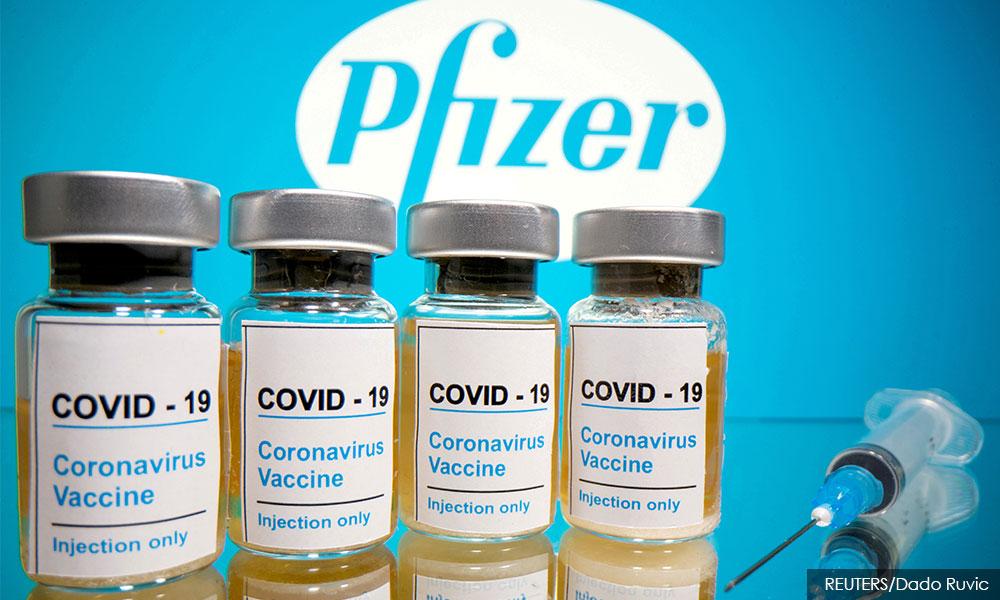

Govt orders more Pfizer vaccines, interval depends on VOC prevalence
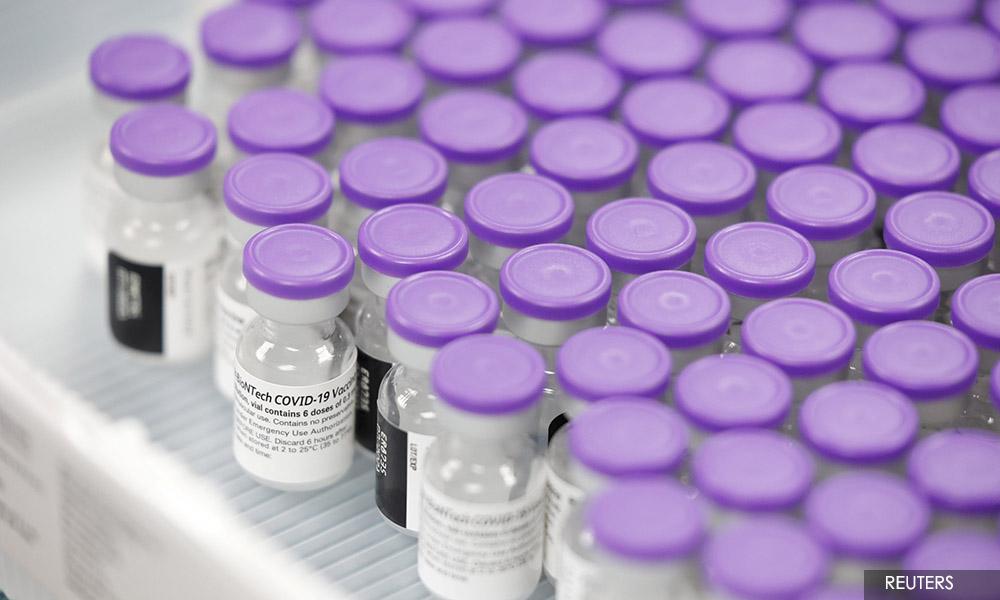
The government has placed an additional order for 12.8 million doses of the Pfizer Covid-19 vaccine in an effort to expedite the National Covid-19 Immunisation Programme.
The programme’s coordinating minister Khairy Jamaluddin said Health Minister Dr Adham Baba had signed the deal on May 21, raising the total size of Malaysia’s order to 44.8 million doses.
The government has placed an additional order for 12.8 million doses of the Pfizer Covid-19 vaccine in an effort to expedite the National Covid-19 Immunisation Programme (NIP).
The programme’s coordinating minister Khairy Jamaluddin said Health Minister Dr Adham Baba had signed the deal on May 21, raising the total size of Malaysia’s order to 44.8 million doses.
This raises the population coverage of the Pfizer vaccine in Malaysia from 50 percent to 70 percent.
“With this increase, I’m pleased to announce that Malaysia will receive 25,682,670 doses from Pfizer in the third quarter of the year,” he told a press conference today.
He said 444,600 Pfizer doses will be delivered each week for five weeks in June, totalling 2,223,000 doses. If previous deliveries are included, this means Malaysia would have received a total of 4,974,840 Pfizer doses by the end of June.
As for Sinovac’s Covid-19 vaccine, Khairy said the latest negotiations with Sinovac and its local partner Pharmaniaga indicates they would be able to fulfil the government’s entire order of 12 million doses by the end of July, including previous deliveries.
These comprise 6,910,200 doses finished in Sinovac’s facility in Beijing, and 5,890,800 doses finished in Pharmaniaga’s fill-and-finish facility in Puchong, Selangor.
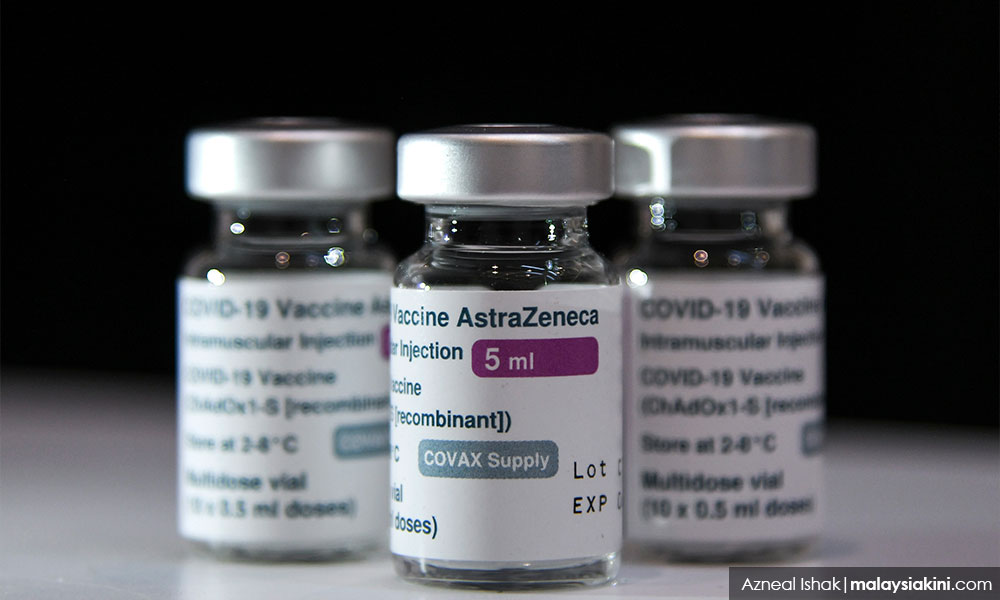
Meanwhile, Khairy said the government also expects 610,000 AstraZeneca vaccine doses to be delivered in June and another 410,000 in July.
However, this is contingent on AstraZeneca’s contract manufacturer in Thailand receiving approval from the National Pharmaceutical Regulatory Agency (NPRA).
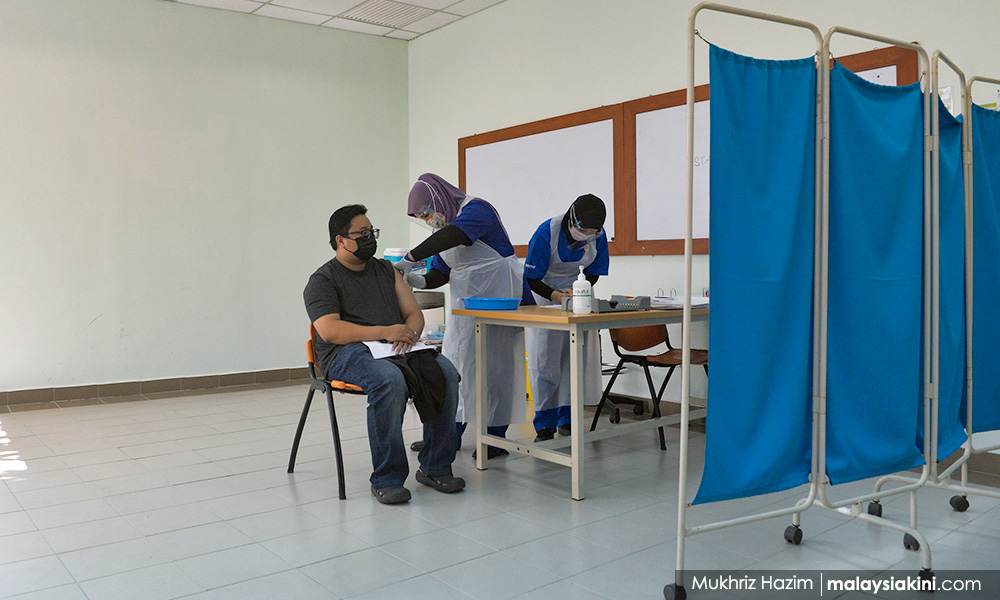
“With all these deliveries, we target administering 150,000 injections per day in June, and this will involve the opening of more vaccine administration centres nationwide.
“With that announcement, I hope people who have yet to receive their appointments will get it soon in the coming months.
“It is a guarantee to the people that our vaccine deliveries are sufficient, faster, and God willing we will be able to implement the NIP even faster,” he said.
Previously, the government ordered 66.7 million Covid-19 vaccine doses from Pfizer, AstraZeneca, Sinovac, CanSino Biologics, and the Gamaleya Institute, all enough for 109.65 percent of the country’s population.
The new deal increases the order to 79.5 million doses, enough for 129.65 percent of the population. All the above vaccines require two doses per recipient to provide strong and lasting protection, except for CanSino Biologic’s single-dose vaccine.
However, procurement deals are contingent on approval by NPRA. To date, approvals are still pending for CanSino Biologic’s vaccine and Gamaleya’s Sputnik V vaccine.
Approval is also pending for a factory in Thailand that is meant to fulfil half of Malaysia’s order for the AstraZeneca vaccine. The AstraZeneca vaccines currently in use come from SK Biologics in South Korea through the World Health Organization’s Covax vaccine sharing scheme.
In other words, procurement for 16.3 million vaccine doses is still pending regulatory approval. This is enough to cover 30.9 percent of the population.
The above population figures assume a population of 32 million including children who are not yet eligible for Covid-19 vaccination pending further studies and NPRA approval.
Dosing intervals
On a related matter, Khairy said the Covid-19 Vaccine Candidate Selection Committee (JKPCV) headed by Dr Kalaiarasu Peariasamy has said that the dosing interval for the Pfizer vaccine can be extended from three weeks to six weeks based on the available data.
He added the decision on whether to go ahead with the extension would depend on the prevalence of Covid-19 variants of concern (VOC) in the country.
As an example, he said the Pfizer vaccine is only 33 percent effective in preventing disease caused by the B.1.617.2 variant that was first detected in India, but this improves to 88 percent after both doses have been administered.
The percentage refers to the prevention of serious disease and hospitalisation. It does not refer to the efficacy of preventing all symptoms which is the figure more commonly reported in the media.
“Although this strategy is a good strategy in terms of extending protection to more people, the quality of that protection against the B.1.617.2 variant is much lower.
“We will look at the prevalence of variants of concern, and in localities where the prevalence is low, we may decide to increase the interval between the two Pfizer doses.
“In places where the B.1.617.2 variant is prevalent, we will maintain the three-week interval to give vaccine recipients the best protection against the variant,” he said.
He added that even if this strategy is adopted, it would only be carried out in June because Malaysia would receive a “surge” of deliveries from Pfizer in July, meaning there would be enough vaccines without resorting to extending the dosing interval.
Likewise, the extended 12-week interval for the AstraZeneca vaccine may be shortened if the prevalence of VOCs is high.
Meanwhile, the dosing interval for the Sinovac vaccine will be maintained at two weeks, due to a lack of data on whether the vaccine would remain effective if the dosing interval is extended.
To date, Malaysia recorded six cases of the B.1.671 variant, which are the B.1.617.1 and B.1.617.2 sub-variants.
Most of these involve imported cases that were detected during quarantine. However, some who tested negative during quarantine later turned out to be carrying the disease.
Meanwhile, 78 cases of the B.1.351 variant that was first detected in South Africa have been found circulating locally. The variant is also associated with reduced vaccine efficacy.
Khairy said genomic surveillance in Malaysia is very limited, so the detection of one VOC case would mean there are many more in circulation.
He said Malaysia is ramping up its genomic surveillance in the next few weeks in hopes of at least matching its peers in Southeast Asia.
According to data from the genomic database Gisaid, Malaysia reported 239,669 Covid-19 cases in the past 90 days. Of these, only samples from 0.071 percent of cases have been sequenced and shared with the scientific community.
This is roughly on par with Indonesia’s 0.08 percent and Thailand’s 0.09 percent, but far behind Philippine’s 0.2 percent, Cambodia’s 0.625 percent and Singapore’s 27.4 percent.
The global leaders are Denmark that sequenced and shared 57 percent of its 66,421 cases, and Australia that covered 53.6 percent of its 1,101 cases in the last 90 days.


Are you sure you want to delete this comment?
This action cannot be undone.