


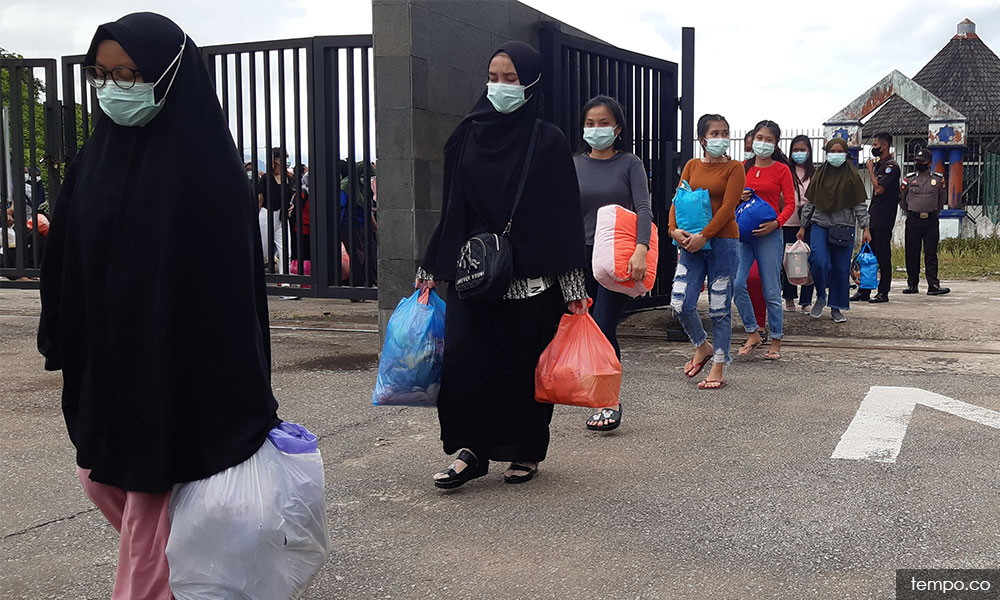

Bounded amid restrictions - through the eyes of the Indonesians
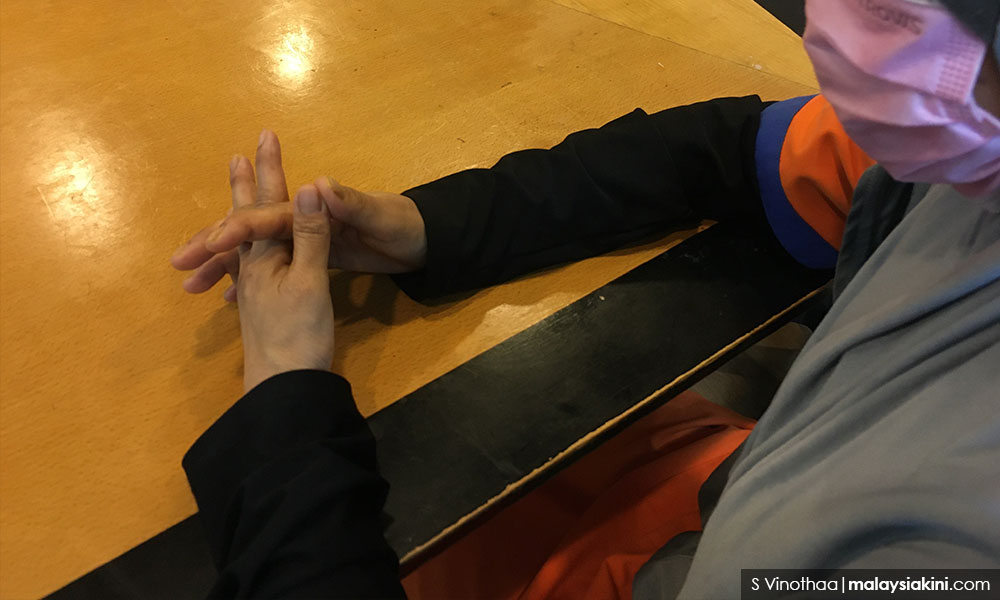
Under economic pressure, drained savings and the need to wire money to her child back home, Indonesian migrant worker Tini Taturia made a desperate decision to work in the middle of 2021, despite being aware that Malaysia has imposed a lockdown.
Her critical decision led to her arrest by the Royal Malaysian Police. “I truly apologise if I committed a violation. I have nothing else to eat, which is why I had to go out and look for money. They eventually understood. I was told to go back home, stay there, and not go out of the house,” said Tini as she recalled her arrest to Tempo in early December.
Ever since the pandemic hit every corner of the world, including Malaysia, Tini faced a bleak destiny. As the pandemic devastated the country, the...
Under economic pressure, drained savings and the need to wire money to her child back home, Indonesian migrant worker Tini Taturia made a desperate decision to work in the middle of 2021, despite being aware that Malaysia has imposed a lockdown.
Her critical decision led to her arrest by the Royal Malaysian Police. “I truly apologise if I committed a violation. I have nothing else to eat, which is why I had to go out and look for money. They eventually understood. I was told to go back home, stay there, and not go out of the house,” said Tini as she recalled her arrest to Tempo in early December.
Ever since the pandemic hit every corner of the world, including Malaysia, Tini faced a bleak destiny. As the pandemic devastated the country, the Malaysian government decided to hit the brakes and impose a national lockdown.
The Malaysian government at one time banned people from working. Tini and her husband were restrained at their house in Puchong, the major town in the Petaling district in Selangor. The couple from East Nusa Tenggara (NTT) were no longer able to make money and were forced to stop sending money back to their only offspring in their hometown.
“I never wired money back to Indonesia until this moment, which lasted from the first period of the pandemic,” said Tini. For food, she and her husband were limited to depending on assistance from her employer, the Indonesian government and Church donations.
The gripping situation loosened in early 2021 when, in February, Tini worked with a cleaning service, getting paid RM64 or Rp218,000 for every order she takes. But just a few months later, in the middle of 2021, the government imposed another lockdown caused by the spread of the Delta variant. Tini found herself unemployed again.
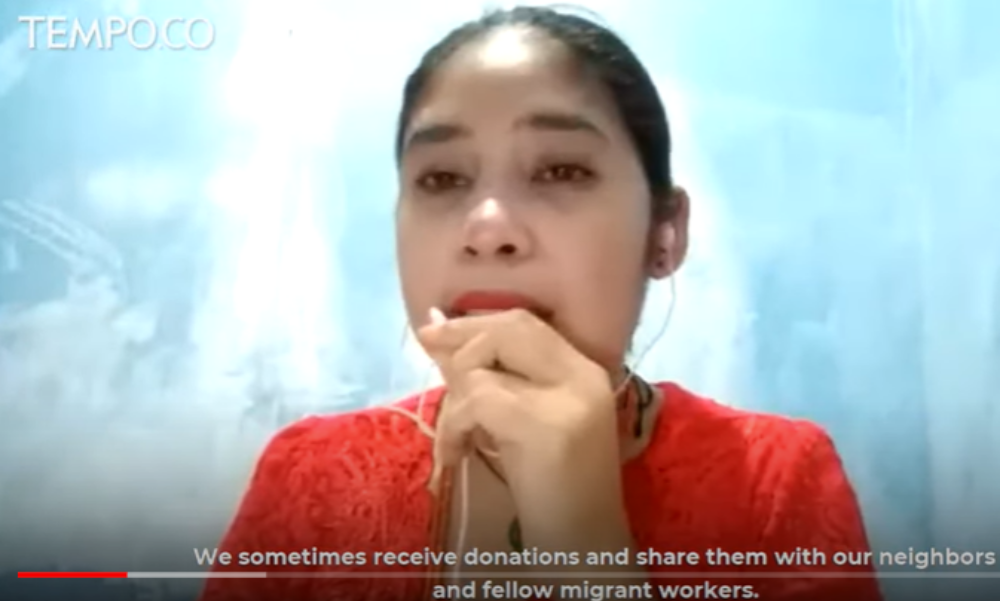
Among the difficult times, thoughts of returning home crossed their minds, but this was abruptly shut down after considering the cost of doing so, which would amount to RM1,800 or roughly Rp6 million each.
“How can we afford to buy the tickets? We could only weep from here as a family member passed away due to Covid-19 back home,” she said. Both are depending on better fortunes ahead.
Stories from people like Tini make the tip of the iceberg about Indonesian migrant workers residing in foreign countries.
Data provided by the Protection of Indonesian Migrant Workers Agency as of November 2021 reveals that most complaints come from migrant workers from Malaysia. From January to November 2021, there have been 367 complaints from workers in Malaysia out of the total 1,553 complaints filed from each and every placement country.
Based on the types of complaints that were filed, most of them are migrant workers who ask to be transported back home, comprising 486 complaints. Other top five reasons include unpaid wages, deaths in a foreign country, human trafficking and work-related fraud.
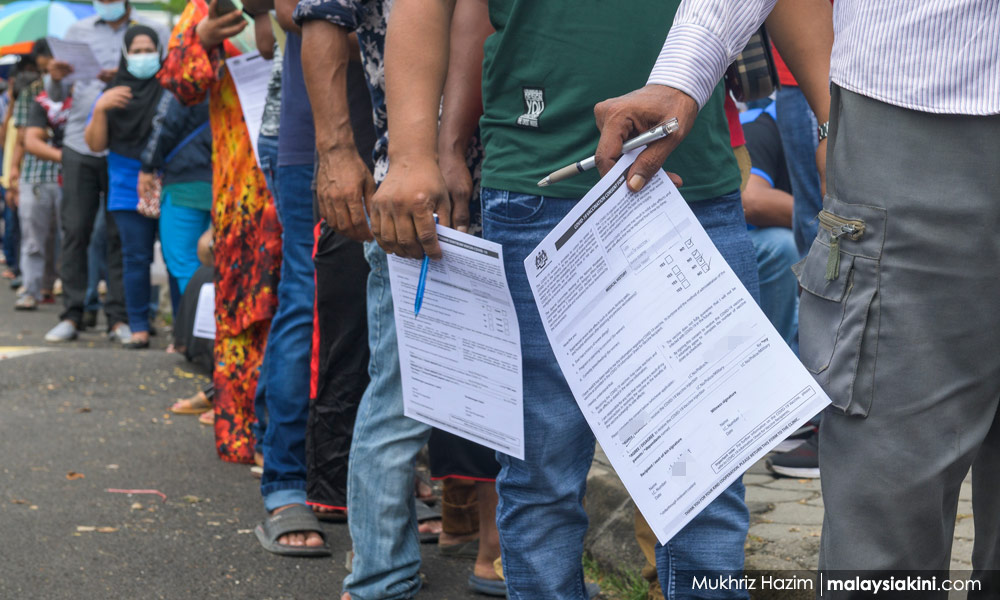
The Human Trafficking Watch (HTW) acknowledges that problems related to employment and human trafficking continue to threaten these migrant workers to this day. HTW’s representative in Malaysia, Dewi Kholifah, said most of the complaints come from the construction sector and domestic workers.
She said many of the Indonesian workers who filed complaints to HTW are unaware of what to do if they are faced with employment and violence. “Many who come here are oblivious of what the KBRI (Indonesian Embassy) is and where it is located. Some are not even able to write down their own names,” said Dewi.
This situation is often taken advantage of by criminal syndicates. Dewi often stumbles upon complaints from legitimate migrant workers who are not in possession of their own passports as the crucial document is kept by either their employer or agent.
There are cases where migrant workers are enticed to sign undisclosed contracts offered by shady agents, which eventually leads them to work without proper pay.
“Even though they are legally recruited, here’s where problems emerge. This is what we need to pay attention to and urge the government to provide Indonesian migrant workers with sufficient protection,” Dewi said.
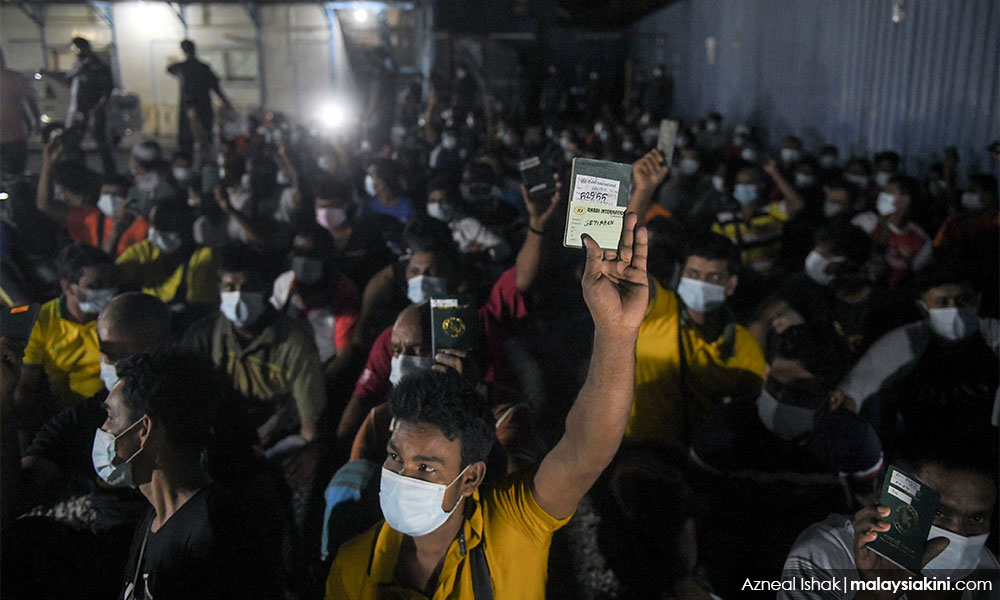
The Migrant Care representative in Malaysia, Alex Ong, said pandemic restrictions have mainly targeted people without legal documents, as these people depend on daily jobs to make a living and the mobility restriction imposed by the government left them unemployed and without means for income to buy food, pay rent and cope with other daily expenses.

During this difficult time, social workers and even the Indonesian Embassy found it difficult to reach the migrant workers spread across a large area.
“Even if we mobilise to the streets and bring them something, what can we do? We can only see them suffer. This is a major challenge and it is the first time we faced such a situation,” Ong said.
He recalled that his organisation was only able to act after obtaining a legal permit from the Indonesian Embassy, which was approved by local authorities. The most catastrophic situation he witnessed was when he encountered more than a dozen Indonesians living in a dumpsite and were constrained to eating food in the trash to survive. Because of this, Ong said, food assistance became their main focus in saving these Indonesian migrant workers.
Apart from the food supply, he revealed cases of exploitation and physical abuse committed by employers, which continue to take place to this day. During this situation, the Migrant Care headquarters, located in a condominium, was not able to accommodate people. According to him, on a normal day, the Migrant Care office would often be used as a shelter for Indonesian migrant workers who need protection.
The head of the Indonesian Migrant Workers Protection Agency (BP2MI), Benny Rhamdani, said the government is finding it difficult to protect migrant workers due to the abundance of workers entering placement countries without adhering to the established procedures.
Citing their data, there are only 4.3 million Indonesians working as migrant workers, but the World Bank suggests there are nine million Indonesian migrant workers.
“If we recite the World Bank data, there are 4.7 million of our workers who are unregistered and I am one thousand percent sure that 90 percent of them are victims of human trafficking that are committed by syndicates,” Benny said.
Benny insists that those unofficially working as migrant workers remain outside of the government’s radar and are unable to track their origins and identity, where they are currently working and what their specific jobs are as these records are basically nonexistent. He said the government is restricted to taking action after the workers themselves file complaints when an incident occurs.
“Which is why we are massively campaigning for safe migration and urging people against working overseas illegally,” said Benny.
The Indonesian Foreign Affairs Ministry’s Director of Protection for Citizens Judha Nugraha acknowledged that the pandemic has unfortunately helped spark issues related to undocumented migrant workers no longer having sources of income, which leads to logistical problems.
To address this pressing issue, Judha said representatives in Malaysia have distributed government assistance in the form of basic need packages in 2020. This programme continues to live on in 2021.
“We have allocated Rp64 billion to representative offices around the globe, and most of them have been distributed to Malaysia,” he said.
In protecting the migrant workers and expanding the government’s reach in handling this issue, he said the government continues to involve each and every stakeholder, starting from the workers themselves, community members, mass organisations and up to the local authorities.

Meanwhile, Rijal Al Huda from the Consular Affairs Embassy of the Republic of Indonesia (KBRI) in Malaysia said the pandemic has highly increased the number of possible conflicts between migrant workers and their employers.
“Many of the employers were affected and had no more income. This increases the potential for abuse,” Malaysiakini reported Rijal as saying.
On protecting the migrant workers, Rijal said the Indonesian Embassy and Consulate-General (KJRI) have actually provided a hotline, even though he admitted that it was only effective for the second pandemic year.
The government and stakeholders were still looking for a proper system to implement in the first year of the pandemic. However, entering the second year, the Indonesian Embassy and Consulate-General have partnered better alongside the Royal Malaysian Police Force.
One of the partnerships, Rijal explained, is the distribution of social assistance packages. The second year of the pandemic saw the KBRI distribute 145,000 to 150,000 packages to Indonesian migrant workers in need.
“Covid-19 is proven to be troublesome for documented persons, let alone the undocumented. Many of their employers were suddenly not able to afford to pay even the legal workers,” he added.
This report is part of the Seafore Asean Masterclass Project and is supported by IWPR.




Are you sure you want to delete this comment?
This action cannot be undone.