




Lalitha lacks credibility to be 'investigative reporter': Azam Baki
In a court filing, MACC chief commissioner Azam Baki claimed that whistleblower Lalitha Kunaratnam could not be regarded as an investigative reporter because she lacked credibility and was untrustworthy.
He made the allegation in his reply to her statement of defence against his defamation suit with regard to her articles on his share ownership in public-listed companies.
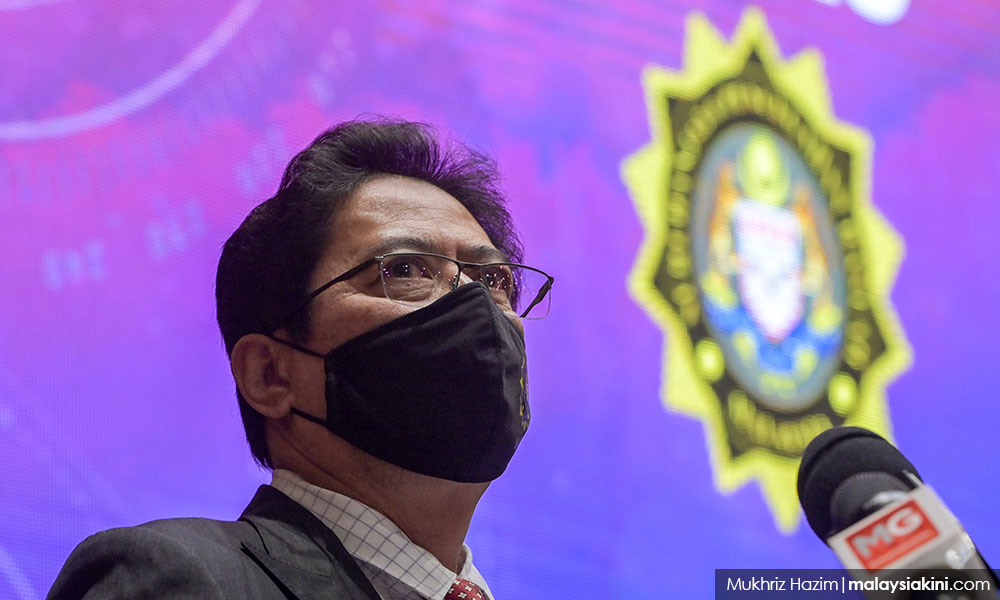
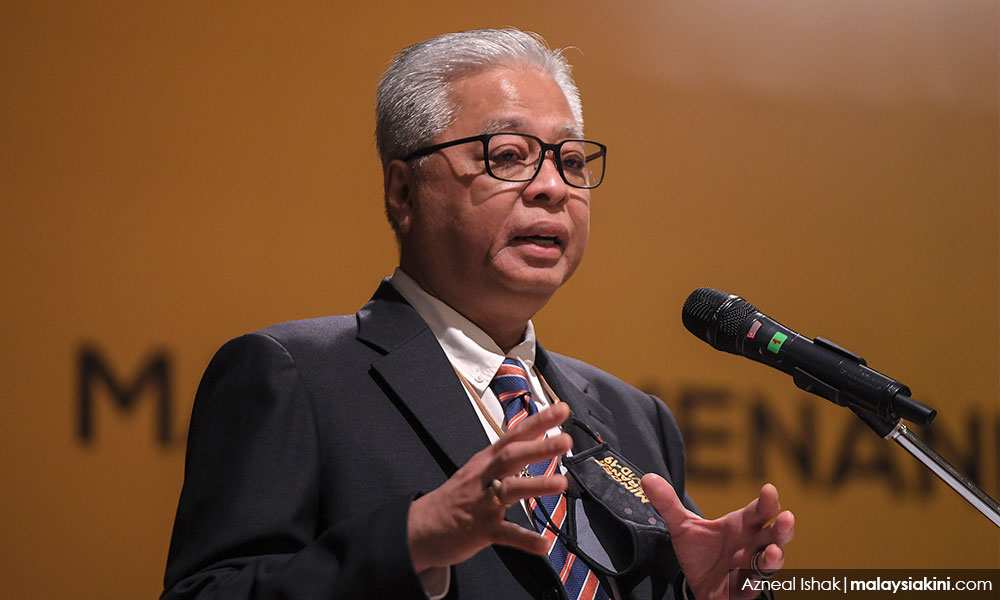
Azam (above) is suing Lalitha over...
In a court filing, MACC chief commissioner Azam Baki claimed that whistleblower Lalitha Kunaratnam could not be regarded as an investigative reporter because she lacked credibility and was untrustworthy.
He made the allegation in his reply to her statement of defence against his defamation suit with regard to her articles on his share ownership in public-listed companies.
Azam (above) is suing Lalitha over the activist's two articles, ‘Business Ties Among MACC Leadership: How Deep Does It Go? (Part 1)’ and ‘Business Ties Among MACC Leadership: How Deep Does It Go? (Part Two)’ carried by the Asia-based Independent News Service (INS) late last year.
According to a copy of the reply filed with the Kuala Lumpur High Court this morning, Azam contended that Lalitha's alleged untrustworthiness is seen in her statement of defence, where she disputed her address for service of the court documents as being at the office of the Centre to Combat Corruption and Cronyism (C4).
Previously, a MACC officer lodged a police report against Lalitha for allegedly lying to the court in her statement of defence about her employment status as a researcher with C4. However, the police later classified the report as NFA (no further action).
In his reply, Azam contended that it "made no sense" for Lalitha to dispute her address of service of the court documents when her own statement of defence stated she had an employment contract with C4.
The MACC chief commissioner claimed that C4 had also denied that she was linked to the whistleblower organisation.
Previously in a media statement, C4 stated that Lalitha ceased being their employee since December 2020.
"Based on the above, it clearly proves that the defendant (Lalitha), among others, has no good credibility, is untrustworthy, constantly flip flops (sering berdolak dalih), confusing, not transparent, and not worthy to self-declare herself as an investigative reporter," Azam stated.

It was reported that Lalitha, in her statement of defence, raised the defence of justification, where she is prepared to prove in court the contents of her articles regarding Azam's shareholdings issue.
In a civil suit for defamation, justification is a defence that the statements or allegations are true, and if proven in court, this would act as an absolute defence against the legal action.
Azam suing in personal capacity
Through a press release on Jan 12, Azam's lawyer Megat Abdul Munir, from the law firm Zain Megat & Murad, announced the filing of the defamation action. The MACC chief is suing Lalitha in his personal capacity.
Azam previously issued a letter of demand to Lalitha via his lawyers, demanding an apology and RM10 million in damages.
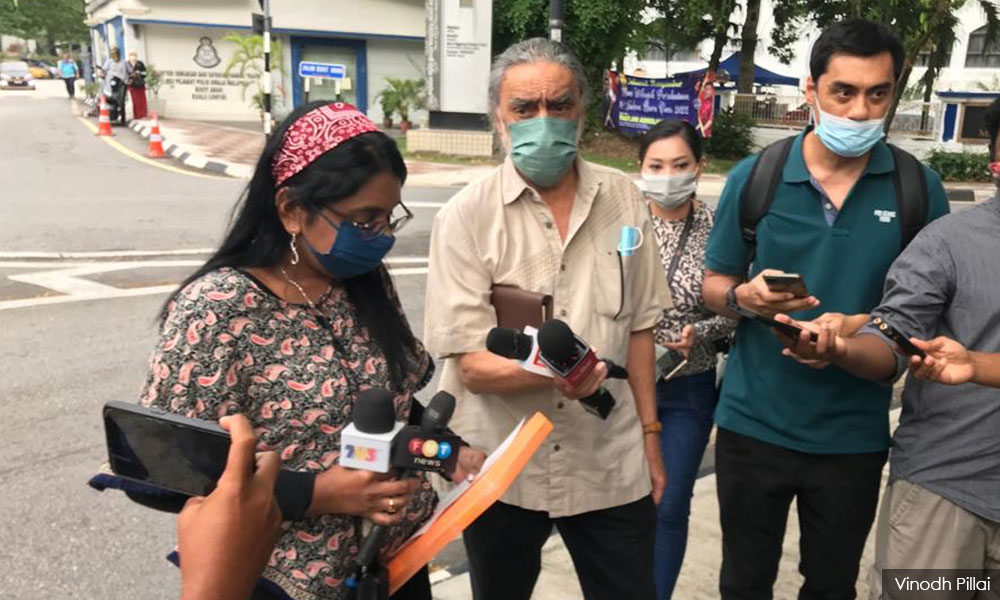
Lalitha has since said she stood by her reports and criticised the MACC's attempt to rope in the police to investigate her.
Azam came under the spotlight over his ownership of 1,930,000 shares in Gets Global Berhad (previously KBES Berhad) on April 30, 2015, worth around RM772,000 at the time.
His shareholding in Gets Global Berhad went down to 1,029,500 as of March 31, 2016, worth around RM340,000 at the time.
He also held 2,156,000 warrants in Excel Force MSC Berhad in March 2016.
The share ownership in 2015 and 2016 raised questions on whether it is commensurate with his income as a public servant.
In a special press conference on Jan 5, Azam did not dispute the ownership of the shares but claimed they were bought in his name by his brother. The shares have since been transferred to his brother.
Nearly a week later, on Jan 18, the Securities Commission (SC) announced that it had concluded its inquiry into the case and that it is unable to conclusively establish that a breach under Section 25(4) of the Securities Industry (Central Depositories) Act 1991 (SICDA) had occurred.
However, following criticism, the SC clarified that Azam had "control" over his own trading account and found no evidence of proxy trading.


Are you sure you want to delete this comment?
This action cannot be undone.